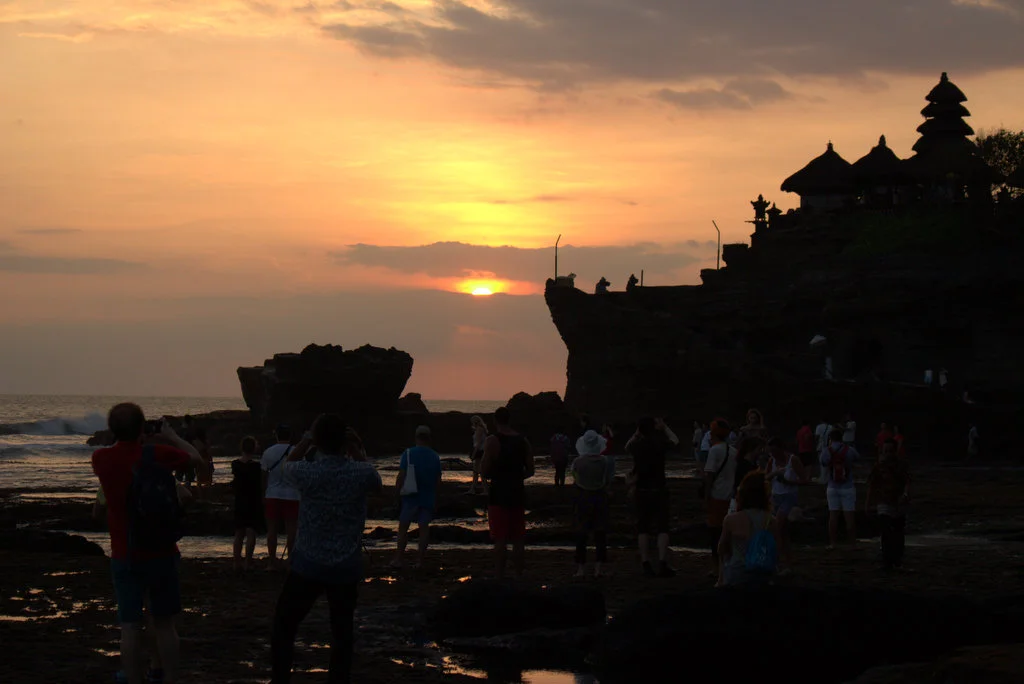
A secluded rock in the sea, salty foam spray and an island of blissful peace... A rare tourist visiting the sights of Bali ignores the most famous island sanctuary Pura Tanah Lot, which has long become a cultural symbol of all of Indonesia.
You can get to this temple by car from Ubud in 40 minutes, and from Kuta in 45. The name “Tanah Lot” is translated from the Balinese language. like "Land in the Sea". And it fully reflects reality, because this small Hindu temple is located on a secluded rock in the sea a few meters from the shore. Tanah Lot is co
ected to the “mainland” by a narrow rocky isthmus, which can be moved only at low tide.
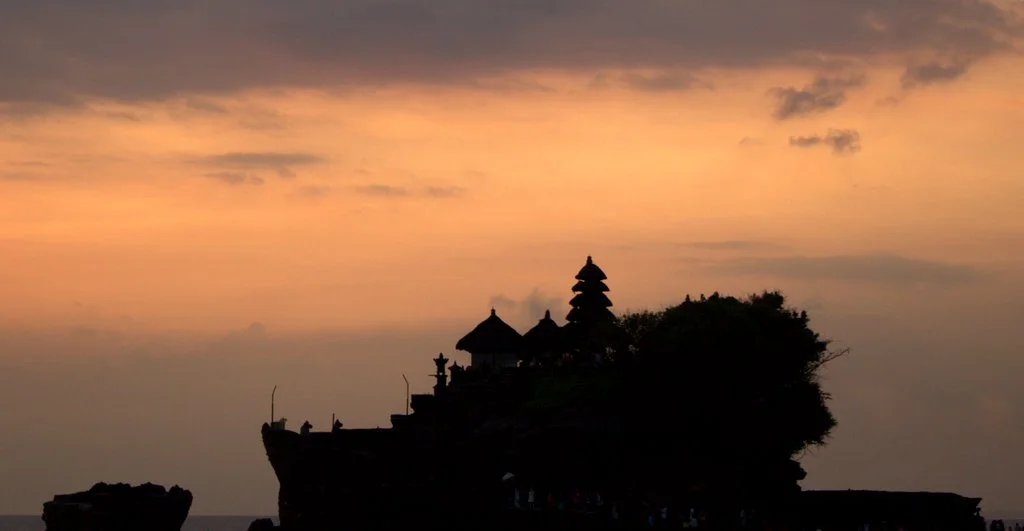
It is worth noting that Pura Tanah Lot is far from the only temple on the coast. The island is practically surrounded by an ensemble of several smaller temples, located in such a way that, having visited one, you can see two more neighboring holy places.
Many Balinese sincerely believe that it is the temple complex that protects the island from evil spirits living in the water, preventing them from reaching land.
History and legends
Oddly enough, the wealth of culture and spiritual world of the population of Bali played a cruel joke on them, since even historians ca
ot accurately recreate the picture of the construction of the Tanah Lot temple. History and legends are intertwined so tightly that it is almost impossible to distinguish truth from fiction.
The only thing historians agree on is the period of creation of the sanctuary.
It is believed that the temple was built in the 15th century by the brahman Nirartha, who came to Bali along the path indicated by the light gushing from a spring. This stream has been preserved, and the local population believes that the water in it is healing.
History is silent about why such a strange place was chosen for the temple. Myths that have been built up over centuries are much more eloquent. According to one version Nirarthi arrived from Java to the island of Bali, but was not “to the heart” of the local leader Bendes Beraben. The Balinese, surprised by the light emanating from the praying Nirartha, brought him offerings. An angry Beraben ordered the wanderer to get out, and he obeyed. True, he did this in a very unique way: with an effort of will, Nirartha moved the rock on which he was sitting into the sea and declared the place sacred. The result was not at all what Beraben had expected. His “flock” immediately recognized the supremacy of Nirartha.
According to another version Nirarthi, brought to the island by a radiant light, was forced to flee persecution from the local population. He moved the rock and dedicated this act to the god of the sea. After this, poisonous sea snakes, which now inhabit the foothills of Tanah Lot, began to guard the newly formed island.
The third version is not so dramatic: Nirartha, who came from Java, spent the night in Bali. Feeling that this amazingly beautiful place was holy, he asked the local residents to build a temple on the rock.
Pura Tanah Lot for tourists
Those who like to touch the relics of saints and enjoy the interior decoration of the sanctuaries will be disappointed, since a visit to Pura Tanah Lot is not included in the tour program. And this despite the fact that every Balinese hotel organizes excursions there! It’s just that Tanah Lot is a functioning Hindu temple, and only true believers are allowed to enter. But ordinary tourists will also find something to see here.
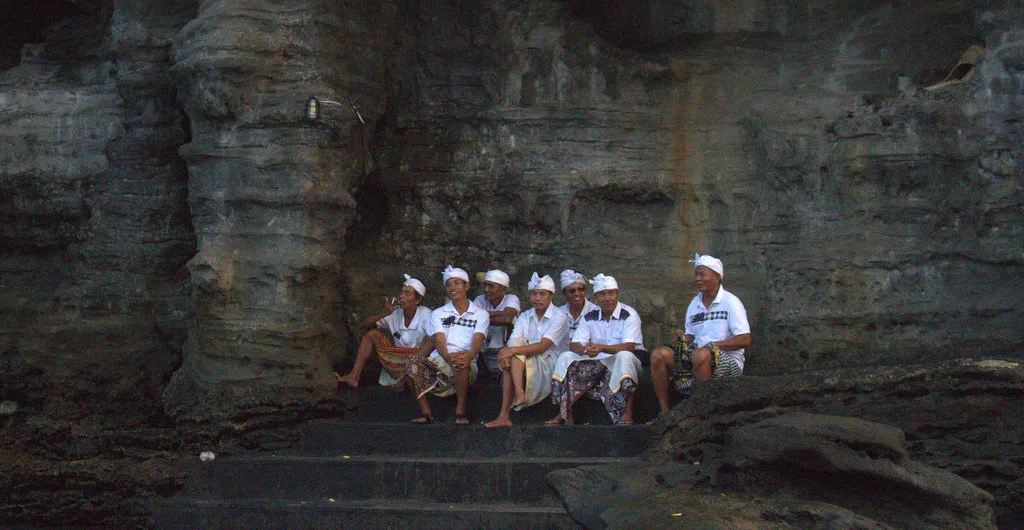
Although at the entrance of visitors they are greeted by a statue dressed in a sarong, they are allowed to walk around the territory of the temple complex without changing their usual jeans for national attire. Visitors can enjoy the scenery, walk along the shore or eat national dishes in a cafe. The only thing they are forbidden to do is enter the temple. The visit to Pura Tanah Lot ends at the foot of the cliff. Here, “for a donation,” tourists undergo a purification ceremony, after which they are allowed to climb a few more steps. But the entrance will remain closed to them.
The Balinese are a completely different matter. For them, Pura Tanah Lot is not the main attraction of the island, but a holy place where they come to pray and make offerings to the gods.
Every self-respecting Indonesian visits Pura Tanah Lot at least once in his life, tu ing a trip to the temple into a big family holiday.
Rock restoratio
In the 80s of the last century, it was noticed that the rock on which Pura Tanah Lot stands was eroded and partially collapsed. Funds for its restoration were allocated by Japan. Comprehensive restoration work was carried out in the 90s, after which access to the temple for tourists was limited. Today, about a third of the rock is artificial.