In this area5
On the map →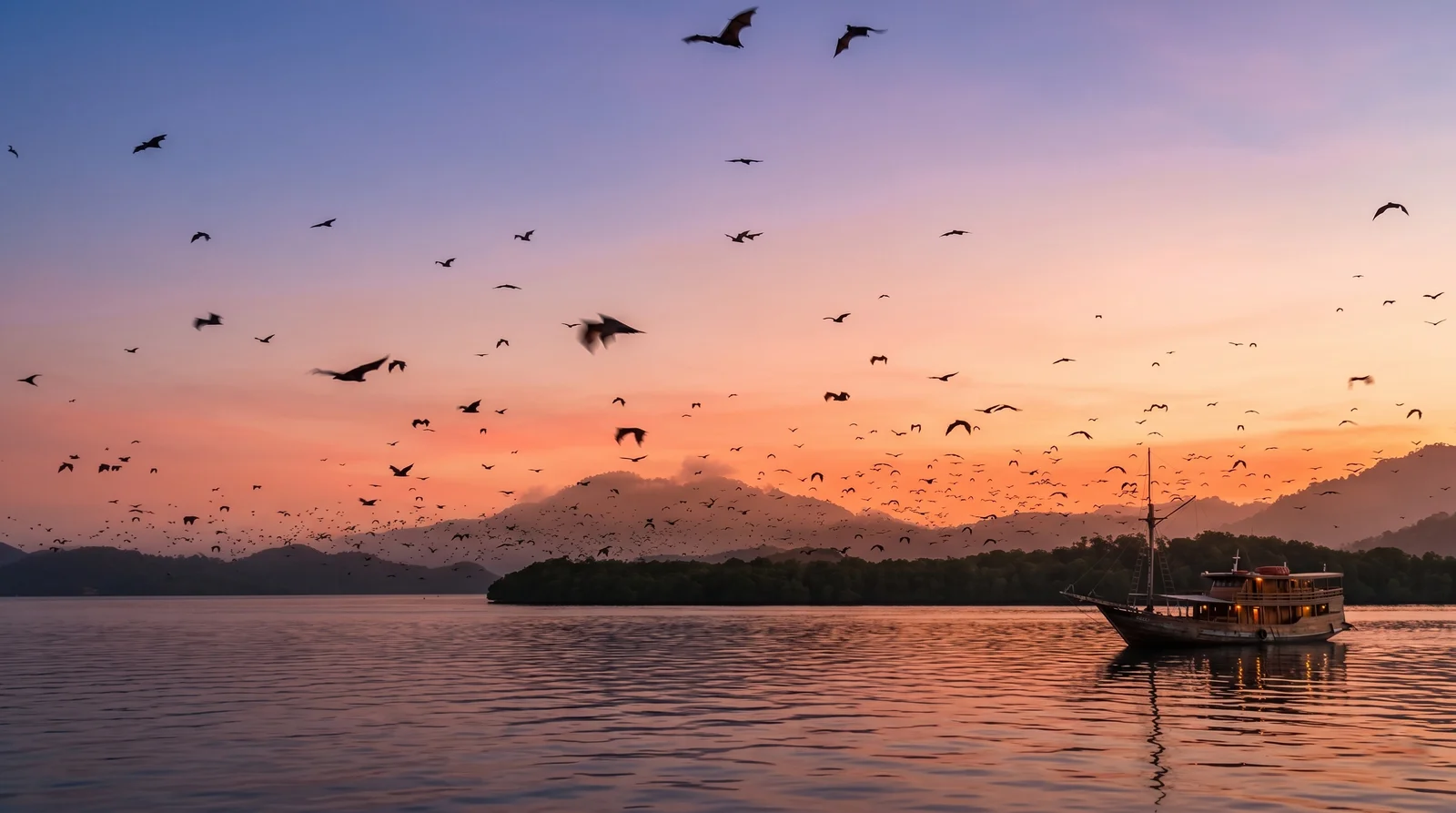
Kalong Island
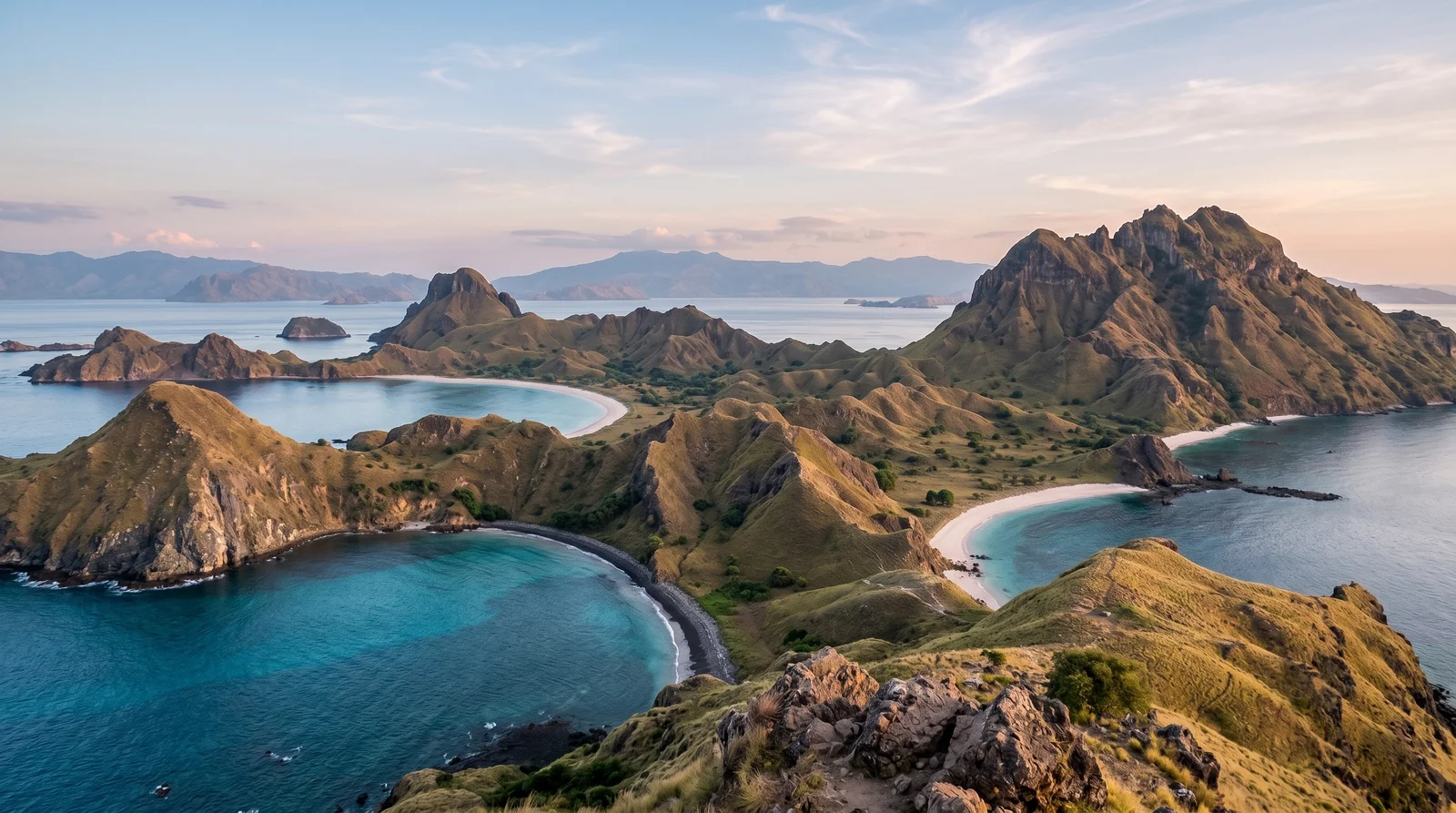
Komodo National Park
Padar Island
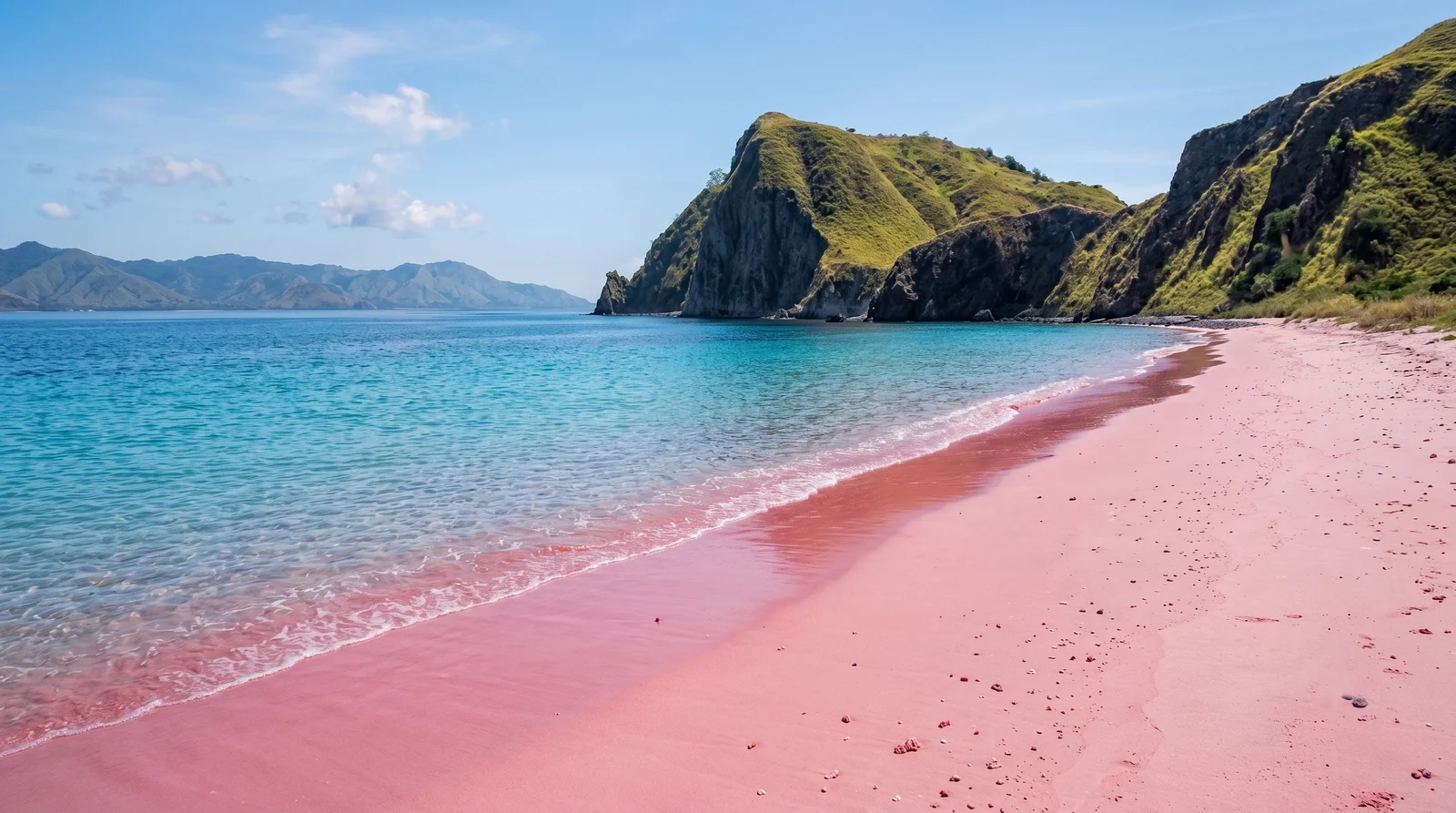
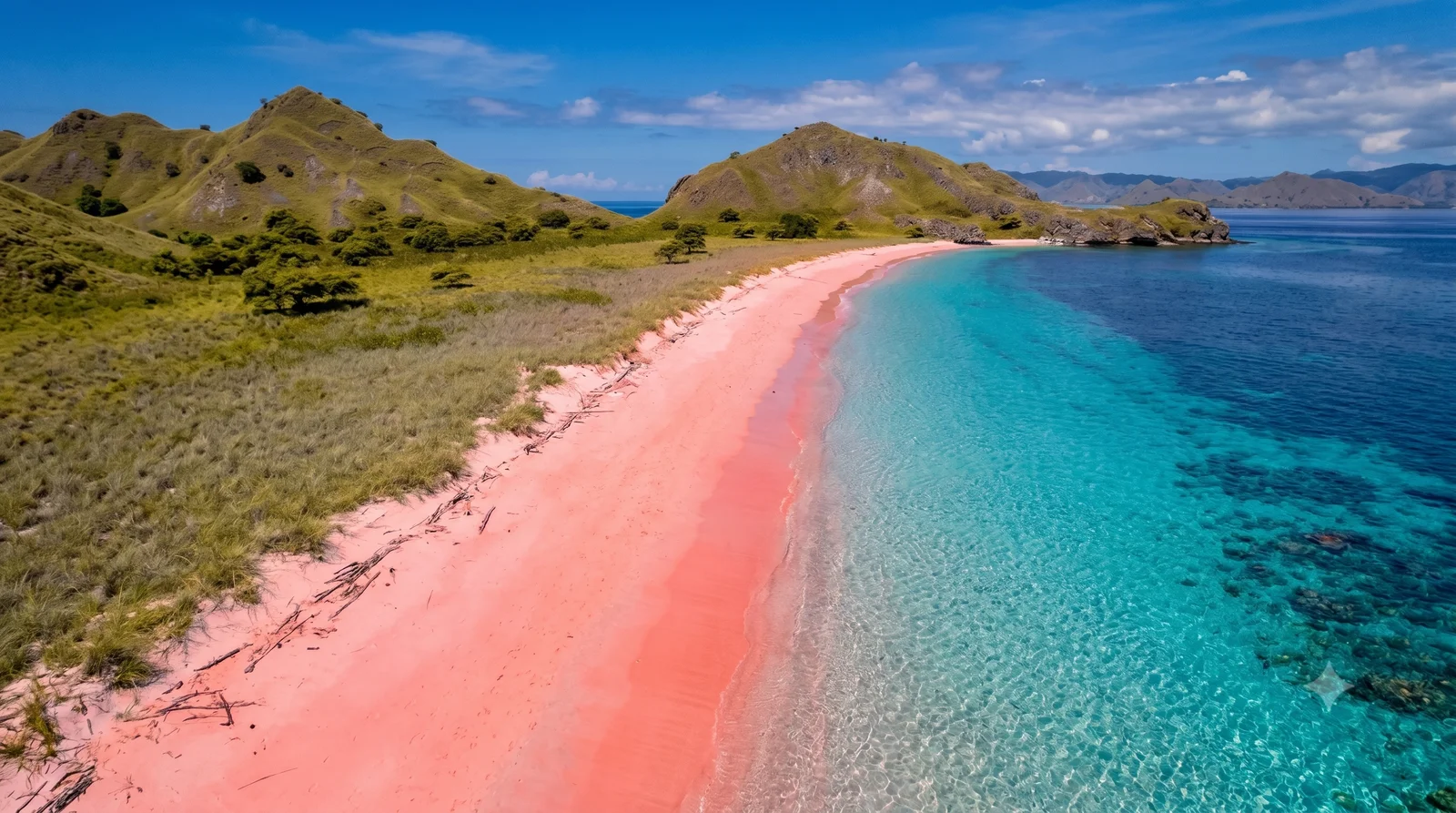
Pink Beach (Pantai Merah)
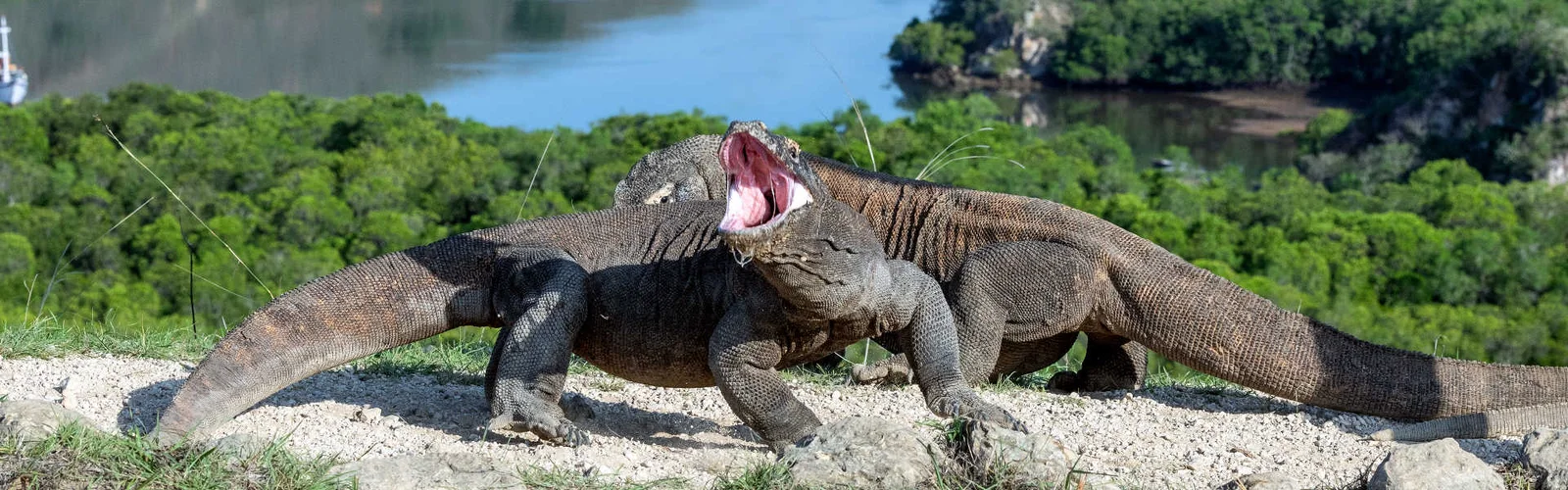
Rinca Island
At a Glance
- Where: an island cluster between Flores and Sumbawa, East Nusa Tenggara
- Status: UNESCO World Heritage Site since 1991
- Area: ~1,733 km² (land and sea)
- Gateway: the town of Labuan Bajo on western Flores
- Flight from Bali: ~1 hour (direct Denpasar–Labuan Bajo)
- Time needed: 1 day (speedboat) or 2–3 days (liveaboard cruise)
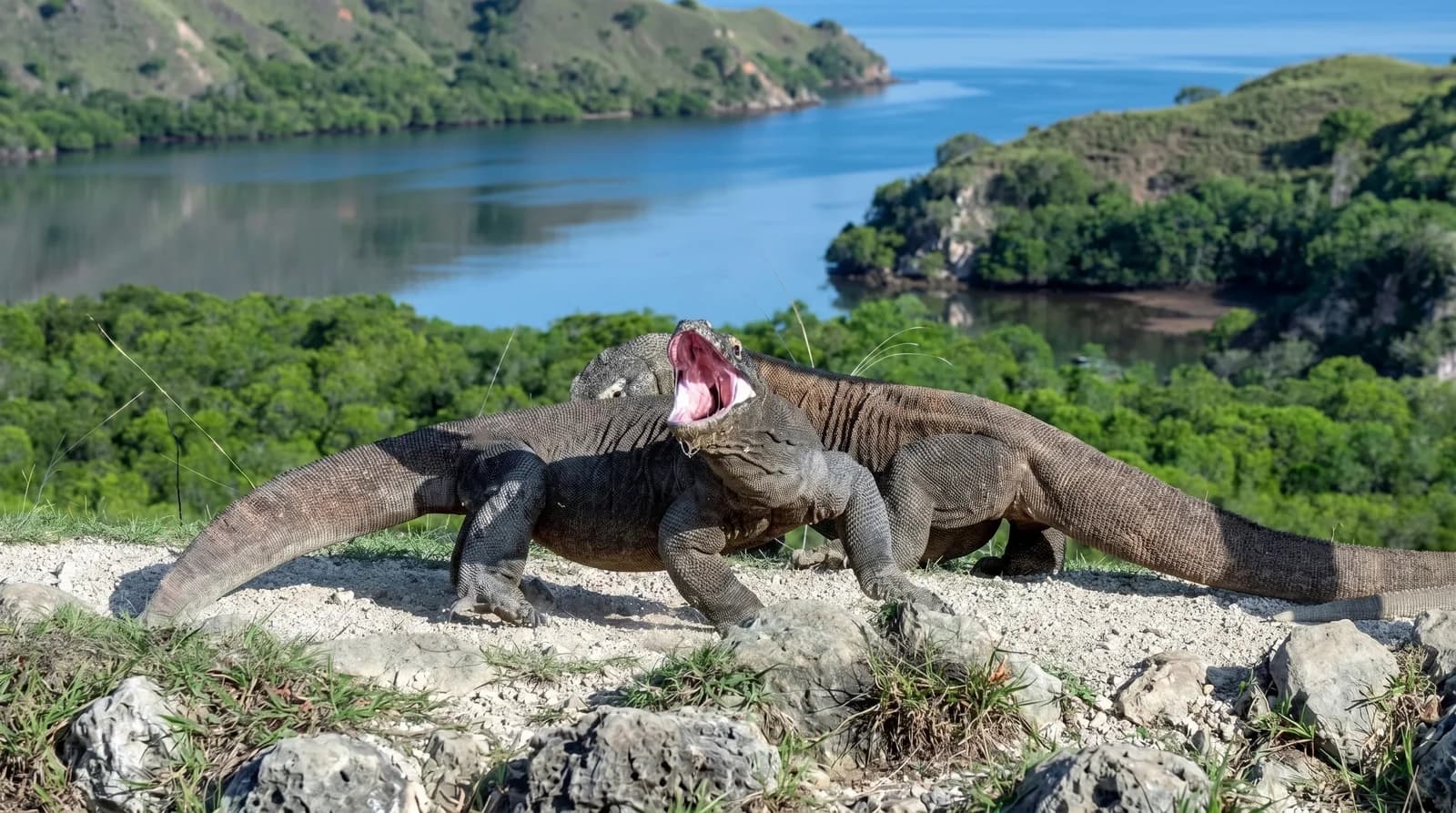
Komodo National Park is the only place on Earth where Komodo dragons, the world's largest lizards, live in the wild. The park covers an archipelago between Flores and Sumbawa: the islands of Komodo, Rinca, Padar and dozens of smaller islets with turquoise bays, pink-sand beaches and some of Indonesia's richest underwater life. The gateway is Labuan Bajo, where all boat excursions depart.
Why Visit
Komodo delivers three layers of experience at once: wild fauna (dragons, manta rays, dolphins), dramatic landscapes (Padar's hills, pink coral sand) and world-class diving in the Coral Triangle. It suits couples, families with teenagers, divers and anyone who needs a scale of nature that Bali simply cannot match.
The Islands & Key Stops
Komodo Island is the largest and the one that gave the park its name. It holds the main dragon population — around 3,000 individuals across two islands. Guided treks range from short to long; dragons are spotted at waterholes and in the shade of trees. Adult males reach 2.5–3 metres in length.
Rinca Island is closer to Labuan Bajo and often included in one-day itineraries. Dragons are just as plentiful, and the trek is shorter. A park ranger accompanies every group — approaching dragons unsupervised is dangerous.
Padar Island is the park's postcard. A trail to the summit (~30–40 minutes) reveals a panorama of three bays with sand of different colours: white, black and pink. One of the most photographed views in Indonesia.
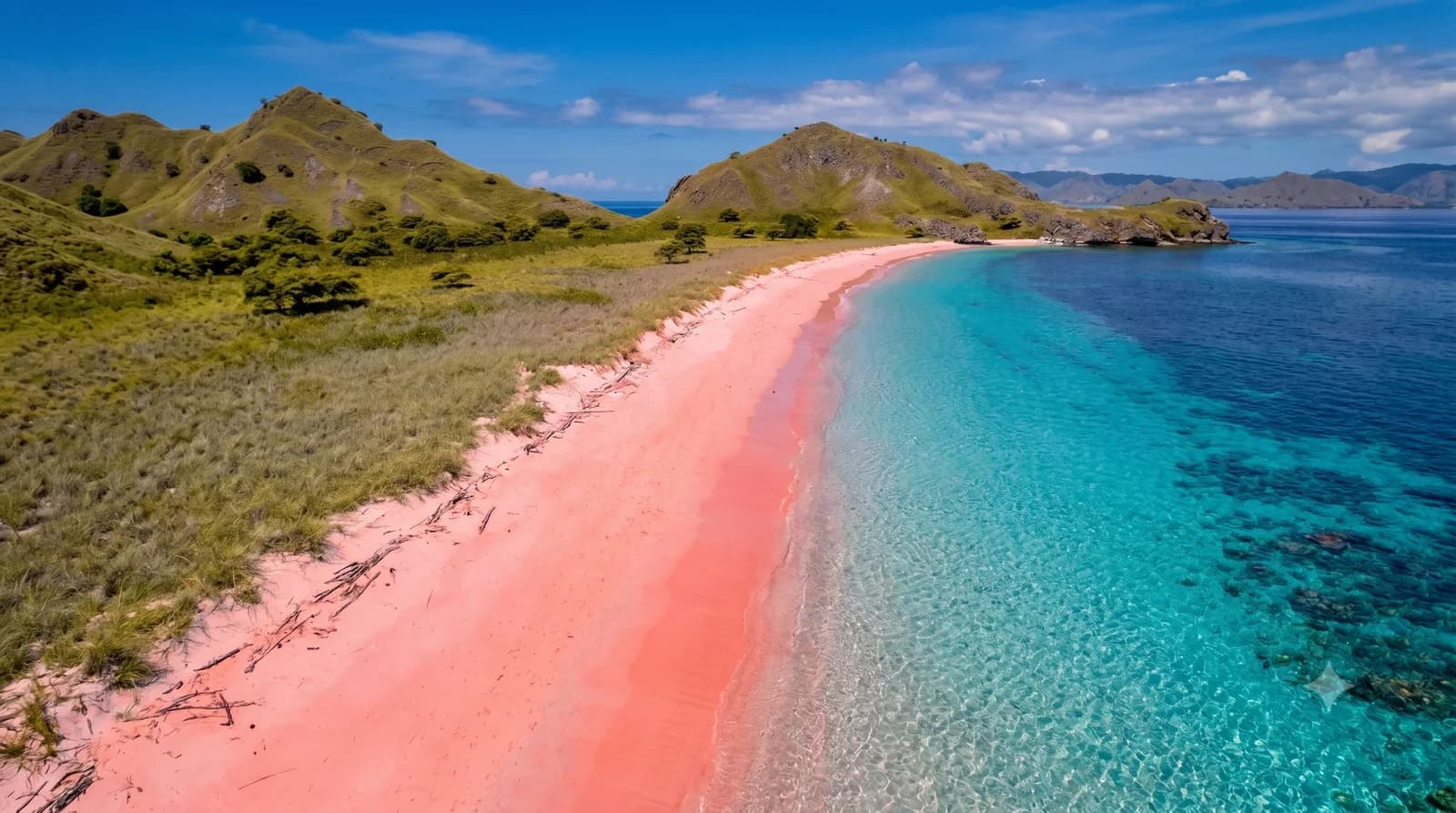
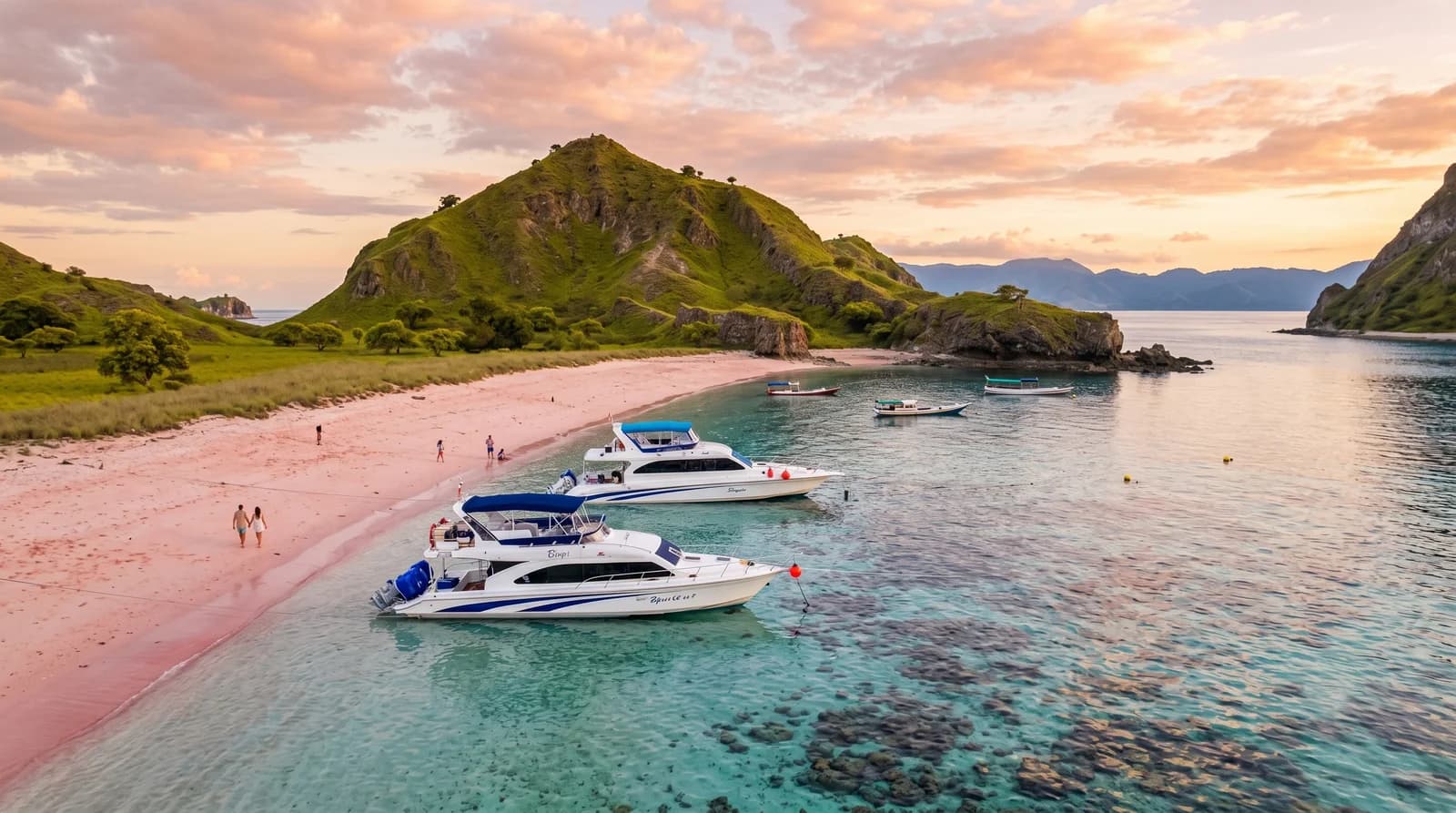
Pink Beach (Pantai Merah) is one of only a handful of pink-sand beaches in the world. The colour comes from crushed red coral fragments (Foraminifera) mixed with white sand. Excellent shore-entry snorkelling: live coral, tropical fish, occasional turtles.
Kalong Island hosts a colony of giant flying foxes. At sunset thousands of the fruit bats take flight for their nightly feed; boats stop off the island specifically for the spectacle.
Diving & Snorkelling
The park's waters fall within the Coral Triangle — the zone of greatest marine biodiversity on the planet. Over 1,000 fish species and 260 coral species have been recorded here.
- Manta Point (Makassar Reef) — a cleaning station for manta rays. Adult mantas have a wingspan of up to 5–7 metres. Snorkelling and diving.
- Batu Bolong — a rock pinnacle in a strong-current strait that concentrates the entire food chain, from tiny reef fish to sharks and tuna. One of Indonesia's top dive sites, for experienced divers.
- Castle Rock — a submerged pinnacle with dense fish schools and current; reef sharks, barracuda, giant trevally.
Getting There & When to Go
- From Bali: direct flight ~1 hour (several flights daily). Labuan Bajo is a compact town with hotels, restaurants and boat-tour operators.
- Format: a one-day speedboat tour (Padar + Pink Beach + Komodo/Rinca + snorkelling) or a multi-day liveaboard cruise for the full experience.
- Season: the best months are April–November (dry season, calm seas, good visibility). December–March brings rougher seas; some routes may close.
- Bring: sunscreen, a hat, trekking shoes (the Padar trail crosses loose ground), mask and snorkel (if not included in your tour), cash.
- Safety: never approach a dragon without a ranger. Do not fly drones without a permit — park fines are steep.
Frequently asked questions
Excursions visiting Komodo NP