In this area3
On the map →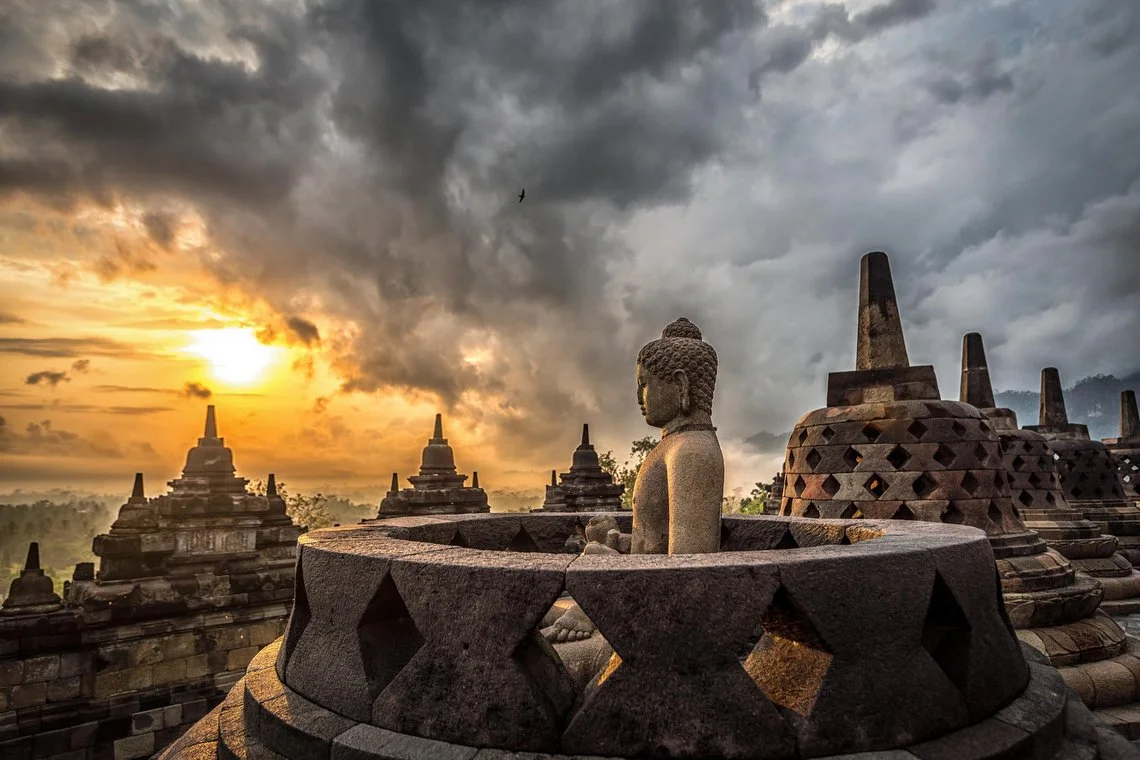
Borobudur Temple
Kraton (Sultan's Palace)
Prambanan Temple
At a Glance
- Where: central Java, Indonesia (not Bali)
- What it is: a city and the cultural capital of Java; a functioning sultanate
- Key sites: Borobudur, Prambanan, Kraton, Taman Sari, Malioboro Street
- Flight from Bali: ~1 hour 15 minutes (direct Denpasar–Yogyakarta)
- Time needed: 2–3 days (minimum 1 full day for the two temple complexes)
- Best time: early morning for Borobudur (sunrise), sunset for Prambanan
Yogyakarta (locals say "Jogja") is the only region in Indonesia still governed by a sultan, and Java's cultural gateway. The city sits at the foot of Mount Merapi and serves as the base for visiting two of South-East Asia's greatest temples: the Buddhist Borobudur and the Hindu Prambanan — both UNESCO World Heritage sites. But Jogja is more than temples: batik, silverwork, gamelan, street food and a living Javanese culture that you feel at every turn.
Why Visit
If you have come to Indonesia and seen only Bali, Yogyakarta reveals an entirely different side of the country. Java is older, deeper, more formal; here you find vast temple complexes over a thousand years old, the palace of a reigning sultan, and craft traditions unbroken for centuries. It suits anyone drawn to history, architecture and authentic culture.
Borobudur
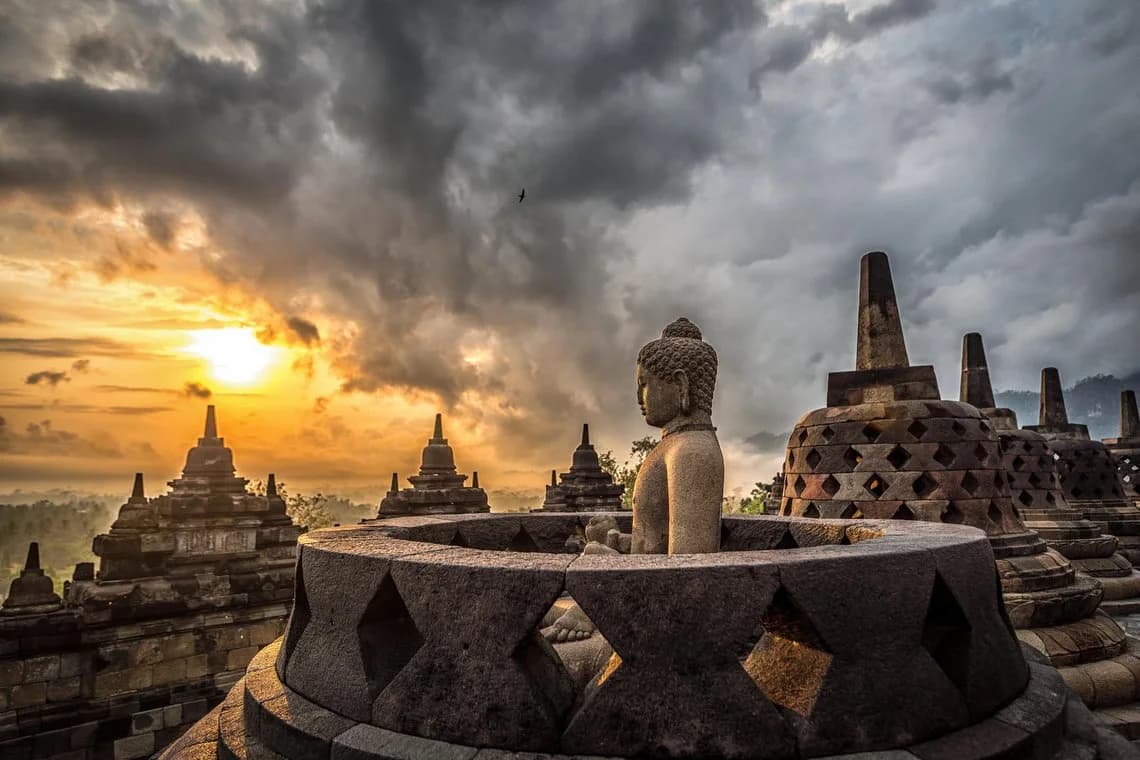
The largest Buddhist temple in the world. Built in the 8th–9th centuries by the Sailendra dynasty from two million blocks of volcanic stone, the temple is a stepped pyramid of 9 platforms with 2,672 relief panels and 504 Buddha statues. The top three tiers are open circular terraces lined with perforated bell-shaped stupas, each sheltering a seated Buddha. At dawn, when mist drifts through the Kedu Valley, the temple's silhouette above the clouds is one of Indonesia's most iconic views.
Borobudur is roughly 40 km north-west of the city. A sunrise visit begins around 4:30 AM — book tickets online in advance, as quotas apply.
Prambanan
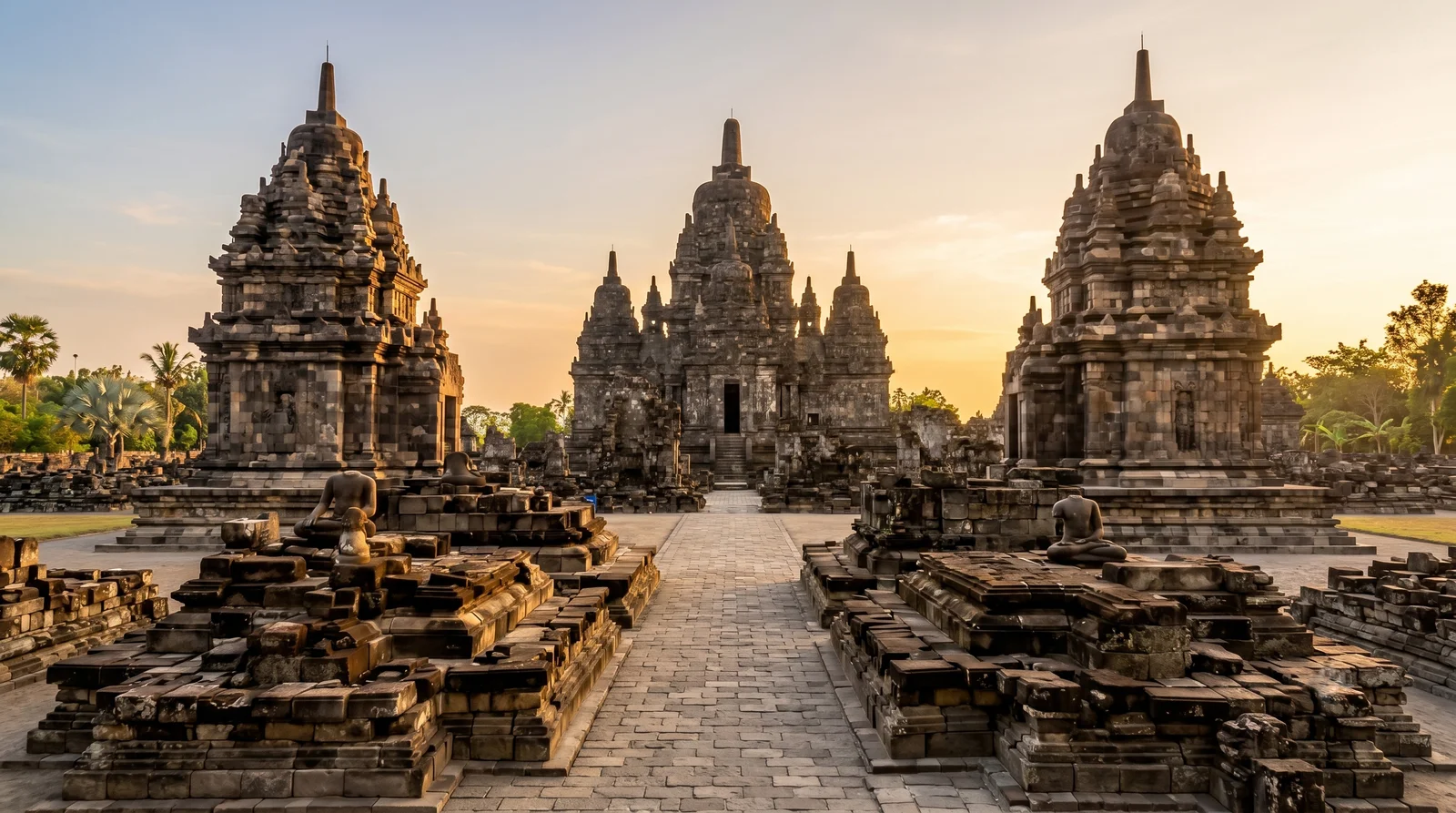
Indonesia's largest Hindu temple complex. Built in the 10th century and dedicated to the Trimurti — Brahma, Vishnu and Shiva. The central Shiva temple rises to 47 metres, its walls carved with episodes from the Ramayana. Beside it stand the smaller temples of Brahma and Vishnu and hundreds of ruined pervara (minor shrines), creating the feeling of a forest made of stone.
Prambanan is 17 km east of the city centre; it fits easily into the same long day as Borobudur. On selected evenings in season, the open-air Ramayana Ballet is performed here — one of Java's great spectacles.
Note: The Kraton and Prambanan are closed on Mondays. Plan your visit for another day.
The Kraton & the City
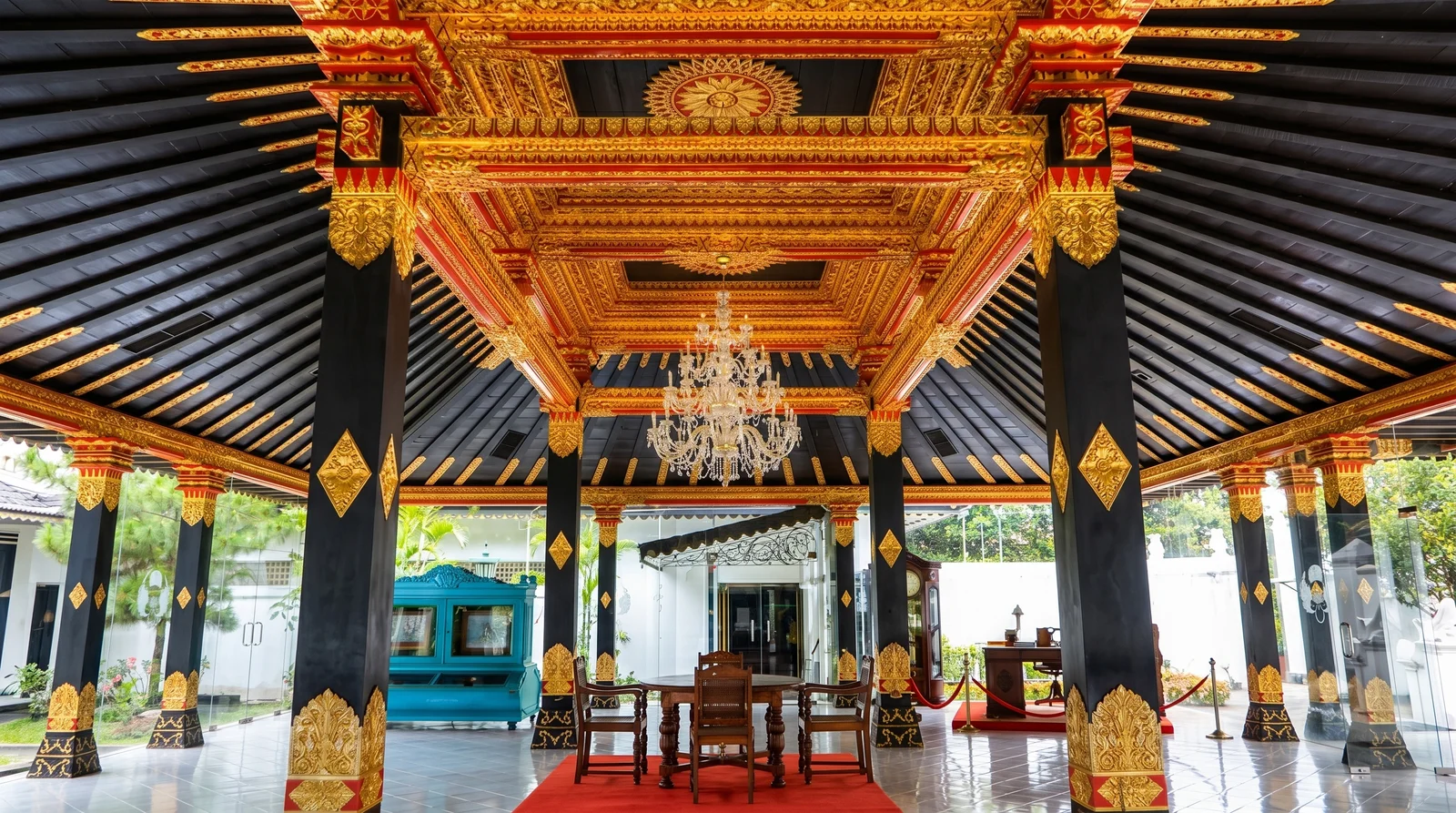
The Kraton (Kraton Ngayogyakarta Hadiningrat) is the sultan's palace — still a working royal residence as well as a museum. Stone gateways, carved pavilions, gamelan orchestras and court dances fill its inner courtyards. Nearby stands Taman Sari (the Water Castle), a former royal bathing garden with pools and underground tunnels, built in 1758.
Malioboro Street is Jogja's main shopping artery: batik, silver, wayang (shadow puppets) and street food. Try gudeg — a Javanese dish of young jackfruit slow-cooked in coconut milk.
Plan Your Visit
- Getting there from Bali: direct flight ~1 hour 15 minutes (Denpasar → Adisucipto/YIA). Daily flights, several airlines.
- Temples: dress modestly (covered shoulders and knees); sarongs are usually provided at the entrance.
- Getting around the city: becak (cycle rickshaws), Grab/Go-Jek, rented scooter or a car with driver.
- One-day plan: Borobudur at sunrise → lunch in town → Prambanan at sunset. Tight but doable.
- 2–3 day plan: add the Kraton, Taman Sari, a batik workshop and Mount Merapi.
- What to bring: comfortable shoes for long walks across temple grounds, a hat for the sun.
Frequently asked questions
Excursions visiting Yogyakarta