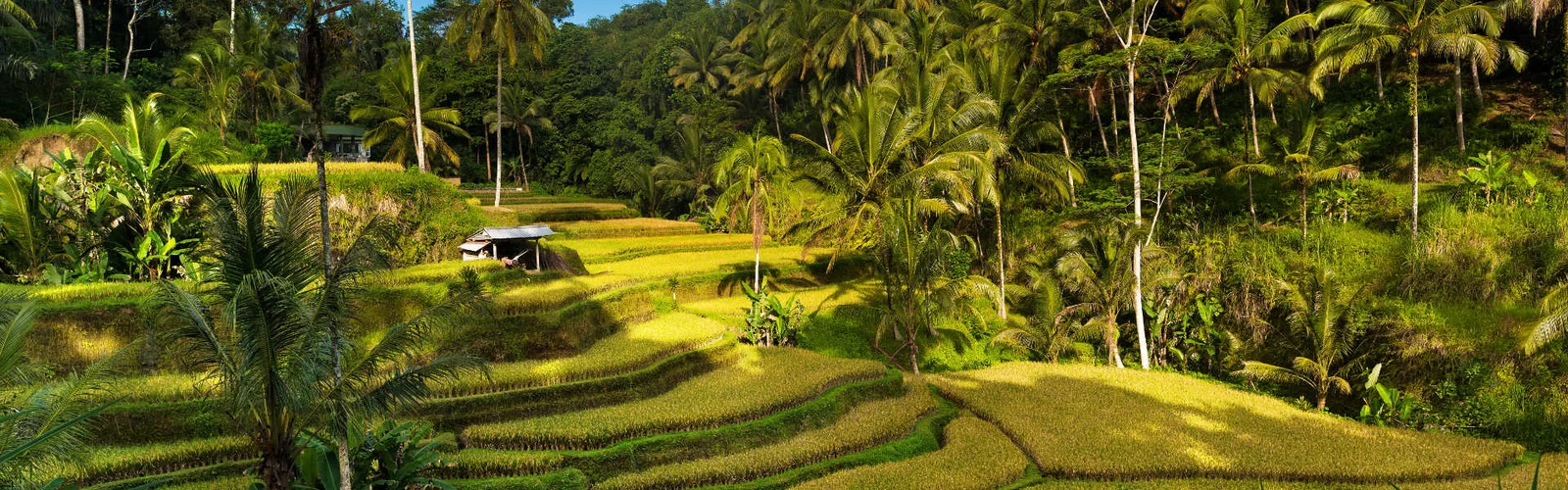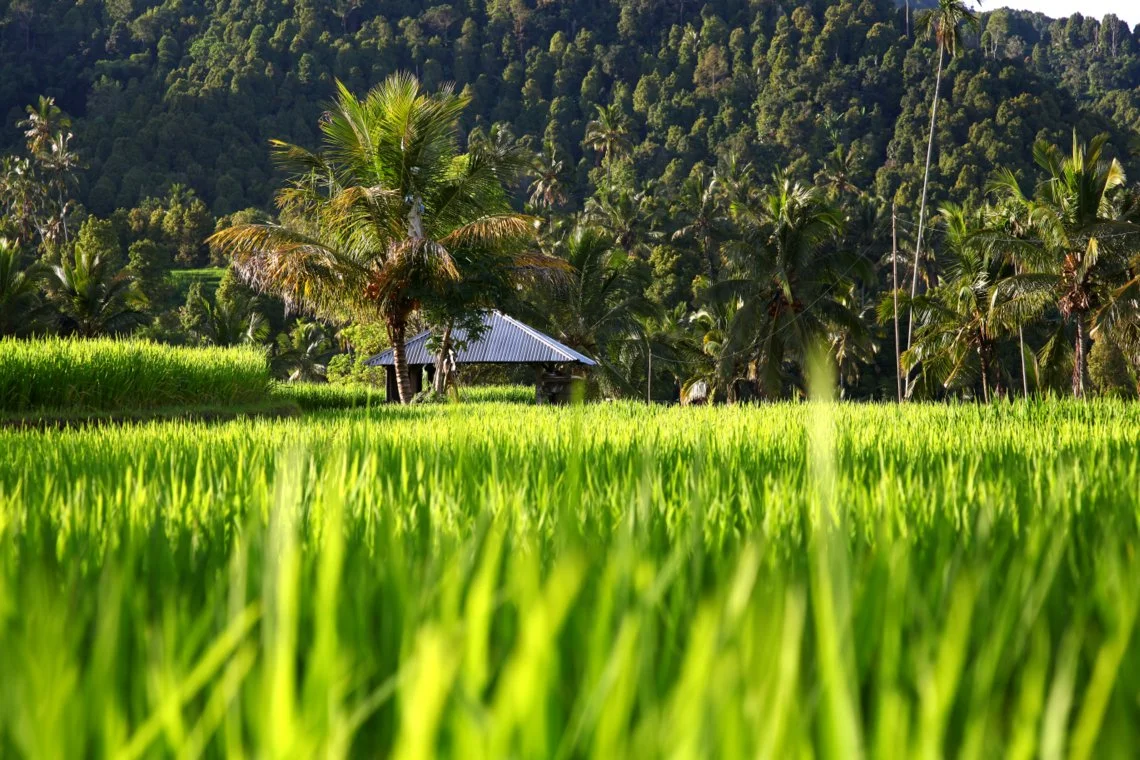
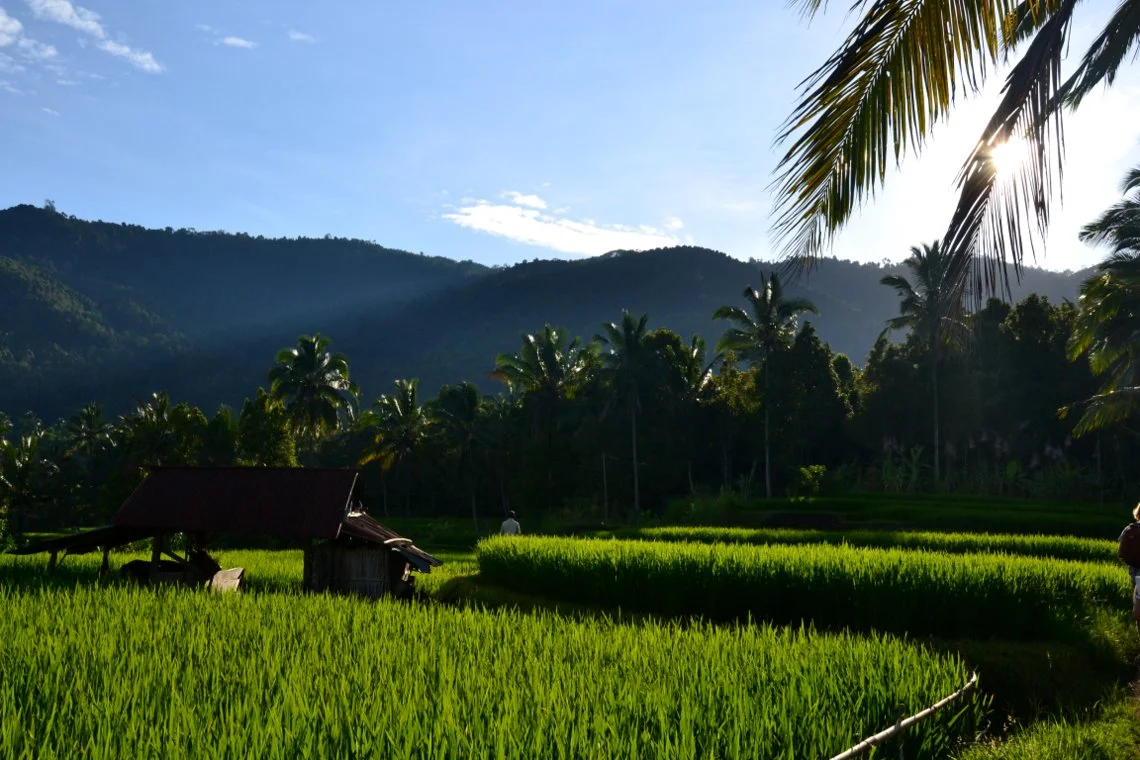
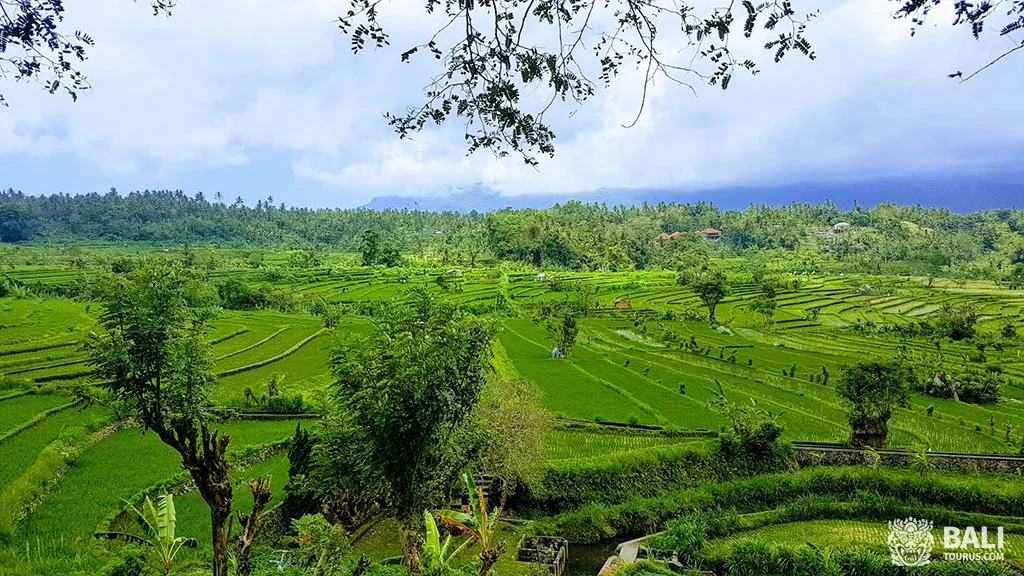
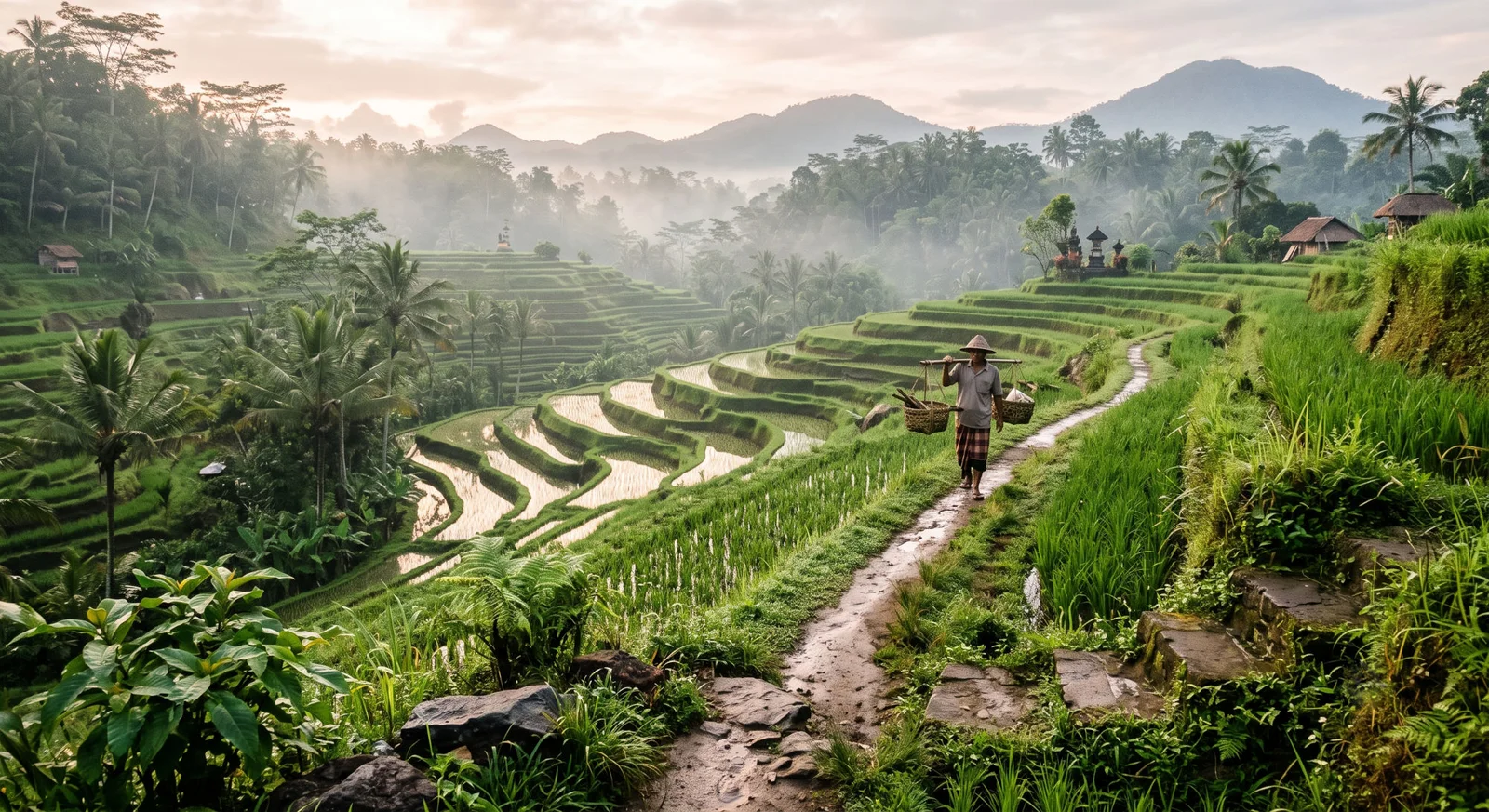
Rice terraces are Bali's signature and some of the island's most photogenic scenery: emerald steps of paddy cascade down the slopes while water in the channels mirrors the sky. The two main terraces for visitors are Tegalalang near Ubud and Jatiluwih in the hills to the west; they're very different, and the choice comes down to what matters more to you — access and the famous shot, or scale and quiet.
This guide covers how Tegalalang and Jatiluwih differ, when to go, how to get there, and where to get the best photo.
Tegalalang — the Famous Shot near Ubud
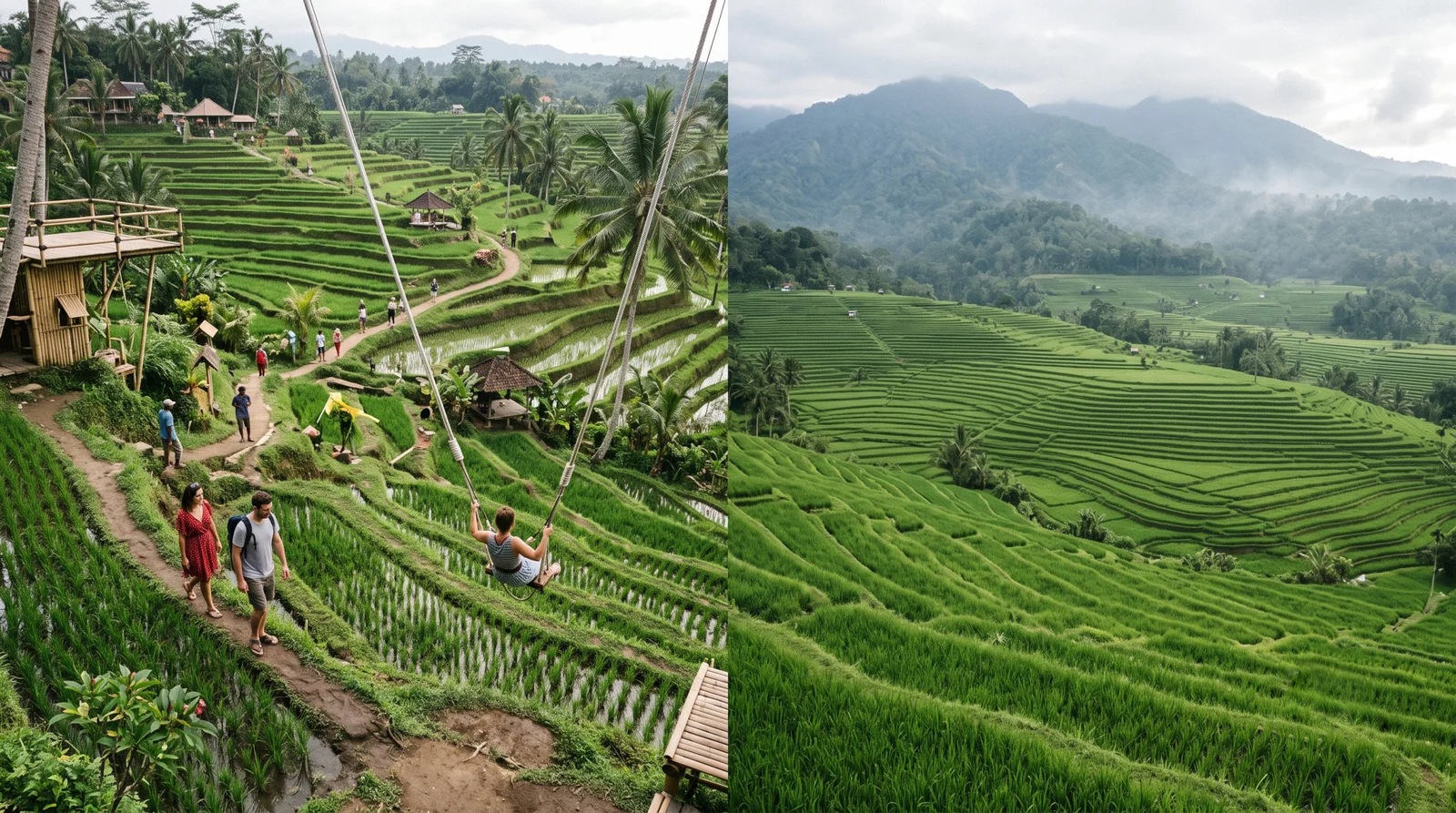
Tegalalang is Bali's best-known rice terrace, just 15–20 minutes north of Ubud. A compact valley of steep tiers, with paths between the paddies and swings over the drop — this is the spot behind most of the postcards.
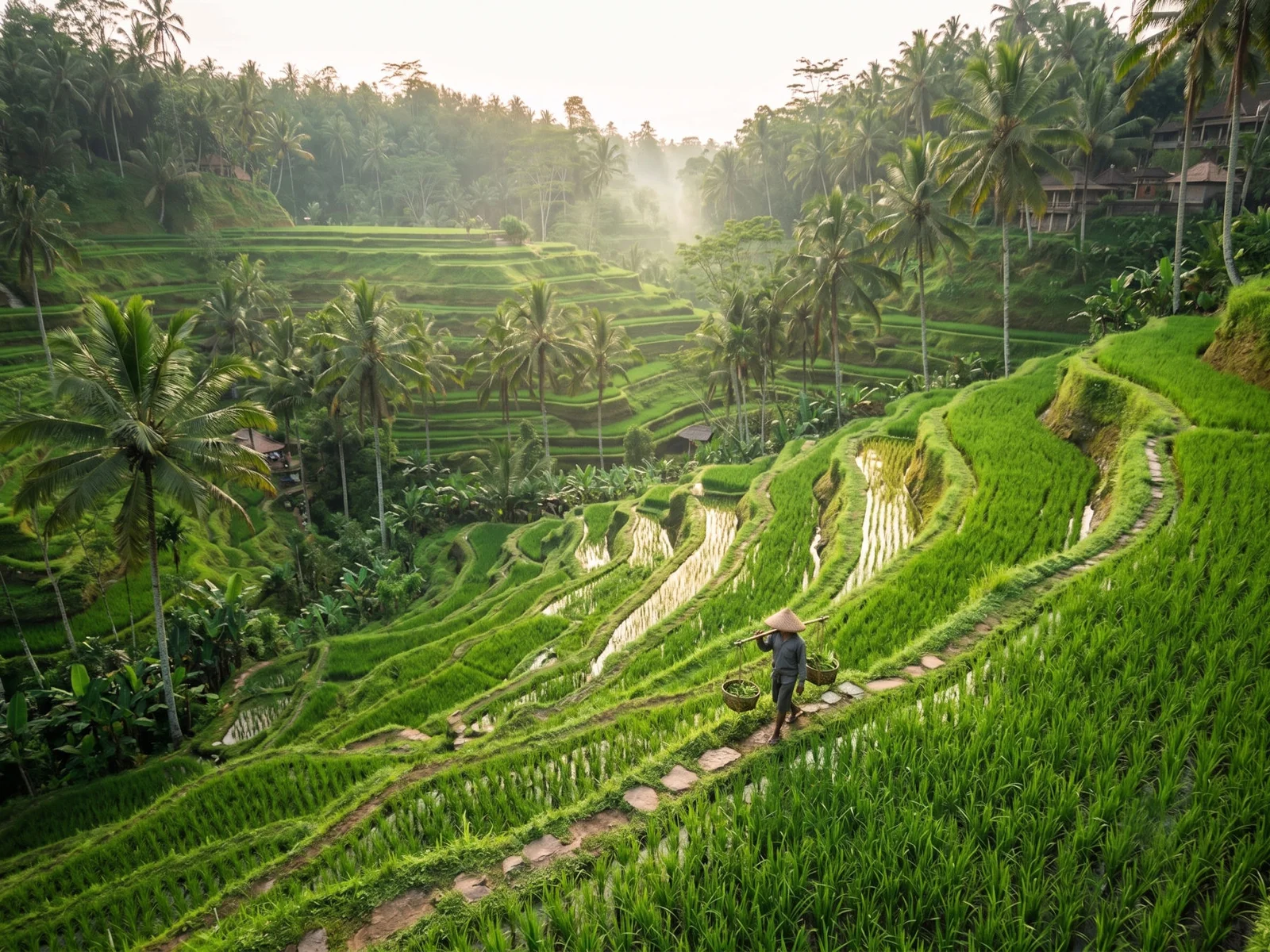
It's convenient: close to Ubud, with view cafés on the opposite slope, swings and photo decks. The flip side is its popularity — it gets busy by day, and climbing up and down the tiers is a real effort. A small donation is sometimes collected for walking the paths.
Jatiluwih — UNESCO-Listed Scale
Jatiluwih is a vast terrace landscape in the hills of Tabanan regency, inscribed on the UNESCO World Heritage list. Unlike compact Tegalalang, here the fields stretch to the horizon at the foot of Mount Batukaru, and there are noticeably fewer people.
You come for space and quiet rather than a single shot: walking and cycling routes of varying length run through the terraces. It's further out — about 1.5–2 hours from Ubud or the south — so Jatiluwih is usually a dedicated trip, often paired with the Ulun Danu Beratan temple or Bedugul.
Tegalalang or Jatiluwih — Which to Choose
In short: Tegalalang if you're short on time and want the famous shot near Ubud; Jatiluwih if you want scale, quiet, and are happy to drive further.
- Distance — Tegalalang is 20 minutes from Ubud; Jatiluwih is 1.5–2 hours.
- Atmosphere — Tegalalang is compact and busy, Jatiluwih is sweeping and calm.
- What to do — swings and photos at Tegalalang; walks and views at Jatiluwih.
- Pair it with — Tegalalang with Ubud and the temples; Jatiluwih with Bedugul and the lake temples.
When to Go and How to Get the Shot
The terraces look best in the dry season (April–October) and are especially striking when the rice is young and bright green — about a month to six weeks after planting. The colour cycles through the season: from water-filled mirrors to gold before the harvest.
- Time of day — arrive at opening (7:00–9:00): soft light, fewer people and less heat.
- Light — morning and late-afternoon sun brings out the steps; at midday the scene looks flat.
- The subak system — the terraces are irrigated by the ancient Balinese subak system, itself UNESCO-recognised; the channels and weirs are part of the shot and a living culture, not just scenery.
Getting There
- Tegalalang — about 20 minutes by car or scooter north of Ubud on the main road; parking and cafés line the slope.
- Jatiluwih — about 1.5–2 hours from Ubud or the south toward Tabanan and Mount Batukaru; easiest with a car and driver for the day. An entry fee applies to the Jatiluwih area.