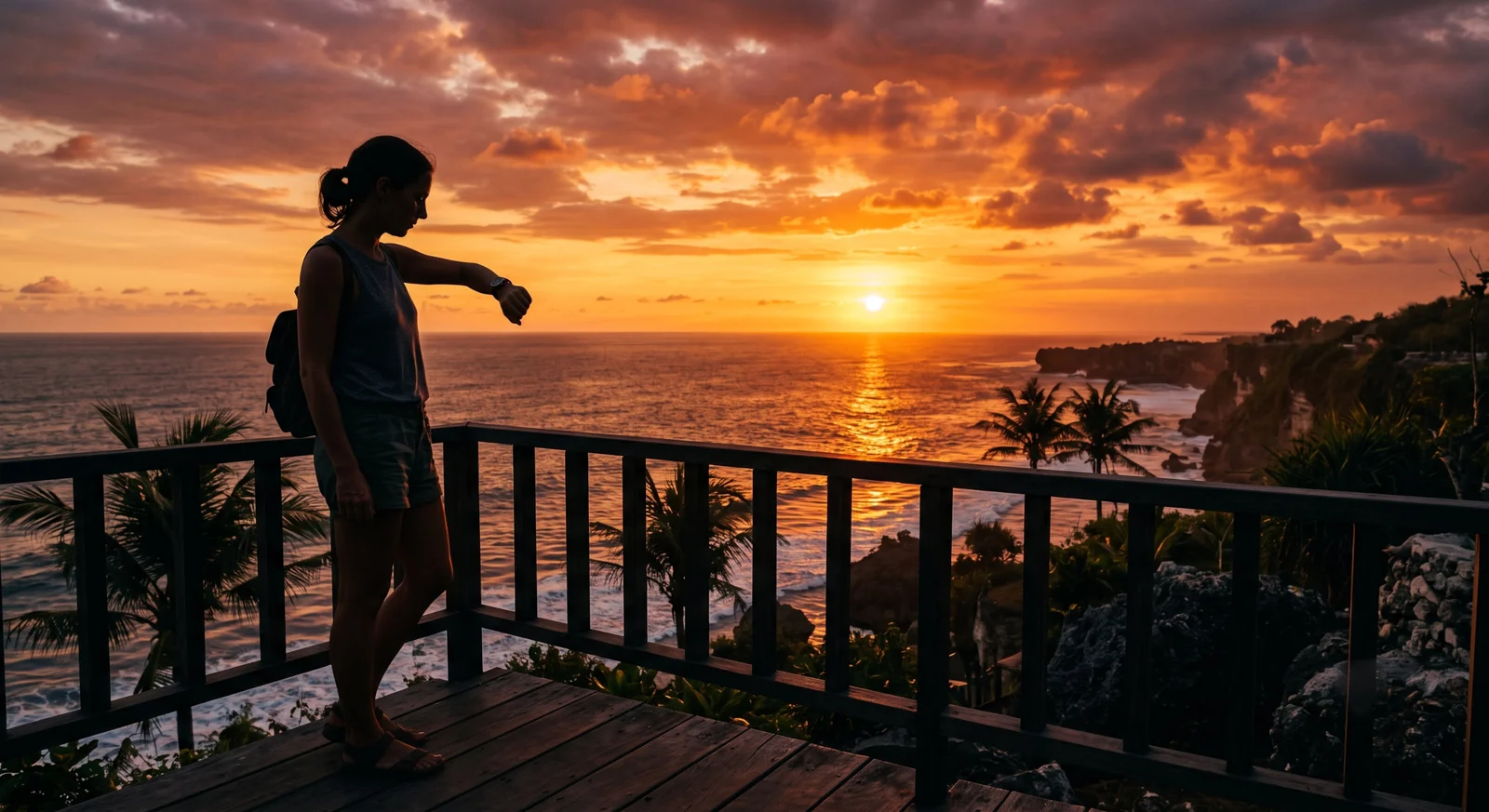
Sunset in Bali arrives fast and lands within the same narrow window nearly all year — between 5:55 PM and 6:45 PM — and the best spots for it cluster along the west coast: Uluwatu, Tanah Lot, the Bukit Peninsula, Jimbaran and Canggu. The island sits just 8 degrees south of the equator, so twilight is short here: the sky fades in 15-20 minutes, without the long, drawn-out golden hour you get further from the equator.
Why are Bali's sunsets so vivid and so short?
Because Bali sits close to the equator, the sun drops almost straight down instead of along a shallow arc, so the switch from day to night takes under 20 minutes. That's the main difference from higher latitudes: there's no hour-long golden hour here — the colors flare hard and fade fast.
Dry season (April-October) gives the cleanest, most contrasted sunsets — fewer clouds, drier air, an open horizon all the way to the sea. Wet season (November-March) brings sunsets less often, but when the sky clears, the cumulus clouds light up from below into a deep red glow — many photographers rate those evenings even higher than dry-season ones.
There's one more Bali-specific quirk: direction. The island runs roughly west to east, and a real ocean sunset only works from the west and southwest coast — Bukit, Tanah Lot, Canggu, Seminyak. East- and south-facing resort areas like Sanur and Nusa Dua are built for sunrise instead — the sun there just drops behind land, with no color over the water.
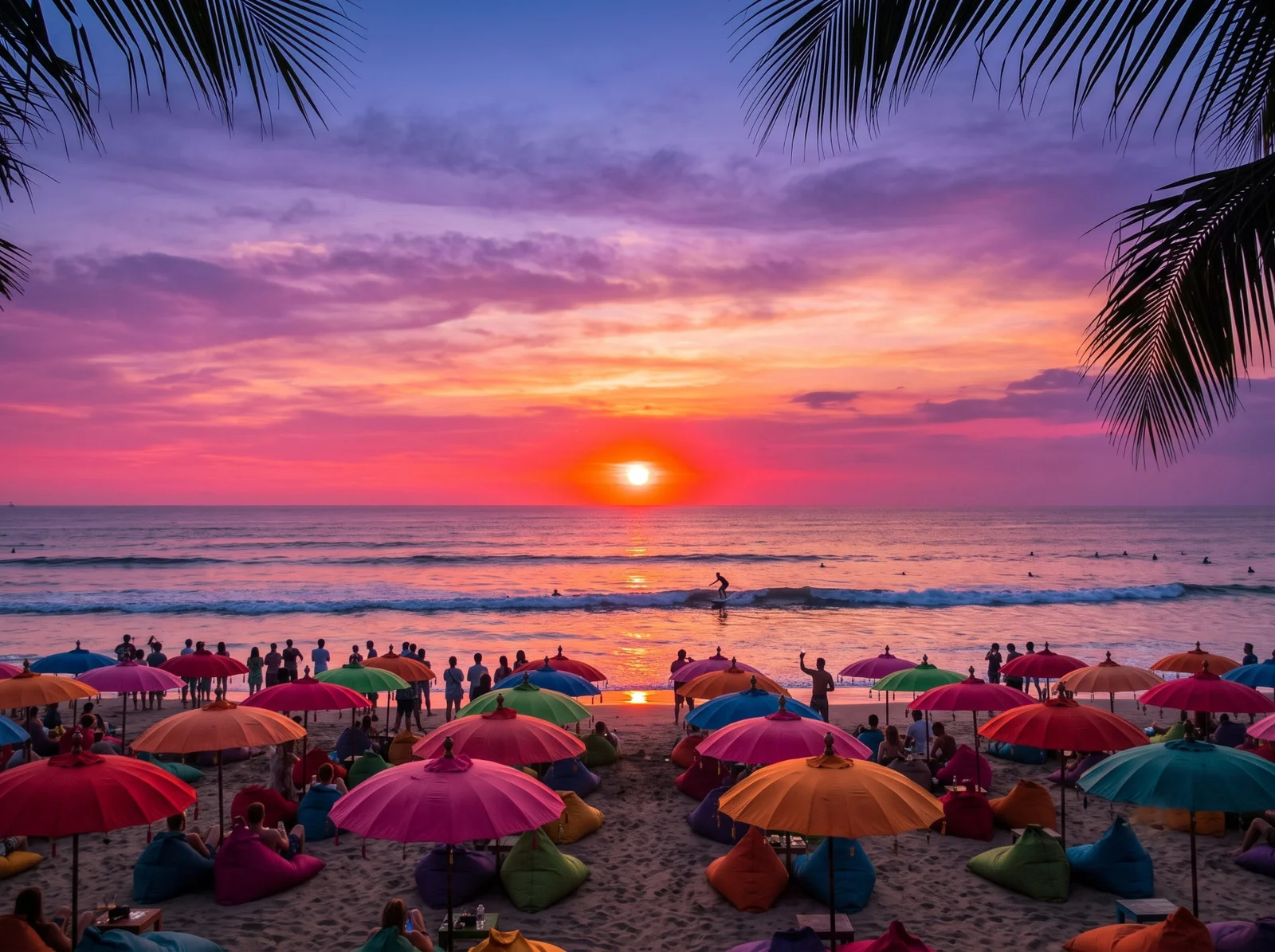
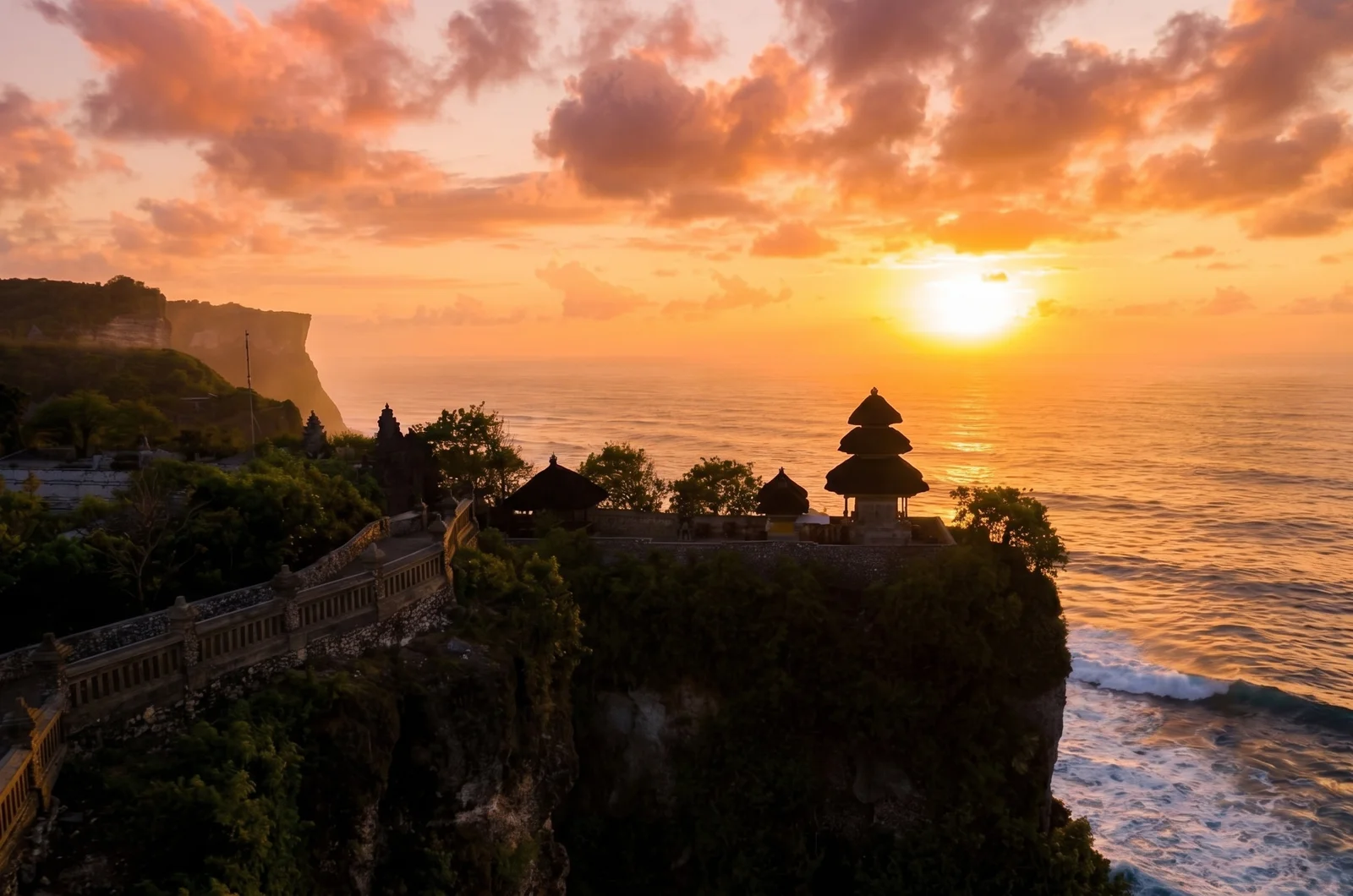
Uluwatu Temple: Bali's most iconic sunset
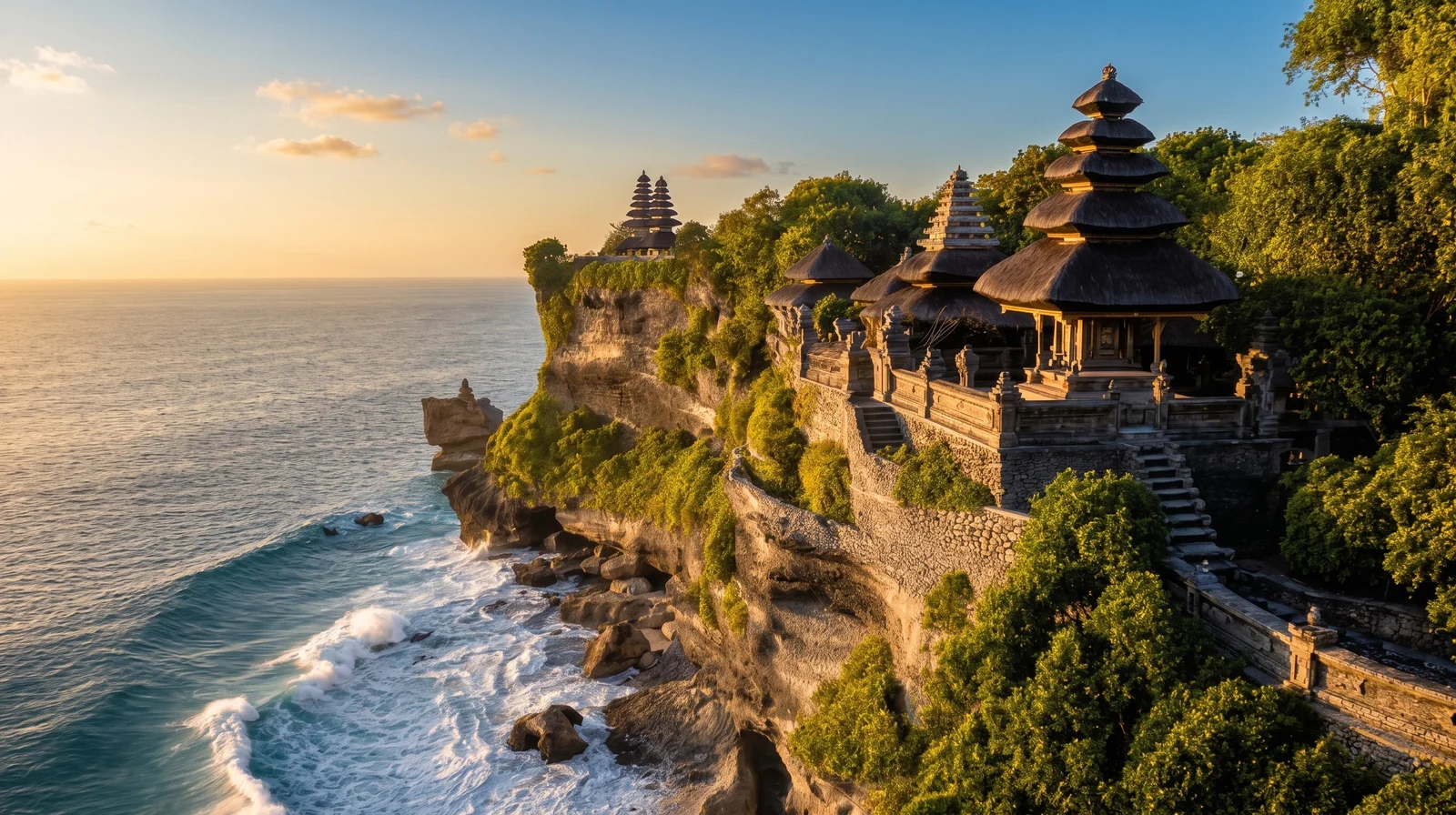
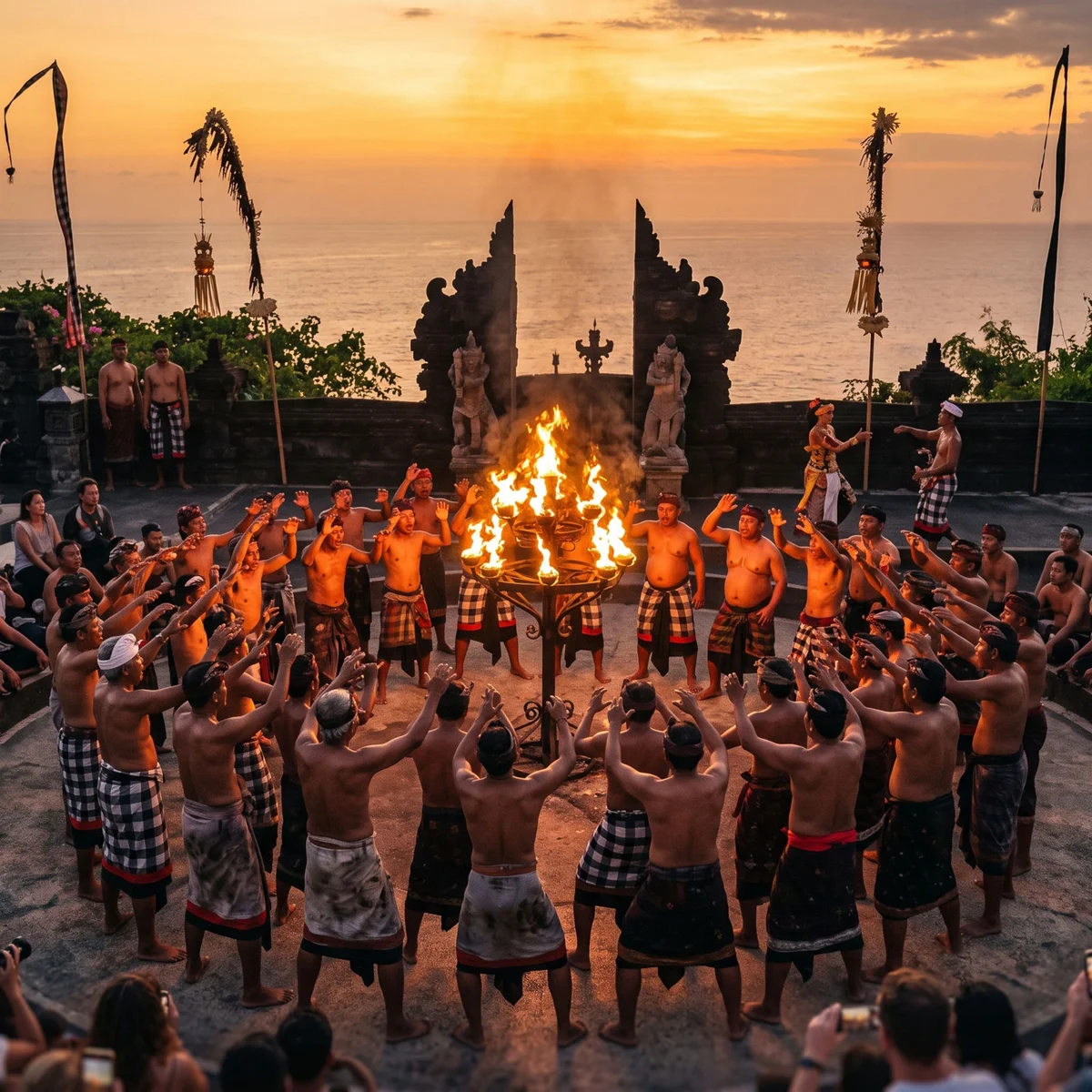
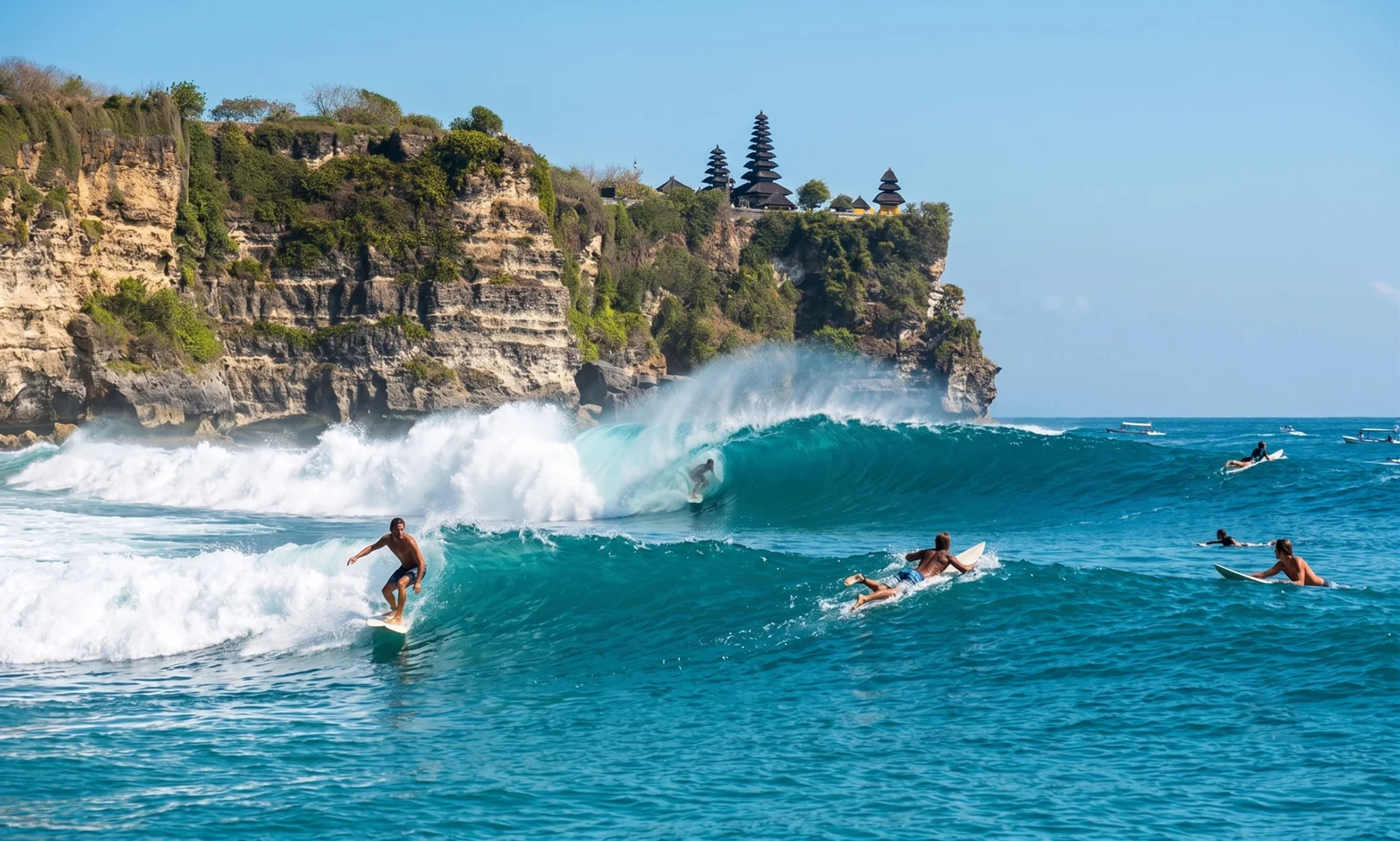
Uluwatu Temple sits on a limestone cliff roughly 70 meters above the Indian Ocean, and it's the only sunset on Bali paired with a live performance: the Kecak dance. A chorus of around fifty men, no instruments, just voice, acts out a scene from the Ramayana with the setting sun behind them.
There are two shows each evening: the first starts around 6:00 PM, right through sunset, the second around 7:00 PM, after dark. For the sunset itself, the first show is the one to catch — and it's worth claiming a seat a full hour early, since the amphitheater is small and demand isn't.
Legend places the temple among the sites where the 11th-century priest Dang Hyang Nirartha meditated — the same figure tied to Tanah Lot. Entry requires a sarong and sash, handed out free with the ticket, and it's worth keeping an eye on loose items along the cliff path: the resident macaques have gotten very good at unzipping bags and lifting sunglasses.
The drive to Uluwatu from the southern resorts often hits evening traffic, so leaving 1.5-2 hours ahead of sunset is the safer call. For anyone who'd rather not do that math themselves, going with a driver takes the guesswork out of it.
Tanah Lot: sunset at a temple in the middle of the ocean
Tanah Lot is a temple on its own rock, surrounded by ocean on every side, standing in the water at high tide and turning into a black silhouette against an orange sky at sunset. It's arguably Bali's most photographed view — and one of the few that looks just as good in person as it does online.
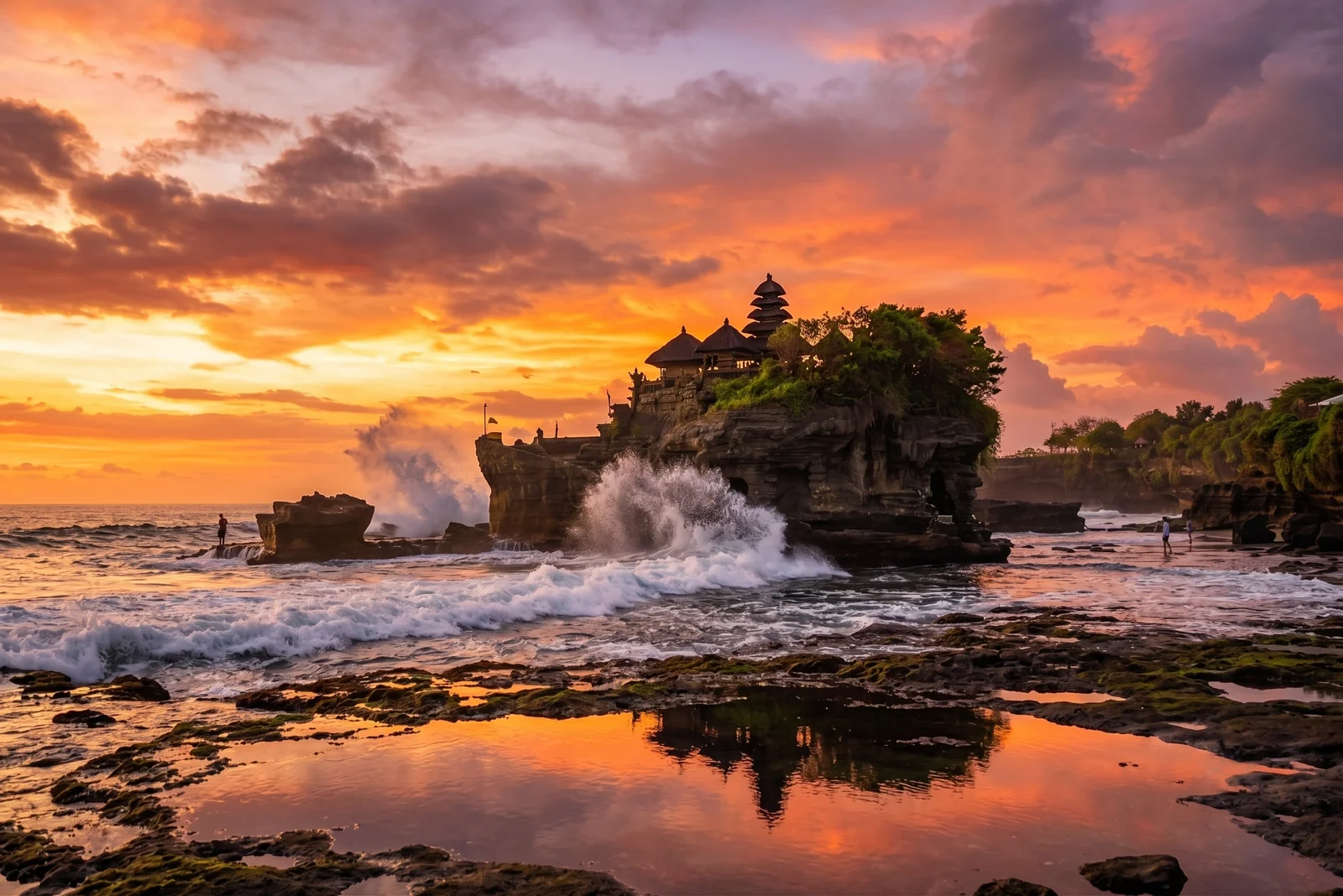
Legend has it that the same Dang Hyang Nirartha moved the temple to its coastal rock in the 16th century and asked locals to build the shrine right in the sea, as a boundary between land and water. The temple itself is closed to visitors, but sea snakes are kept at its base — said, by tradition, to have been left there by the priest to guard the temple from evil spirits.
At low tide you can walk out to the rock and touch the temple wall — Bali's tide schedule shifts day to day, so it's worth checking before you go. Arriving before 4:30 PM is the safer bet: later, the parking area and viewpoints fill up with tour buses.
Bukit's surf beaches: Padang-Padang, Balangan and Suluban
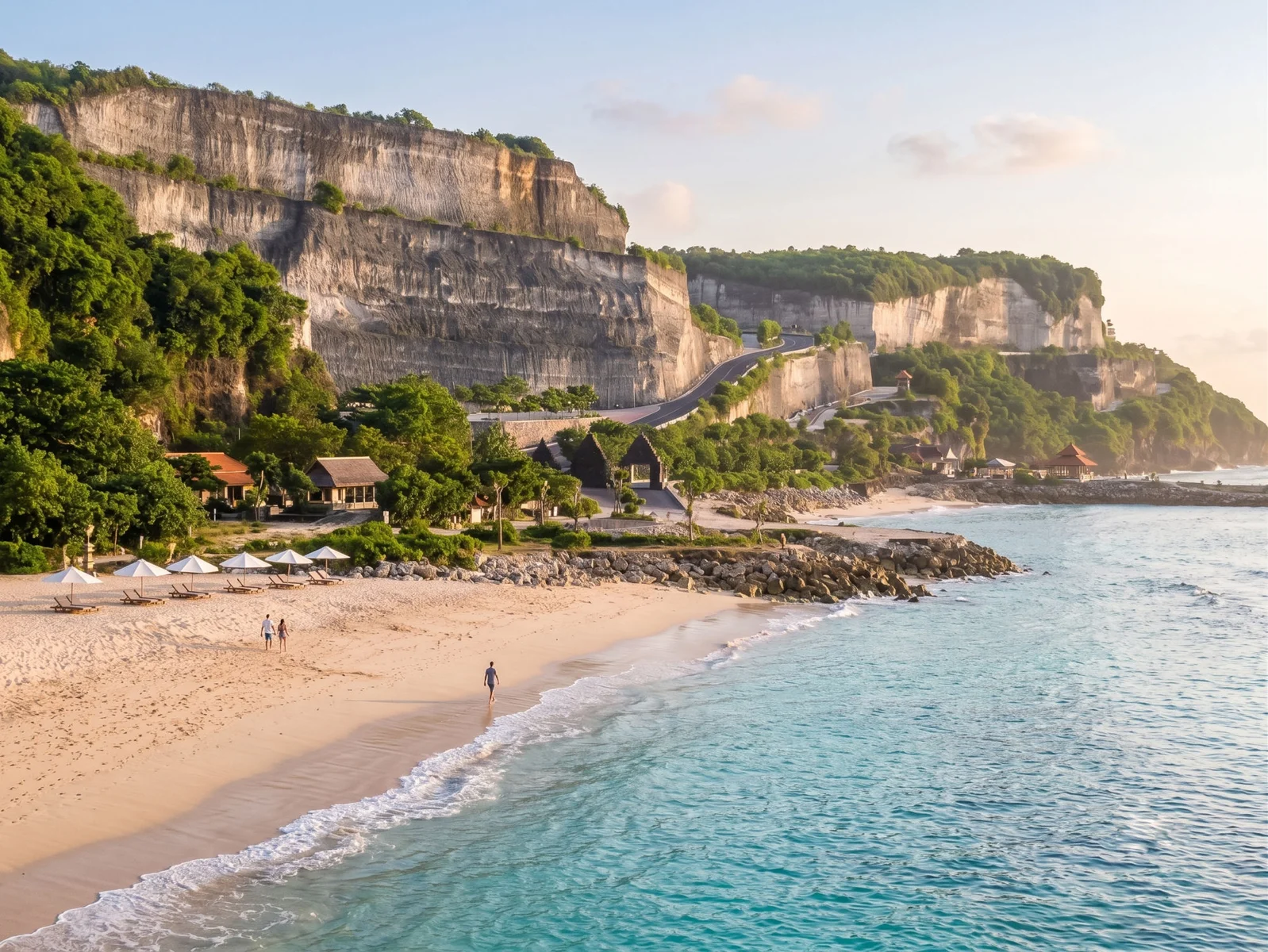
The Bukit Peninsula is a run of beaches at the foot of limestone cliffs, where sunset isn't watched from behind a temple fence but straight from the sand or a cliffside bar. Padang-Padang, Balangan and Suluban sit 15-20 minutes apart and work well as one evening loop.
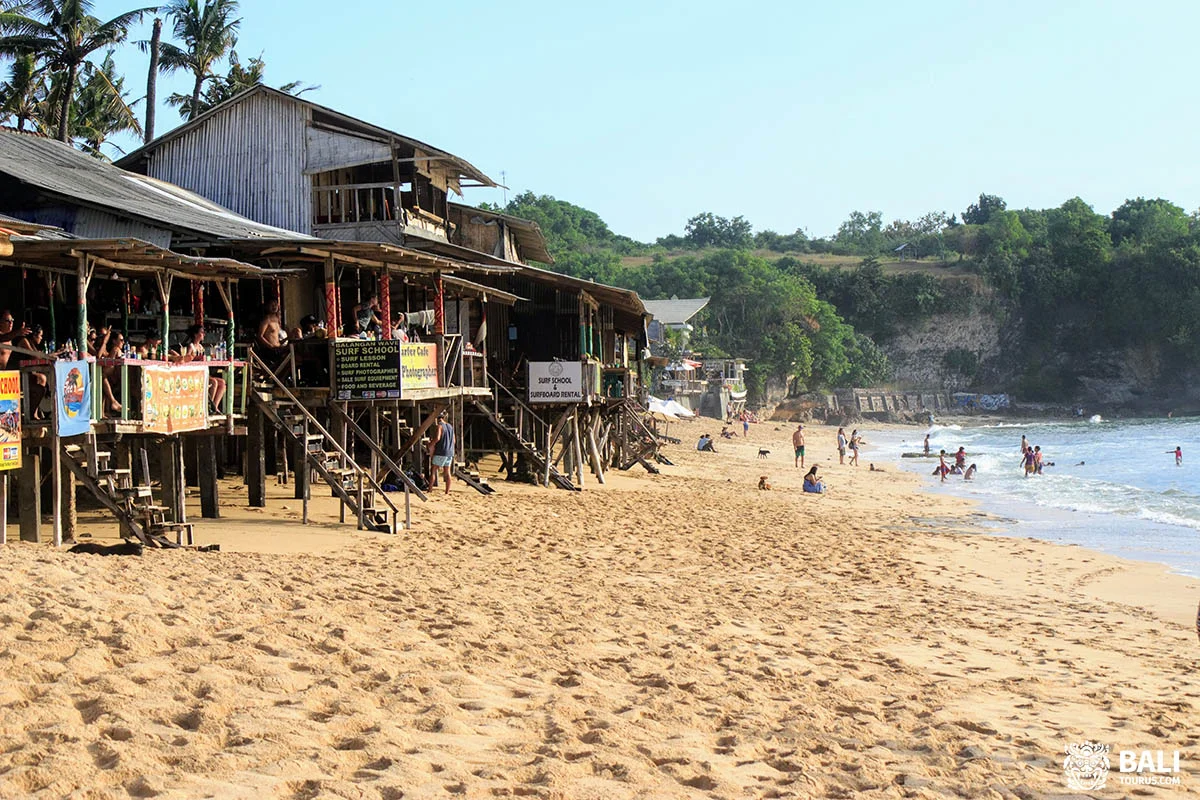
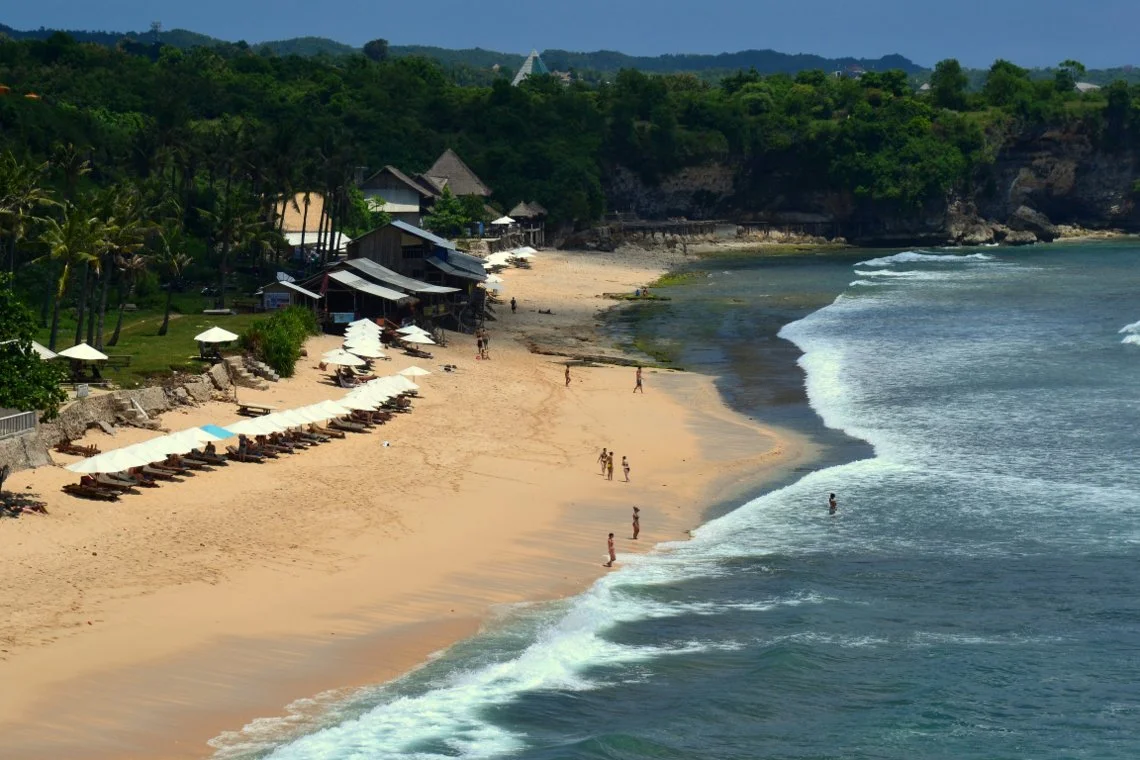
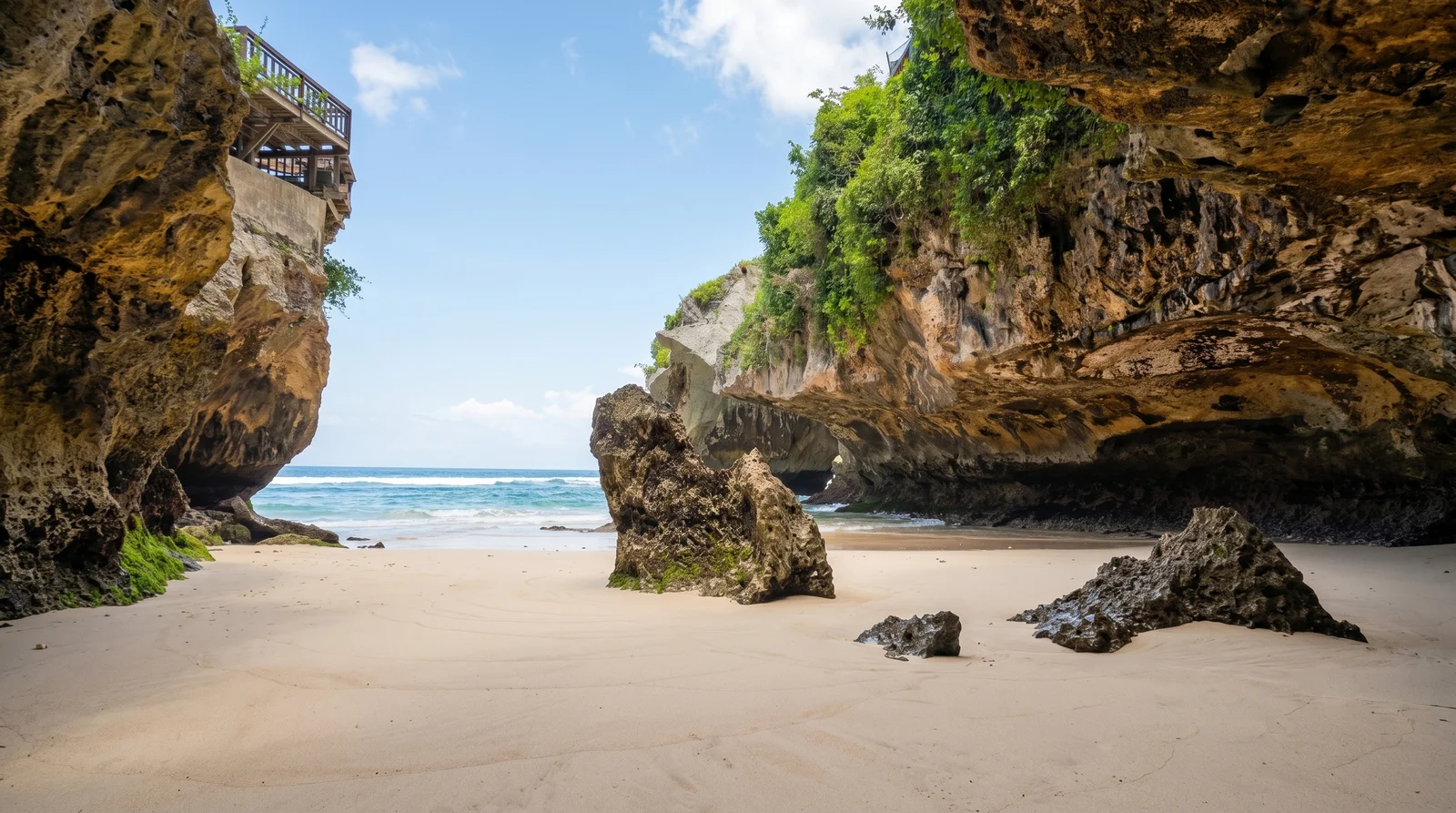
Suluban is known for Single Fin, a bar perched right on the cliff above the surf break — cheap by Bali standards and a magnet for surfers and travelers alike come evening, with a clear view of the last riders catching waves into the dusk. Balangan and Padang-Padang are quieter: sunset there is watched from loungers at beach warungs, without the music or the crowd.
The walk down to the water at all three runs down stairs cut into the cliff — 50 to 100 steps depending on the spot and the tide, so sunset footwear is worth choosing for grip, not flat beach flip-flops.
Jimbaran: sunset dinner with an ocean view
Jimbaran is a bay lined with fishing boats and a row of seafood restaurants set right on the sand, tables arranged so the sunset is visible from anywhere in the room. The format hasn't changed in decades: fresh grilled fish, candles pushed into the sand, and the horizon fading out over a glass of wine.
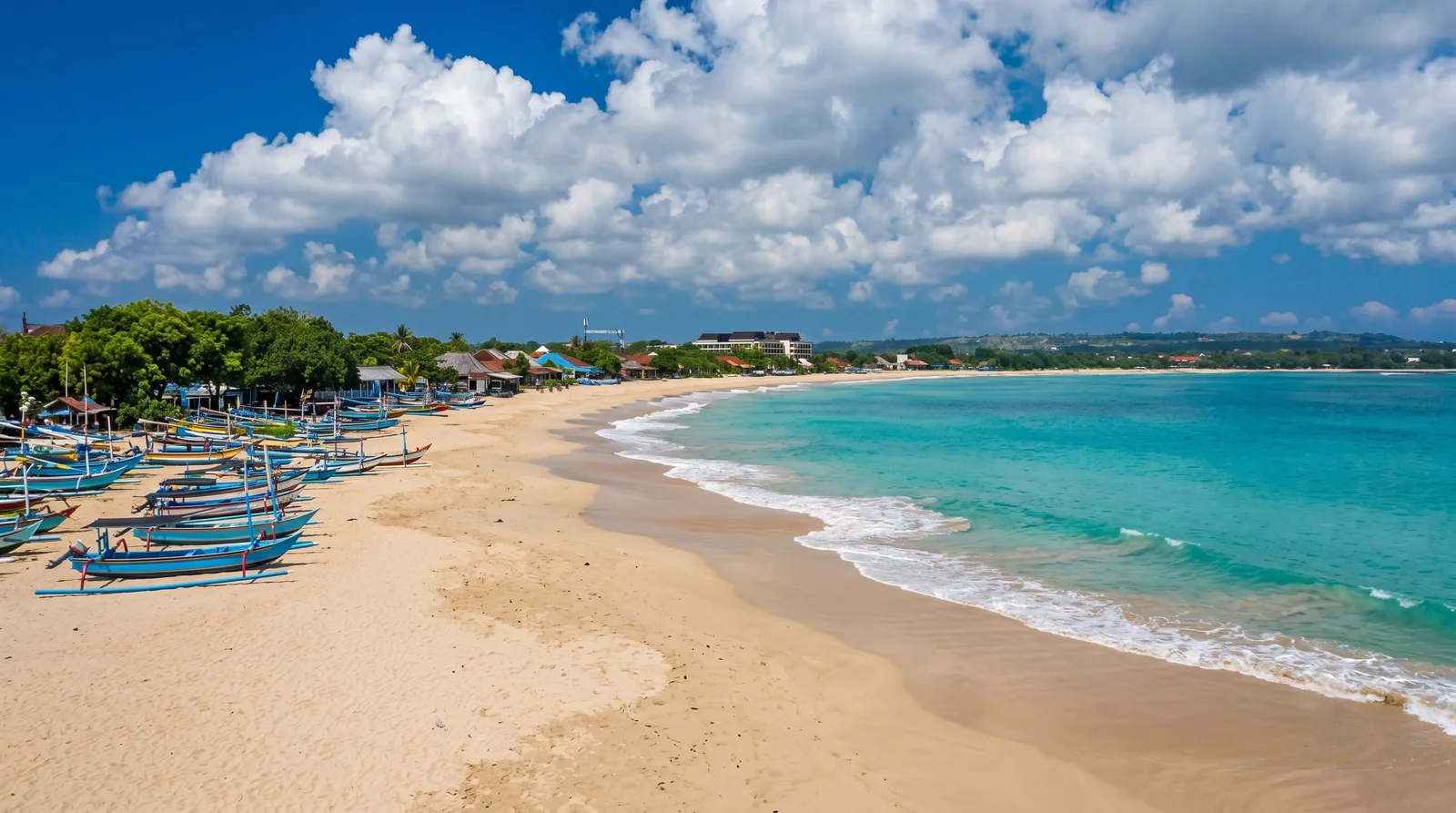
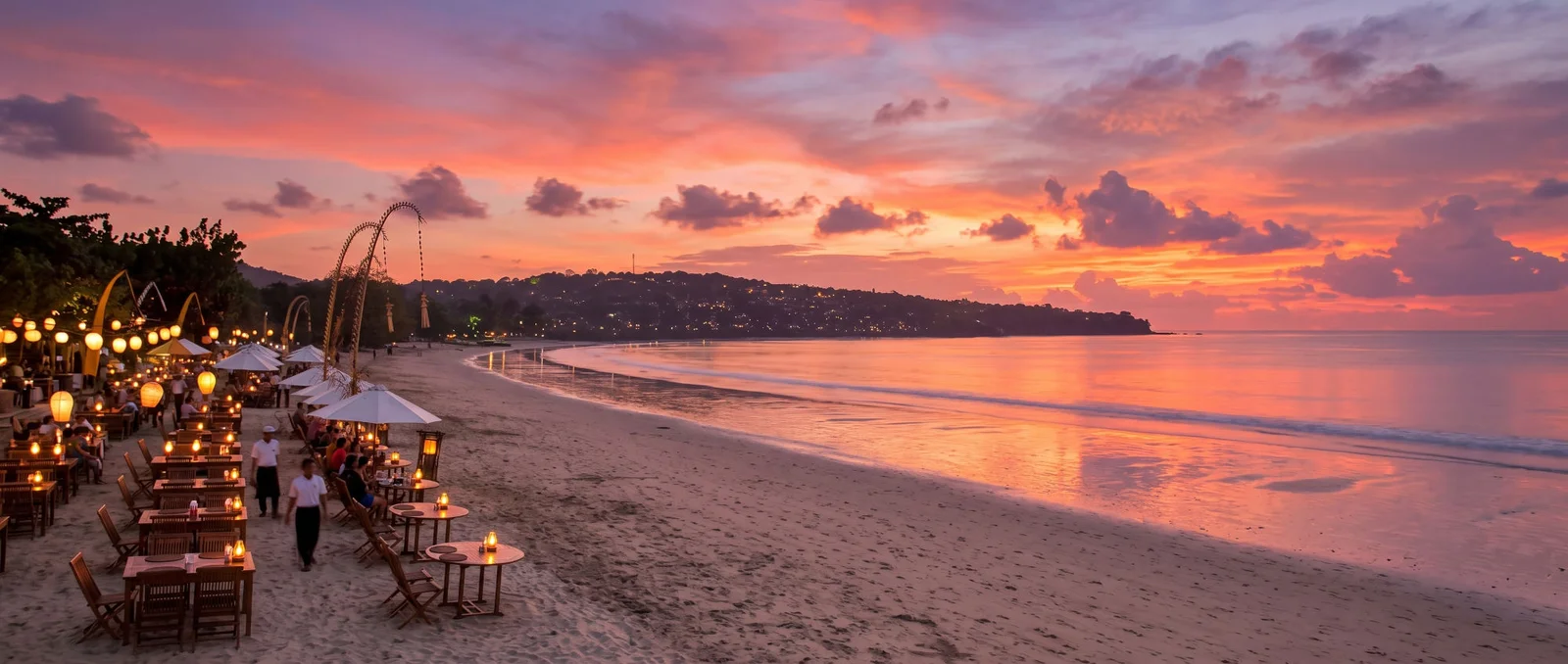
A front-row table is worth booking ahead — in high season, the seats closest to the water go hours before sunset. For anniversaries and other occasions worth marking, Jimbaran tends to be the first pick precisely for that combination: sunset, sea and dinner at the same table.
Dozens of restaurants line the bay, and nearly all of them run the same way: pick your fish and seafood raw off the display, then it's grilled in front of you over charcoal. The real difference between places is mostly how close the tables sit to the water, not the cooking itself.
Canggu and Echo Beach: sunset beach clubs for the party crowd
Canggu treats sunset differently from Uluwatu or Tanah Lot: here it's not something you sit quietly and watch, it's the opening act of the night — the beach clubs along Echo Beach turn the music on an hour before sunset and don't turn it off for a long time after. It's the youngest, loudest sunset scene on the island.
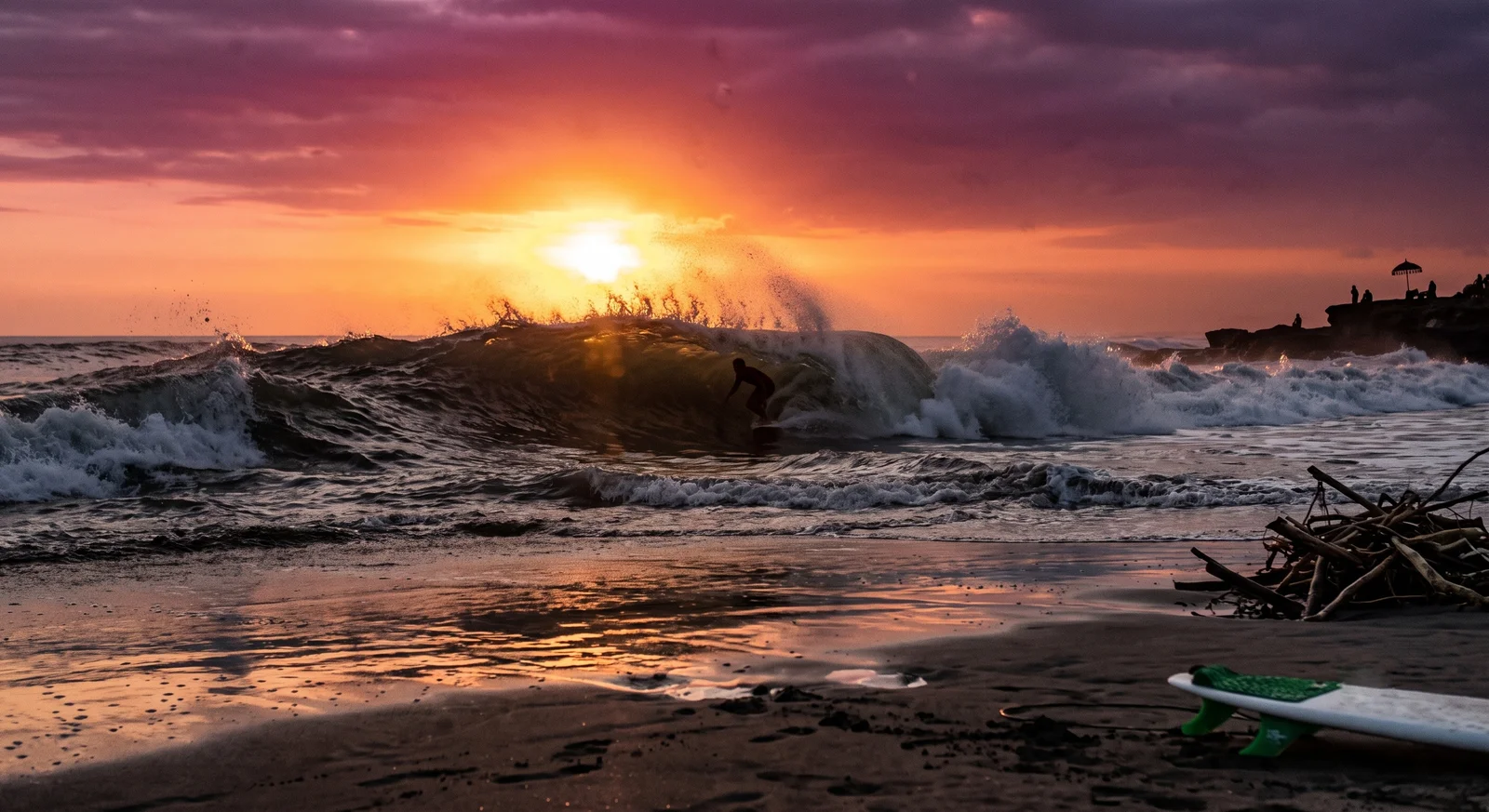
Surfers catching the last waves of the session share the sand with bar crowds holding cocktails. For anyone after a quiet sunset with no bass, Canggu is the worst fit on this list — for anyone who wants to fold sunset straight into the night out, it's the best.
Most of the venues along Echo Beach skip a cover charge — ordering one drink is usually enough to claim a spot on the cushions near the sand. By 7:00-7:30 PM, once the sun is down, the night here is just getting started, and a good part of the crowd stays well past that.
Campuhan Ridge Walk in Ubud: sunset away from the ocean
The Campuhan Ridge Walk is a two-kilometer path along a hilltop ridge above the Ayung River, and it's the one entry on this list where sunset means rice fields and jungle instead of ocean. The sun drops behind distant hills, lighting the valley below from underneath in gold.
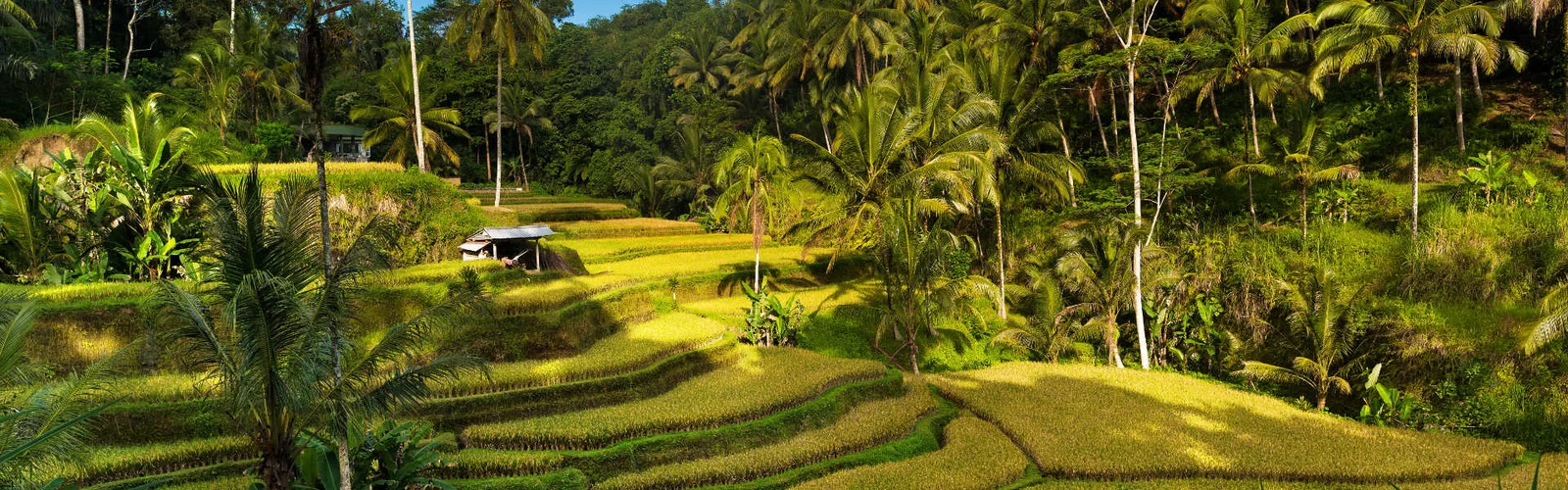
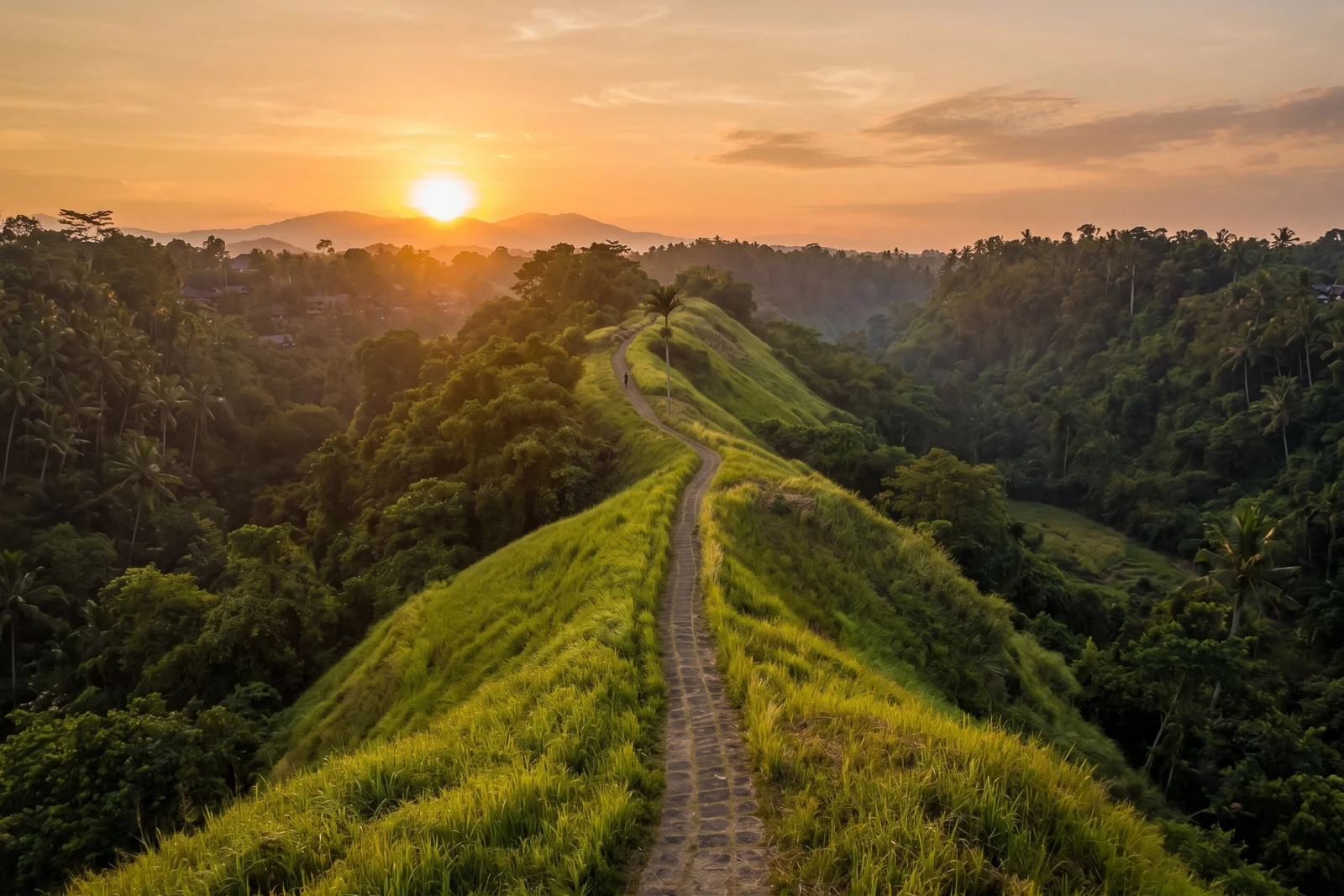
The path has no shade, so walking it at midday is best skipped — but the last hour before sunset is one of the most comfortable stretches of the day in Ubud: the heat drops off, the light softens, and the valley view opens up across the full 2 kilometers of the trail.
What time is sunset in Bali by month?
Sunset in Bali stays within a narrow band nearly all year — from 5:55 PM in late May-June to 6:45 PM in late January, a swing of under 50 minutes. Compared to higher latitudes that's a tiny range — evening plans barely need adjusting for the season.
| Month | Approximate sunset time |
|---|---|
| January | 6:35-6:45 PM |
| February-March | 6:20-6:35 PM |
| April-May | 6:05-6:20 PM |
| June-July | 5:55-6:05 PM |
| August-September | 6:00-6:10 PM |
| October-November | 6:15-6:30 PM |
| December | 6:25-6:40 PM |
For the exact time on a specific day, checking online before heading out is the easiest way to be sure — season barely moves the needle in Bali, but building in 30-40 minutes of buffer is still worth it, for parking, the walk to the viewpoint, and finding a spot.