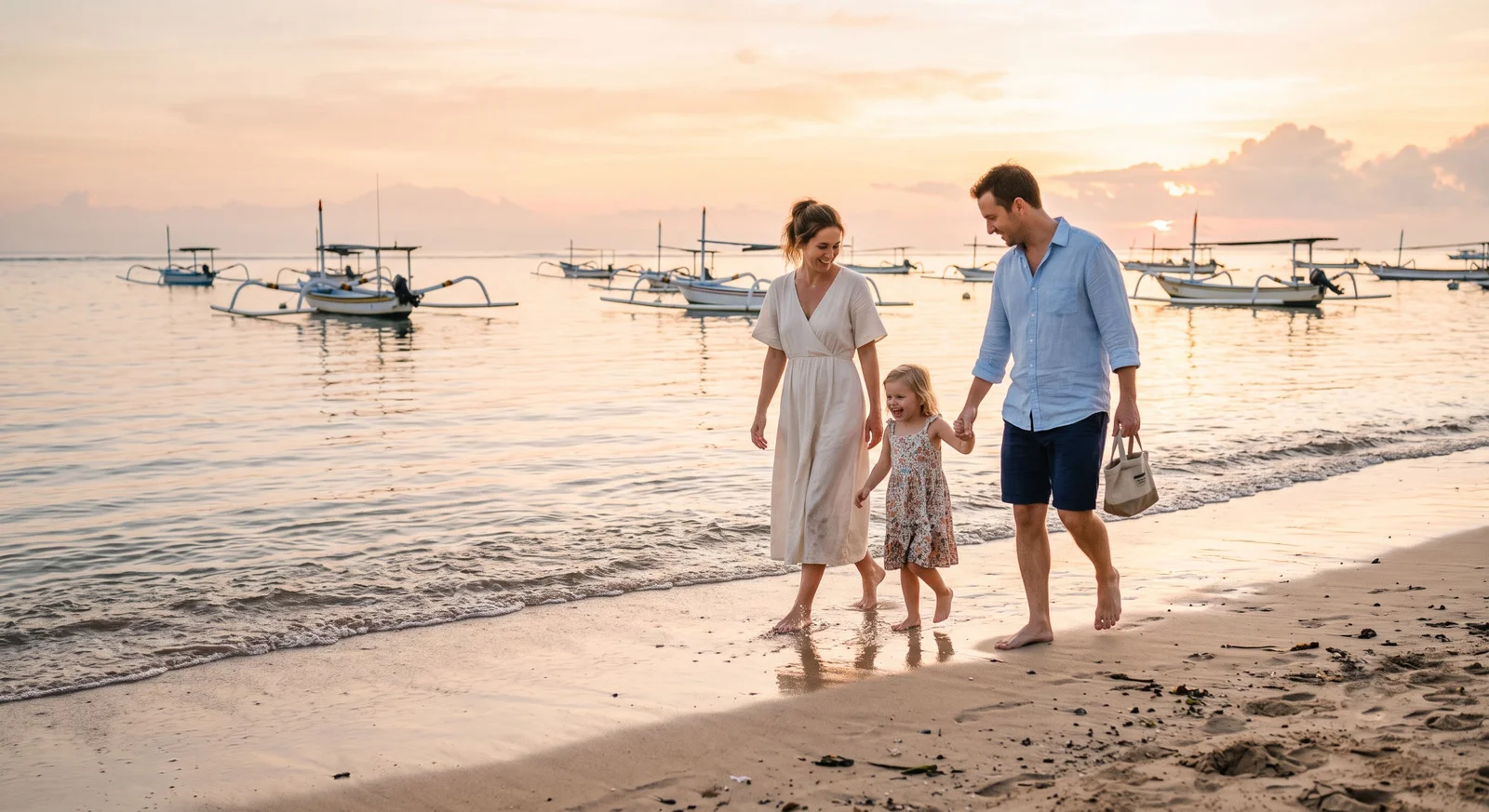
Bali beaches are not interchangeable: one is good for swimming with children, another is better for sunset drinks, and a third is a surf break where casual swimmers should stay close to shore.
So the question "what are the best beaches in Bali?" only makes sense when you define your goal: swimming, surf, scenery, family comfort, snorkeling, or a beach-hotel base.
This guide separates Bali's swim-friendly beaches, wave beaches, white-sand coves, black-sand coastlines, family options, and scenic cliff beaches. As a rule of thumb, Nusa Dua, Geger, Sanur, and parts of Jimbaran are easier for swimming; Bukit beaches are more scenic; Kuta, Canggu, and Uluwatu are more wave-oriented.
Which Bali beaches should you choose first?
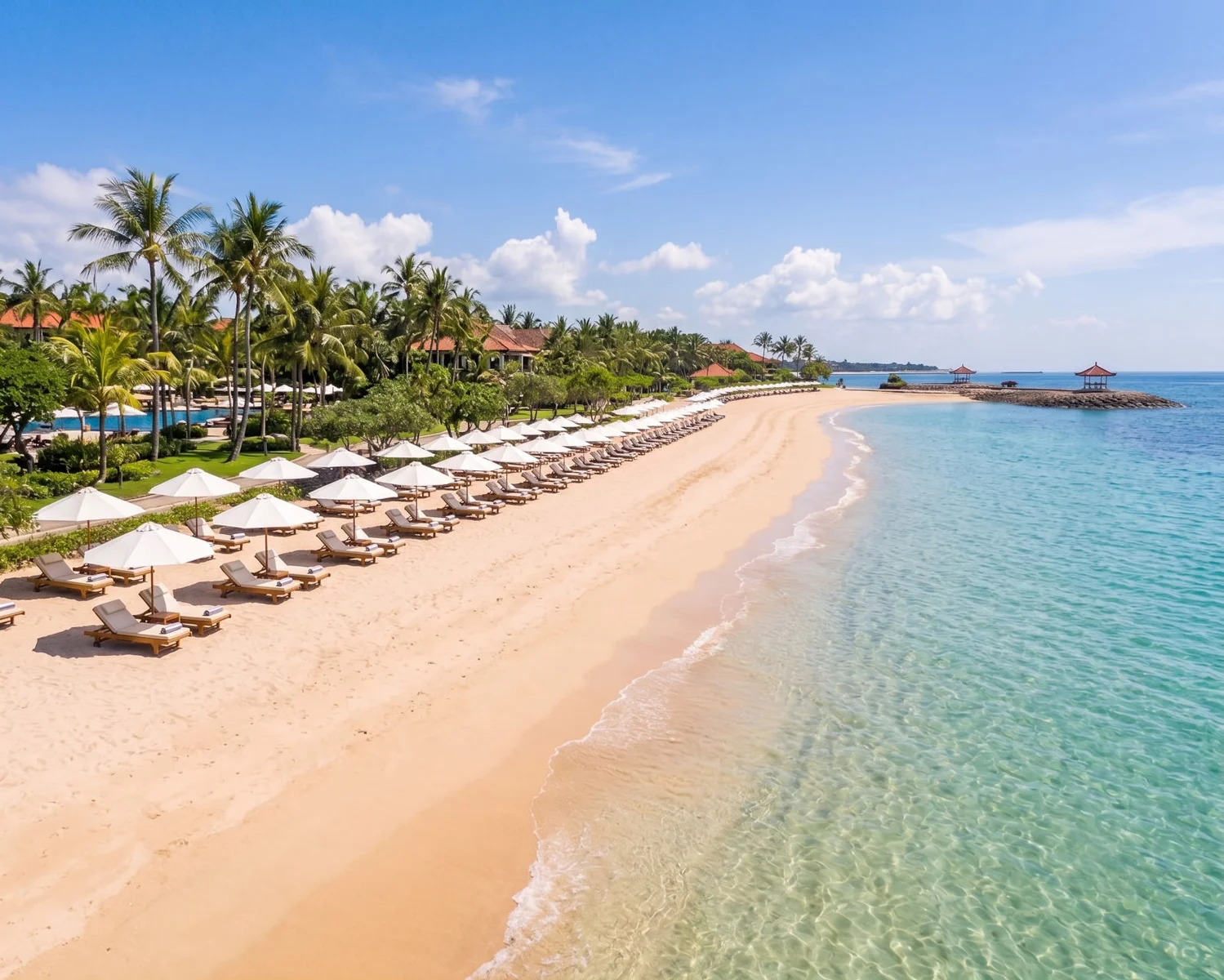
For a first trip, choose the beach by purpose rather than by popularity. Nusa Dua, Geger, Sanur, and Jimbaran are better for swimming; Melasti, Padang-Padang, Balangan, and Suluban are stronger for cliffs and photos; Kuta, Canggu, and Uluwatu are better for surf culture.
Quick selection:
- Swimming: Nusa Dua, Geger, Sanur, Jimbaran.
- Children: Sanur, Nusa Dua, Geger, calmer parts of Jimbaran.
- Cliffs and photos: Melasti, Padang-Padang, Balangan, Suluban.
- Surf: Kuta for beginners, Canggu and Uluwatu for stronger waves.
- Snorkeling: Amed, Blue Lagoon Padangbai, Menjangan, Nusa Penida.
- Black sand: Lovina, Keramas, parts of the north and east coast.
Where are the best Bali beaches for swimming without strong waves?
The easiest Bali beaches for swimming are usually protected by a reef, bay shape, or calmer seabed. The ocean never gives a full guarantee, but Nusa Dua, Geger, Sanur, and Jimbaran are generally safer choices for relaxed swimming than Kuta, Canggu, or reef breaks around Uluwatu.
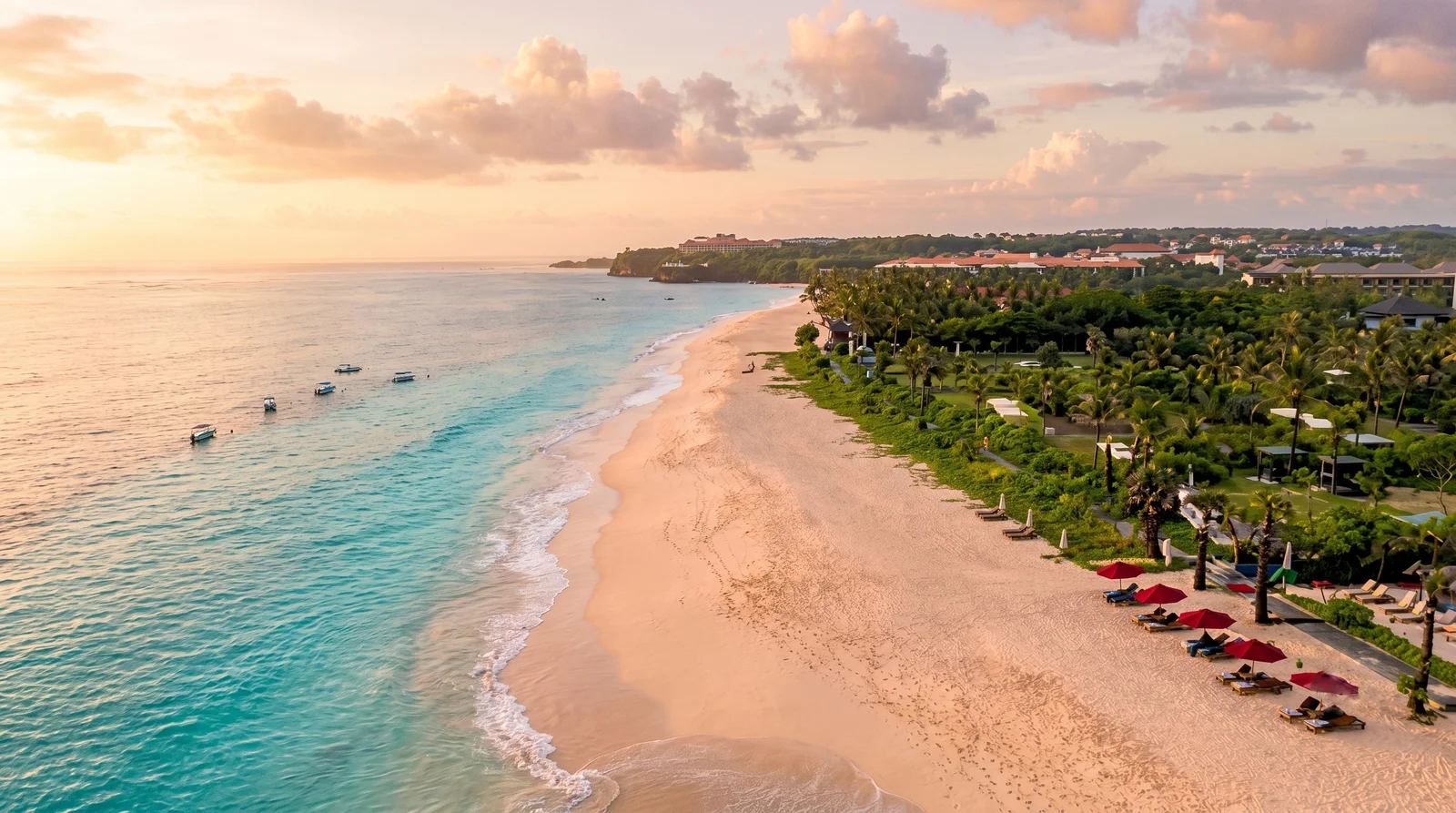
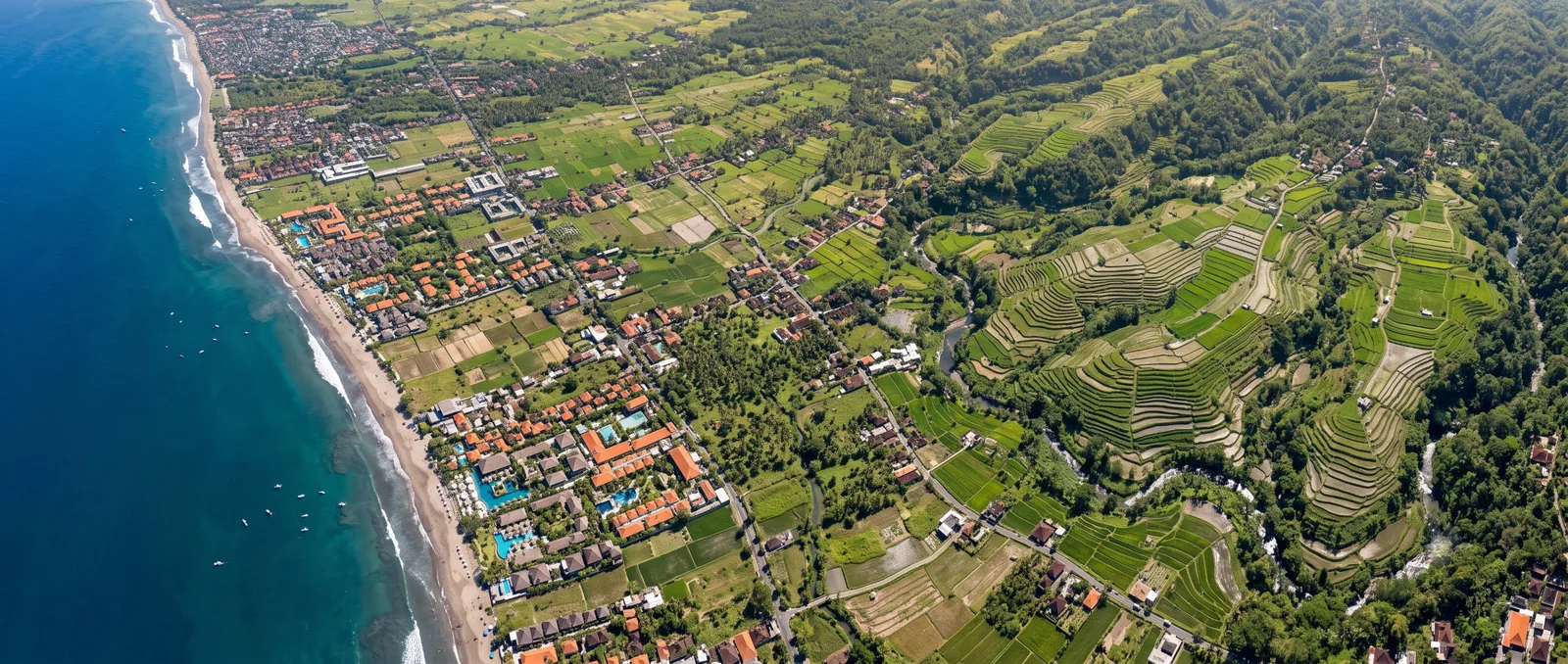
Nusa Dua and Geger are the clearest beach-hotel choices: cleaner resort infrastructure, soft sand, and a more predictable beach routine. Sanur is calm, walkable, and practical for families. Jimbaran is wide, sandy, and relaxed, especially toward sunset.
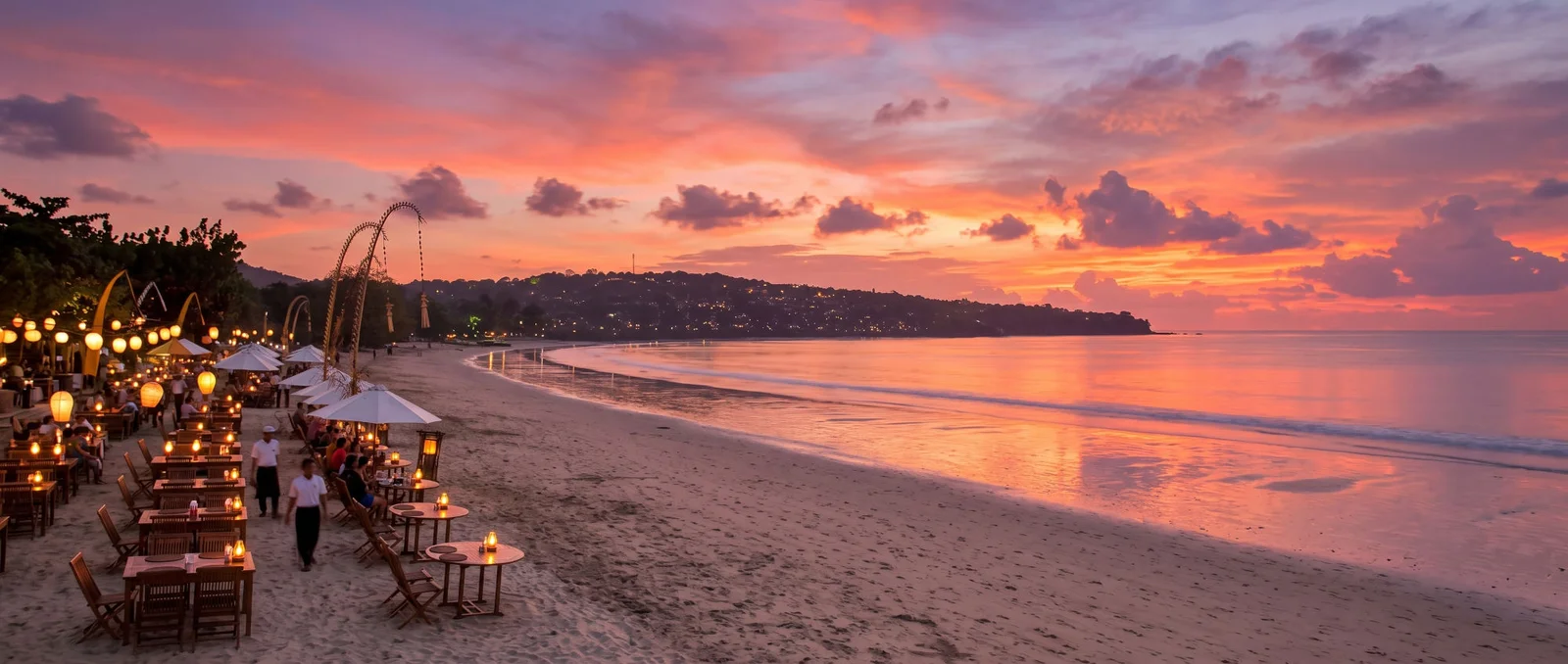
Always check flags, currents, and tide conditions. Bali is an ocean island, not a lake resort, and even calm-looking beaches can change by season and tide.
Melasti, Padang-Padang, and Balangan: when should you go to Bukit?
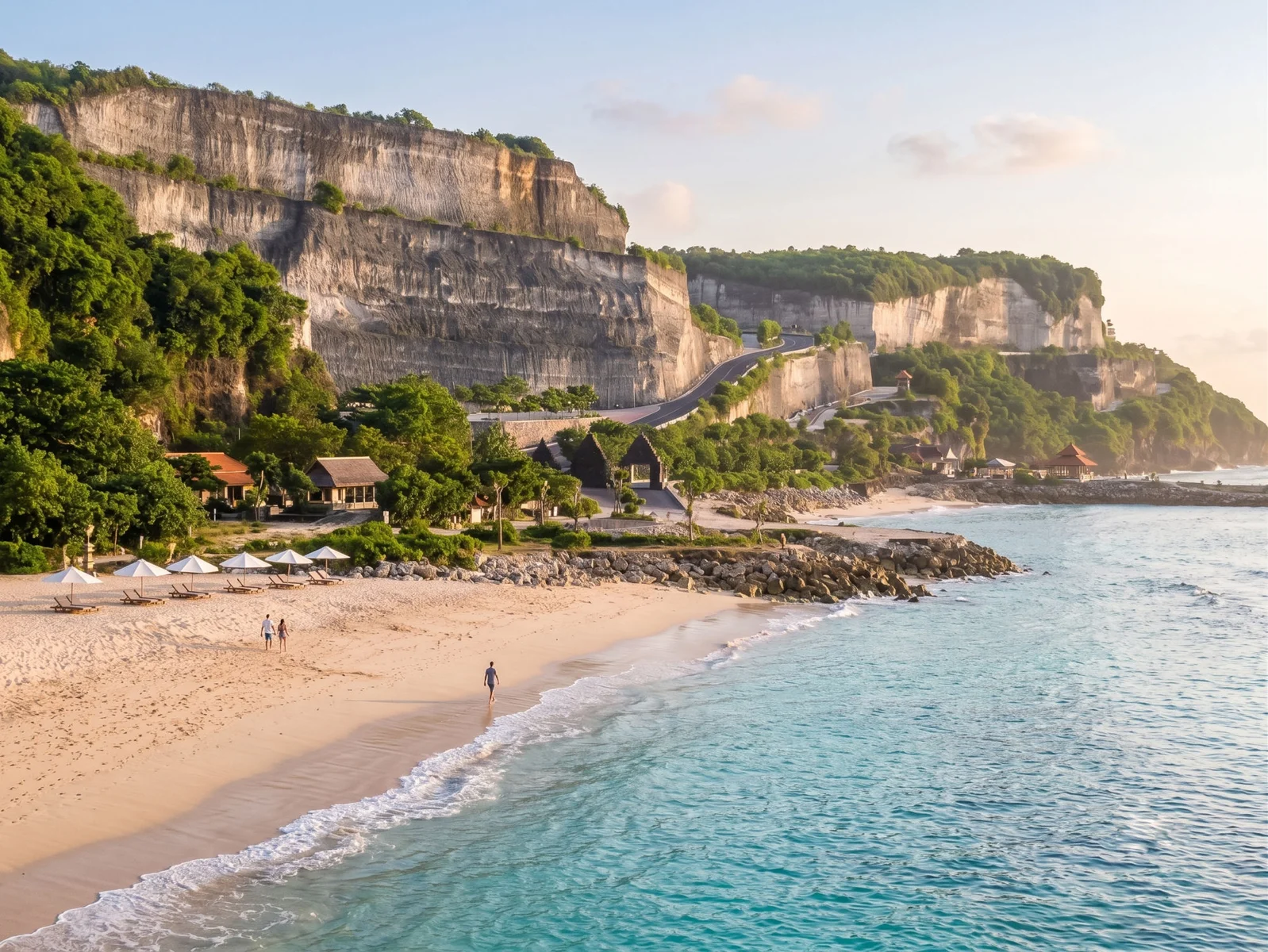
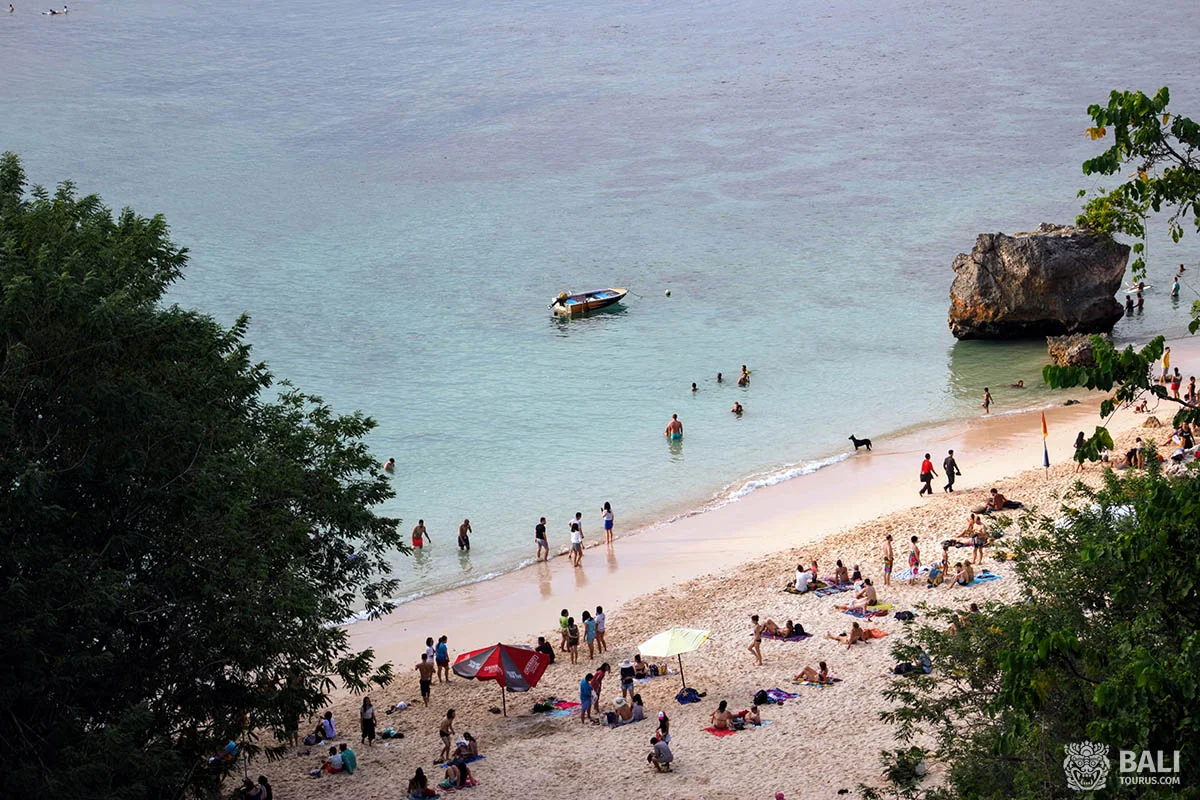
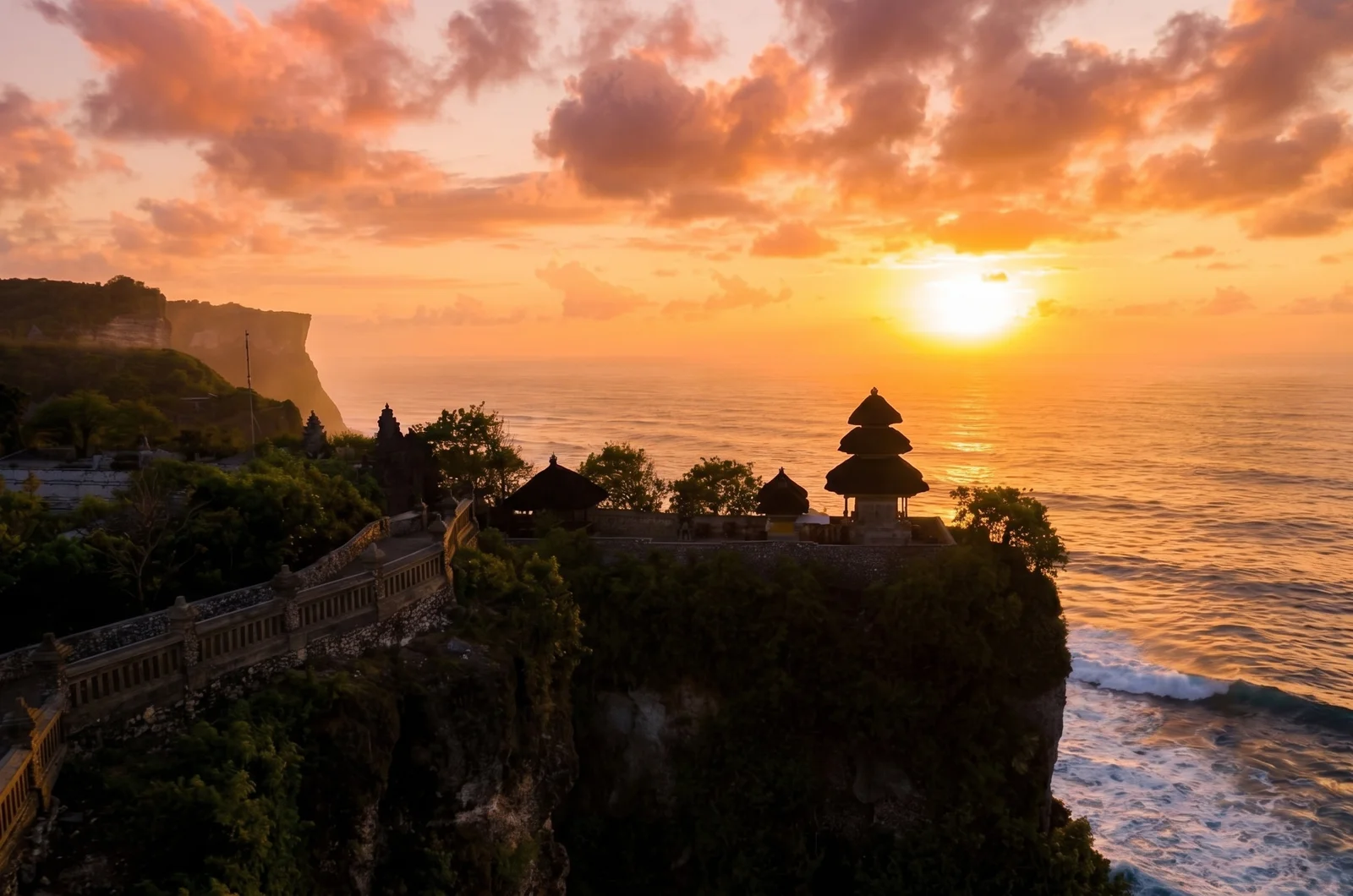
Bukit beaches are some of Bali's most photogenic beaches, but not all of them are equally easy for swimming. Melasti is simpler for scenery and access, Padang-Padang is compact and popular, Balangan is strong at sunset, and Suluban is more of a surf-and-viewpoint beach than a calm swimming stop.
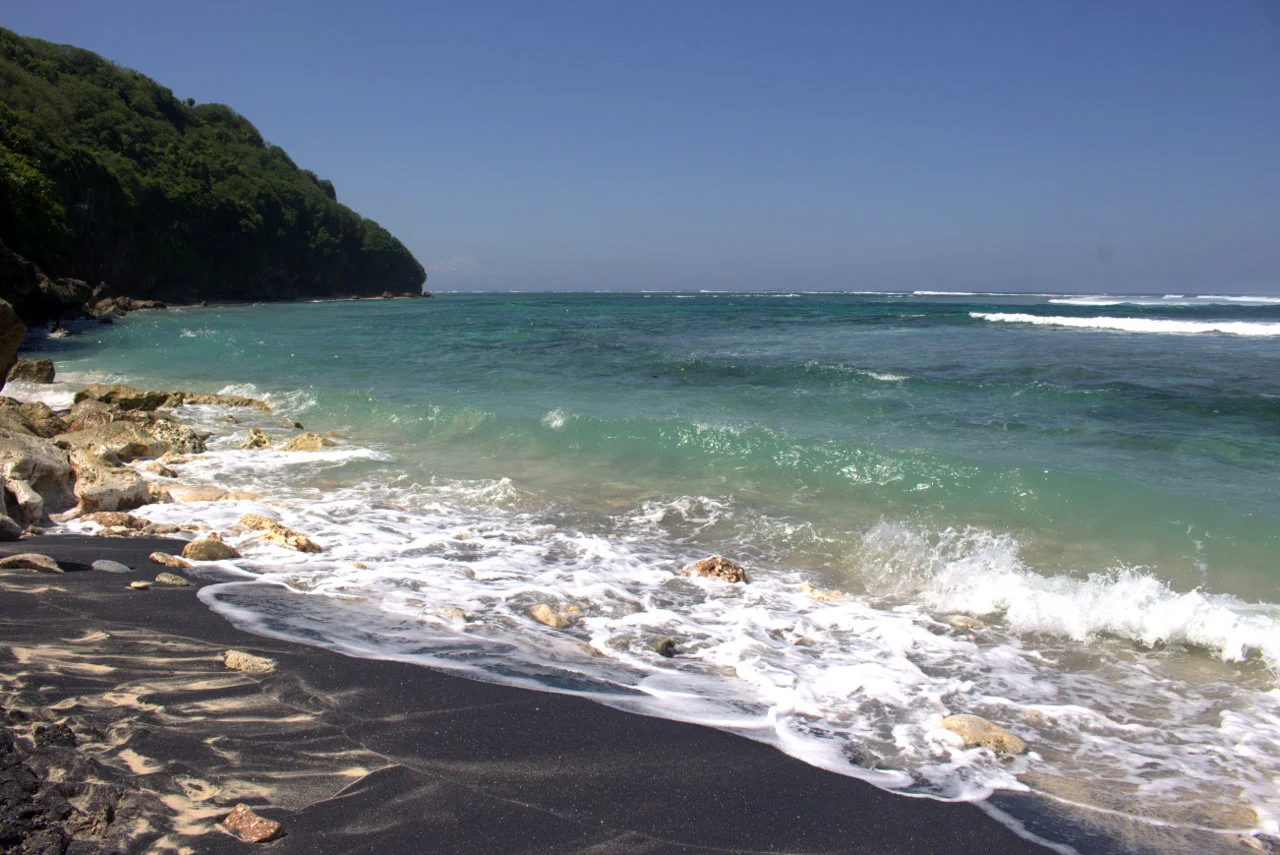
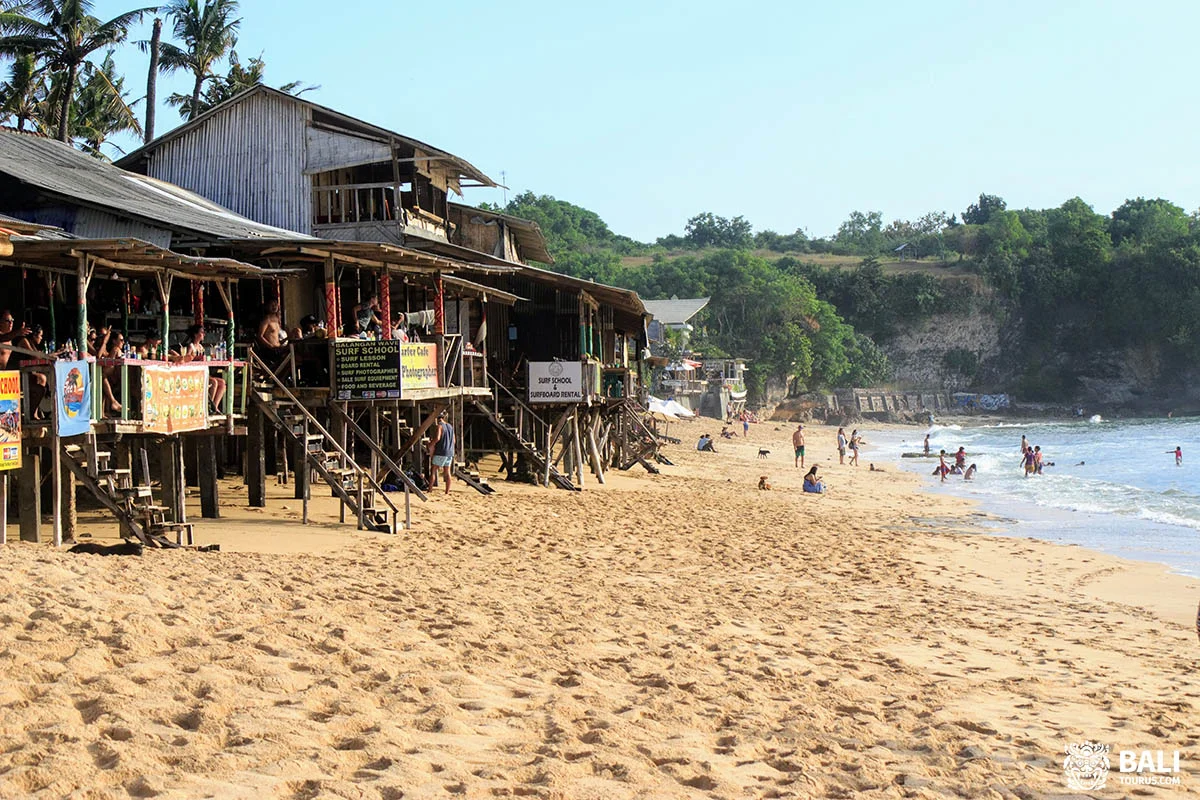
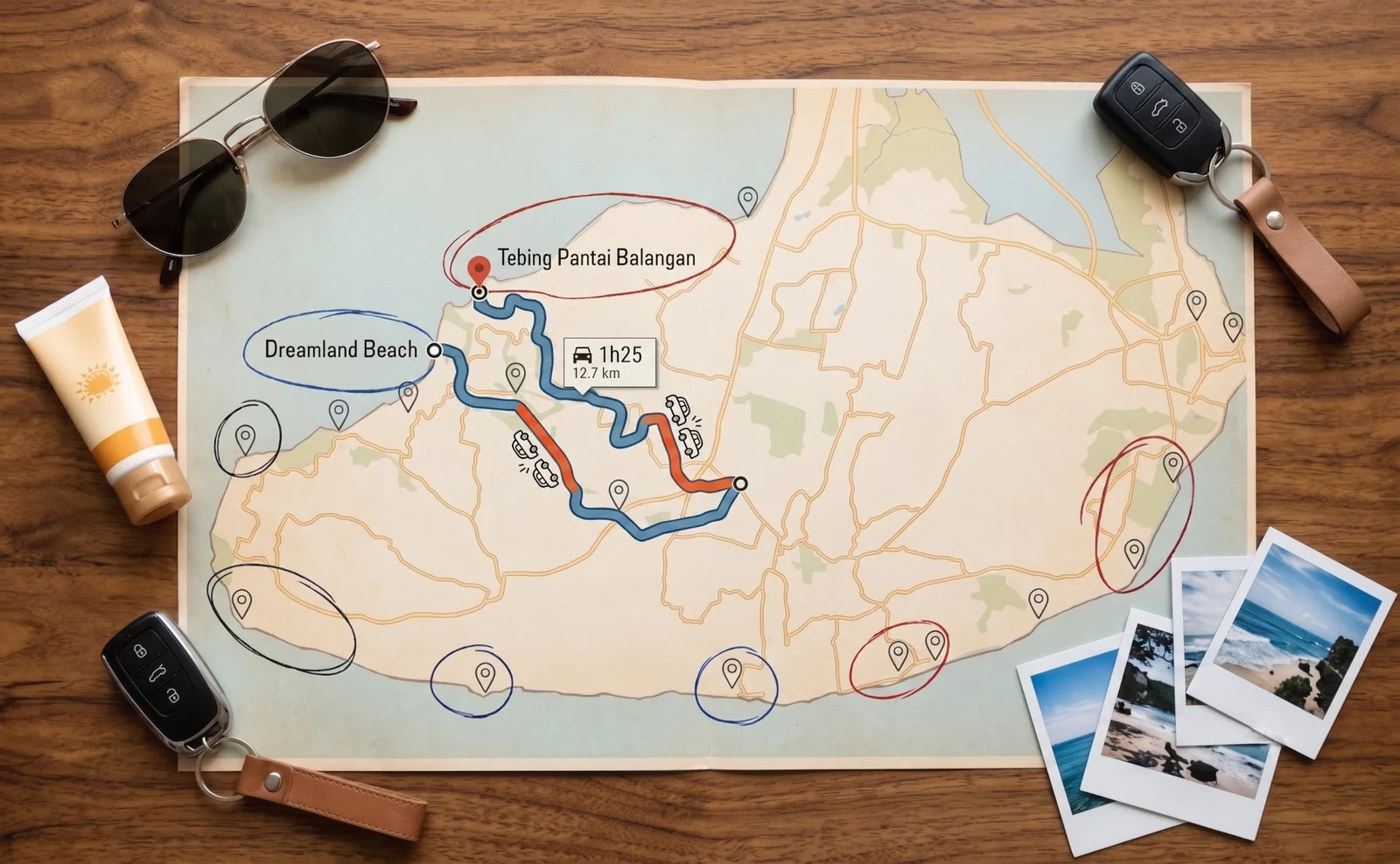
Tides matter on the Bukit Peninsula. At low tide, reef plates and rocks can appear; at high tide, the beach may become narrower. Before going to Melasti, Padang-Padang, Suluban, or Balangan, check both the map and the tide window.
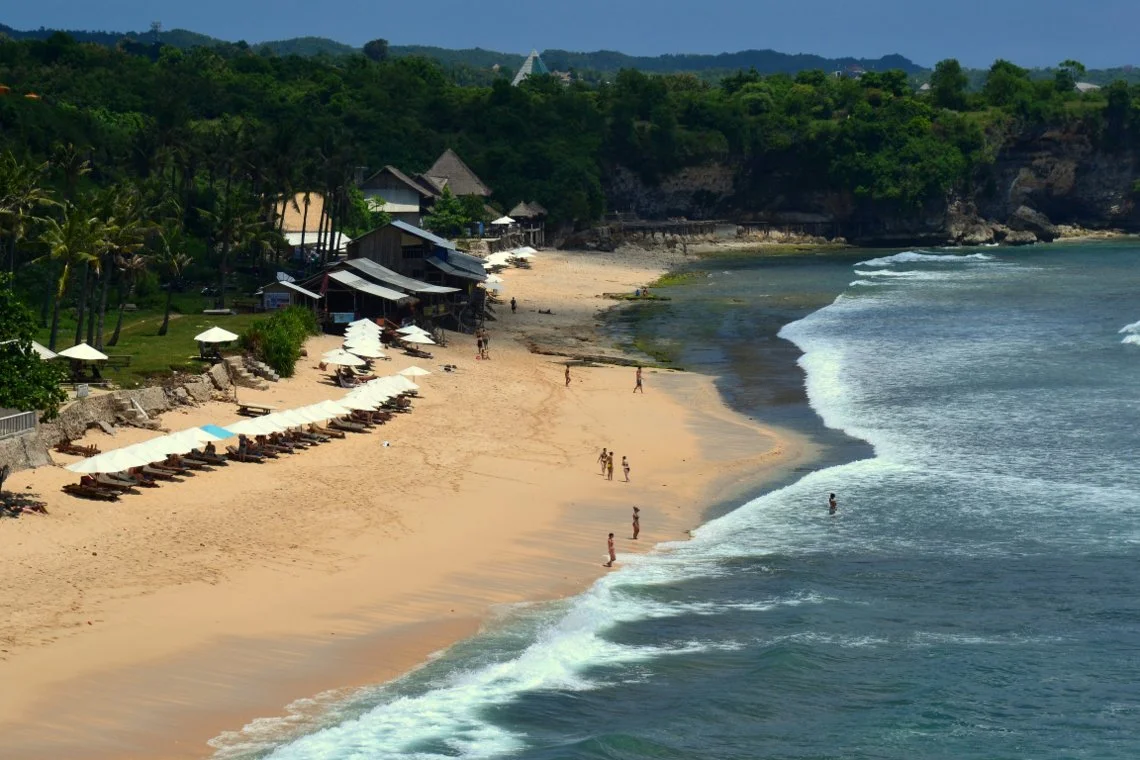
Which Bali beaches are for surfing, not casual swimming?
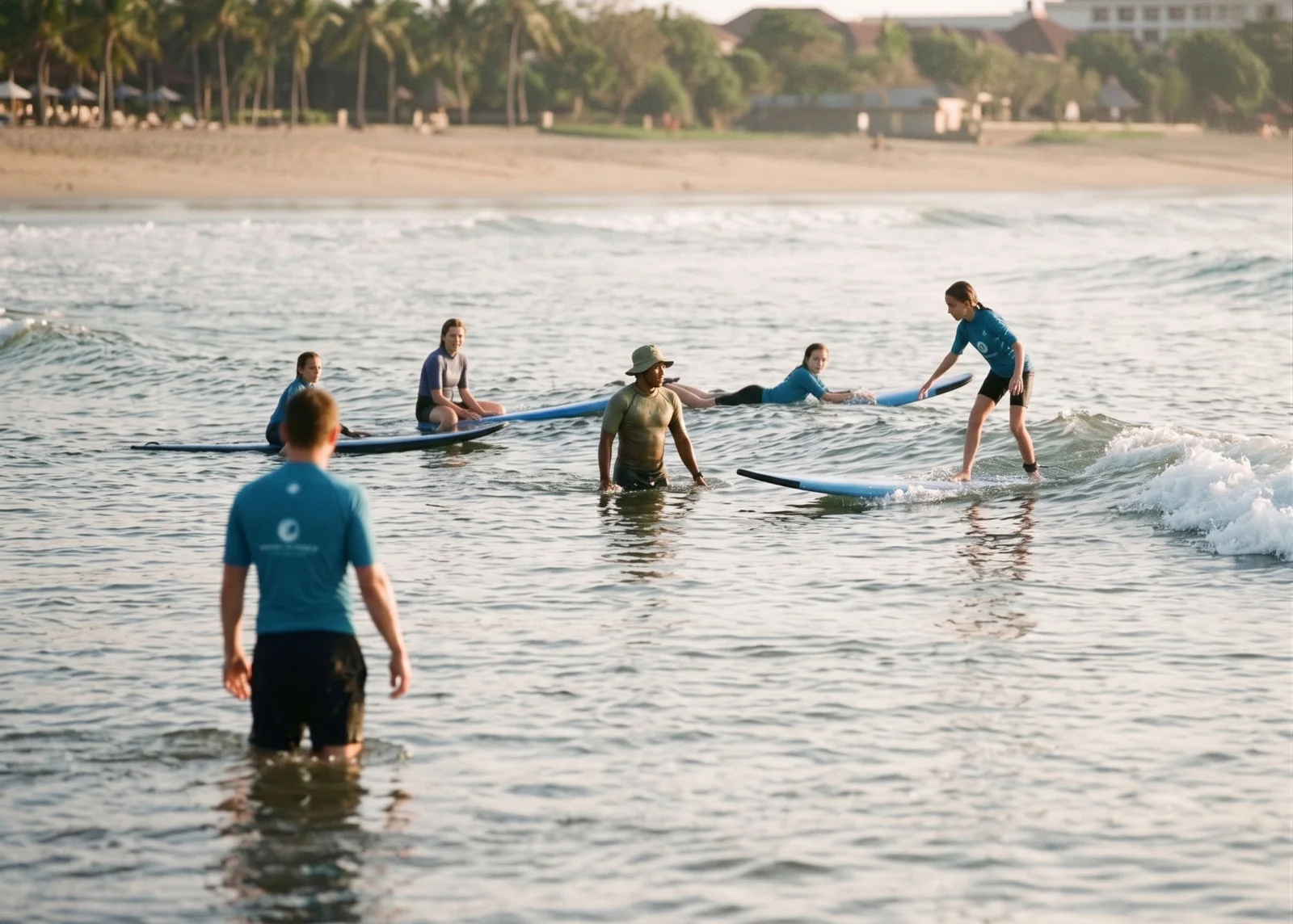
If a Bali beach is famous for surfing, that does not automatically make it good for swimming. Kuta is suitable for first lessons, Canggu and Uluwatu have stronger wave energy, and many Bukit reef breaks require awareness of currents, rocks, tide, and entry points.
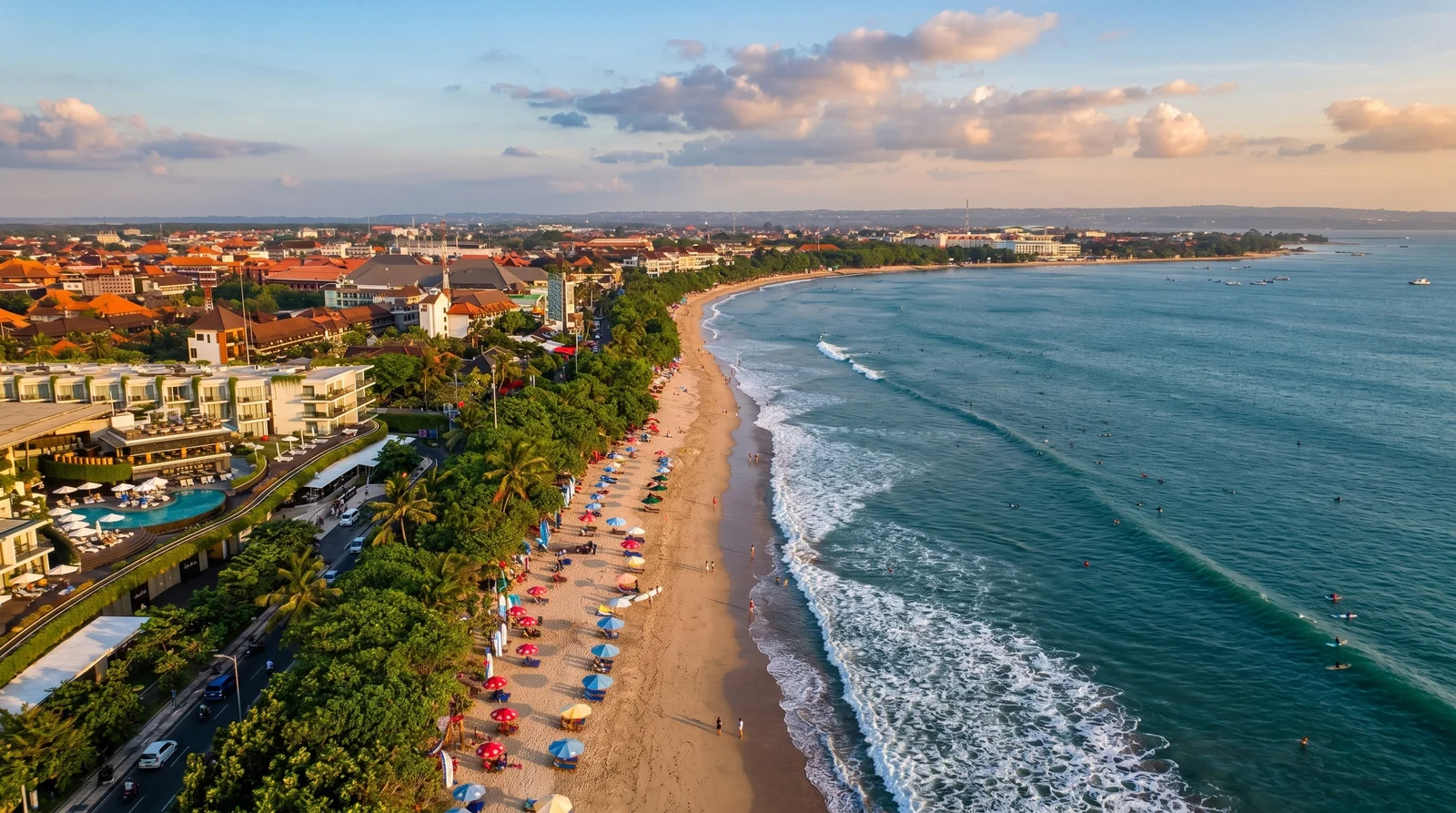
Kuta is the easiest surf-school beach thanks to its sandy bottom and wide shoreline, but it can be busy and wavy for families. Canggu, Batu Bolong, Berawa, and Echo Beach are more about surf culture, cafes, and sunsets than calm swimming.
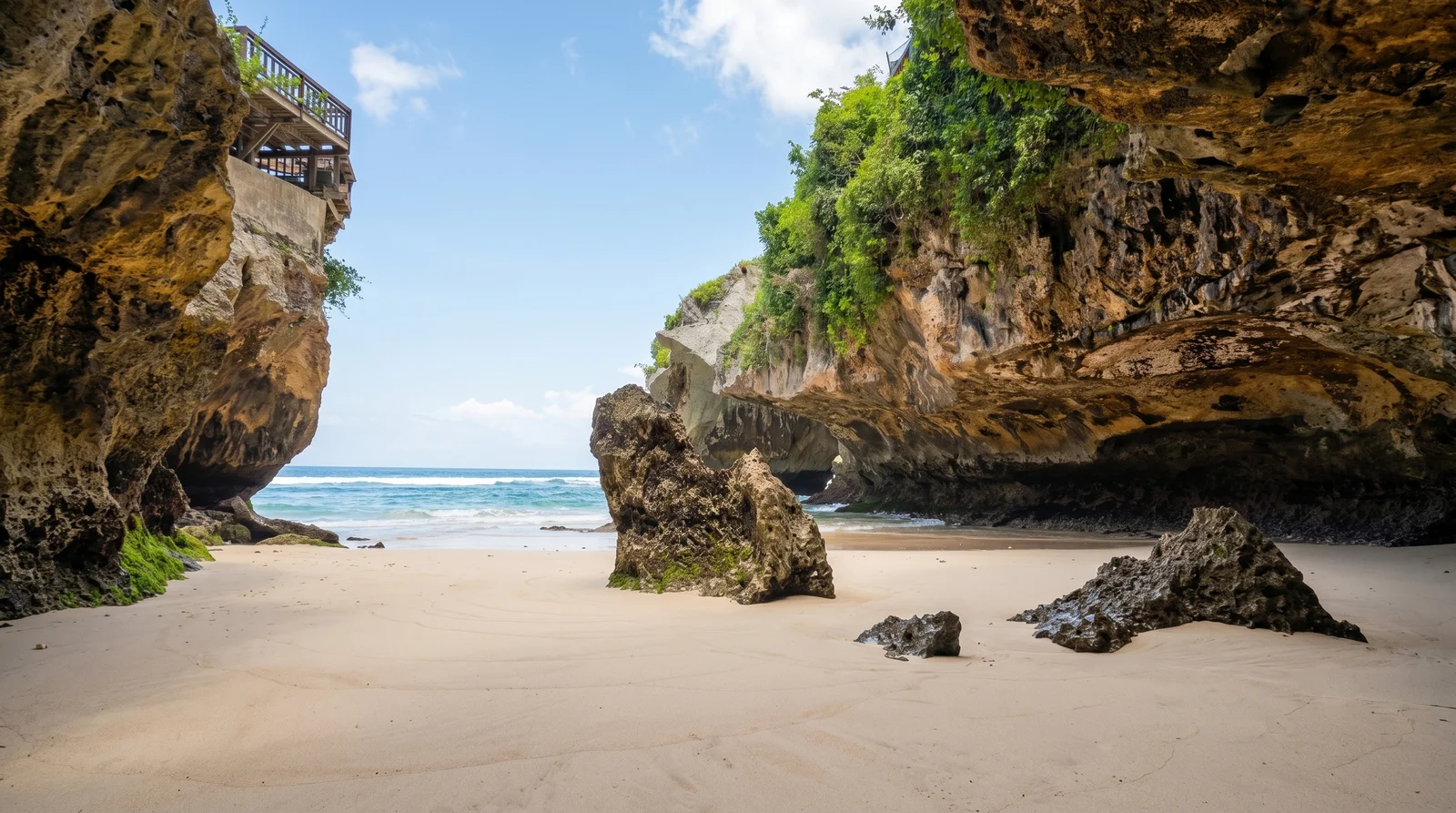
Around Uluwatu and Suluban, access can involve stairs, caves, reef shelves, and strong water movement. These beaches are beautiful, but they reward patience and caution.
Which Bali beaches are best with children?
For families, the best Bali beach is not only about small waves. Shade, toilets, showers, nearby food, short access, and the ability to leave quickly matter just as much. That is why Sanur, Nusa Dua, Geger, and Jimbaran usually work better than remote cliff beaches with steep steps.
Family-friendly scenarios:
- Toddlers: Sanur or Nusa Dua for easier walking and infrastructure.
- School-age children: Geger, Jimbaran, calm sections of Nusa Dua.
- Short scenic stop: Melasti or Padang-Padang if the heat and steps are manageable.
- Not ideal for small children: Suluban, many Canggu beaches, Uluwatu reef breaks.
Even on calmer beaches, do not leave children alone near the water. Bali's ocean is beautiful, but it is not a controlled swimming pool.
Where can you find white sand, black sand, and volcanic beaches in Bali?
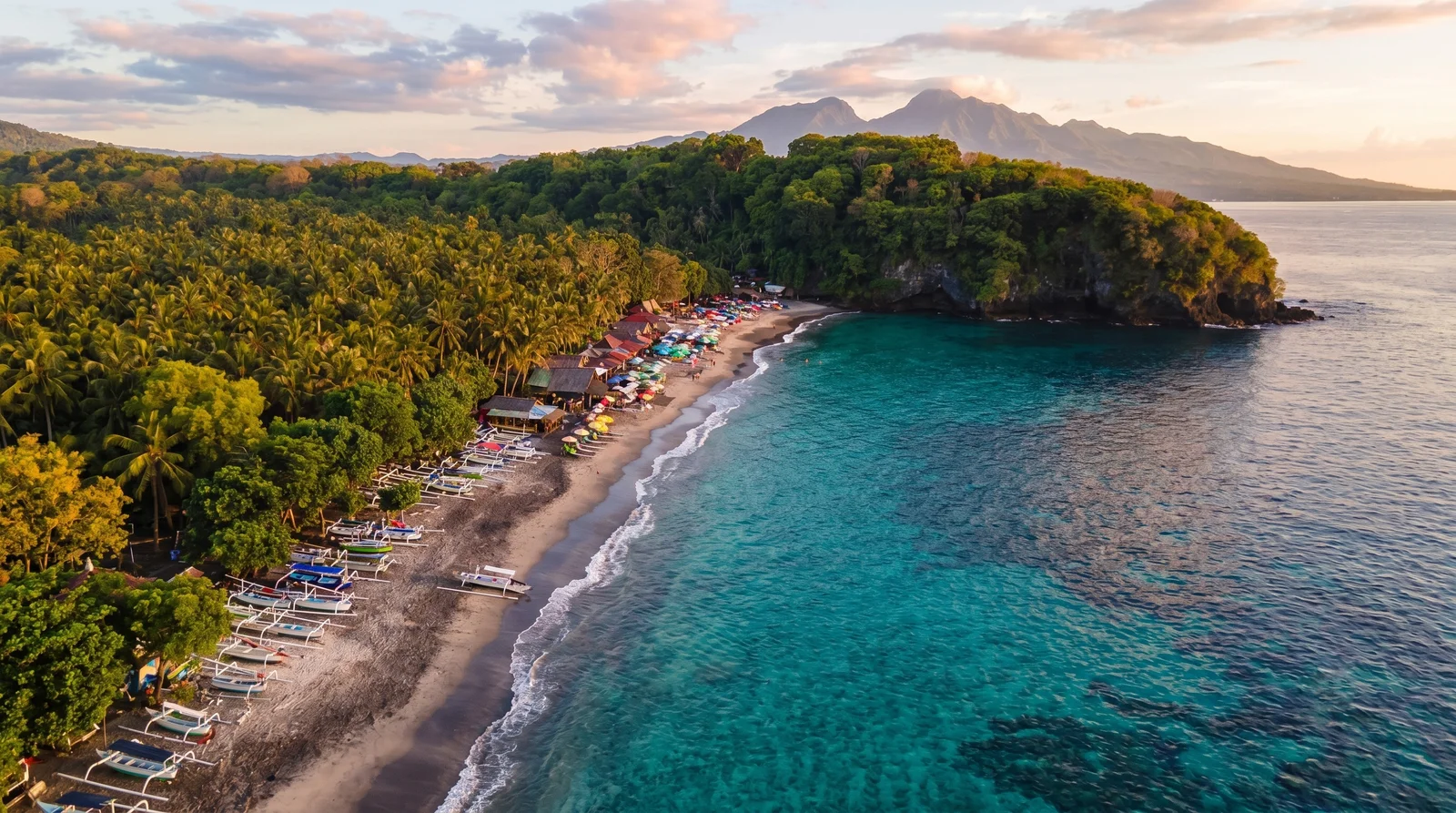
White-sand beaches are mostly associated with the south and east: Nusa Dua, Geger, Melasti, Padang-Padang, and Virgin Beach. Black volcanic sand is more common on the north and east coasts, including Lovina, Keramas, and parts of Amed and Tulamben.

Virgin Beach in East Bali feels more like a tucked-away bay than a resort strip. Lovina is a very different experience: black sand, quieter north coast, sunrise dolphin trips, and a much longer drive from the south.
If you want postcard-style tropical beaches, also consider nearby islands such as Nusa Penida, Nusa Lembongan, and the Gili Islands. Bali's beach strength is variety: cliffs, surf, sunset, volcanic sand, reefs, and local coastal culture.
How should you read a Bali beach map?
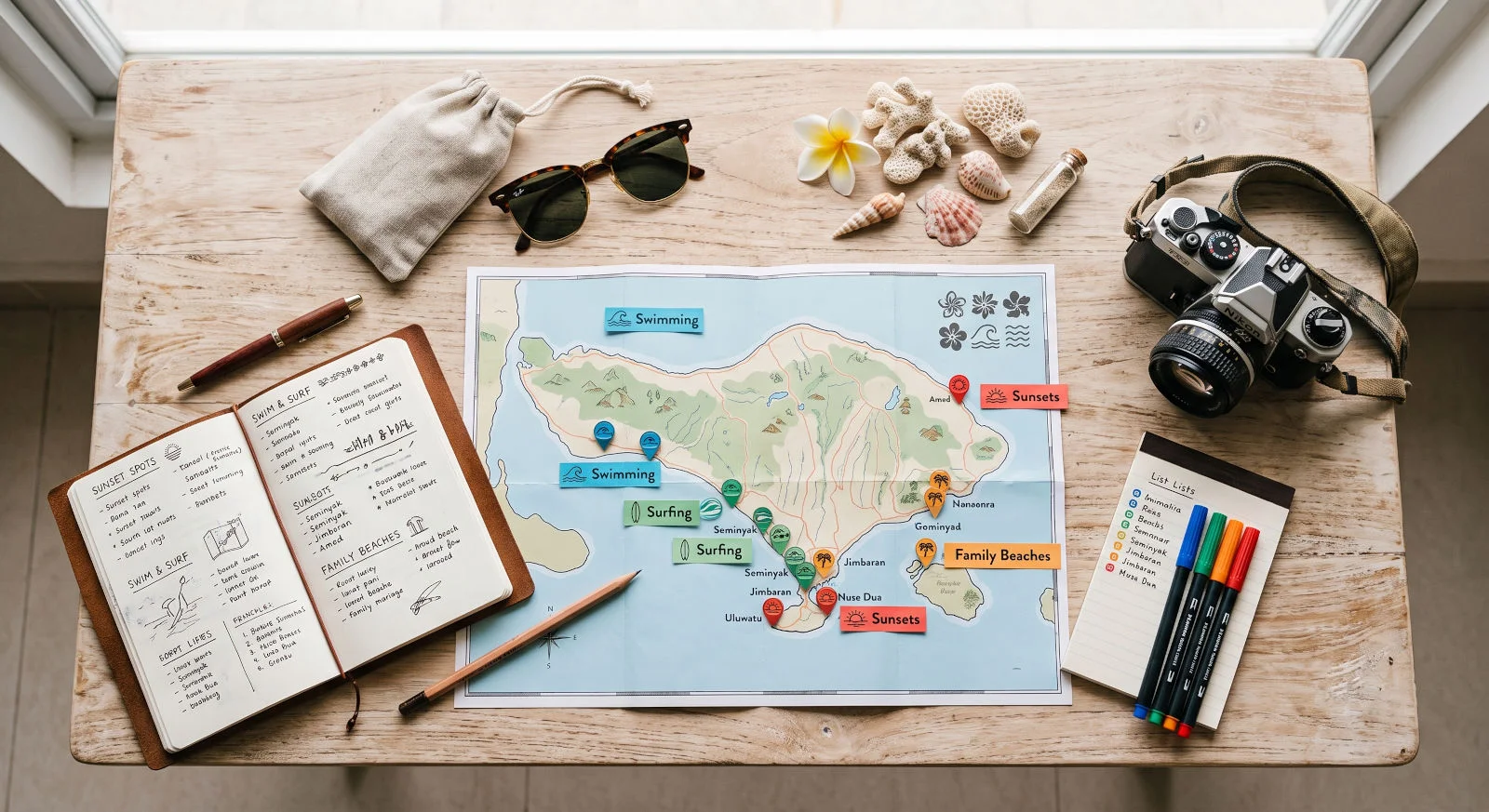
On the map, Bali beaches look close together, but traffic between Canggu, Nusa Dua, Uluwatu, Sanur, and Ubud can turn a beach day into a transfer day. Choose beaches by where you stay, then plan dedicated beach routes instead of trying to cover the whole coastline at once.
Simple logic:
- Staying in Nusa Dua: swim locally, then visit Melasti and Uluwatu.
- Staying in Sanur: use the beach for calm mornings and east-coast access.
- Staying in Kuta or Seminyak: enjoy sunsets nearby, but travel for calmer swimming.
- Staying in Canggu: expect cafes, surf, and sunsets more than quiet sea.
- Staying in Ubud: make beach time a separate day trip.
Bali beaches work best as clusters: Nusa Dua + Geger, Melasti + Padang-Padang + Uluwatu, Sanur + East Bali, Jimbaran + sunset. This gives you a more useful trip than collecting random pins from a list.