

Bali with Kids: Where to Stay, Which Beaches to Choose, and What to See

Bali with Kids: Where to Stay, Which Beaches to Choose, and What to See

Bali works well for a family trip if you plan calmly and pick a practical base — Sanur, Nusa Dua, Geger, and Jimbaran, with Ubud added as its own stage.

Happy family with children relaxing by the resort pool in Bali

Is Bali good with kids?

Bali is worth doing with kids if you plan calmly — not stacking a beach, waterfall, temple, and a long transfer into the same day just to check every box.

Bali works well if you want warm weather, a villa with a pool, a safari park and bird park, rice terraces, and a relaxed beach routine without rushing.

It gets harder if you expect a closed resort with perfect calm sea every day — tides and season shift the water, and transfers run longer than they look.

Bali areas from southern beaches to green Ubud

Where should you stay in Bali with children?

Sanur, Nusa Dua, Geger, and Jimbaran are the easiest family bases in Bali — calmer on infrastructure and beach access than Canggu, Kuta, or Uluwatu.

Geger offers a resort-style setup with beach infrastructure and predictable swimming, a practical choice for a family base by the sea.

Jimbaran gives a wide shoreline, sunsets, and easy airport access — a good fit for either the first or the last night of the trip.

Ubud works better as its own 2-3 night stage — greenery, rice terraces, craft villages, and easier family routes away from the coast.

Bali beach selection concept by swimming, waves, and family travel

Which Bali beaches are best with kids?

The best Bali beaches with kids are not the most dramatic ones in photos — they are the easiest on water, shade, showers, and access: Sanur, Nusa Dua, Geger, calmer Jimbaran.

Good picks: Sanur for walks and sunrise, Nusa Dua's resort hotels, Geger's pleasant sand, and Jimbaran's wide evening shoreline.

Use caution with Kuta's waves and surf schools, Canggu's stronger surf and traffic, Suluban and Uluwatu's stairs and reef, and remote beaches with few facilities.

A joyful woman with exotic parrots in the lush Bali Bird Park, near Ubud's Sacred Monkey Forest and stunning landscapes

What should you do in Bali with children?

With children, the places that work best have clear facilities and an adjustable visit length — a bird park, a safari park, Monkey Forest at a careful pace.

Bali Bird Park offers tropical birds and an easy walking format, a good way to change pace between beach time and transfers.

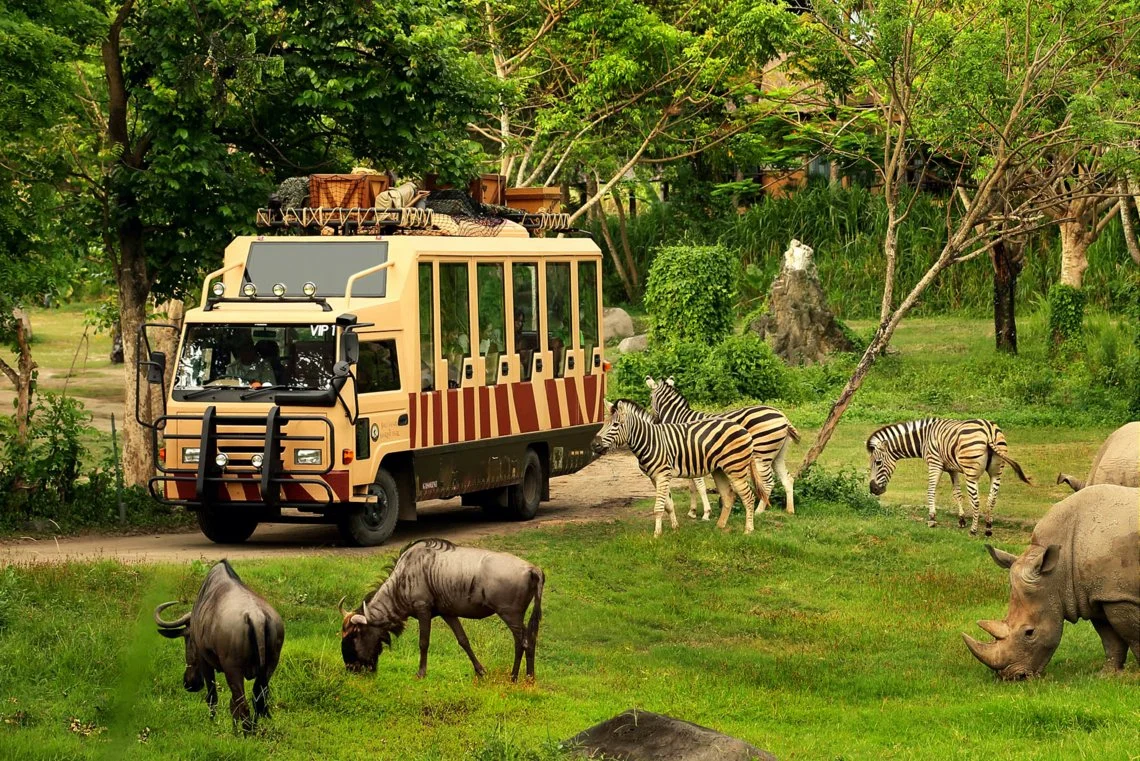
A safari park gives close animal contact in a family-friendly format, and you can adjust the visit length to your child's mood.

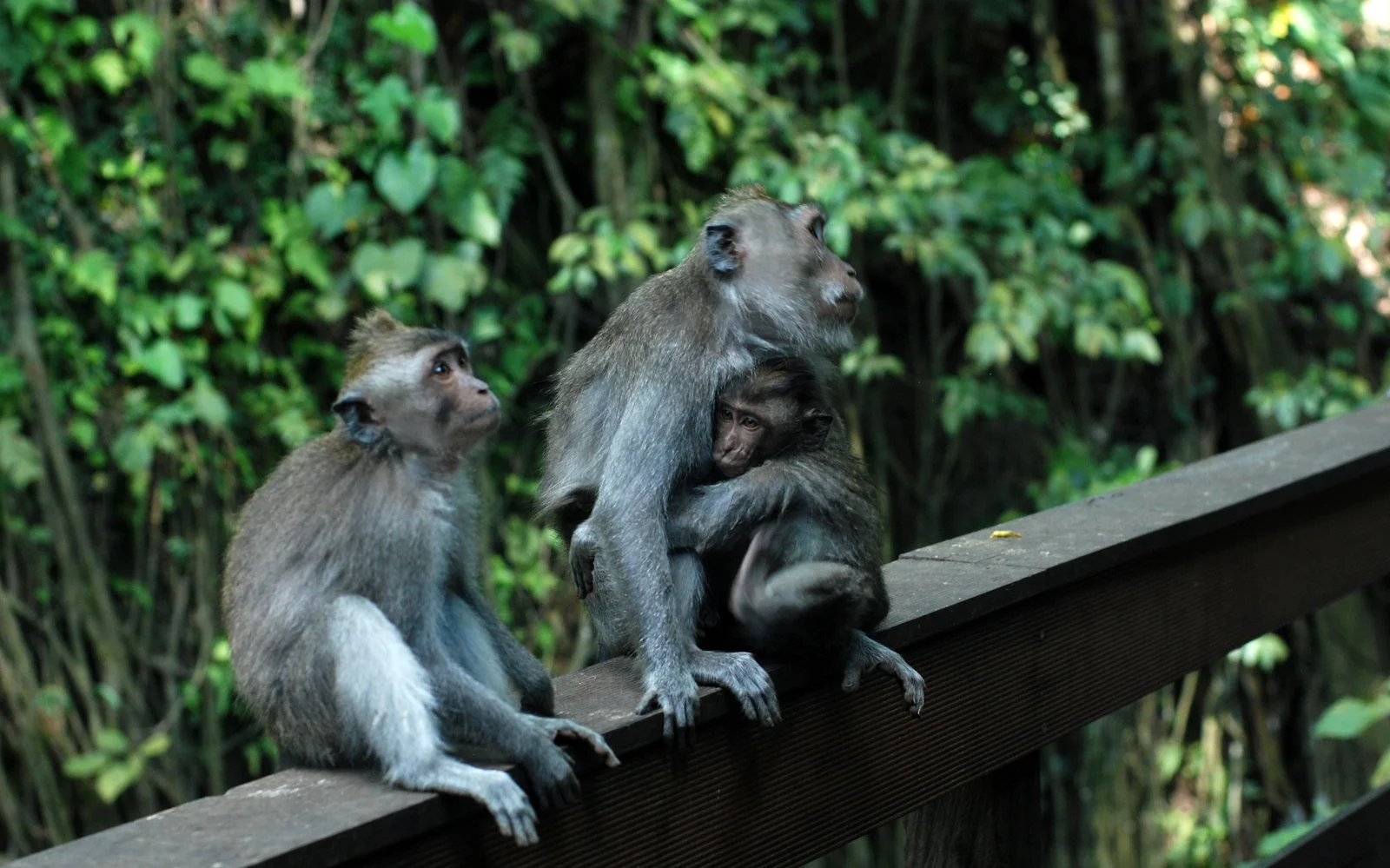
At Monkey Forest, skip carrying food or loose objects, and keep small children at a distance — the monkeys are fast and not always predictable.

Family day kit in Bali with water, hat, first aid, map, and child travel items

How should you move around Bali with kids?

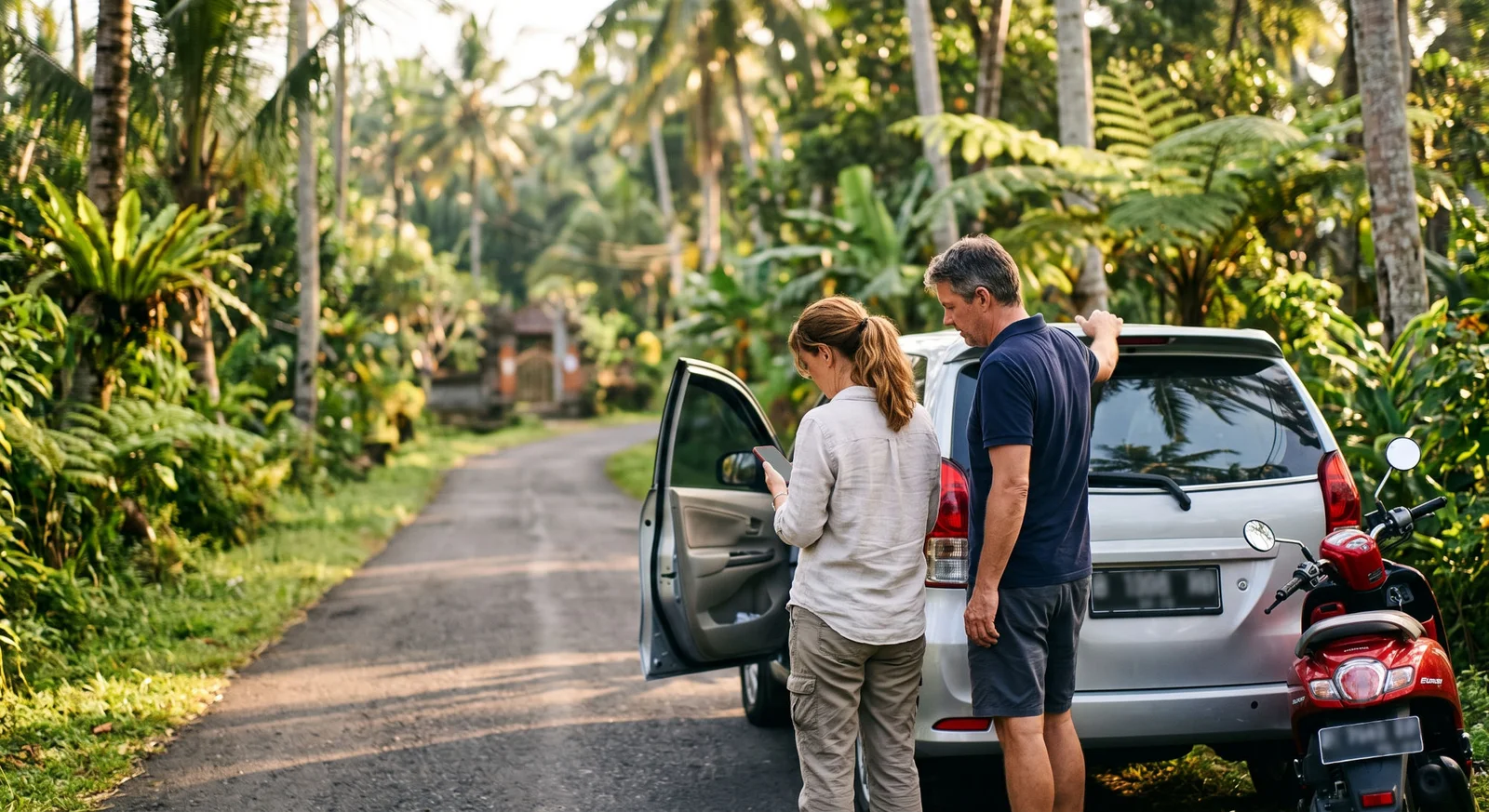
With children, a car with a driver is usually easier than a scooter or constant taxis in Bali — a driver removes the stress of parking, stops, and heat.

Do not plan more than 2-3 active stops a day, start longer routes in the morning, and bring water, snacks, spare clothes, and wet wipes.

Scooters with kids are common locally but risky for visitors — traffic is dense, and insurance may not cover an accident without the right license.

First-aid kit, insurance document, repellent, and phone with emergency contact before a Bali trip

What should you pack for Bali with a small child?

Packing for a child in Bali comes down to the basics: sunscreen, light clothing, age-appropriate repellent, familiar medicines, and insurance — better prepared before departure.

The list: child-safe sunscreen and hat, age-appropriate repellent, medicines and a thermometer, rehydration salts, insurance, and document copies.

Introduce food gradually — warungs can be fine, but for young children it helps to start with simple dishes, bottled water, and food cooked in front of you.

Getting Around Bali: Taxi, Scooter, Driver, and Apps

Getting Around Bali: Taxi, Scooter, Driver, and Apps

1/8
Bali with Kids: Where to Stay, Which Beaches to Choose, and What to See

Bali with Kids: Where to Stay, Which Beaches to Choose, and What to See

January 5, 2026
10 min read

Bali can work very well with children, but it is not an automatically easy beach island. You have ocean conditions, humidity, traffic, long transfers, and areas with very different levels of convenience. A good family trip starts with area choice, beach choice, and a slower daily rhythm.

This guide explains where to stay in Bali with kids, which beaches are easier for swimming, what to see with children, which routes to avoid overloading, and how to move around the island. The simplest family bases are usually Sanur, Nusa Dua, Geger, and Jimbaran, with Ubud added as a separate inland stage.

Is Bali good with kids?

Bali is good with kids if you plan calmly, stay in a practical area, and avoid putting a beach, waterfall, temple, and long transfer into the same day. The island suits families, but it requires attention to ocean conditions, sun, water, food, insurance, and logistics.
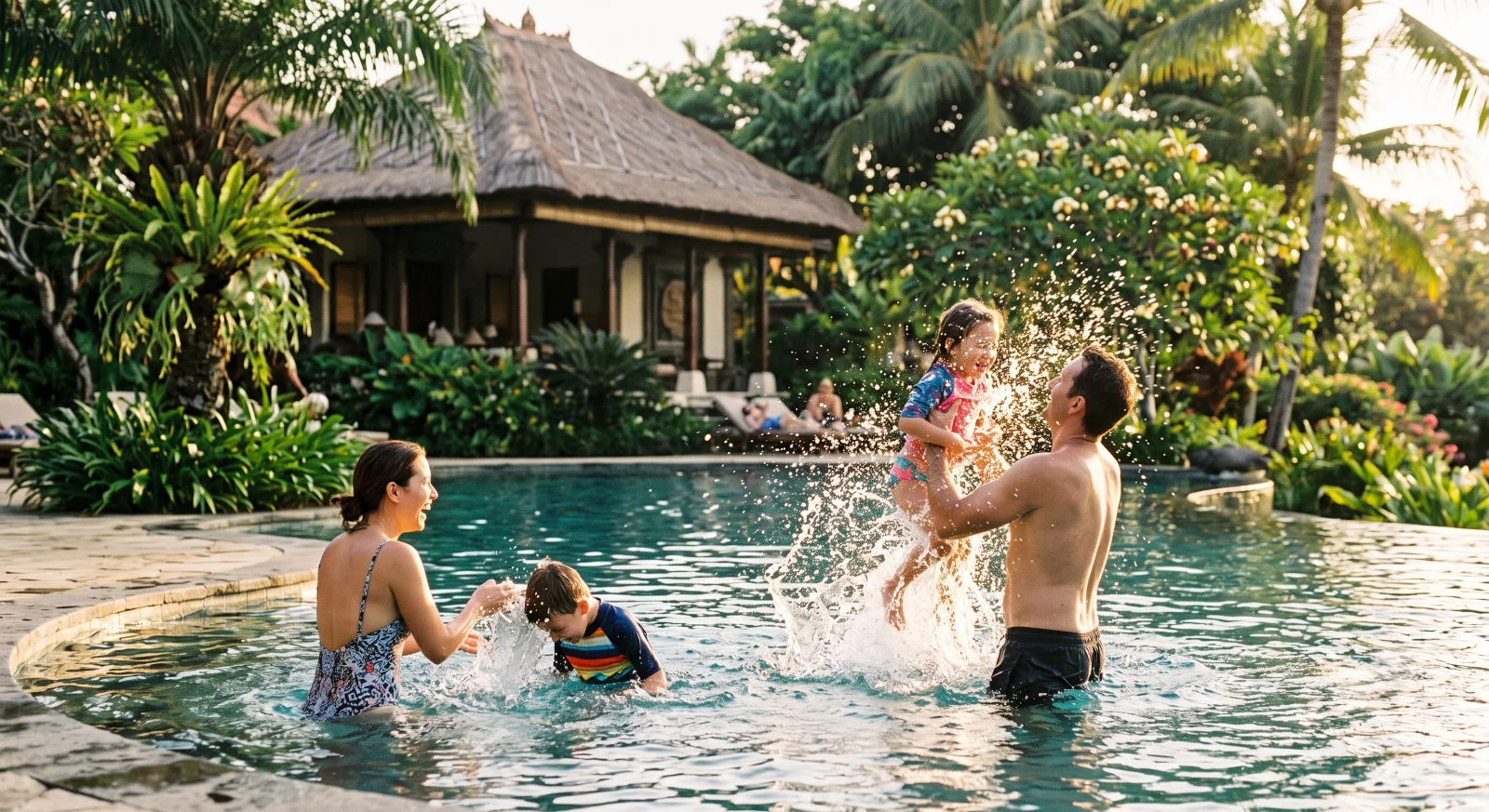
Happy family with children relaxing by the resort pool in Bali

Bali works well for families who want:

  • warm weather and nature;
  • villas or hotels with pools;
  • animal parks and family attractions;
  • rice terraces and short nature walks;
  • a flexible beach rhythm without daily rushing.

Bali is harder if you expect a closed resort island with perfect calm sea every day. Tides, waves, season, and traffic all matter.


Where should you stay in Bali with children?

For family travel, Sanur, Nusa Dua, Geger, and Jimbaran are usually the easiest areas. They are more practical for beach access, daily rhythm, and infrastructure. Canggu, Kuta, and Uluwatu can be interesting, but often less convenient for young children because of waves, traffic, stairs, or noise.


Bali areas from southern beaches to green Ubud

Sanur is the calmest option for walks, sunrise, and family pace. Nusa Dua and Geger provide resort comfort, beach infrastructure, and more predictable swimming. Jimbaran gives a wide beach, sunsets, and convenient access near the airport.

Ubud works better as a separate 2-3 night stage among greenery, rice terraces, craft villages, and easier family routes.


Which Bali beaches are best with kids?

The best Bali beaches with kids are not always the most dramatic beaches in photos. You want calmer water, shade, toilets, showers, food nearby, and easy access. Sanur, Nusa Dua, Geger, and calmer sections of Jimbaran usually work better than cliff beaches with stairs.
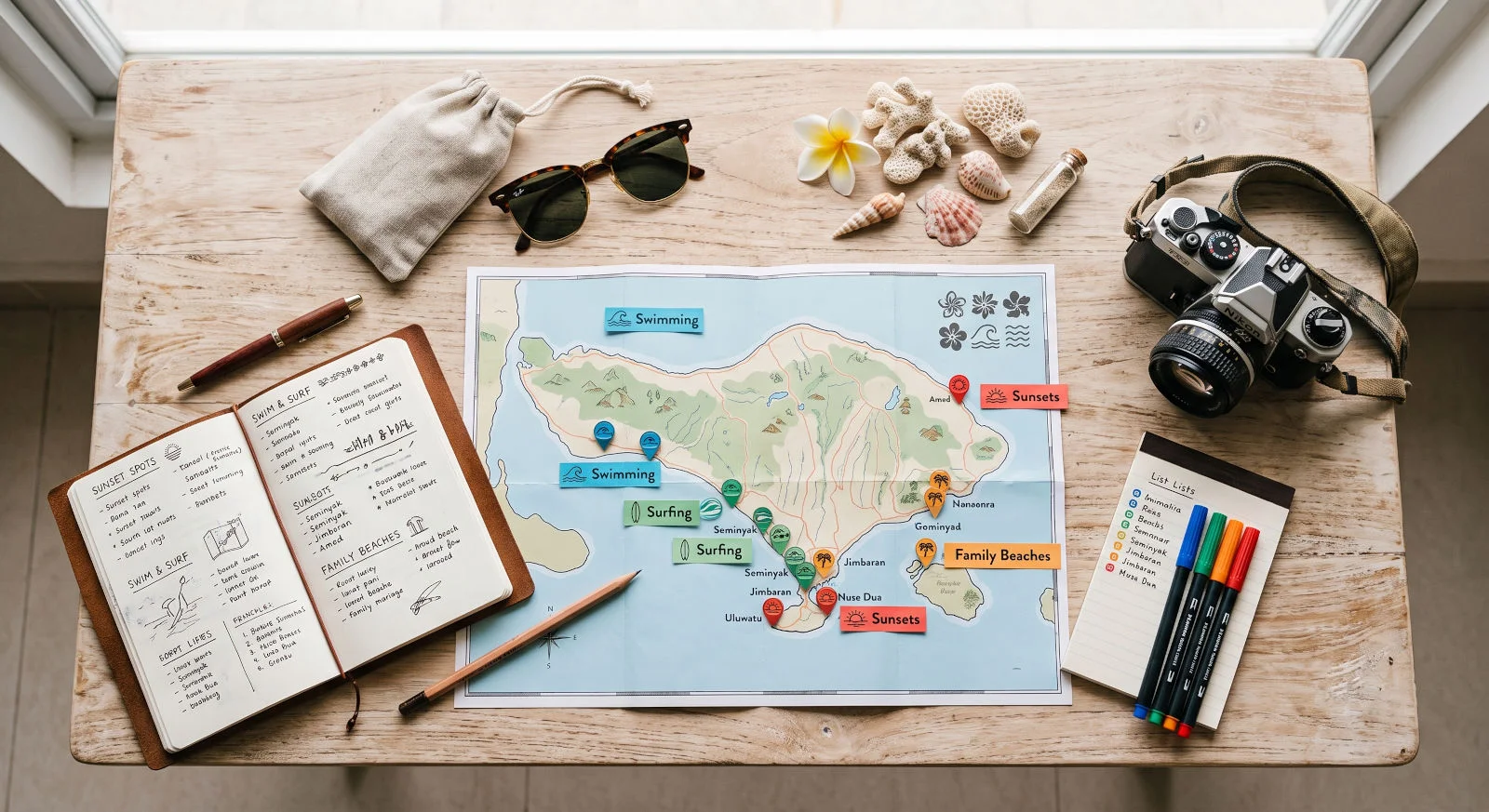
Bali beach selection concept by swimming, waves, and family travel

Good scenarios:

  • Sanur: walks, calm coast, sunrise, practical with small children.
  • Nusa Dua: resort hotels, infrastructure, low-friction beach routine.
  • Geger: pleasant sand and a quieter feel.
  • Jimbaran: evening beach, wide shoreline, restaurants.

Use caution with:

  • Kuta: waves, surf schools, crowds.
  • Canggu: stronger surf and traffic.
  • Suluban and parts of Uluwatu: stairs, rocks, reef.
  • Remote beaches: beautiful, but limited facilities.

What should you do in Bali with children?

With children, the best stops are places where facilities are clear and the visit length can be adjusted. Bali Bird Park, Bali Safari, Monkey Forest at a careful pace, rice terraces without long trekking, one easy-access waterfall, and a short temple route usually work better than an all-day island race.
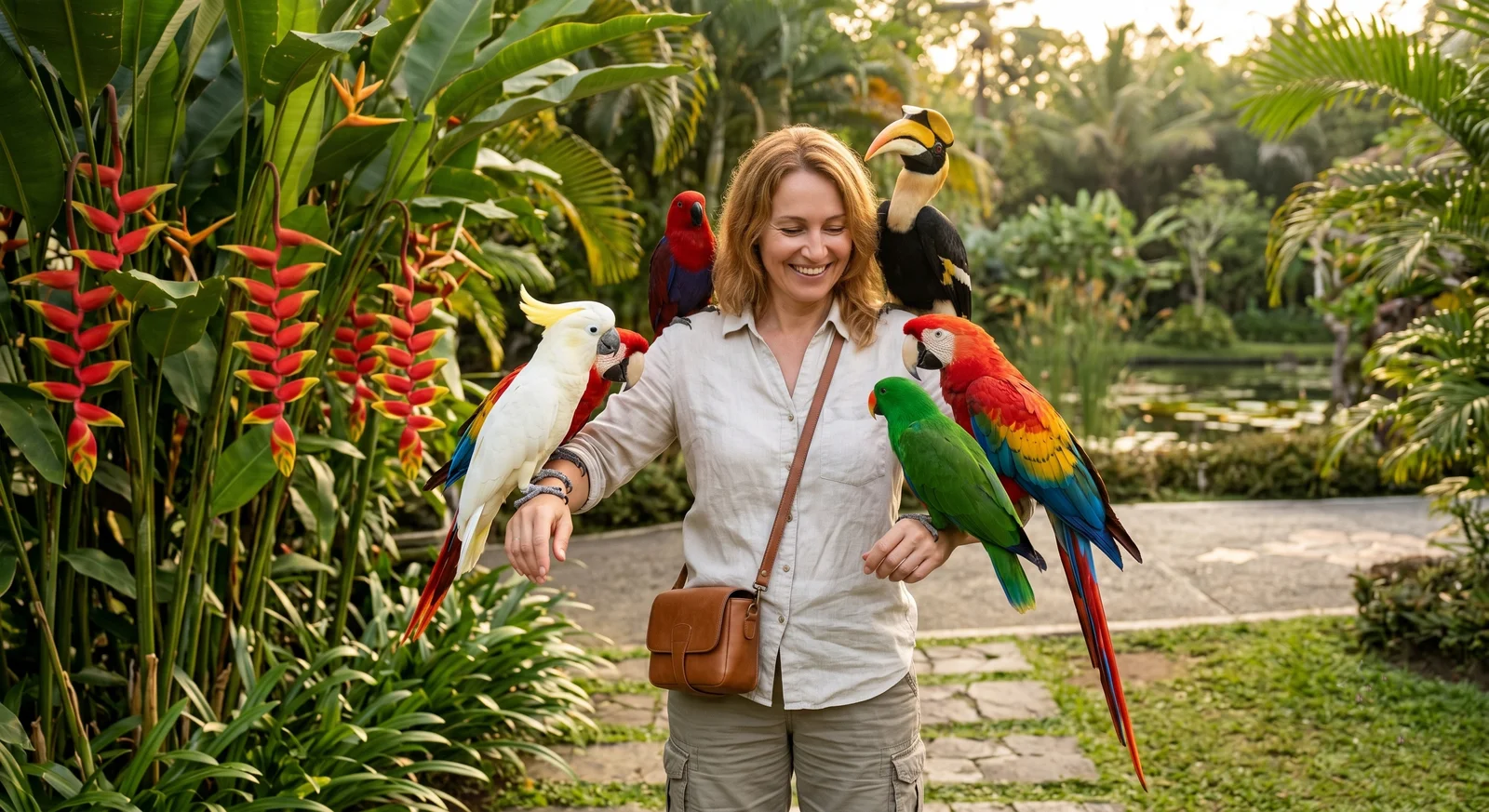
A joyful woman with exotic parrots in the lush Bali Bird Park, near Ubud's Sacred Monkey Forest and stunning landscapes

Family day at Bali Safari

Ideas:

  • Bali Bird Park or Bali Safari;
  • a Sanur beach walk;
  • Ubud: Monkey Forest, terraces, craft villages;
  • one easy waterfall;
  • Nusa Dua or Jimbaran beach time;
  • a short Uluwatu sunset route if your child handles transfers well.

At Monkey Forest, do not hold food, sunglasses, or loose objects. With small children, keep distance and avoid treating the monkeys like pets.


How should you move around Bali with kids?

With children, a car with a driver is usually easier than scooters or constant taxis. A driver lets you store bags, adjust stops, change the route, and avoid dealing with parking, helmets, heat, and tired kids after the beach.
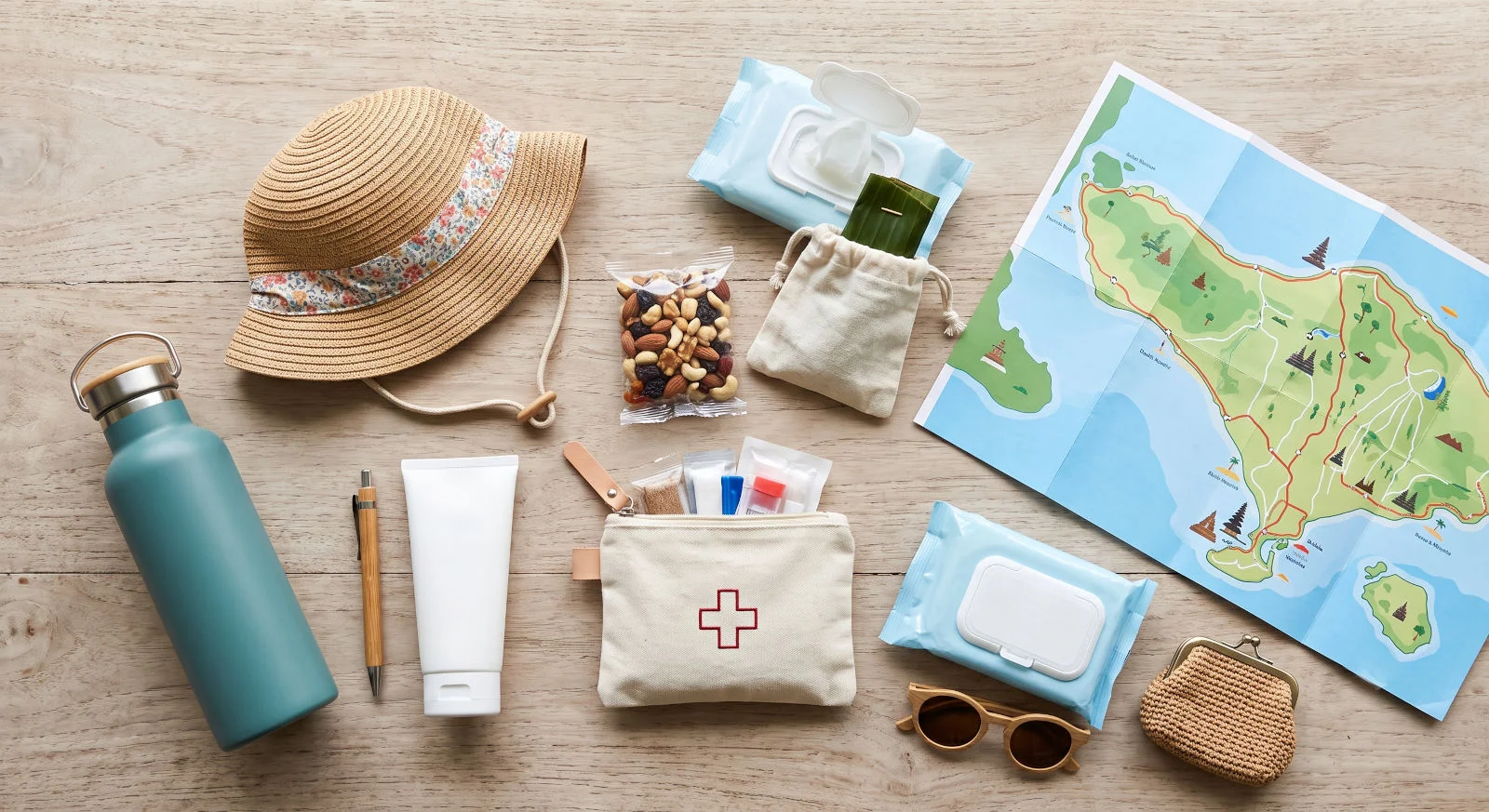
Family day kit in Bali with water, hat, first aid, map, and child travel items

Practical rules:

  • do not plan more than 2-3 active stops in one day;
  • start longer routes in the morning;
  • bring water, snacks, spare clothes, and wet wipes;
  • leave time for naps and heat breaks;
  • do not expect children to follow an adult excursion pace.

Scooters with children are common locally, but risky for visitors. Traffic is dense, road behavior is inconsistent, and insurance may not cover incidents without the correct license.


What should you pack for Bali with a small child?

For a child, Bali packing is about heat, sun, water, insects, and food changes. Sunscreen, a hat, light clothing, age-appropriate repellent, basic medicines, and insurance are better prepared before departure than during the first tired day on the island.

First-aid kit, insurance document, repellent, and phone with emergency contact before a Bali trip

Basic list:

  • child-safe sunscreen and hat;
  • light clothes with shoulder coverage;
  • age-appropriate repellent;
  • familiar medicines and thermometer;
  • oral rehydration salts;
  • insurance covering planned activities;
  • document copies and emergency contacts.

Introduce food gradually. Warungs can be fine, but with young children it is better to start with simple dishes, bottled water, and places where food is cooked fresh.


FAQ: Bali with kids

A traveller's basics: your personal medicines (with spares, in original packaging), something for an upset stomach and rehydration salts (for Bali belly), antiseptic and plasters, pain and fever relief, motion-sickness tablets, mosquito repellent and sunscreen. Antihistamines and after-sun also help. You can buy a lot at local pharmacies, but bring any specific medication you rely on. If you have a chronic condition, carry a prescription or a doctor's note.
There are no compulsory vaccinations to enter Bali for most travellers (a yellow-fever certificate is only required if you arrive from a country where it's present). Doctors typically recommend being up to date on routine shots (MMR, tetanus-diphtheria, polio) plus hepatitis A and typhoid (both spread through food and water); and, depending on your trip, hepatitis B, Japanese encephalitis and rabies (for animal contact). The right list depends on your itinerary and health — see a travel doctor 4–8 weeks before you go and check official guidance.
No — don't drink tap water in Bali: it isn't reliably treated and can carry bacteria and parasites. Stick to bottled or boiled water, and use it for brushing your teeth too — this is the main way to avoid Bali belly, travellers' diarrhoea. Ice at hotels, beach clubs and busy restaurants is generally made from purified water and is fine; be more careful with ice and raw food from small street vendors. Carry water on day trips — on our tours drinking water is usually included.
Travel medical insurance is strongly recommended: treatment at private clinics is paid up front for foreigners and serious cases can need costly evacuation. Choose a policy with medical cover and emergency evacuation/repatriation. If you plan to rent a scooter, check that motorbike accidents are covered — many policies exclude them, and cover usually applies only if you hold the correct licence. Add adventure cover (volcano trekking, diving) if those are on your itinerary. We don't endorse specific products — compare and choose your own.
For most visitors a car with a driver is easier and less stressful: they know the roads, handle parking and navigate the chaotic, left-hand traffic while you enjoy the view — it's a popular, affordable choice for full-day sightseeing. Self-drive without a driver suits confident drivers who hold an International Driving Permit and are ready for local traffic. For trips around the island and transfers we arrange a car with an English- or Russian-speaking driver — just message us.

Read also