


Bali for First-Timers: What to Know Before You Go

Bali for First-Timers: What to Know Before You Go

July 8, 2026
10 min read

A first trip to Bali is easier when you plan it as a system, not as a list of beautiful places. Whether you are coming from Australia, India, China, Europe, the UK, the US, Singapore, Malaysia, or another regular Bali market, the same core questions matter: where to stay, how to handle arrival, how to pay, how to get around, what to see, and where to be careful.

This guide is for international travelers reading Bali reviews, forums, and scattered tips before the trip, but wanting a calm overview. It covers documents, airport arrival, areas, money, mobile connection, transport, safety, food, and a sensible first-week route without assuming one specific nationality.

What should first-time visitors know before going to Bali?

First-time visitors should know 6 basics: Bali is bigger than it looks, public transport does not solve most tourist routes, not every beach is safe for swimming, temples require respectful dress and behavior, cash is still useful, and long transfers are better planned early in the day.
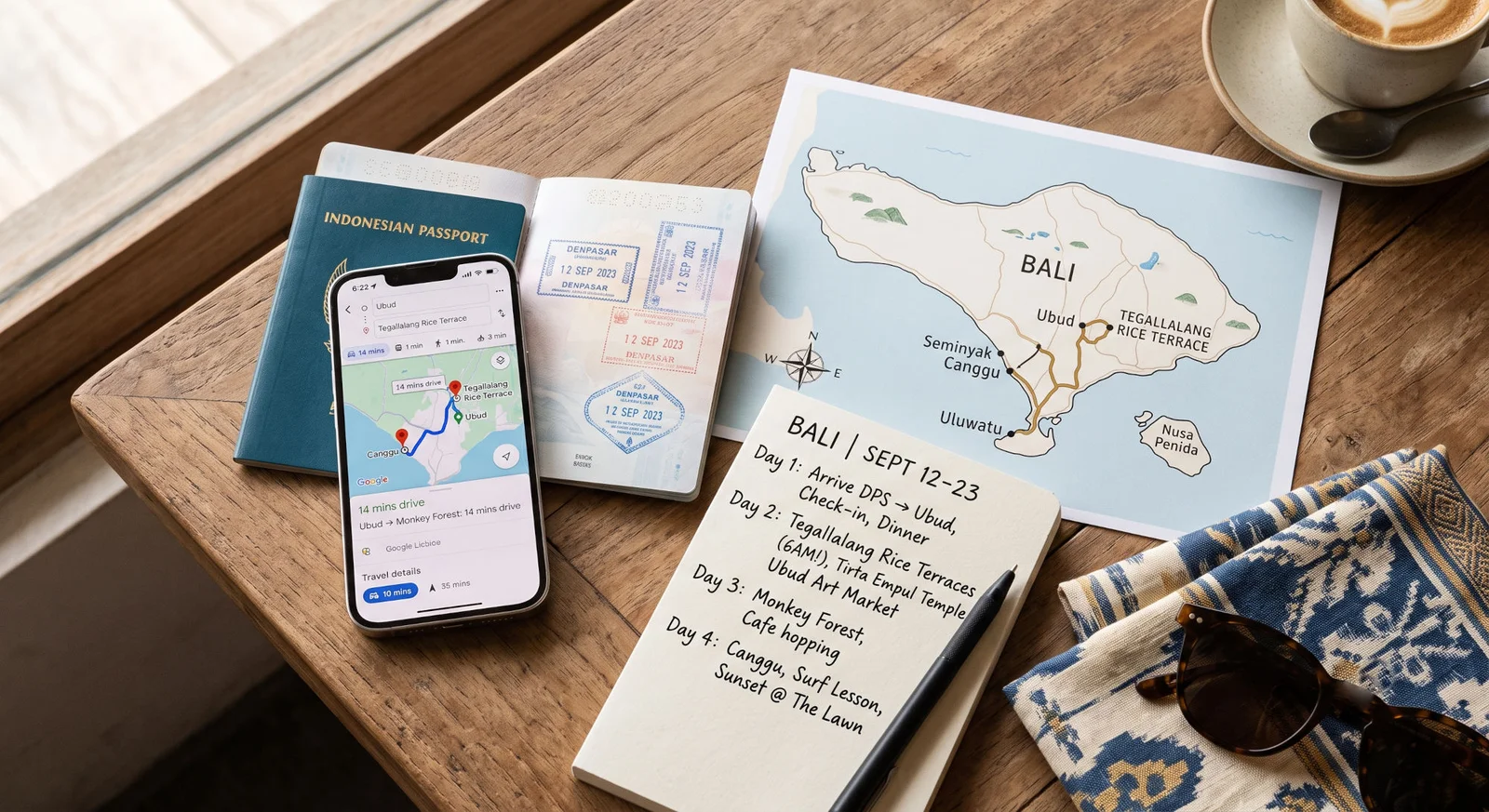
First Bali trip planning board with passport, island map, phone, sarong, and route notes

Quick checklist:

  • Documents: passport validity, onward ticket, visa or e-VOA, electronic arrival card.
  • Area: choose your base by travel style, not only by a hotel photo.
  • Transport: decide whether you will use scooters, taxis, a driver, or a mix.
  • Money: carry a card, some cash, and a plan for safe exchange.
  • Safety: ocean, scooters, heat, and food need more attention than temples.
  • Route: leave free days, especially on trips longer than 7 days.

Which documents and entry steps do you need for Bali?

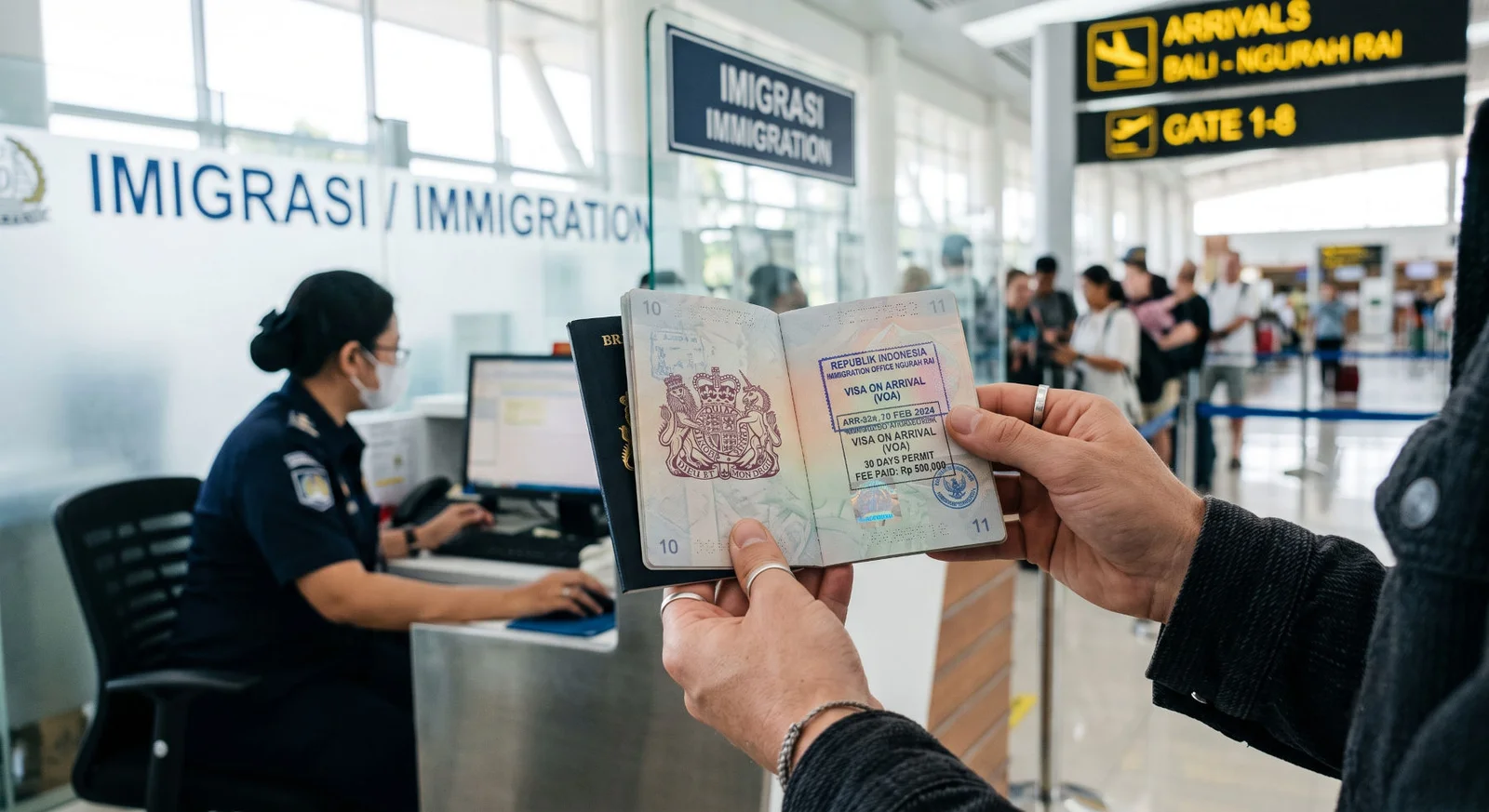
For a tourist trip, you usually need a passport with enough validity, an onward ticket, the correct visa route for your nationality, an electronic arrival card, and an online customs declaration. Several steps can be completed before flying, which makes arrival at Denpasar airport smoother.

The official Indonesia eVisa portal states that the arrival card is submitted within 3 days before arrival. It is separate from the visa and produces a QR code. The electronic customs declaration can also be completed online before or around arrival.

Visa handling depends on your passport. Many visitors from major Bali source markets use visa-free ASEAN entry, Visa on Arrival, or e-VOA, while others need a different visitor visa before travel. Check your nationality on the official Indonesia eVisa portal before buying non-refundable tickets, especially if your trip includes business activities, long stays, or multiple entries.

Check before departure:

  • passport validity of at least 6 months from arrival;
  • onward or return ticket;
  • whether you need e-VOA, VoA, or another visa type;
  • completed electronic arrival card;
  • Love Bali tourist levy QR voucher if paying before arrival;
  • items in luggage that may need declaration.

Families should also check child passport validity and consent rules before transit. If you connect through another country on the way to Bali, review that transit country's rules separately, because Indonesian entry rules do not cover your layover.

FAQ: entry and arrival formalities

Yes, but for most travellers it is issued on arrival. Around 87 nationalities — including the US, UK, EU countries, Australia and Canada — are eligible for Indonesia's Visa on Arrival (code B1): a fee of IDR 500,000 (~USD 35) for a stay of up to 30 days, extendable once by another 30 days (60 days total). A separate Bali tourist levy of IDR 150,000 per person is paid online through the official Love Bali portal. Always confirm your own passport against the official Imigrasi subject-country list before you fly, as eligibility, fees and rules can change.
It's a mandatory electronic arrival card (All Indonesia Arrival Card) for everyone entering Indonesia, Bali included. Fill it online within 72 hours before arrival at the official allindonesia.imigrasi.go.id or the app — submit it earlier than 3 days and the system won't accept it. From your passport details you get a QR code (by email) that officers scan at immigration, health and customs. The card is free — don't pay third-party services. It's separate from your visa and doesn't grant entry on its own.
Duty-free per person you can bring roughly: 200 cigarettes (or 50 cigars / 100g tobacco), 1 litre of alcohol, and personal goods up to USD 500; you must declare cash over IDR 100 million (~USD 6,500). The declaration is filed electronically (e-CD, often part of the 'All Indonesia' card) — a QR code is scanned as you leave baggage reclaim. Customs are strict: limits are per person and can't be pooled, and over-limit alcohol is confiscated. Undeclared restricted goods can mean seizure and a fine.
The Bali tourist levy is IDR 150,000 per foreign tourist. It's easiest to pay online in advance at the official lovebali.baliprov.go.id portal or the Love Bali app (you'll need your passport, name, email and arrival date); you'll get a QR voucher by email that's scanned at a dedicated 'Levy' lane at Denpasar airport. If you haven't paid, BRI bank counters in the arrivals hall take cash or card. Accepted methods include cards, bank transfer, UnionPay and QRIS. KITAS/KITAP holders are exempt.

Where should you stay in Bali for the first time?

For a first Bali trip, choose the area by the rhythm you want: Nusa Dua and Sanur are calmer beach bases, Ubud is best for culture and nature, Jimbaran is easy after a late arrival, Uluwatu is for cliffs and sunsets, while Kuta and Seminyak suit a busier south-coast stay.
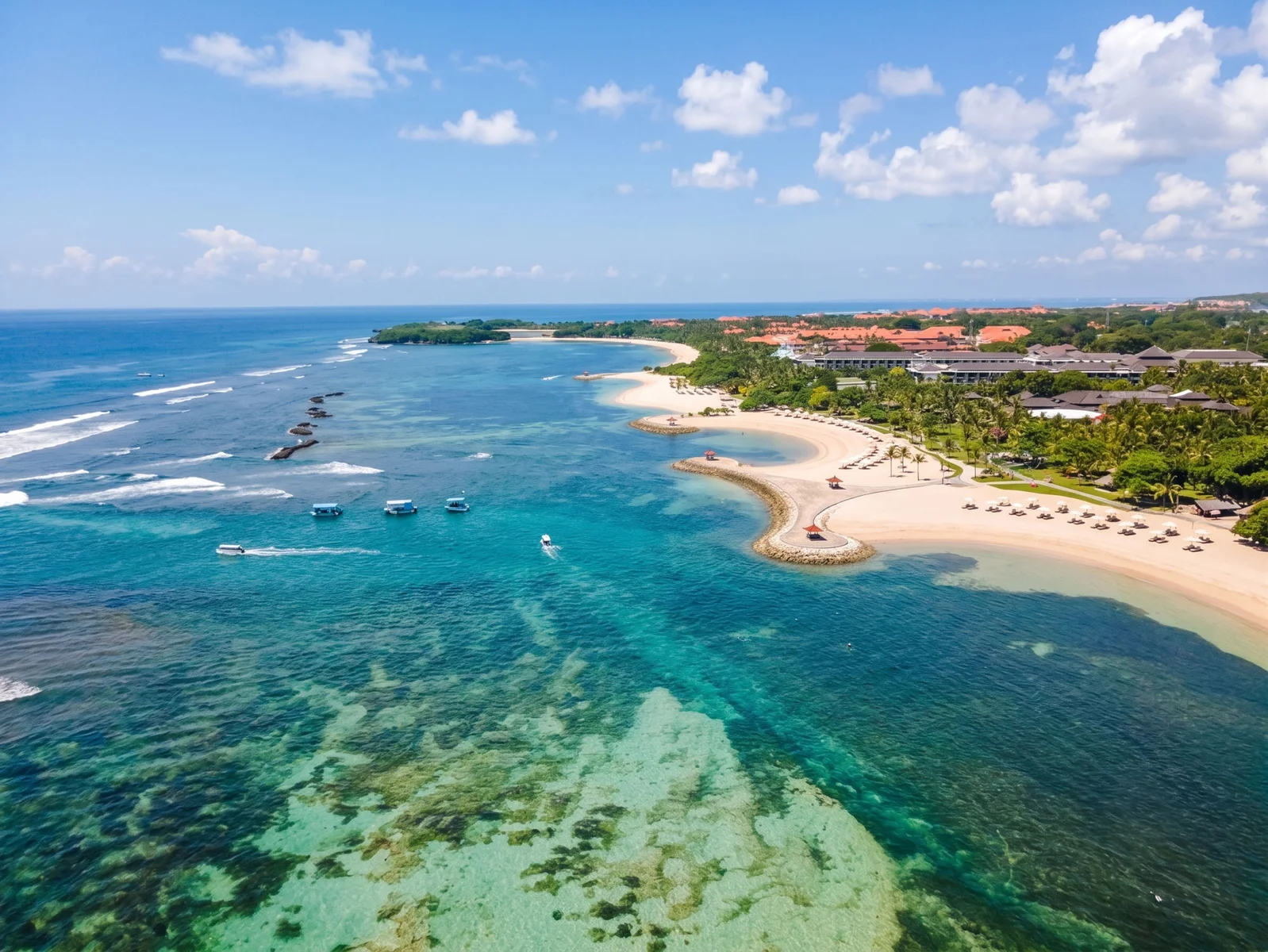
Beach
Nusa Dua
Badung

Nusa Dua

A manicured resort enclave in south Bali — white-sand beaches, calm reef-protected water, a coastal boardwalk and family-friendly comfort.

Read More
Location
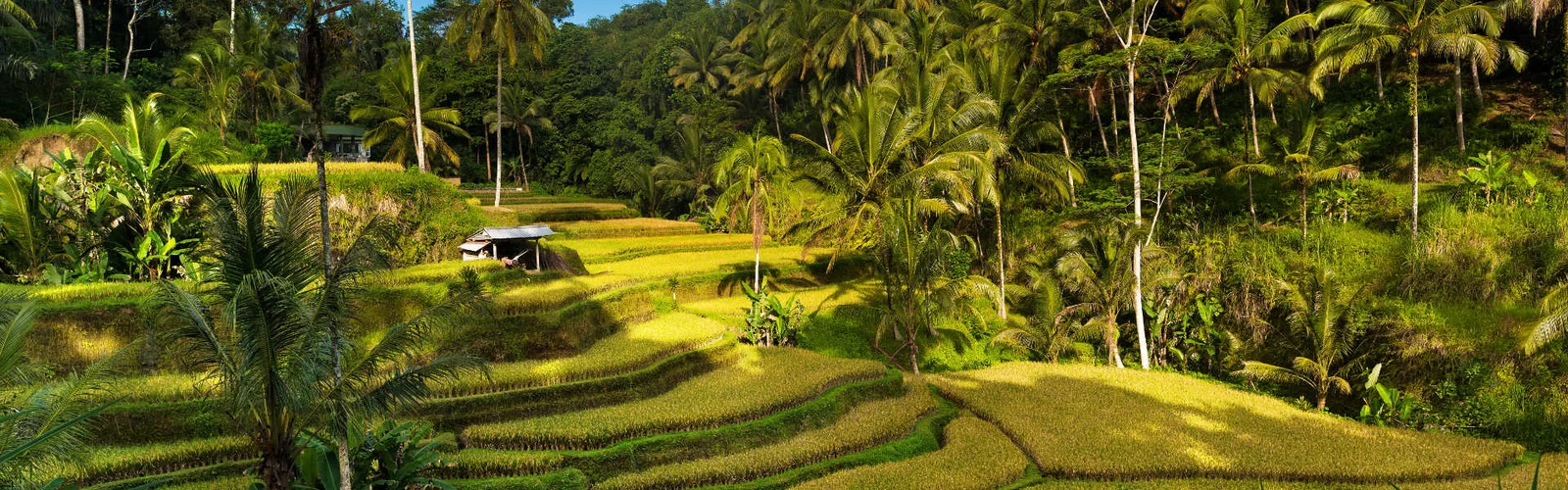
Ubud
Gianyar

Ubud

Bali's cultural hub, surrounded by rice terraces, temples, art museums, craft villages, tropical valleys and central-island day trips.

Read More

Popular Ubud Cultural Tour

Excursion
Ubud Tour

Ubud tour

Type of holiday: sightseeing tour. Duration: 8-10 hours.
from$57per person
Details

Short version:

  • Sanur or Nusa Dua: calmer and easier for a first beach base or families.
  • Ubud: best as a separate 2-4 night stage, not a daily commute from the south.
  • Jimbaran: good after a late landing and for a gentle start.
  • Uluwatu: beautiful, but inconvenient without transport.
  • Kuta / Seminyak / Canggu: more cafes, traffic, surfing, and nightlife.

If you are unsure, do not force the whole trip into one base. For 7-10 days, splitting the trip between a beach area and Ubud often works better.
Temple
Uluwatu
Badung

Uluwatu

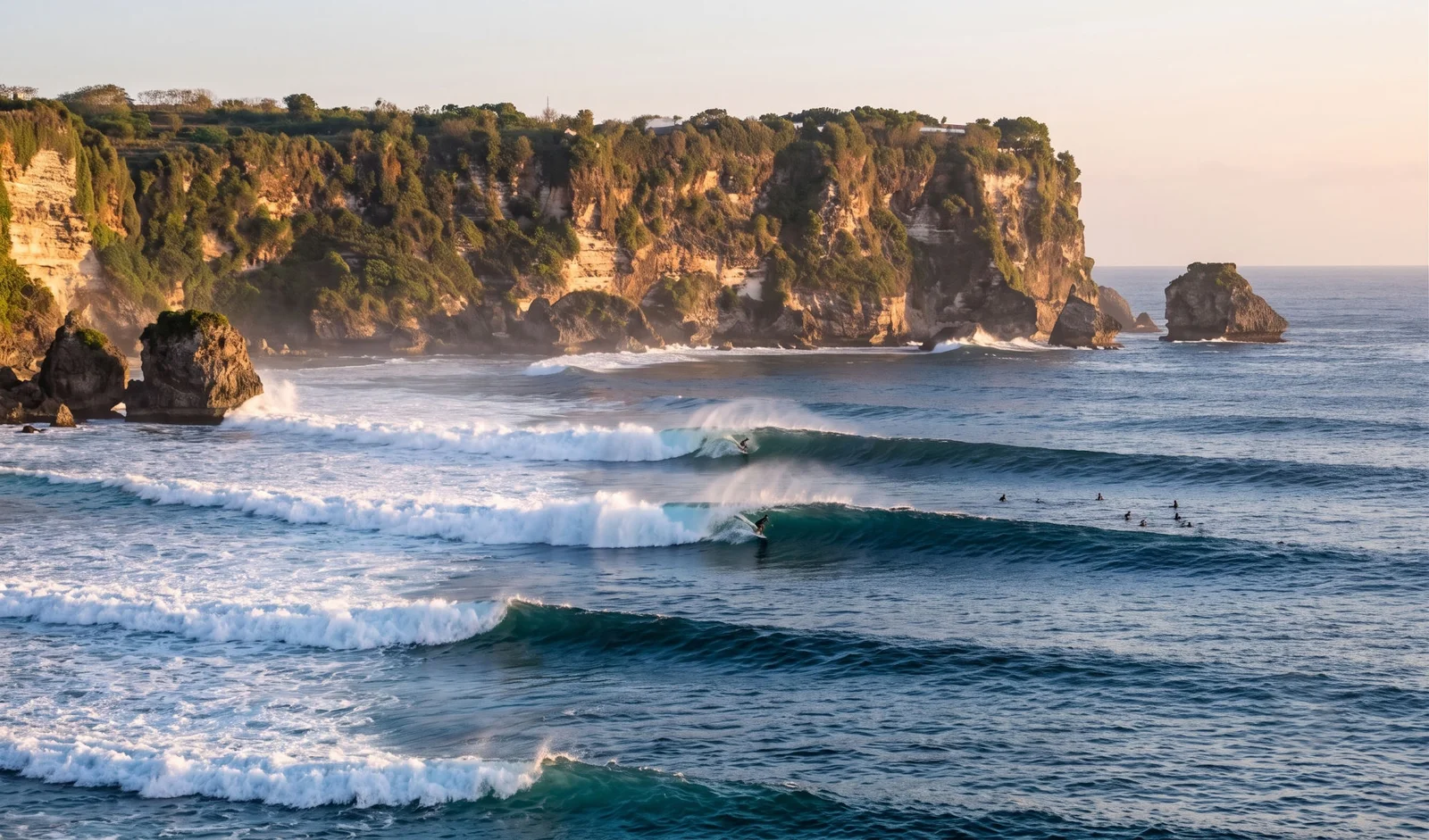
The clifftop area on Bali's Bukit Peninsula — limestone cliffs over the ocean, a sea temple with the Kecak fire dance, world-class surf and hidden beaches.

Read More

Private Bukit Beaches & Uluwatu Sunset Tour

Excursion
Uluwatu Classic

Uluwatu Tour — Uluwatu Classic

Type of holiday: sightseeing tour. Duration: 8-10 hours.
from$40*per person
Details

How do you handle Bali airport arrival without stress?

Bali's main airport is I Gusti Ngurah Rai International Airport, code DPS. It is often called Denpasar Airport, although it sits south of the city in the Tuban/Kuta area, so travel time to your hotel depends more on traffic and timing than on distance.
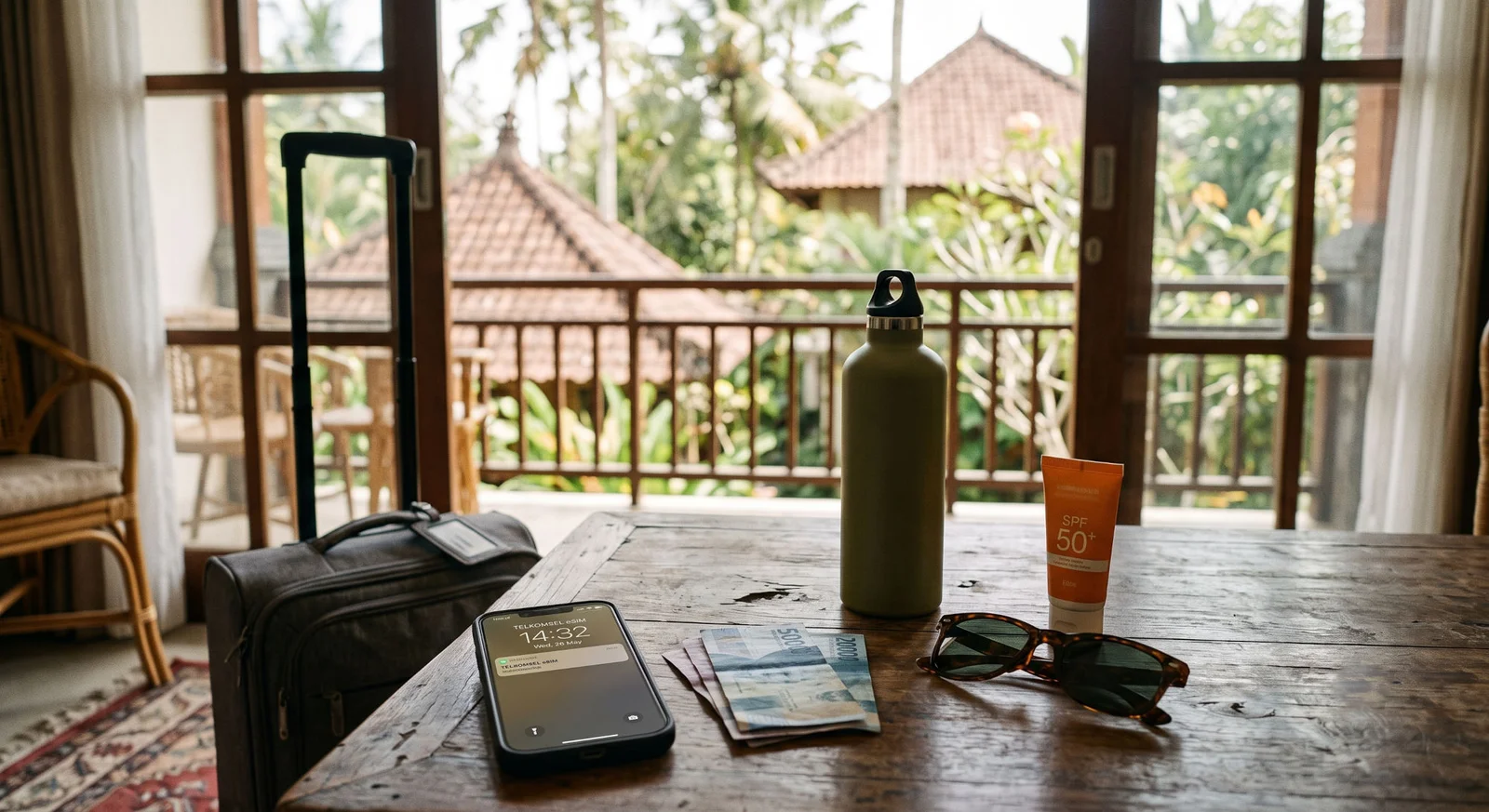
Bali arrival kit with eSIM phone, rupiah cash, water, sunscreen, and luggage

The usual arrival sequence:

  1. Immigration and visa check.
  2. Baggage claim.
  3. Customs control and e-CD QR code.
  4. Tourist levy check if the counter applies to your flow.
  5. SIM/eSIM, money exchange, or ATM if needed.
  6. Driver meeting point, transfer, or official taxi.

Do not exchange all your money at the airport and do not accept the first random taxi offer outside. It is better to know who meets you, how long the drive should take, and what to do if the flight is delayed.


How should first-timers get around Bali?

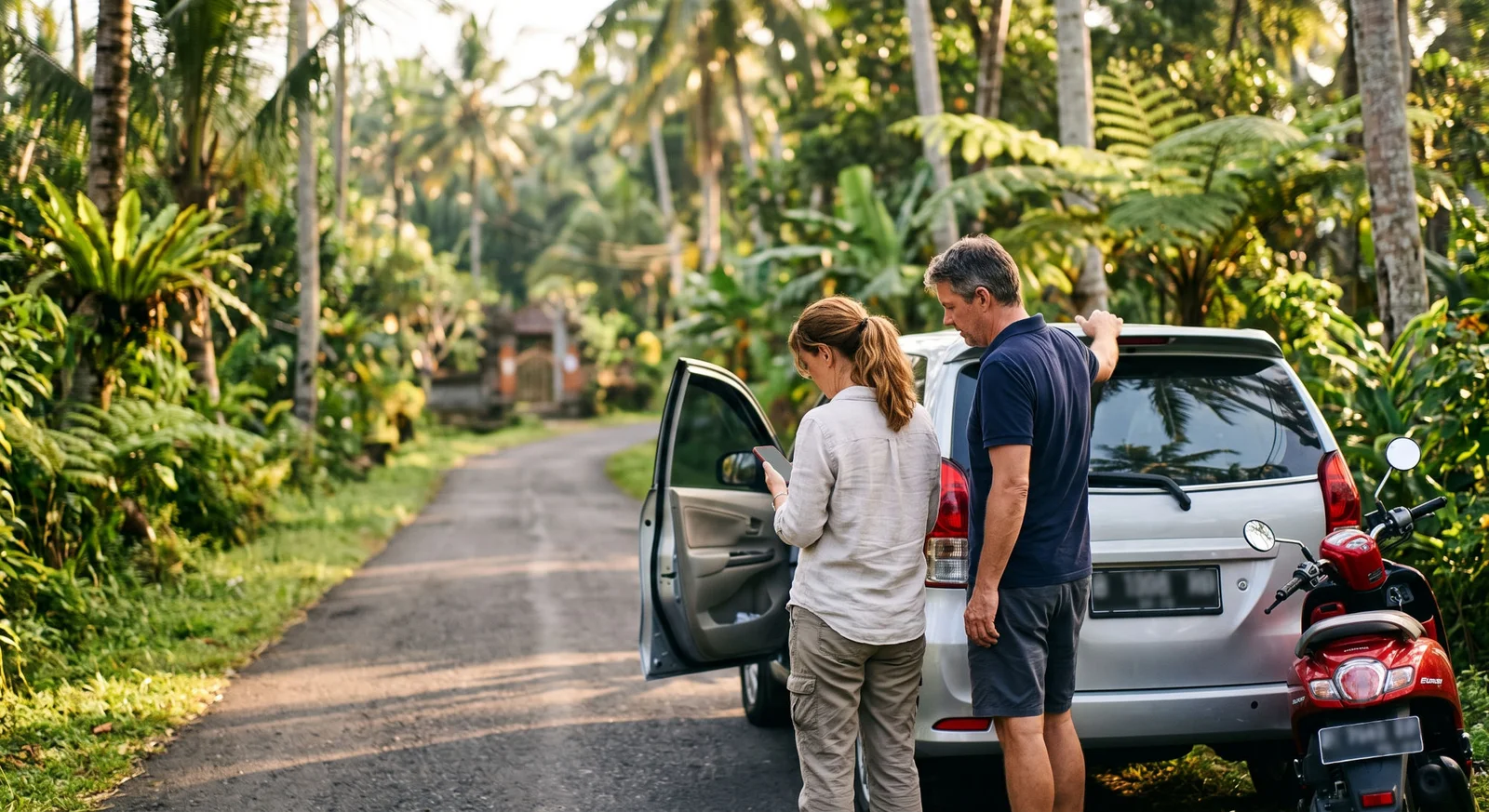
Bali does not have a metro or tourist public transport that connects all areas well, so most visitors choose between ride-hailing apps, scooters, a car with driver, and organized day routes. For a first trip, mixing transport types is usually better than relying on only one.

A scooter is useful for short distances, but it requires the right license, experience, and calm reactions in dense traffic. Ride-hailing works well in many town areas, but some places have local restrictions. A car with driver is better for full-day routes with scattered stops.

Practical logic:

  • short local rides: ride-hailing app or walking where realistic;
  • nearby beach day: taxi or scooter if you are experienced;
  • Ubud, waterfalls, temples: car with driver or a planned day route;
  • Nusa Penida: arrange boat, transfer, and island transport in advance;
  • families with children: a car is calmer and safer than scooters.

FAQ: transport and roads

For most visitors a car with a driver is easier and less stressful: they know the roads, handle parking and navigate the chaotic, left-hand traffic while you enjoy the view — it's a popular, affordable choice for full-day sightseeing. Self-drive without a driver suits confident drivers who hold an International Driving Permit and are ready for local traffic. For trips around the island and transfers we arrange a car with an English- or Russian-speaking driver — just message us.
You need an International Driving Permit (IDP) endorsed for motorcycles (category A), carried together with your home-country licence, your passport and a copy of your visa. A car-only licence is not legally accepted for a scooter. A helmet is mandatory for both rider and passenger — riding without one is an on-the-spot IDR 250,000 fine. Traffic police run regular document checks on tourists (especially around Canggu, Seminyak and Sunset Road) and have taken a zero-tolerance line since 2026. Without the right licence you risk not just a fine but also a refused payout if you have an accident.
Stay calm and show your documents: International Driving Permit (IDP, category A), home licence, passport and the bike's registration (STNK). Riding without a licence or helmet is fined — on the spot from IDR 250,000, and up to IDR 1,000,000 by formal ticket. If you genuinely broke a rule, ask for the official blue ticket (Surat Tilang) stating the amount and pay it at a BRI bank within 14 days — this protects you from inflated cash 'fines'. Carrying a helmet and the right papers is the best way to avoid the issue entirely.
Tours are conducted in comfortable Japanese minivans such as Suzuki APV or Toyota Avanza (up to 5 passengers). For larger groups, we provide spacious Toyota HiAce minibuses.

How many days do you need in Bali for a first trip?

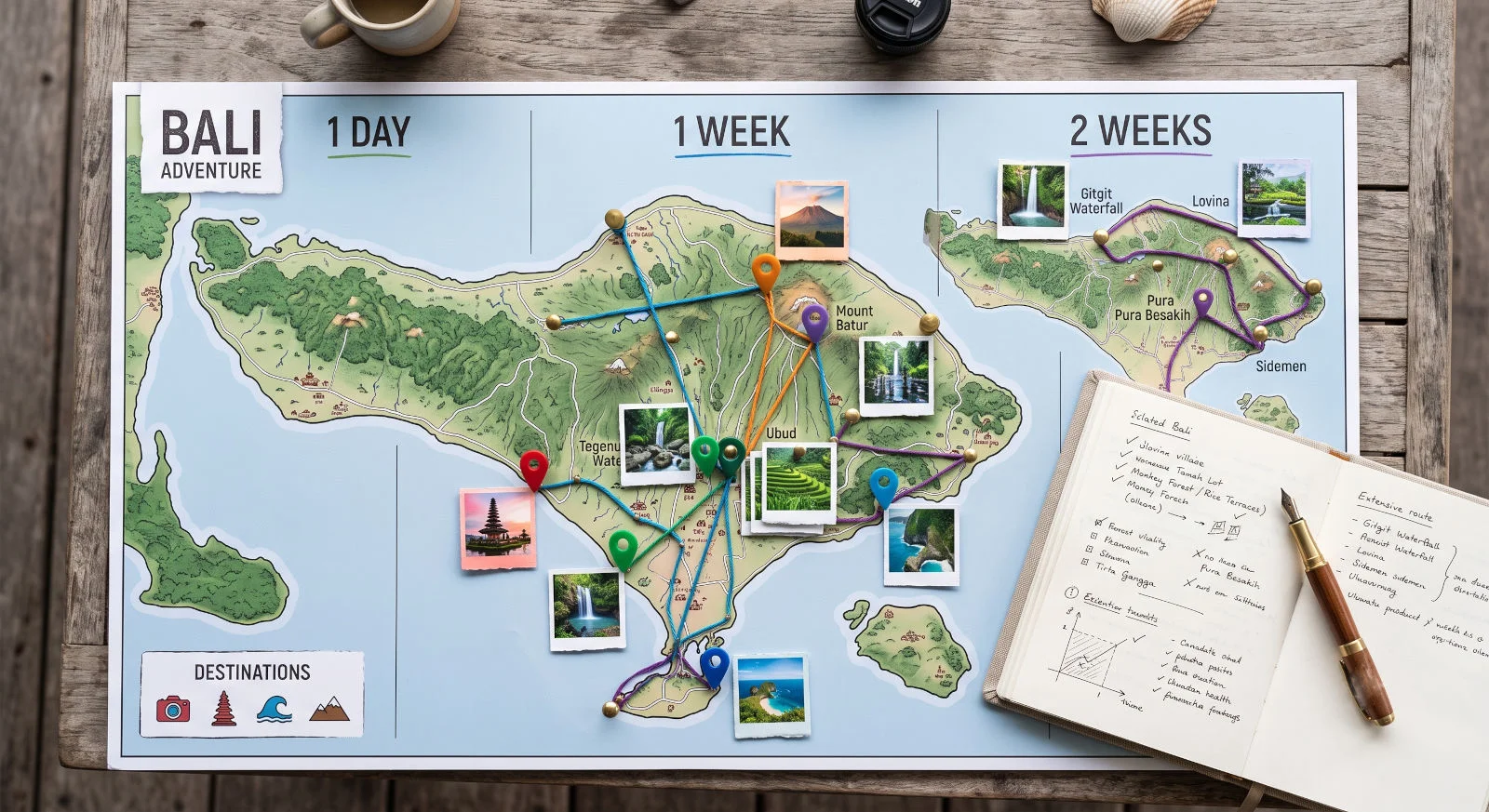
For a first Bali trip, 7 days is the minimum comfortable length, while 10-14 days gives a much better rhythm if you want more than the beach near your hotel. In one week you can fit the south, Ubud, one temple route, and one nature day, but with limited slack.

Simple structure:

  • 5 days: one area plus Ubud or one day trip.
  • 7 days: beach base + Ubud + one larger route.
  • 10 days: add Nusa Penida, Bedugul, Batur, or East Bali.
  • 14 days: add the north, Lembongan, Gili, or slower rest days.
Temple
Tanah Lot Temple
Tabanan

Tanah Lot Temple

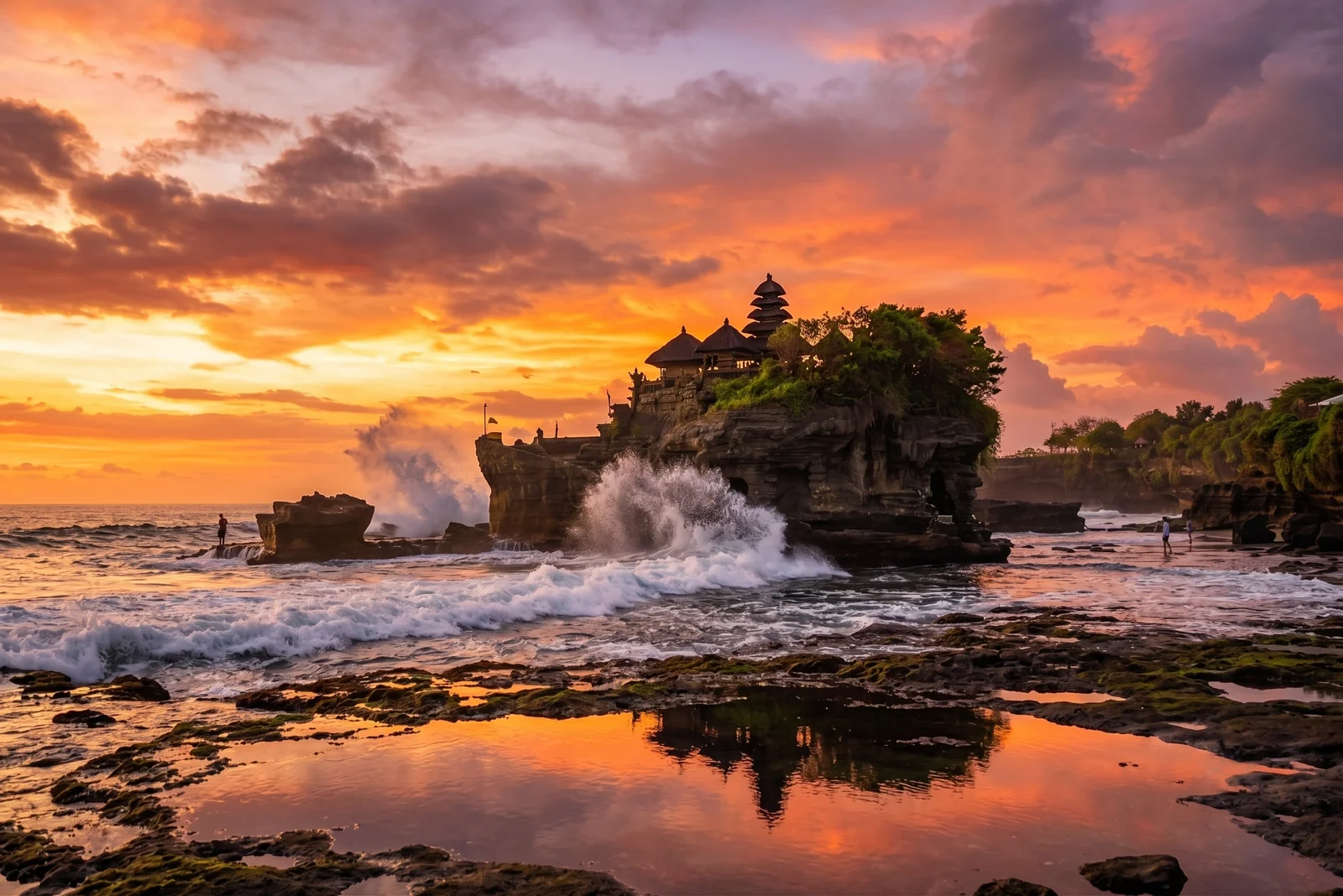
The famous sea temple on Bali's southwest coast, set on a dramatic rocky outcrop in the ocean and accessible only during low tide.

Read More

When reviews say that Bali felt exhausting, the issue is often not the island itself. It is the route: too many stops, long midday transfers, and no days without plans.


Money, cards, and mobile connection: what should you prepare?

In Bali, it is useful to have an international card, a small cash reserve, and eSIM or local SIM access for maps, taxis, and hotel communication. Cards work in many hotels and cafes, but markets, parking, small warungs, and some entrance points often need cash.

Travelers from Australia, India, Europe, the UK, the US, China, Singapore, and Malaysia usually find card payments straightforward in established venues, but not universal. Bring at least one backup payment method and some exchangeable cash, and avoid relying on one card, one app, or one wallet for the whole trip.

Before the trip:

  • check whether your card works abroad;
  • prepare some cash currency for exchange;
  • keep at least one backup payment method separate from your main wallet;
  • install maps, translator, ride-hailing apps, and messengers;
  • consider eSIM before flying if you need internet immediately after landing;
  • save your hotel address offline.

FAQ: money, cards, and connection

Your Visa and Mastercard work at bank-owned ATMs and in established hotels, restaurants and shops (UnionPay is also accepted at 90%+ of ATMs). Withdraw cash at ATMs attached to bank branches (Mandiri, BCA, BNI, BRI, Permata) for safety, and watch for foreign-transaction and ATM fees. Keep cash in rupiah for everyday spending — warungs, markets, small shops and transport are often cash-only — while cards and QR payments cover the bigger venues.
Use only licensed money changers: an official one displays a 'PVA Berizin' sticker and registration number (Bank Indonesia), and you can verify the licence on Bank Indonesia's portal. Reliable names are BMC and Central Kuta, or exchange inside a bank. Avoid booths offering rates well above the market (more than ~3% better) and the 'fast-fold' trick, where the cashier slips notes back out while counting — count the cash yourself and don't rush. Many travellers skip exchange entirely and simply withdraw rupiah from a bank-owned ATM.
For the best coverage (including rural areas and islands like Nusa Penida and the Gilis) choose Telkomsel; XL is a good budget option in towns, and Indosat suits short stays. Tourist starter packs with data are cheap and easily cover a couple of weeks. A SIM must be registered with your passport — done at an operator's office or an authorised retailer. Buy at Denpasar airport, phone shops or minimarkets. A convenient alternative is an eSIM, which you can set up online before you fly.
QRIS is Indonesia's single QR-payment standard (from Bank Indonesia), accepted almost everywhere in tourist areas. Travellers from partner countries (Singapore, Malaysia, Thailand, Japan, Korea, China) pay by scanning a QRIS code with their own banking app. Others can use a local e-wallet (GoPay, OVO) — verify with your passport and a local SIM, then top up by linking an international card. If that's a hassle, ordinary cards and cash work fine everywhere tourists go.

Is Bali safe for tourists?

Bali is generally comfortable for tourists, but safety depends on habits: avoid rough ocean conditions, do not ride a scooter without experience, drink bottled water, carry insurance, and follow temple etiquette. Most problems come from rushing rather than from the island being inherently dangerous.

Main risks:

  • ocean: waves and currents vary by beach and season;
  • roads: dense traffic, narrow streets, sudden maneuvers;
  • heat: dehydration happens faster than expected;
  • food and water: be careful with ice, questionable alcohol, and random places;
  • temples: dress and behavior matter;
  • monkeys: do not hold food, glasses, or phones openly.

FAQ: safety and health

Travel medical insurance is strongly recommended: treatment at private clinics is paid up front for foreigners and serious cases can need costly evacuation. Choose a policy with medical cover and emergency evacuation/repatriation. If you plan to rent a scooter, check that motorbike accidents are covered — many policies exclude them, and cover usually applies only if you hold the correct licence. Add adventure cover (volcano trekking, diving) if those are on your itinerary. We don't endorse specific products — compare and choose your own.
No — don't drink tap water in Bali: it isn't reliably treated and can carry bacteria and parasites. Stick to bottled or boiled water, and use it for brushing your teeth too — this is the main way to avoid Bali belly, travellers' diarrhoea. Ice at hotels, beach clubs and busy restaurants is generally made from purified water and is fine; be more careful with ice and raw food from small street vendors. Carry water on day trips — on our tours drinking water is usually included.
Yes, if you choose wisely. Eat where there's high turnover and food is cooked to order — hot, freshly cooked dishes are the safest. Be more careful with food that's been sitting out, with raw salads and pre-cut fruit (which may be washed in tap water), and with ice from small stalls. Drink bottled water and buy whole fruit you peel yourself. Done this way, warungs are delicious, authentic and cheap — Bali belly usually comes not from warungs themselves but from stale food and untreated water.
Beyond the sarong and sash, conduct matters too. Don't stand higher than the priest or the offerings, don't block people praying or walk straight in front of them. Use no flash and keep quiet during ceremonies; don't touch sacred objects or cross barriers into closed areas. By Balinese tradition, women are asked not to enter a temple during menstruation. In short — be quiet and respectful, as you would in any active place of worship.

What should you see in Bali on a first trip?

On a first trip, choose places that show different sides of Bali: Ubud and rice terraces, one ocean temple, one waterfall or volcano route, a calm swimming beach, and Nusa Penida if timing allows. This keeps Bali from becoming only cafes, hotels, or traffic.

Volcano
Mount Batur
Kintamani

Mount Batur

An active 1,717 m volcano in Kintamani — Bali's most popular peak for a sunrise hike above a sea of clouds.

Read More

Recommended Itinerary: Bedugul & Tanah Lot Temple

Excursion Route

Bedugul and Tanah Lot

Type of holiday: sightseeing tour. Duration: 8-10 hours.
from$48*per person
Details
Munduk Waterfall
11:00Munduk Waterfall
Buyan and Tamblingan Lakes
12:00Buyan and Tamblingan Lakes
Ulun Danu Bratan Temple
13:00Ulun Danu Bratan Temple
Luwak Coffee Plantations
16:00Luwak Coffee Plantations
Tanah Lot Temple Sunset
17:30Tanah Lot Temple Sunset

A good first-week set:

  1. Ubud: culture, craft villages, rice terraces, Monkey Forest.
  2. Uluwatu: cliffs, Bukit beaches, temple, and sunset.
  3. Tanah Lot or Bedugul: temple and highland route.
  4. Waterfalls: one practical route instead of chasing every stop.
  5. Nusa Penida: only with an early start and clear logistics.

For a first visit, choose 3-4 strong route days and keep pauses between them. Bali opens up better when you are not trying to beat the map.
Island
Nusa Penida Island
Klungkung

Nusa Penida Island

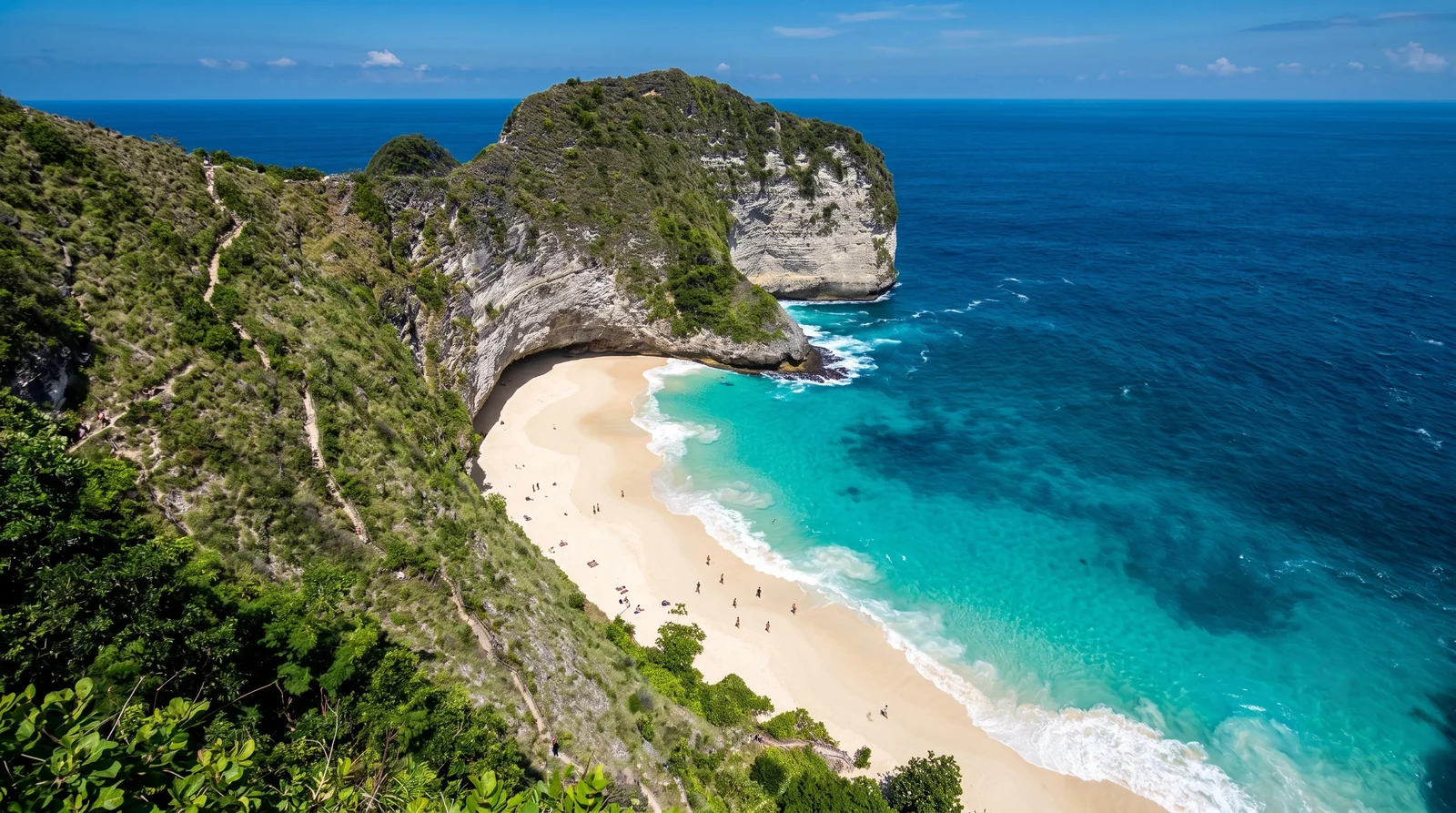
The largest of the three Nusa islands off Bali's southeast coast: sheer cliffs, turquoise bays and snorkeling with manta rays.

Read More

What should you pack for Bali?

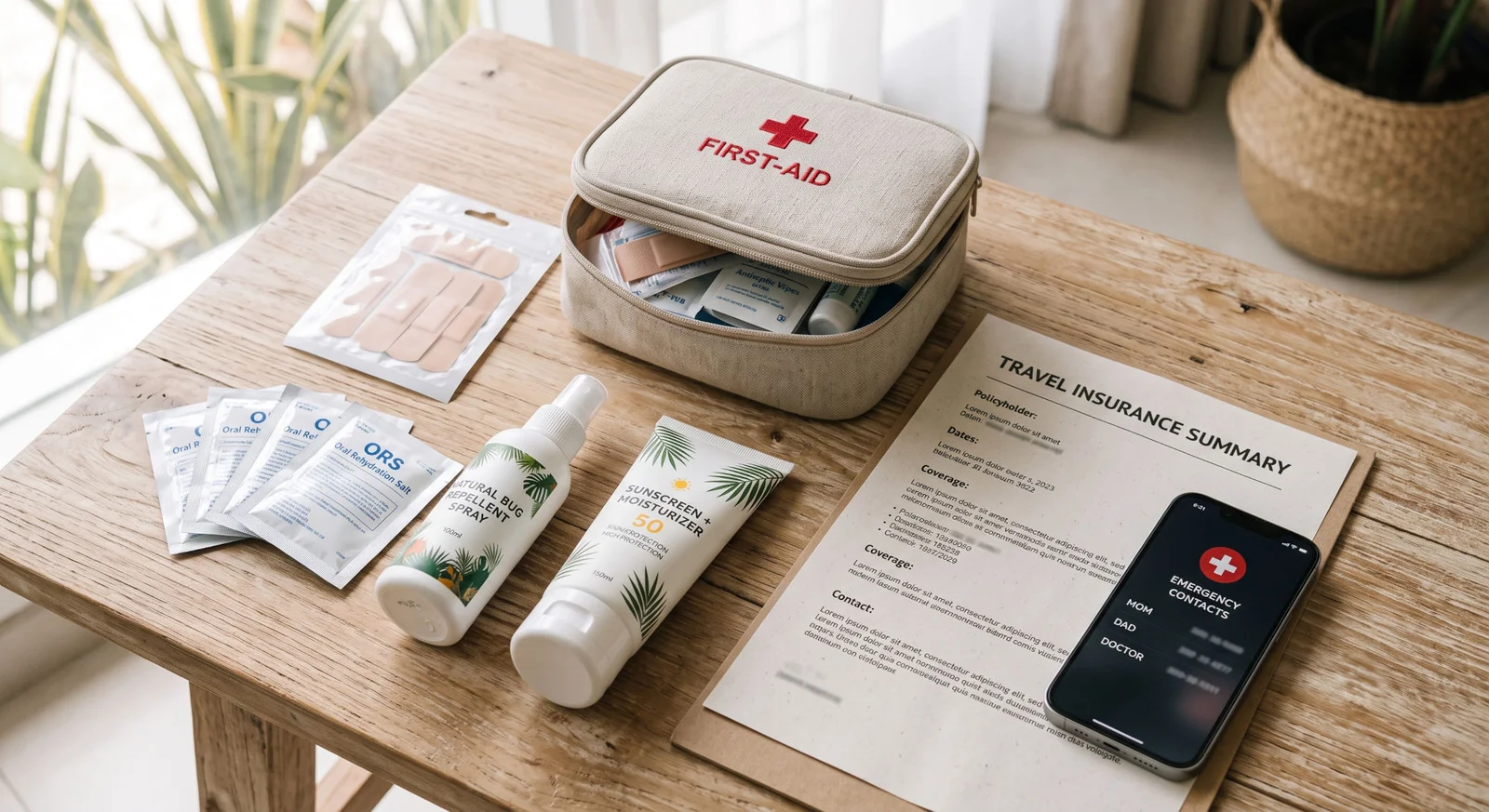
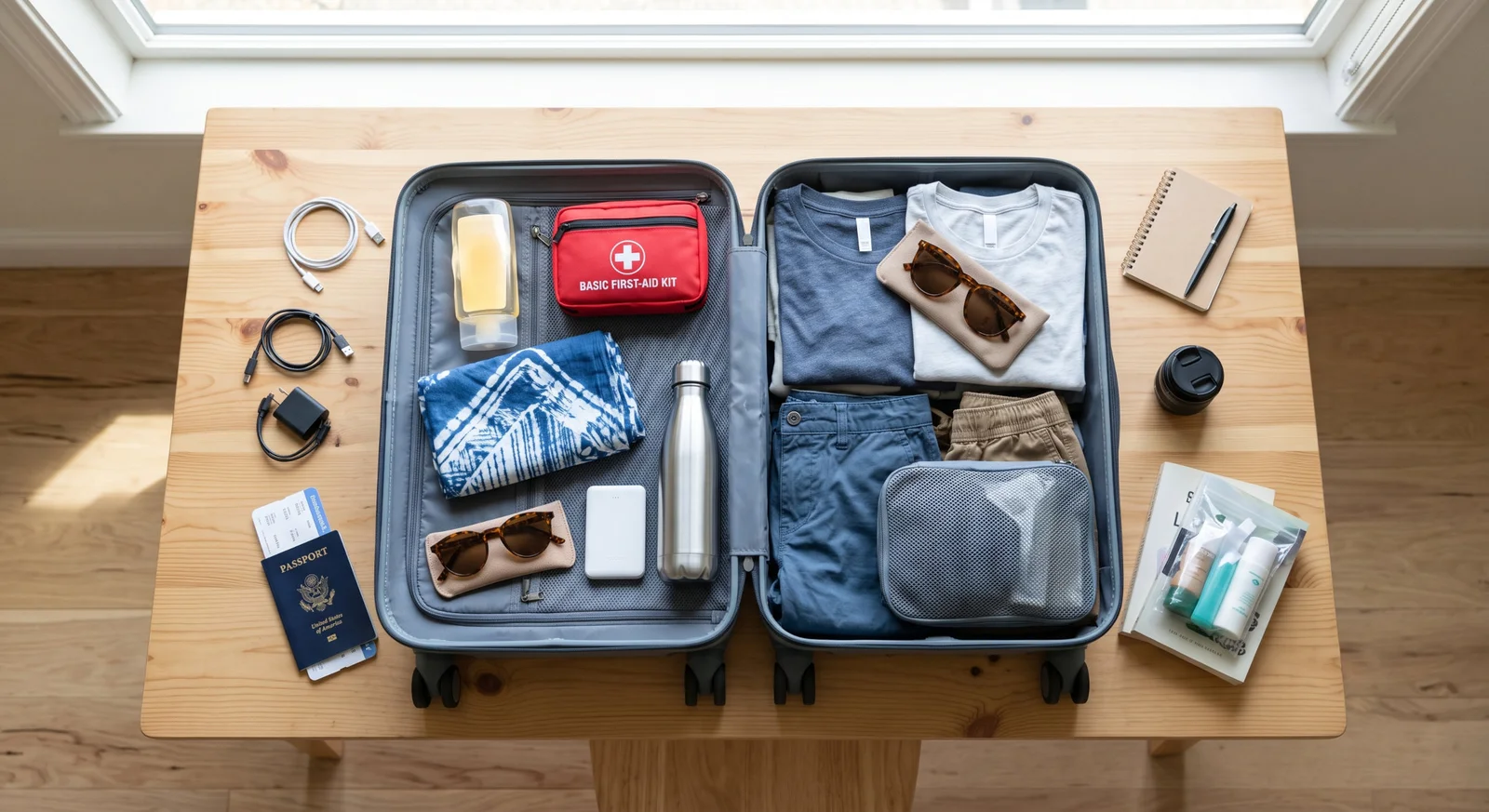
For Bali, light practicality matters more than a large suitcase: sun protection, comfortable shoes, modest clothing for temples, a small medicine kit, document copies, a waterproof pouch, and items that help with heat, humidity, and long transfers.

Basic list:

  • light clothing in breathable fabrics;
  • closed shoes for waterfalls, terraces, and volcanic routes;
  • sunscreen, hat, and sunglasses;
  • light overshirt or cover-up for sun and temples;
  • medicine kit, personal prescriptions, and travel insurance;
  • passport copy and offline documents;
  • power bank and plug adapter if your devices need one.

Do not pack for every unlikely scenario. Basic items are easy to buy in tourist areas, but personal medicine, documents, insurance, and bank access should be solved before departure.


FAQ: first trip to Bali

A traveller's basics: your personal medicines (with spares, in original packaging), something for an upset stomach and rehydration salts (for Bali belly), antiseptic and plasters, pain and fever relief, motion-sickness tablets, mosquito repellent and sunscreen. Antihistamines and after-sun also help. You can buy a lot at local pharmacies, but bring any specific medication you rely on. If you have a chronic condition, carry a prescription or a doctor's note.
It depends on your travel style: the island is large and getting around takes time. For a first trip it's handy to combine the south (beaches and infrastructure) with Ubud (nature and culture). Seminyak and Canggu are about beaches, cafés, surf and atmosphere; Nusa Dua and Sanur suit a calm or family stay; Uluwatu has cliffs, surf and views; Kuta is budget and busy. For nature and culture, head to Ubud (no sea there).
The best time is the dry season, April to October: sunny, 27–32°C, ideal for beaches and tours. The busiest and priciest months are July–August (plus the New Year period); the sweet spot for weather, prices and thinner crowds is May, June, September and early October. The wet season runs November to March — showers are short but frequent and it's humid, though prices drop and there are fewer tourists. December and January are the wettest.
Indonesian (Bahasa) is simple and friendly, and locals love a few words. Handy ones: 'terima kasih' — thank you, 'sama-sama' — you're welcome, 'selamat pagi/siang/malam' — good morning/afternoon/evening, 'permisi' — excuse me (to get attention), 'maaf' — sorry, 'berapa?' — how much?, 'ya / tidak' — yes / no. English is understood in tourist areas, but even a simple 'terima kasih' goes a long way.