At a Glance
- Original name: Pura Tanah Lot ("Land in the Sea")
- Where: Tabanan coast, southwest Bali
- Built: 15th century, by the Javanese priest Nirartha
- Unique feature: Built on a rock formation in the ocean, accessible only during low tide
- Time needed: 1–1.5 hours (best at sunset)
- Important: Entry inside the main temple on the rock is restricted to Hindu worshippers; tourists explore the base
- Getting there: About 45 minutes by car from Canggu/Kuta or Ubud
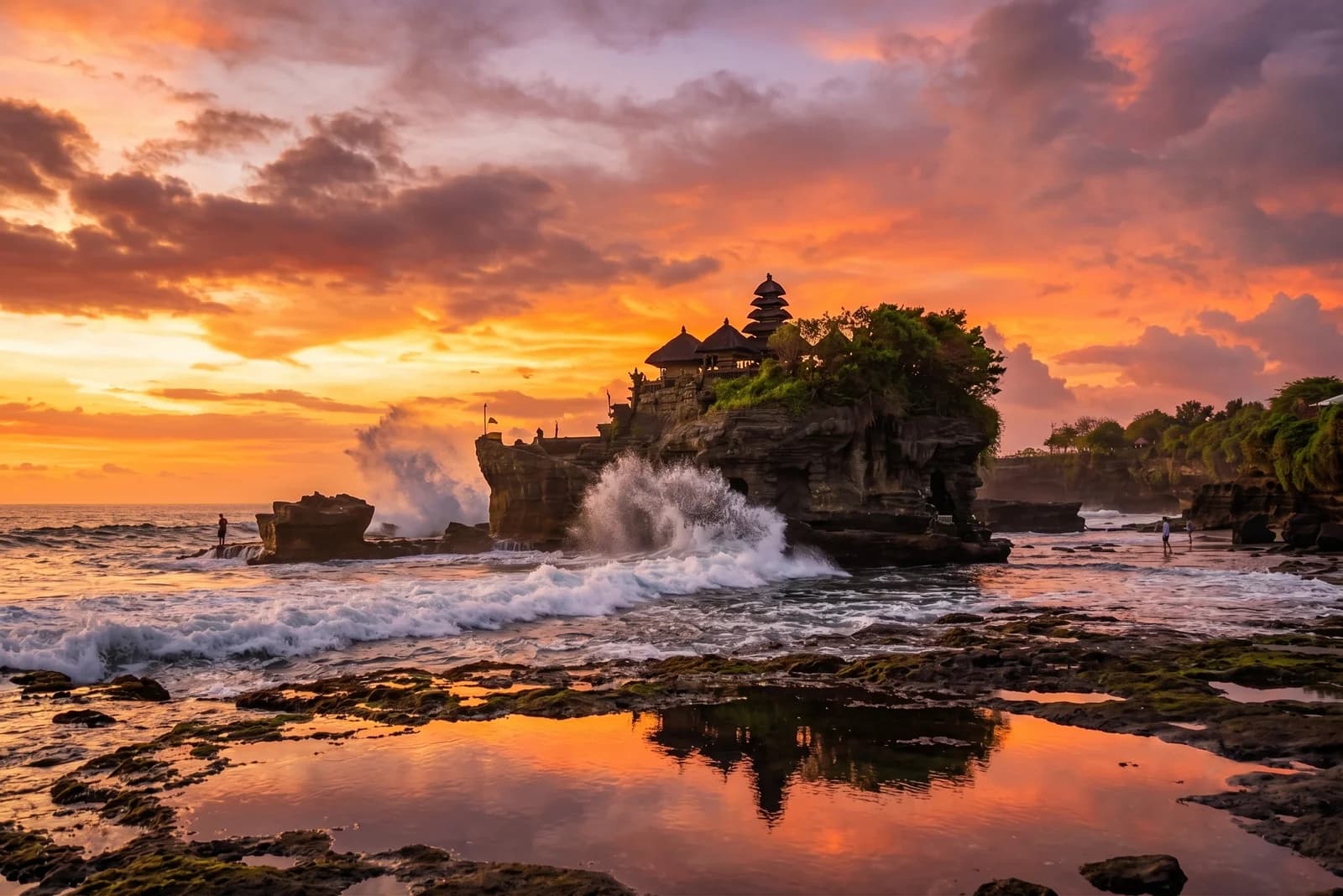
Tanah Lot Temple (Pura Tanah Lot) is one of Bali's most sacred and iconic sea temples, serving as a cultural symbol of Indonesia. Standing on a lone offshore rock shaped by the ocean waves, it connects to the mainland only via a narrow rocky path exposed during low tide.
Why Visit
It is one of seven sea temples built along the Balinese coast, designed to form a chain that spiritually protects the island from evil sea spirits. Visitors flock here for the breathtaking sunsets, when the temple's silhouette is framed against a burning sky, and for its unique oceanic setting.
It is perfect for photography enthusiasts and culture seekers alike. However, keep in mind that it is one of Bali's most heavily visited sites, so expect a lively tourist scene rather than quiet solitude.
History and Legends
The exact history of Tanah Lot is deeply interwoven with local spiritual lore:
- The Legend of Nirartha: It is believed the temple was founded in the 15th century by Dang Hyang Nirartha, a high priest from Java. Guided by a holy light emanating from a freshwater spring on the coast, he stopped to pray. The local chief, Bendesa Beraben, grew jealous and ordered Nirartha to leave. In response, Nirartha used his spiritual powers to push the rock he sat on into the sea, declaring it a sacred sanctuary.
- Guardian Sea Snakes: According to legend, Nirartha threw his sash into the water, where it transformed into venomous sea snakes (black-and-yellow striped sea kraits). These snakes still nest in the caves at the base of the temple and are believed to guard the sanctuary from dark forces.
Restoring the Rock
Over centuries, the relentless ocean waves severely eroded the rock's foundation. In the 1980s, the structure faced imminent collapse. With funding from the Japanese government, a massive restoration project was carried out in the 1990s. Today, roughly one-third of the temple rock is high-quality artificial stone, engineered to blend seamlessly with the natural landscape.
Rules and Tips for Visitors
- Entering the Temple: Because Tanah Lot is an active place of worship, tourists are not allowed to climb the stairs up to the main temple courtyard on top of the rock. Exploration is restricted to the beach and the base of the rock.
- The Holy Spring: During low tide, you can walk across to the base of the rock where the freshwater spring flows. For a small donation, local priests will perform a brief blessing ceremony, washing your face with holy water, placing raw rice (waja) on your forehead, and pinning a frangipani flower behind your ear.
- Dress Code: Unlike other Balinese temples, a sarong is not strictly required to walk around the beach and cliffside viewpoints, but modest clothing is recommended.
Best Time to Visit
The most popular time is sunset (around 5:30 PM – 6:30 PM). While the views are spectacular, it is also when crowds are at their peak. For a peaceful experience with soft morning light and empty paths, visit at opening time (7:00 AM – 8:00 AM). Always check the local tide charts before planning your trip.
Combine Your Trip
- Uluwatu Temple and Tanah Lot are both part of the sea temple network protecting Bali.
- Jatiluwih Rice Terraces and Batuan Temple pair naturally with a sunset trip to Tanah Lot.
FAQ
Can tourists climb up into the temple? No, access to the top of the rock is restricted to Balinese worshippers during ceremonies. Tourists can only explore the beach at the base. Where is the freshwater spring located? The sacred freshwater spring wells up inside a small cave at the base of the rock, accessible only during low tide. Do I need a sarong to visit Tanah Lot? A sarong is not required for the surrounding clifftops and markets, but respectful dress (covering shoulders and knees) is highly recommended when visiting the base.
Frequently asked questions
Excursions visiting Tanah Lot
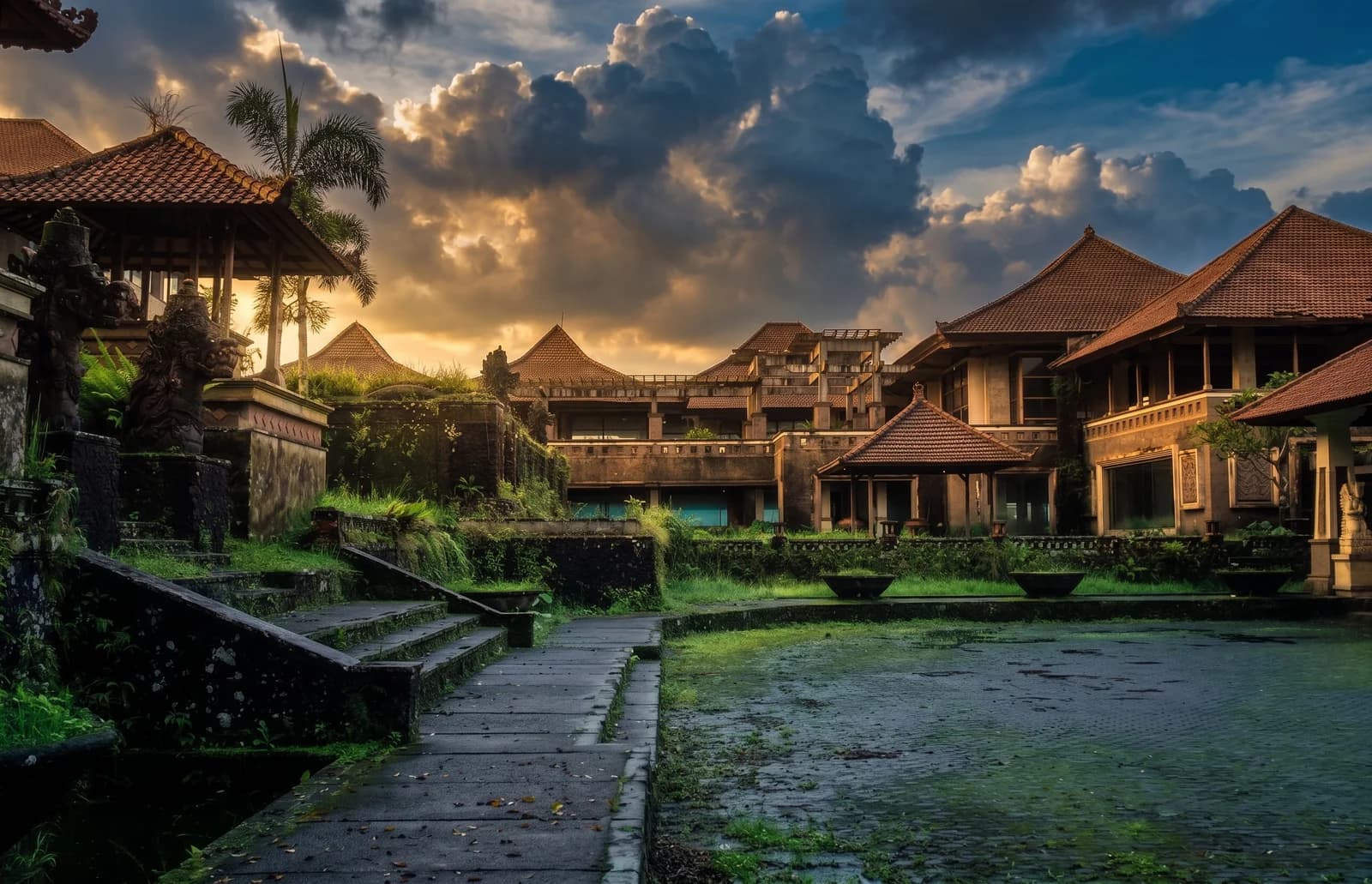
Bedugul and Tanah Lot + Ghost Hotel
Extended