Temples in Bali are not static tourist monuments. They are active places of worship where Balinese families pray, bring offerings, mark life-cycle ceremonies, and maintain harmony between gods, people, and the unseen world. So the best way to choose which Bali temples to visit is not only by photo popularity, but by the kind of experience you want: ocean cliffs, holy springs, mountain sanctuaries, lake scenery, or village architecture.
This guide covers the best temples in Bali for a first trip: Uluwatu Temple, Tanah Lot, Besakih, Tirta Empul, Lempuyang, Ulun Danu Bratan, and Batuan. You will also find route ideas by region, etiquette notes, and a realistic way to plan 1, 2, or 3 temple days without spending the whole trip in traffic.
Which Bali temples should you visit first?
For a first visit, choose temples that show different sides of Balinese Hinduism: Uluwatu for ocean cliffs and sunset, Tanah Lot for a sea-rock shrine, Besakih for Bali's most important temple complex, Tirta Empul for purification rituals, and Ulun Danu Bratan for a cool mountain lake setting. This gives you variety instead of repeating the same visual experience.
A strong first-trip shortlist:
- Uluwatu — cliff temple, sunset, and the Kecak dance.
- Tanah Lot — sea temple on a rock, best at low tide or sunset.
- Besakih — Bali's "Mother Temple" on the slope of Mount Agung.
- Tirta Empul — holy spring temple and melukat purification ritual.
- Ulun Danu Bratan — lake temple in the cooler Bedugul highlands.
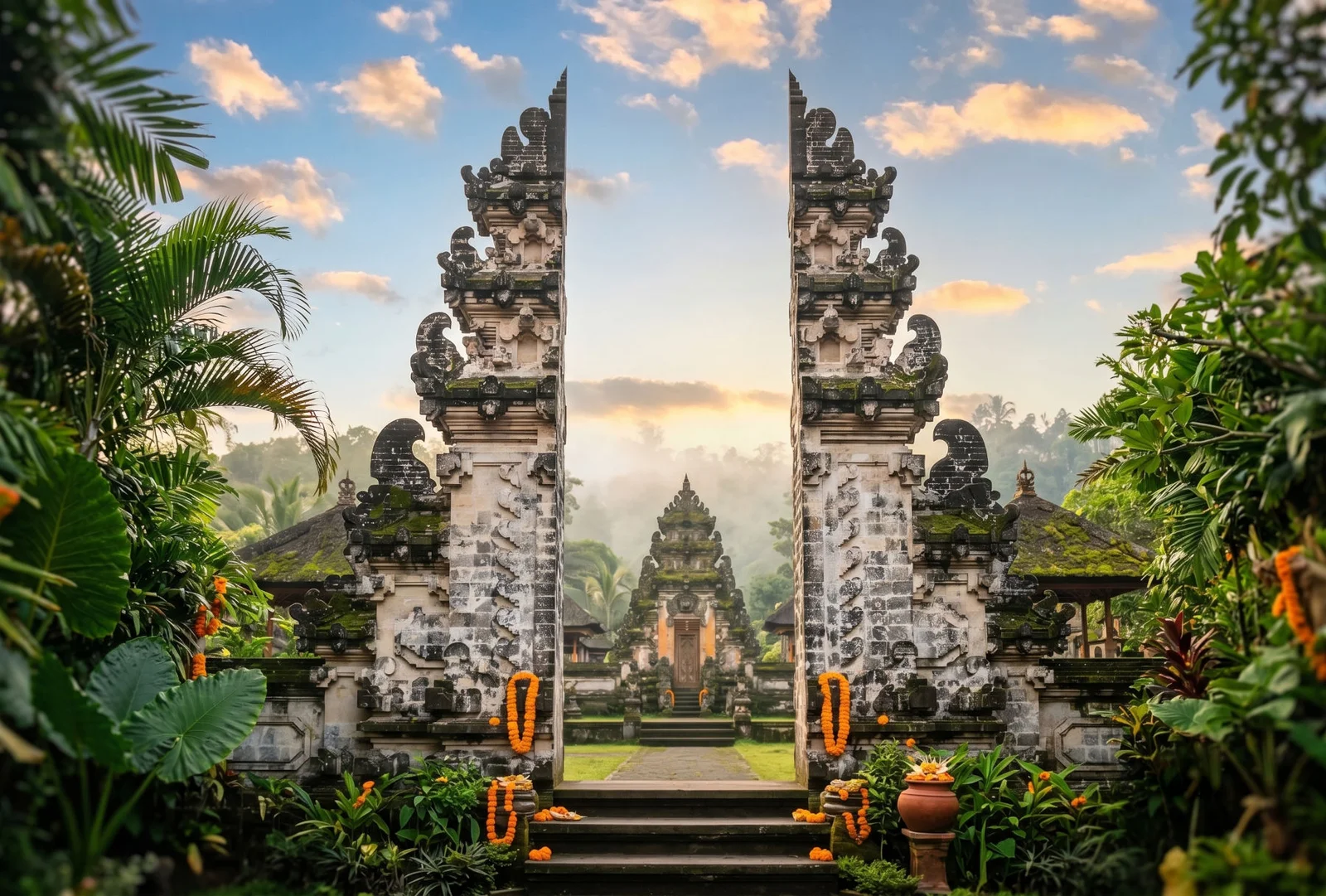
- Lempuyang — eastern temple known for the "Gates of Heaven" view.
- Batuan — accessible temple near Ubud with detailed stone carving.
Uluwatu Temple: cliffs, ocean, and Kecak at sunset
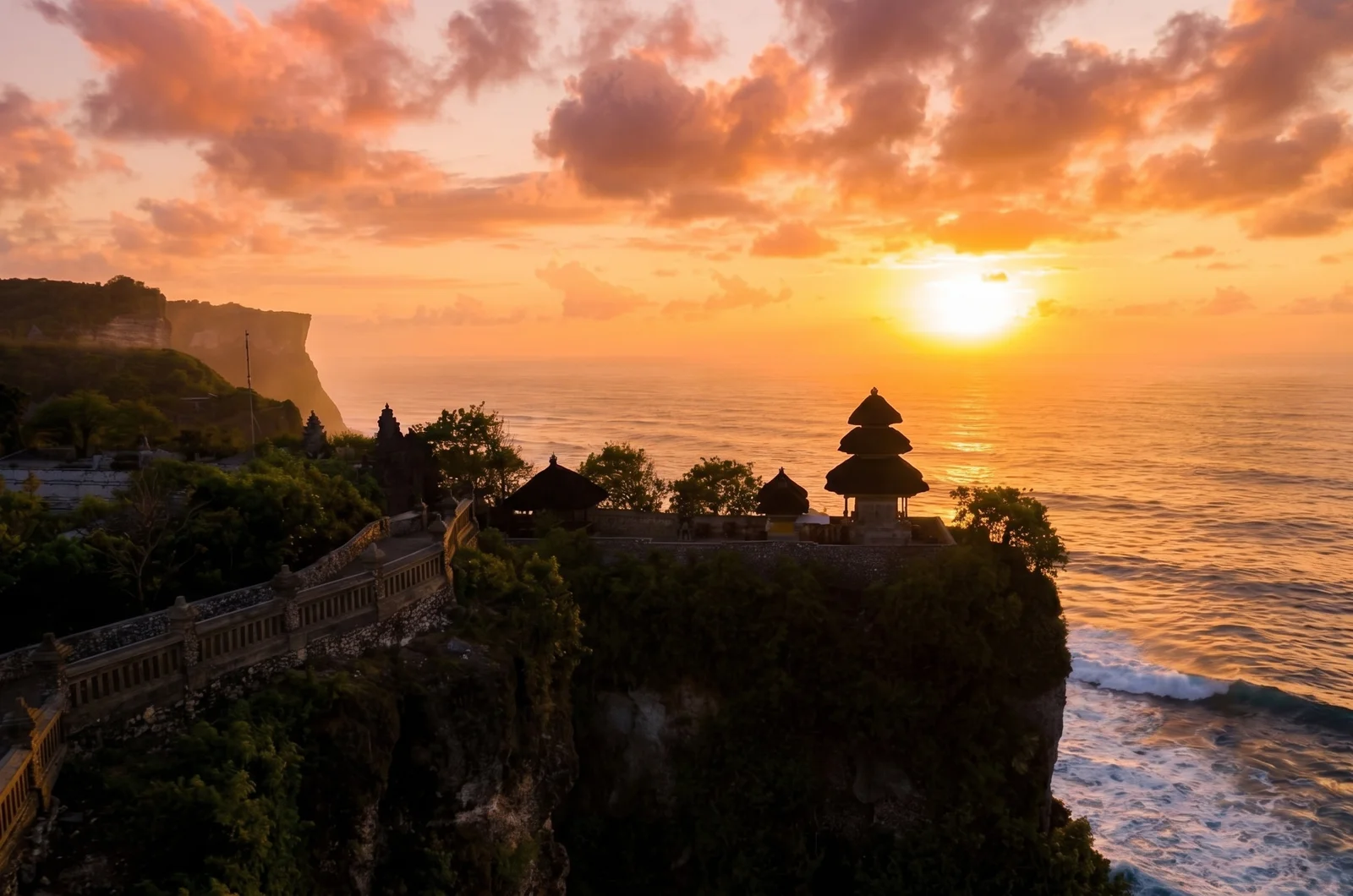
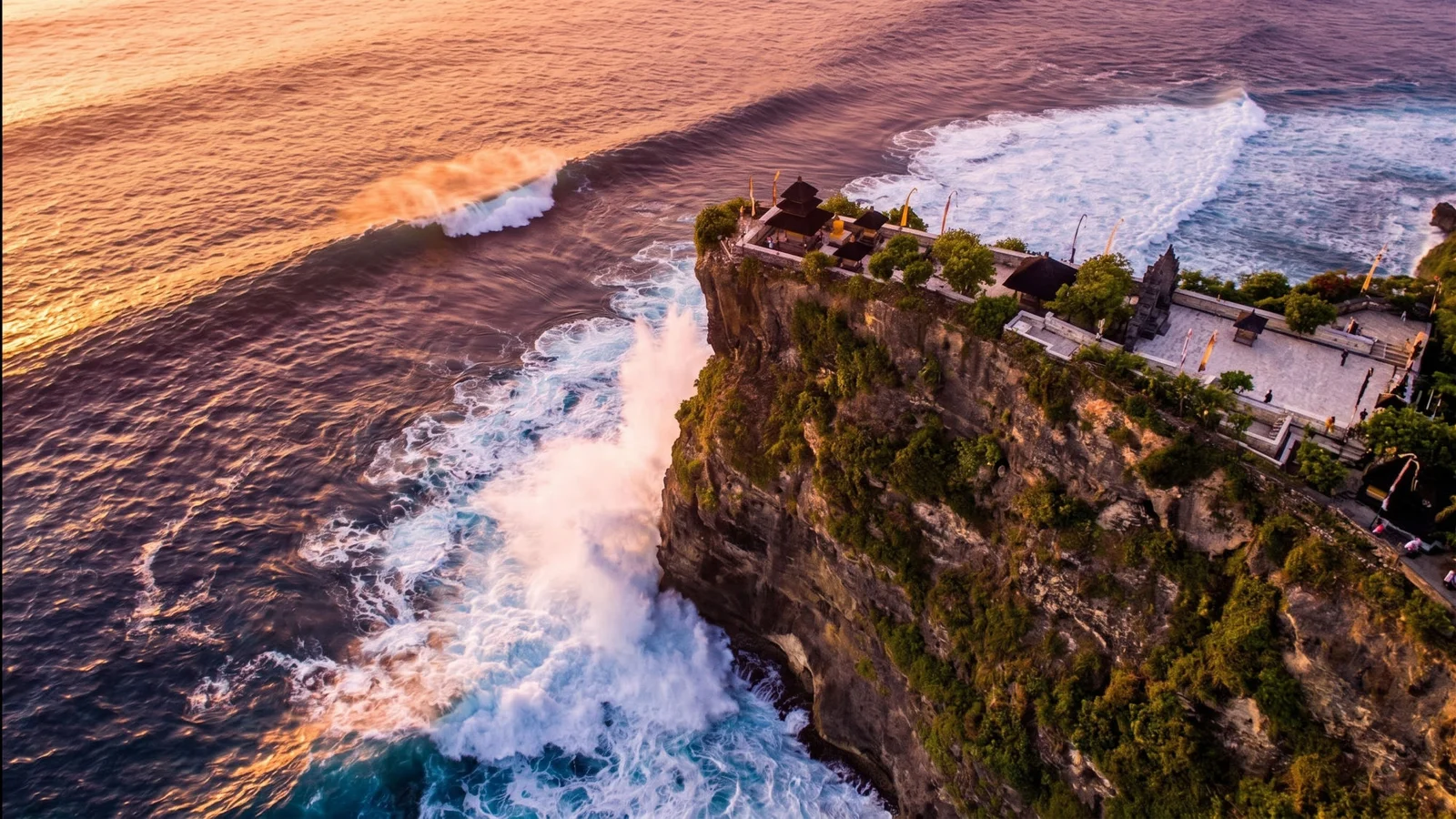
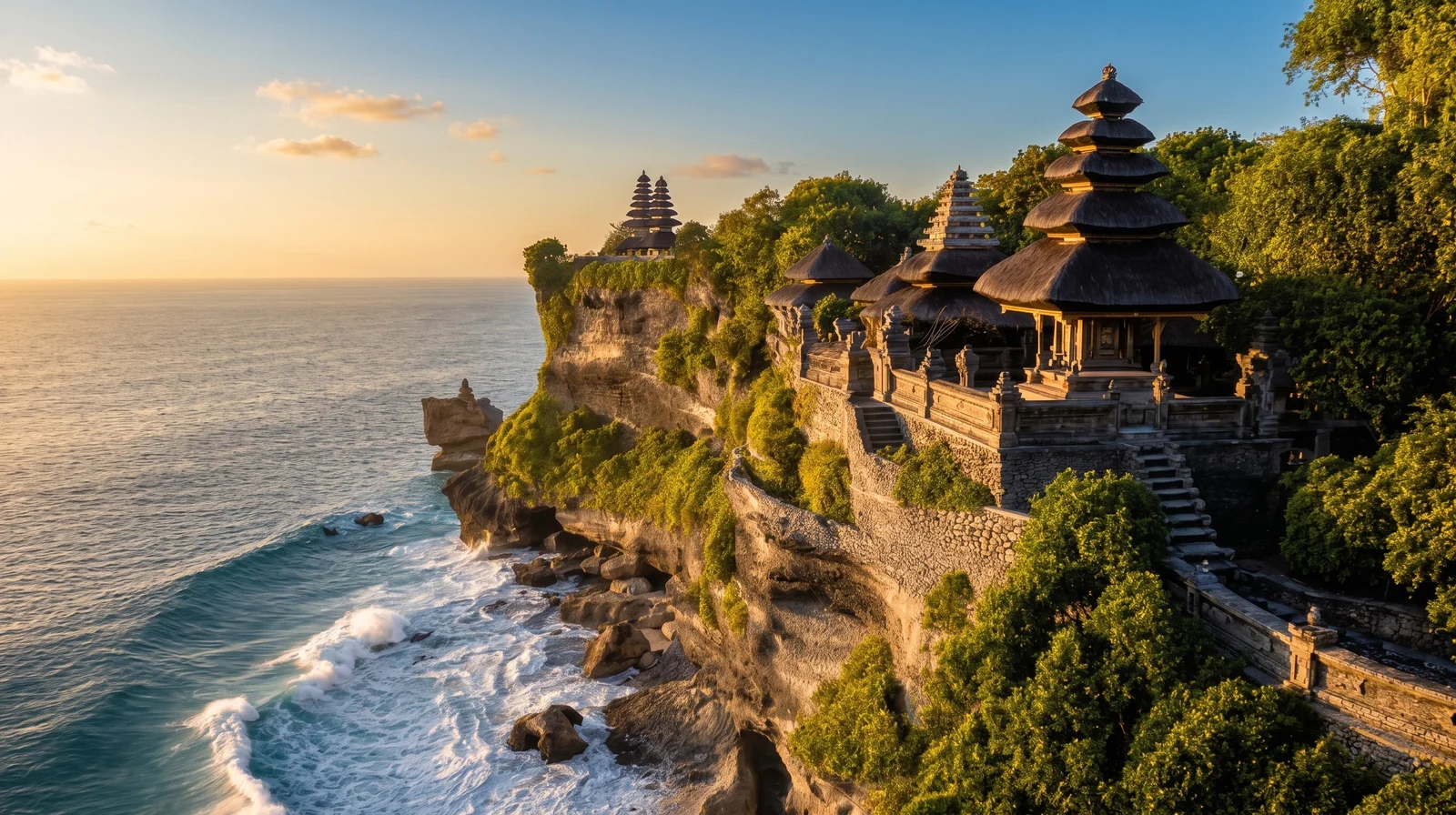
Uluwatu Temple in Bali sits on a limestone cliff roughly 70 meters above the Indian Ocean. It is one of the island's most dramatic southern temples, visited for sunset views, cliff paths, monkeys, and the evening Kecak performance in the amphitheater beside the temple.
Uluwatu fits naturally into a Bukit Peninsula day: Padang-Padang, Suluban, Melasti, and the sunset temple visit work well together. The temple itself is not a long museum-style stop, but the cliff walk, viewpoints, and sunset timing usually take 2-3 hours.
Useful notes:
- the monkeys are fast, so keep sunglasses, phones, jewelry, and loose items in a bag;
- the inner sacred area is closed to visitors, but the cliffside path gives the main visual experience;
- arrive early for Kecak because the sunset show fills quickly.
Tanah Lot: Bali's classic sea temple
Tanah Lot is often described as a water temple, but it is more accurately a sea temple: the shrine stands on a rock offshore and can only be approached at low tide. It is one of Bali's most recognizable sunset silhouettes, and also one of the busiest temple sites on the island.
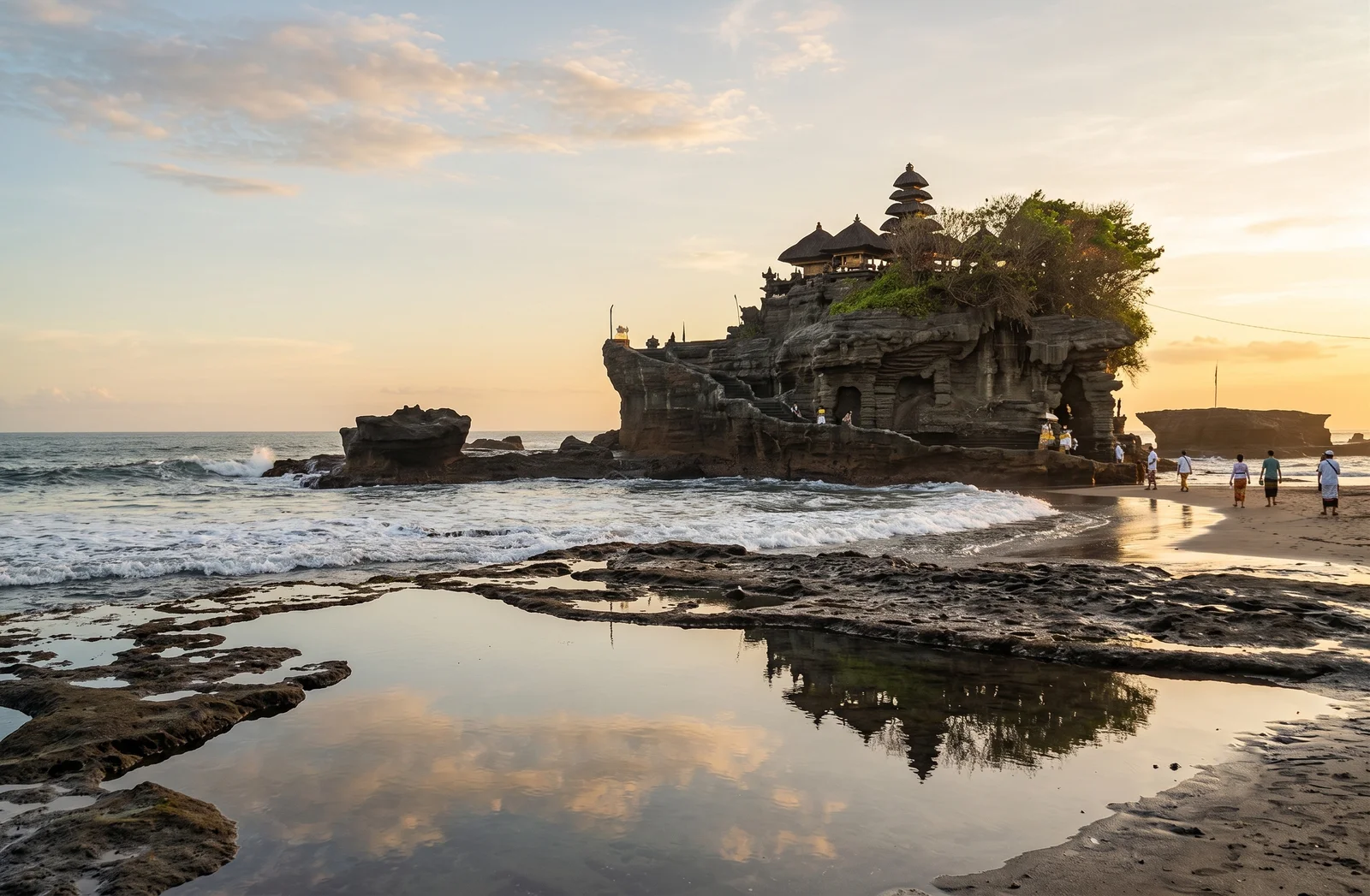
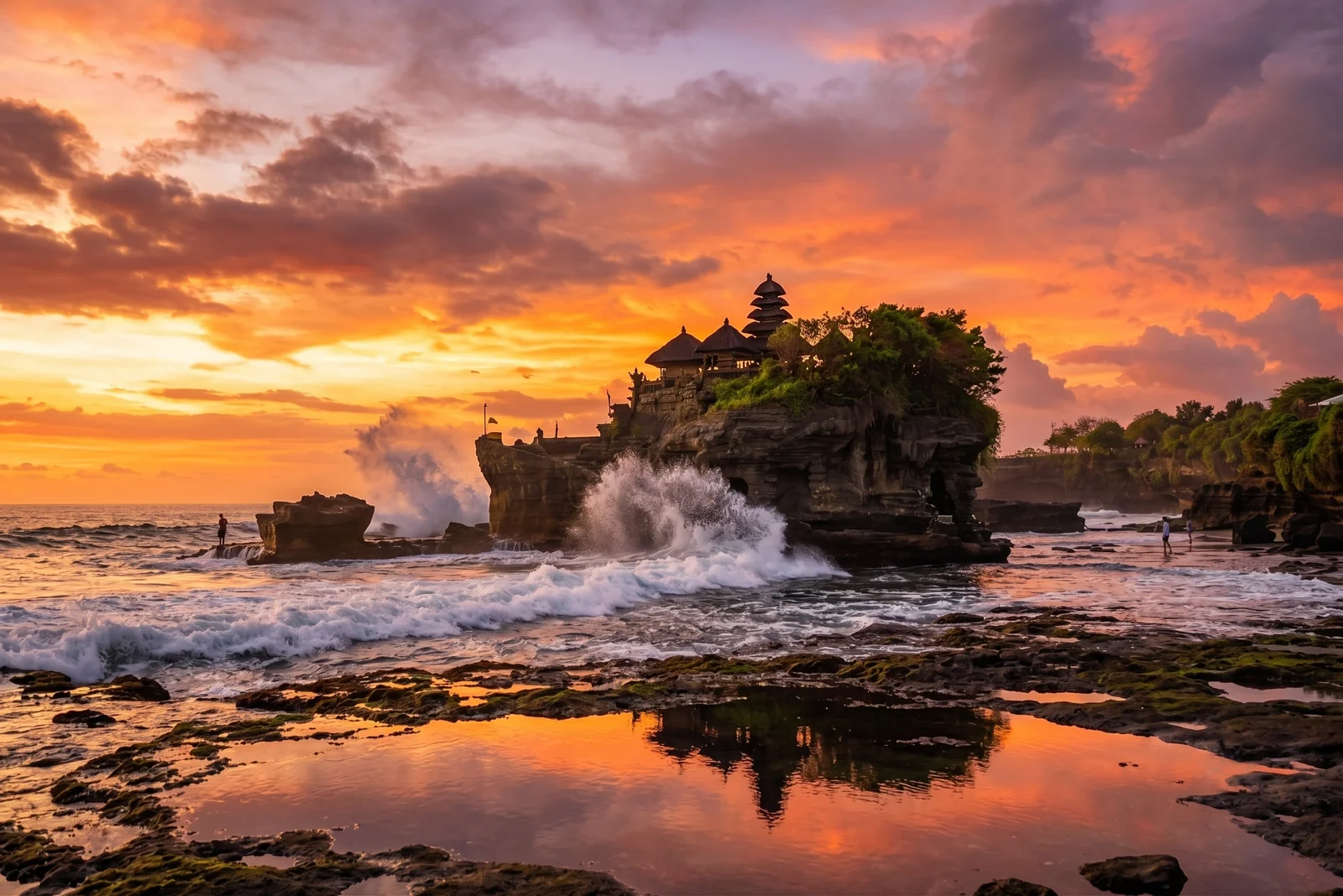
Visitors usually walk around the coastal grounds, descend toward the base of the rock at low tide, and watch the waves crash around the temple. Tourists cannot enter the inner shrine courtyard; it remains an active sacred space for Hindu worshippers.
Come in the morning for a calmer visit, or before sunset if photography is the priority. Tide timing matters: at high tide the temple looks more dramatic from a distance, while at low tide you can get closer to the rock.
Besakih: Bali's Mother Temple near Mount Agung
Besakih Temple is often called Bali's Mother Temple. It is not a single building, but a large sacred complex on the slope of Mount Agung, with multiple shrines, terraces, stairways, and ceremonial courtyards tied to the island's religious hierarchy.
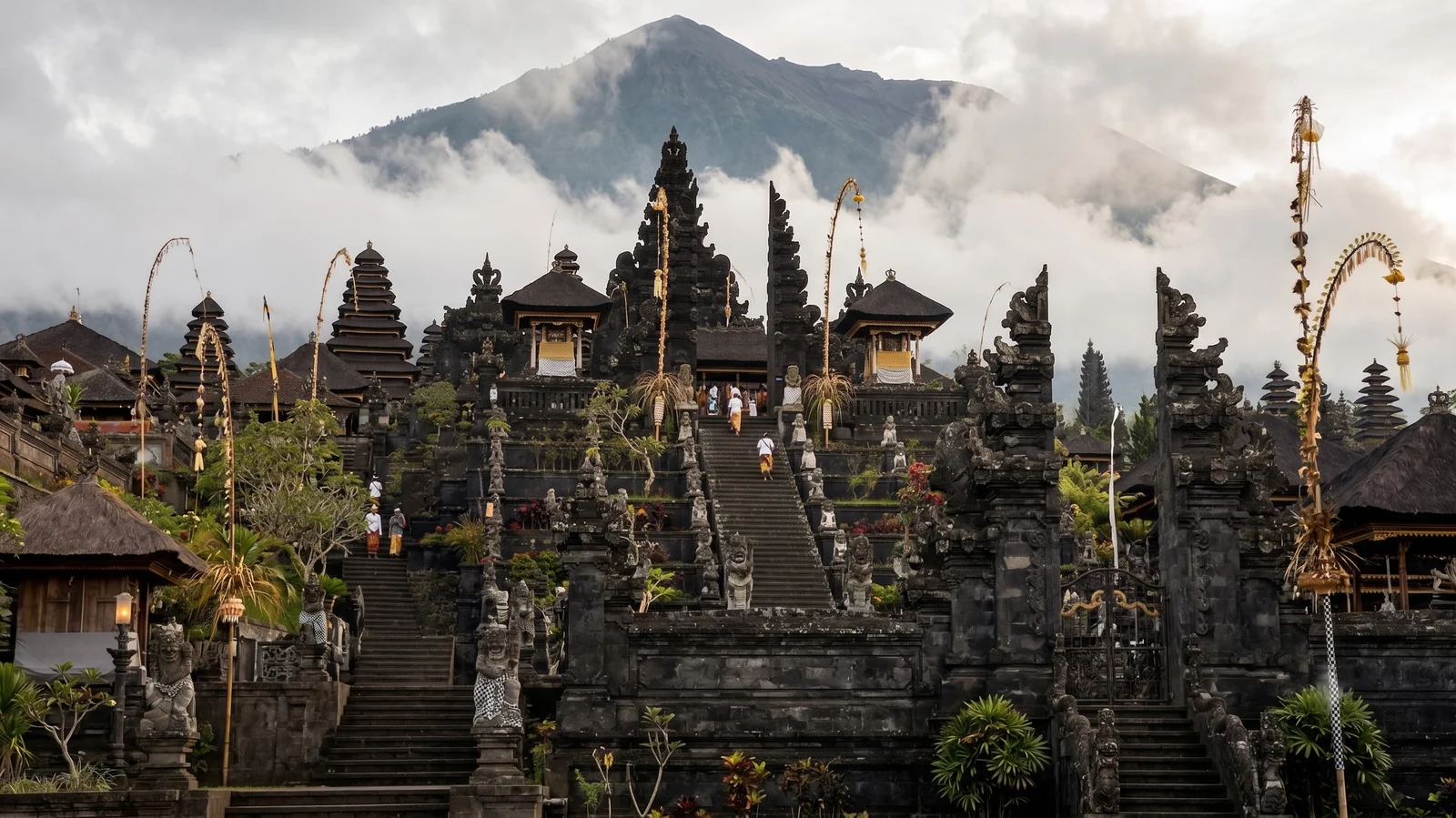
Besakih is the right choice if you want to understand scale and structure rather than just see a pretty gate. The complex is closely connected to Mount Agung, the island's most sacred volcano, and on clear days the mountain rises behind the temple terraces.
Allow around 2 hours for the visit, not counting the drive. From the southern resorts it is a long outing, so Besakih is usually paired with Kintamani, East Bali, or the water palaces.
Tirta Empul: holy springs and the melukat ritual
Tirta Empul Temple near Tampaksiring is known for its holy springs and the melukat purification ritual. Pilgrims and visitors move through a bathing pool, pausing at each fountain for a short prayer and water cleansing; it is one of the clearest ways to see Balinese religion in action.
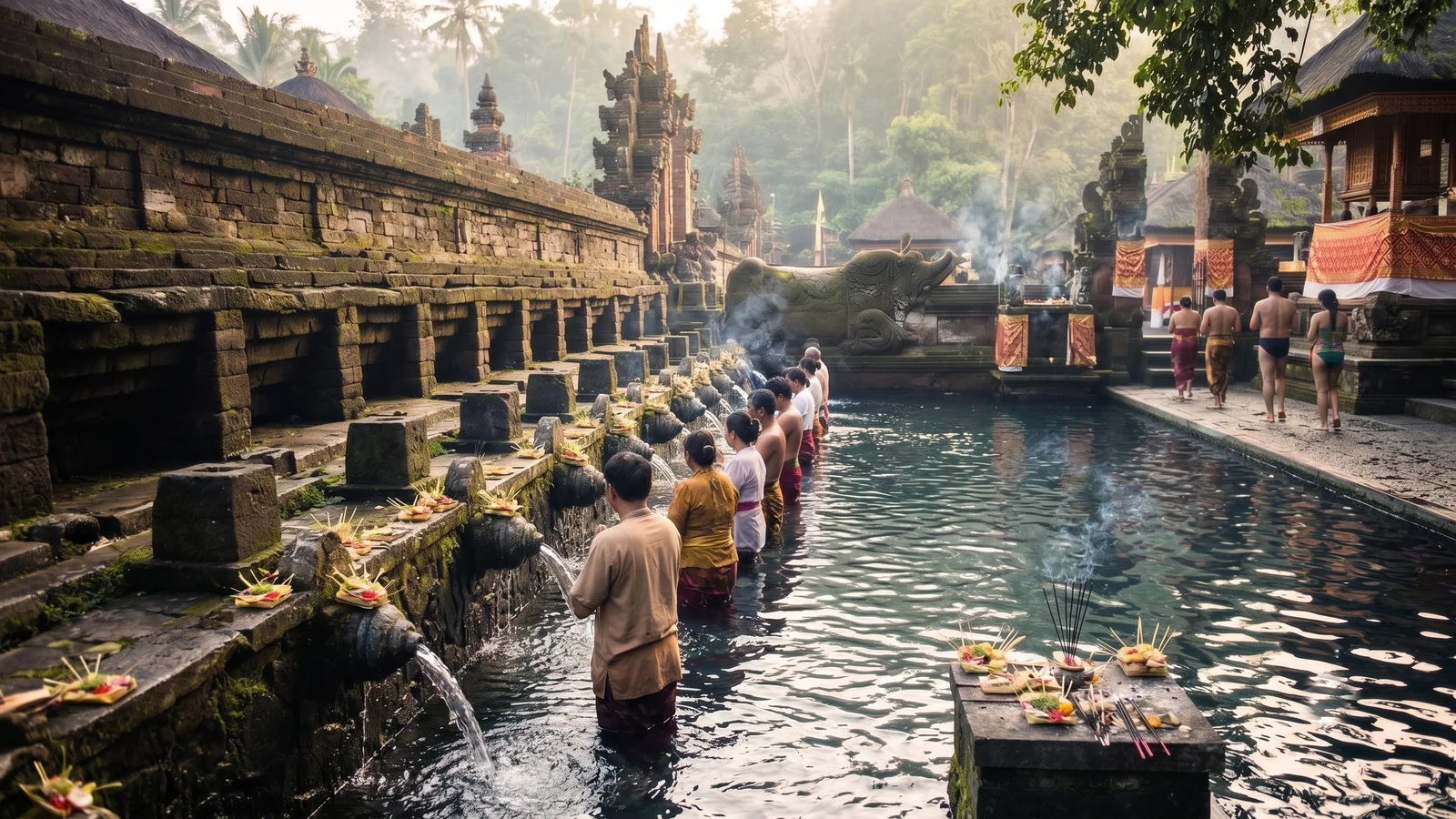
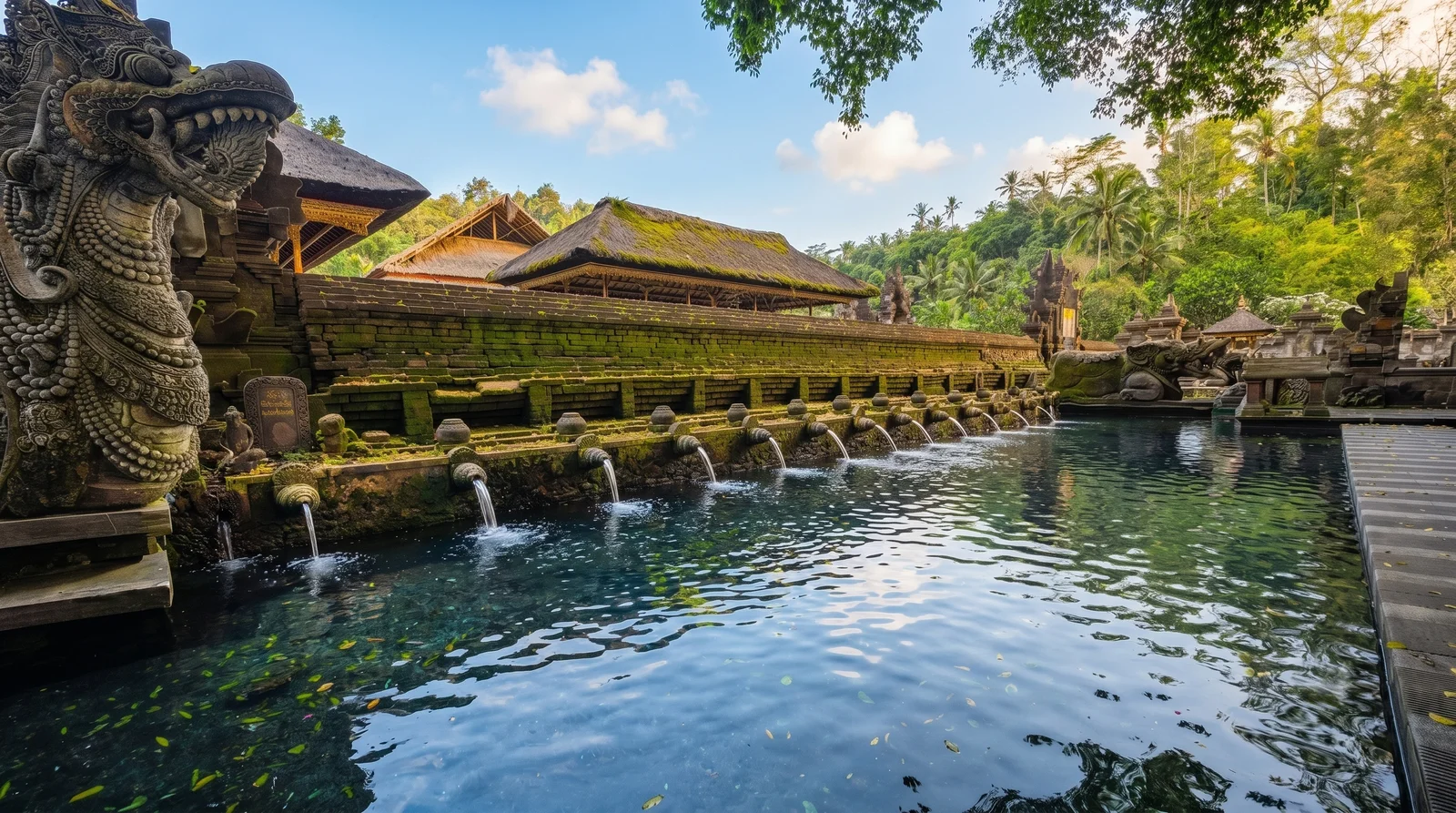
Tirta Empul works especially well from Ubud: nearby stops include Tegallalang Rice Terraces, Gunung Kawi Sebatu, and craft villages. If you plan to join the purification, bring a change of clothes and a towel; a sarong is usually provided or available at the entrance.
Do not treat the central pool like a photo prop. This is a religious sequence, so follow the line, keep space for people praying, and ask a local guide or temple attendant about the correct order before entering the water.
Lempuyang Temple: gates, Mount Agung, and East Bali
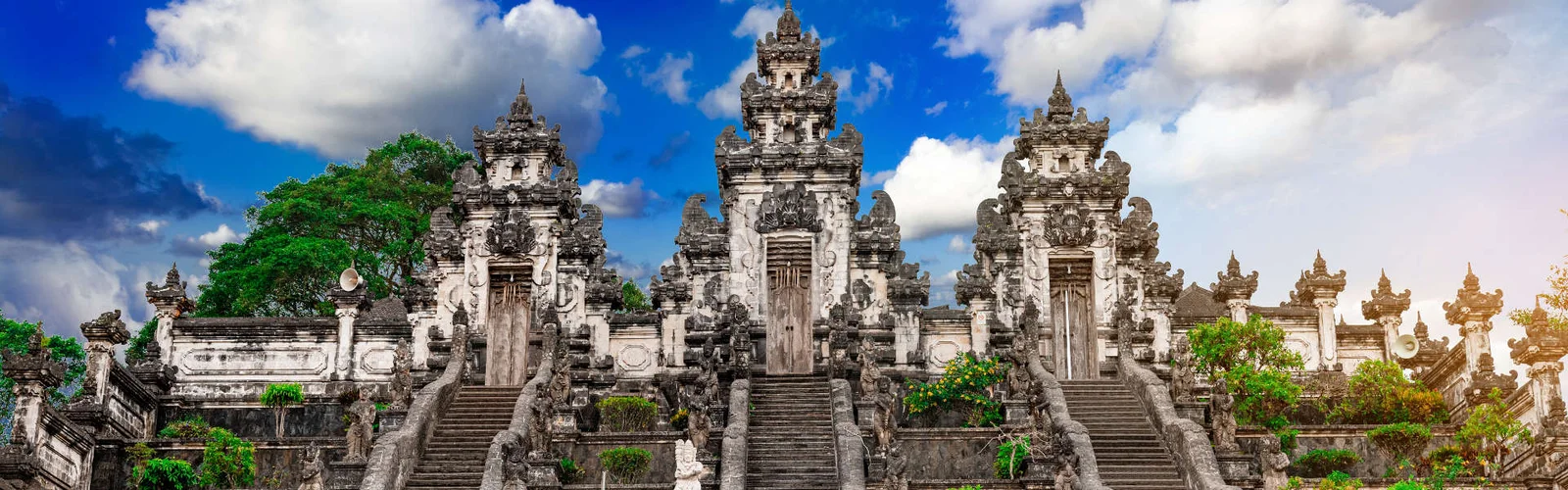
Lempuyang Temple is famous for the split "Gates of Heaven" framing Mount Agung on clear mornings. Beyond the photo spot, it is part of a larger eastern temple complex on Mount Lempuyang, with a more serious pilgrimage atmosphere than many quick social-media visits suggest.
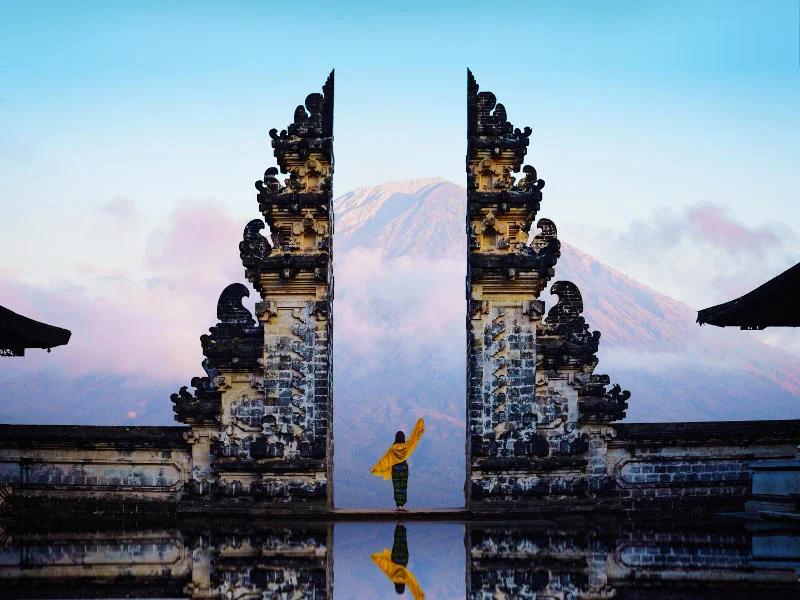
Lempuyang makes sense when you are already exploring East Bali. Pair it with Tirta Gangga, Taman Ujung, and Virgin Beach. If you travel from Canggu, Seminyak, or Nusa Dua only for the gate photo, the drive may feel disproportionate.
Arrive early in the morning. You have a better chance of a clear Mount Agung view and a shorter wait for the gate photograph.
Ulun Danu Bratan: Bali's lake temple in the highlands
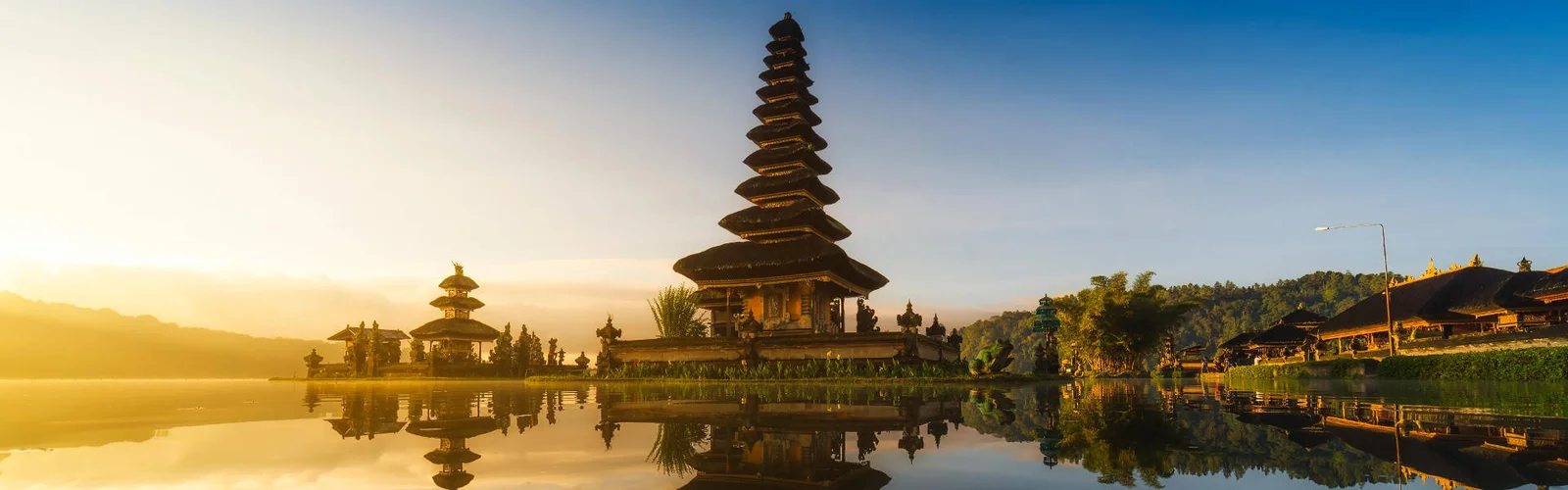
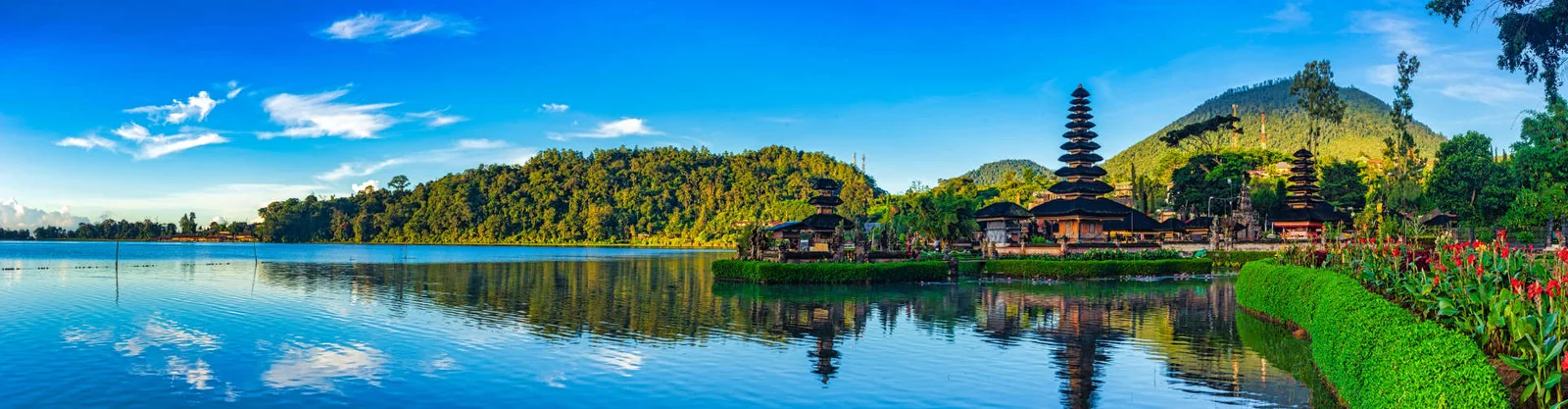
Ulun Danu Bratan Temple sits by Lake Bratan in the Bedugul highlands and is dedicated to Dewi Danu, the goddess of water. At around 1200 meters above sea level, the air is cooler than on the coast, and morning mist often gives the temple a softer mountain atmosphere.
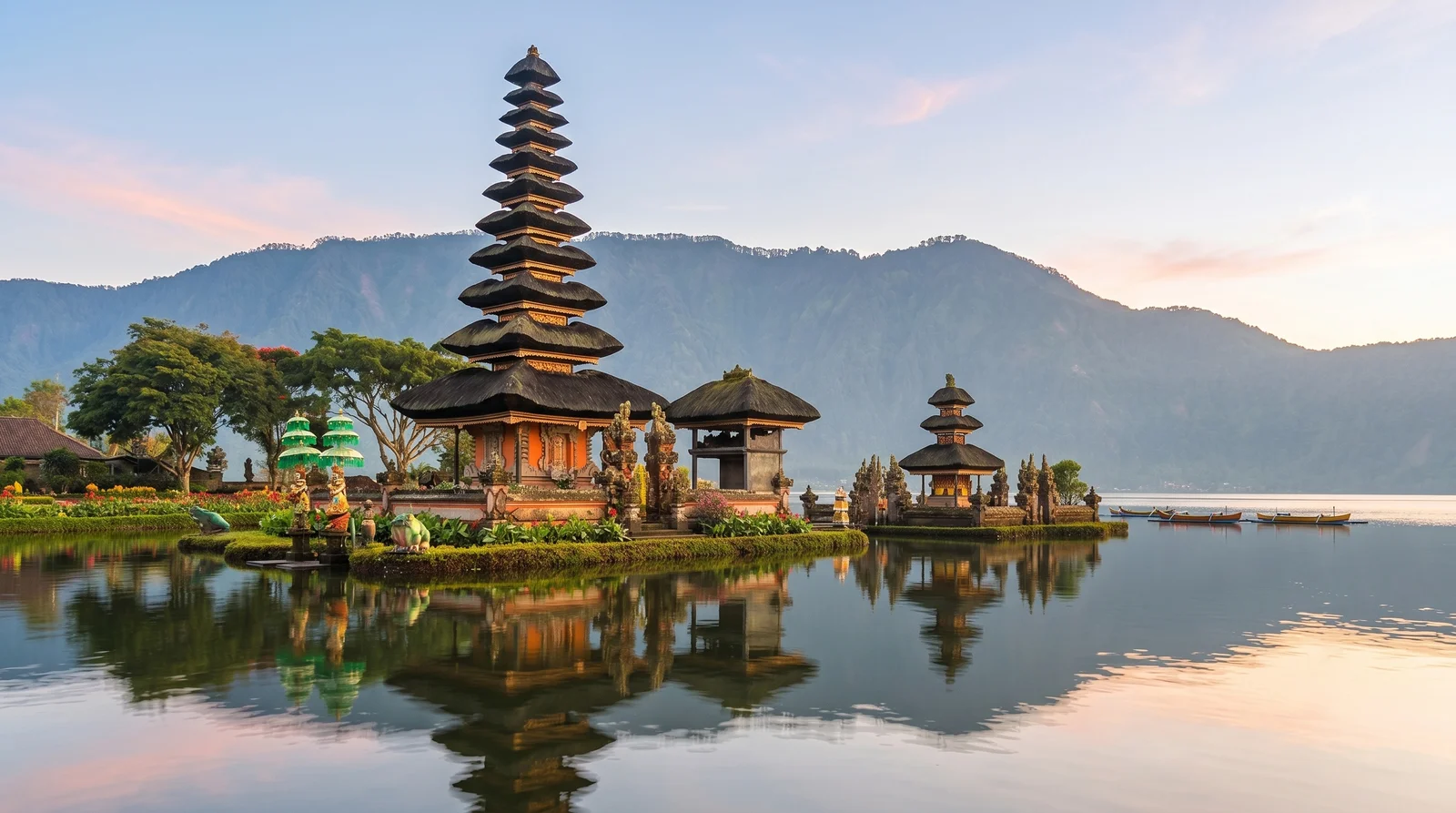
This temple fits a north or central Bali route. It is commonly combined with the Bali Botanic Garden, Buyan and Tamblingan lakes, Jatiluwih rice terraces, and Nungnung Waterfall.
If you want a calm scenic "water temple" experience, Ulun Danu Bratan often feels gentler and cooler than the hot coastal drama of Tanah Lot.
Batuan, Batukaru, and Gunung Kawi Sebatu: quieter temple options
Not every beautiful Bali temple requires a long drive or a photo queue. Batuan is convenient from Ubud, Batukaru feels like a quiet mountain sanctuary, and Gunung Kawi Sebatu is a good choice for holy water scenery without the density of Tirta Empul.
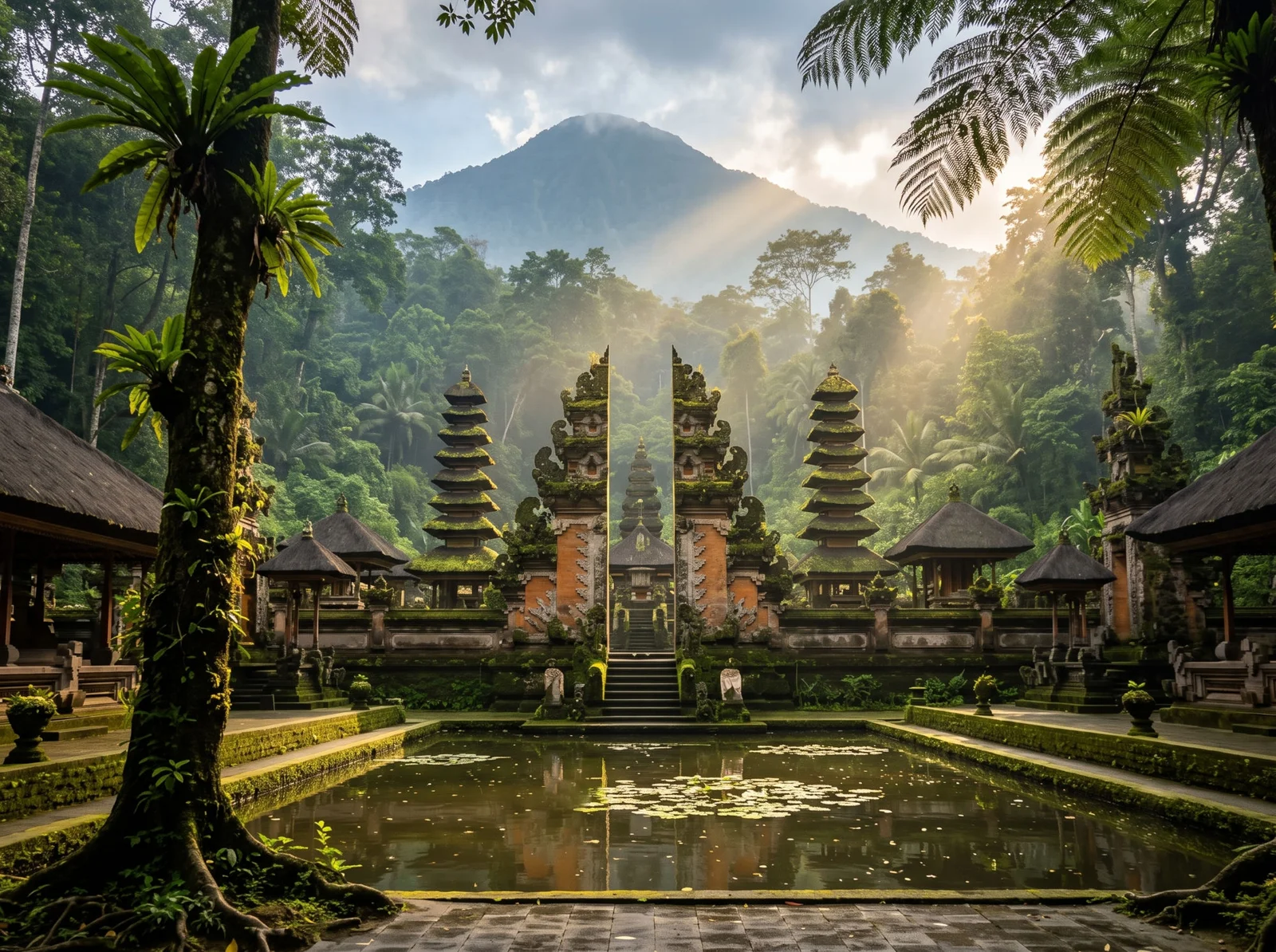
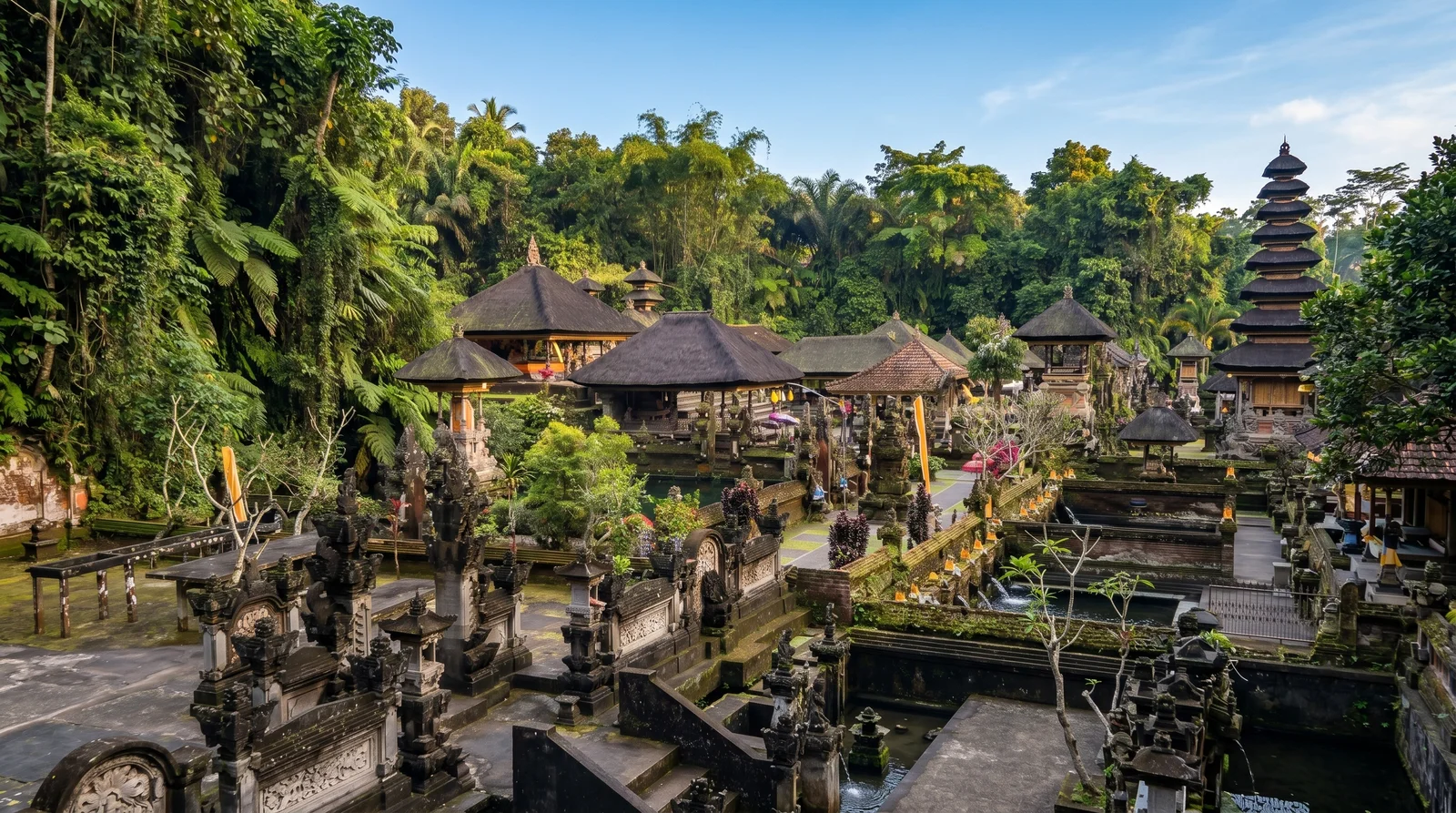
Batuan is known for stone carving, gateways, dense ornamentation, and easy access from Ubud. It is a useful stop if you want to understand the structure of a classic Balinese temple without traveling far.
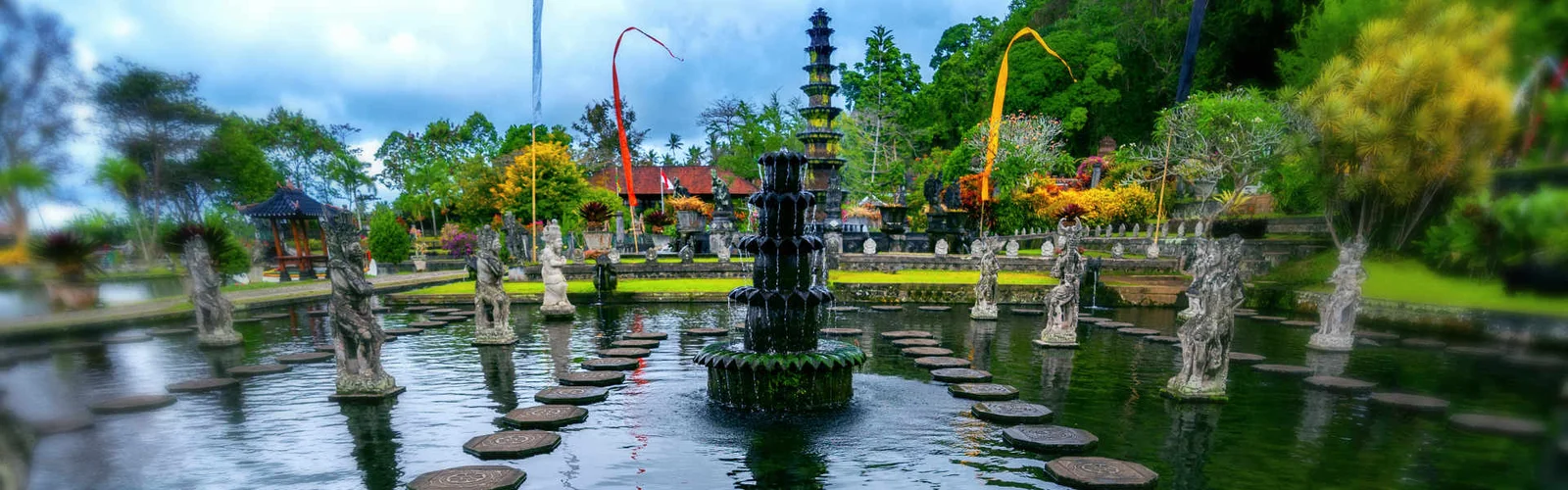
Batukaru sits near the foot of its namesake mountain and feels greener, damper, and more subdued. Gunung Kawi Sebatu is a water temple with springs and ponds, often chosen as a quieter alternative to Tirta Empul.
Bali temples by region: how to plan a realistic route
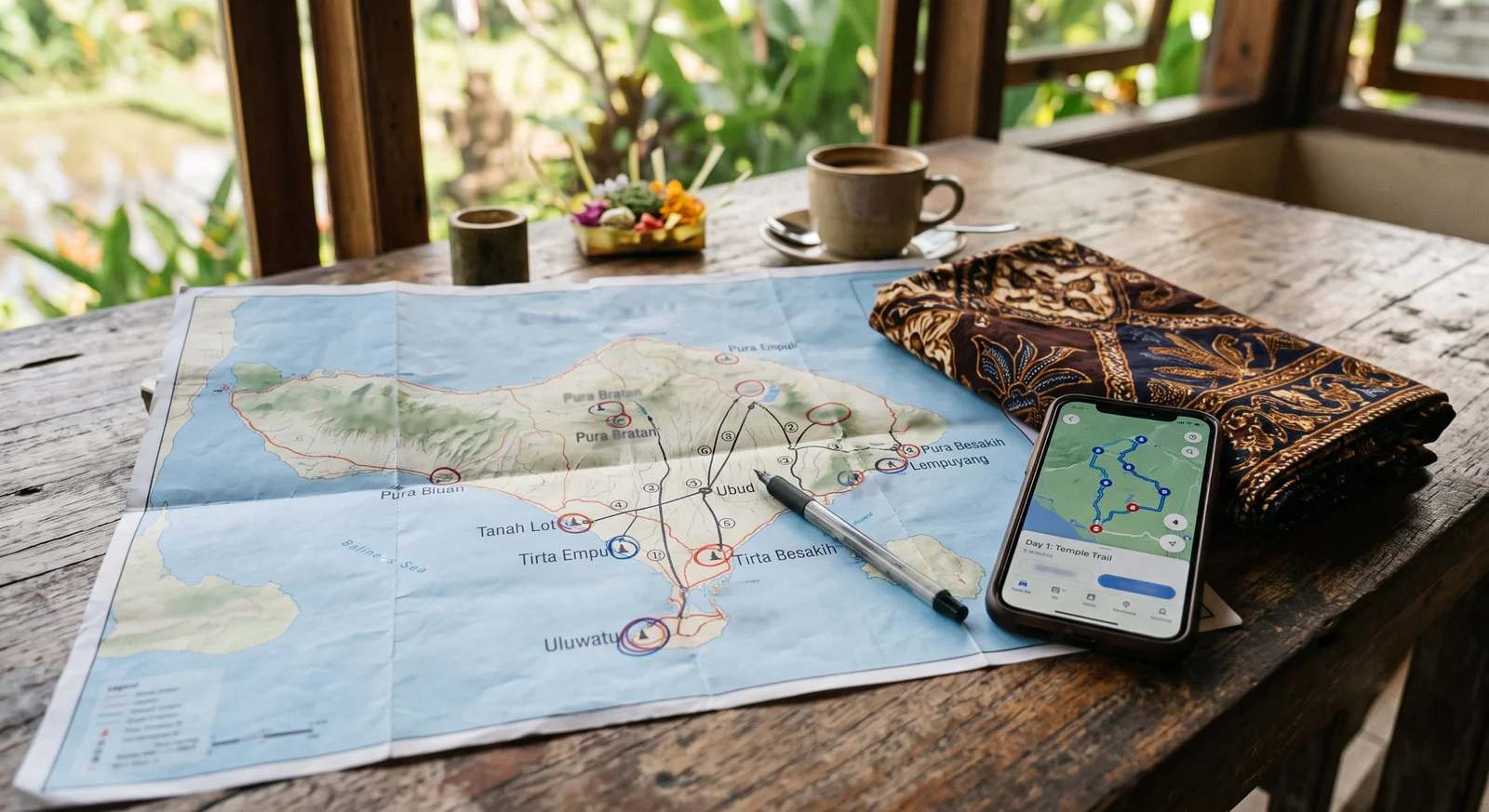
Plan Bali temples by geography, not by a long wish list. The island looks compact on a map, but the roads are narrow and traffic between the south, Ubud, Bedugul, and East Bali can easily take longer than the actual temple visits.
Useful route clusters:
- South and sunset: Uluwatu + Bukit beaches + Kecak.
- West coast: Tanah Lot + Jatiluwih + Batukaru.
- Ubud area: Batuan + Tirta Empul + Gunung Kawi Sebatu + Tegallalang.
- Highlands and lakes: Ulun Danu Bratan + Bedugul + Buyan and Tamblingan.
- East Bali: Besakih + Lempuyang + Tirta Gangga + Taman Ujung.
If time is short, do not try to combine Uluwatu, Besakih, and Lempuyang in one day. It looks possible on a map, but in practice it becomes a rushed transfer day with little time to understand the places.
Bali temple etiquette: what visitors should know
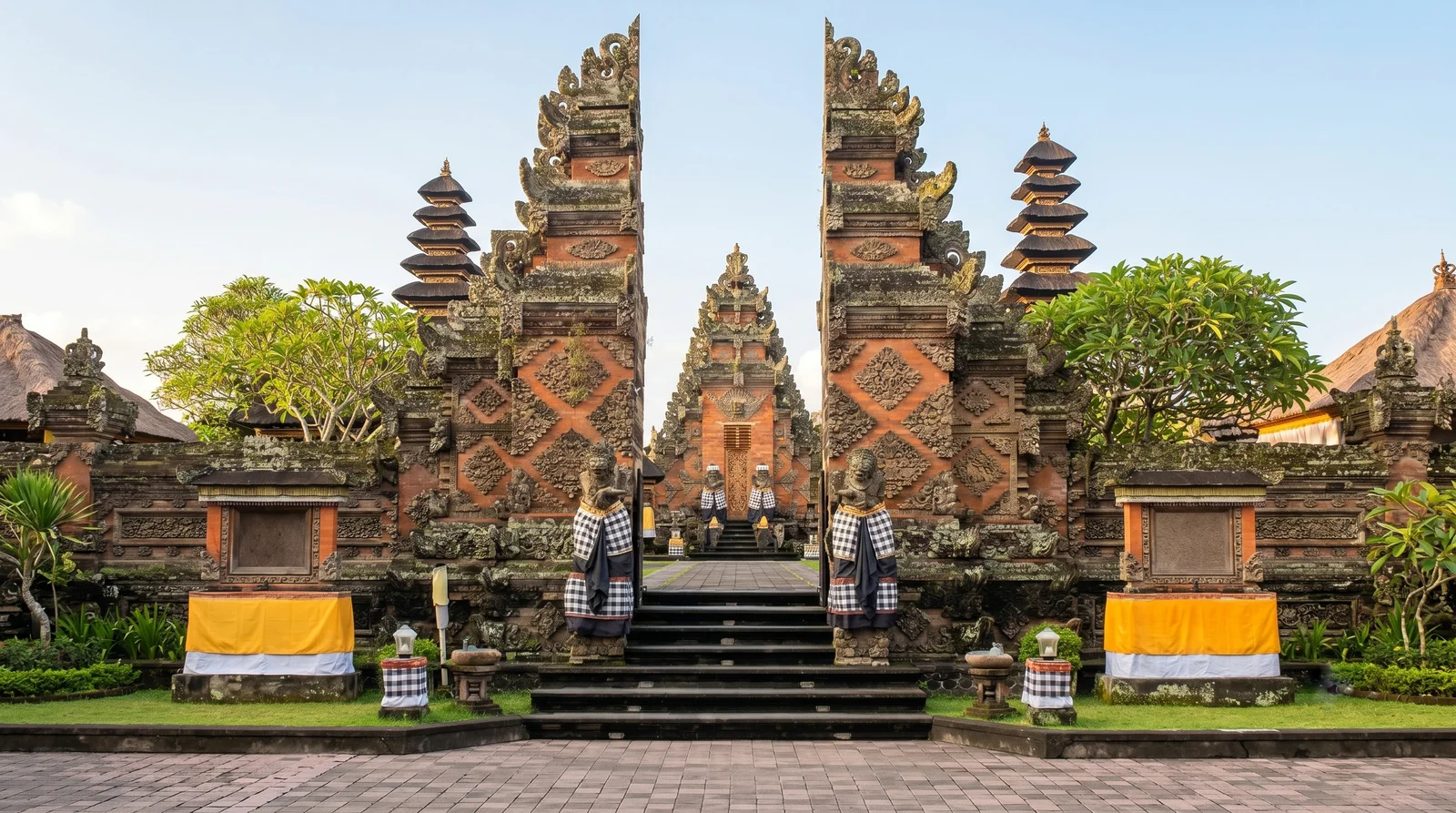
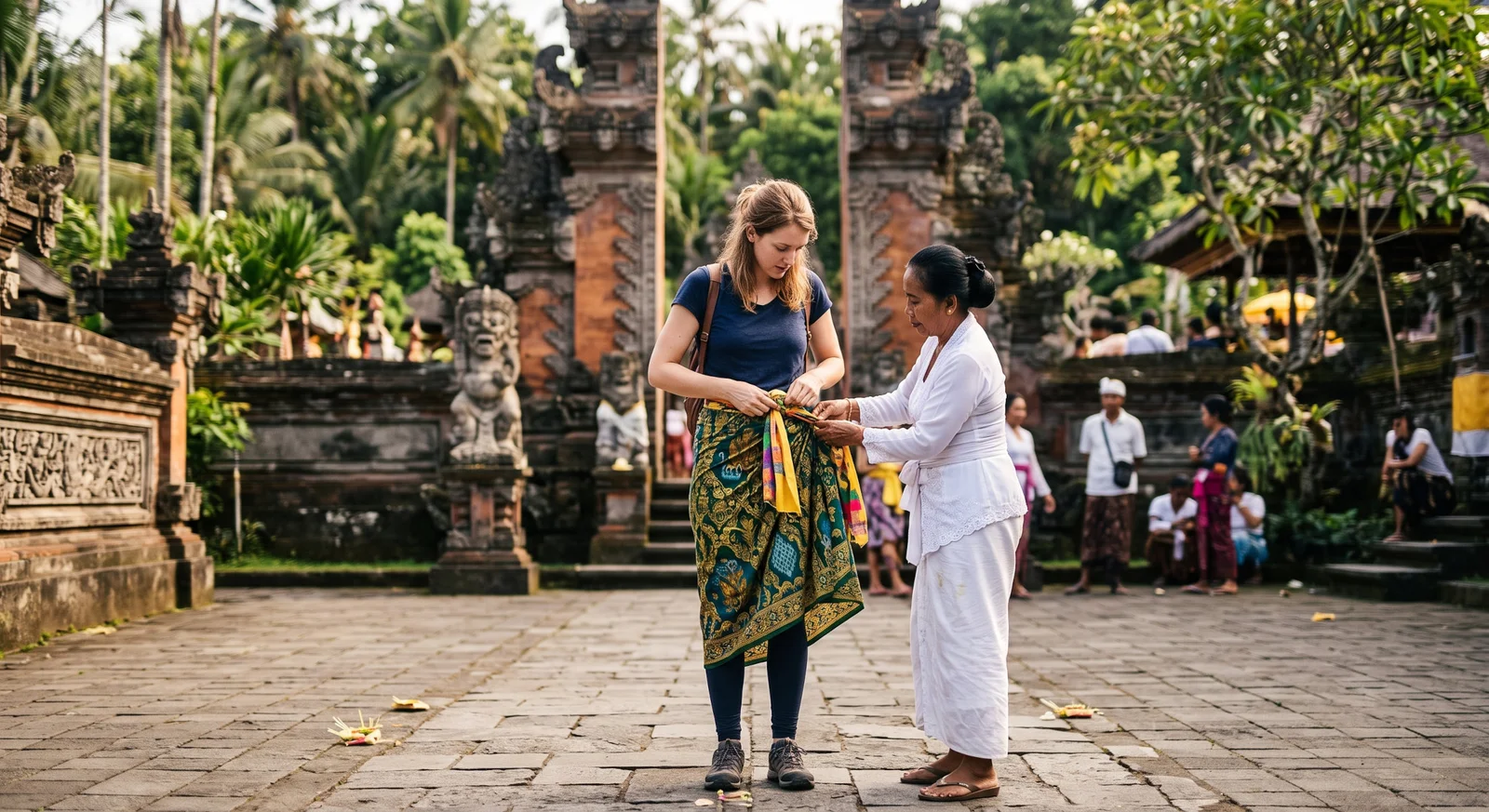
Most Balinese temples welcome visitors when they follow basic etiquette: covered shoulders and knees, a sarong with a sash, quiet behavior, and respect for prayers and ceremonies. A Balinese temple is an active place of worship first and a visitor attraction second.
Core rules:
- wear a sarong and sash, even if you already have long trousers;
- do not pass closed gates, ropes, or barriers;
- do not stand higher than priests, altars, or offerings for a photograph;
- avoid flash during prayers and ceremonies;
- do not touch sacred objects or step on offerings;
- by local custom, women are asked not to enter temples during menstruation.
These rules are not just a dress-code checklist. In Bali, respectful behavior matters as much as clothing: speak more softly, move more slowly, and do not turn a ceremony into a photo session.
Which Bali temples should you choose with limited time?
With 1 day, choose one area: Uluwatu for ocean cliffs and sunset, Ubud with Tirta Empul for culture and purification, or Tanah Lot for a classic sea temple. With 2-3 days, add Besakih or an East Bali route with Lempuyang to see the mountain and sacred side of the island.
Simple itineraries:
- 1 day, south: Uluwatu, Suluban or Padang-Padang Beach, Kecak at sunset.
- 1 day, Ubud: Batuan, Tirta Empul, Tegallalang, Gunung Kawi Sebatu.
- 1 day, sunset: Jatiluwih, Batukaru, Tanah Lot.
- 2 days: Uluwatu + Ubud holy spring route.
- 3 days: Uluwatu + Ubud/Tirta Empul + Besakih/Lempuyang in East Bali.
This works better than trying to collect every famous temple in one day. Bali temples make more sense through context: ocean, water, mountain, village, ritual, and time of day.