At a Glance
- Original name: Pura Besakih
- Where: the slope of Mount Agung, Karangasem regency, east Bali
- Elevation: about 1,000 m above sea level
- What it is: the "Mother Temple" — Bali's principal complex of ~23 temples
- Time needed: 1.5–2 hours
- Important: sarong required; entry with a licensed guide; inner courtyards off-limits to tourists
- Getting there: ~2–2.5 hours from Ubud and south Bali
The Besakih Mother Temple (Pura Besakih) is the largest and holiest Hindu temple complex on Bali. It spreads across the southwestern slope of sacred Mount Agung at around 1,000 meters, and for the Balinese of every caste it is the island's spiritual center — the "Mother Temple" to which all other temples are linked.
Why Visit
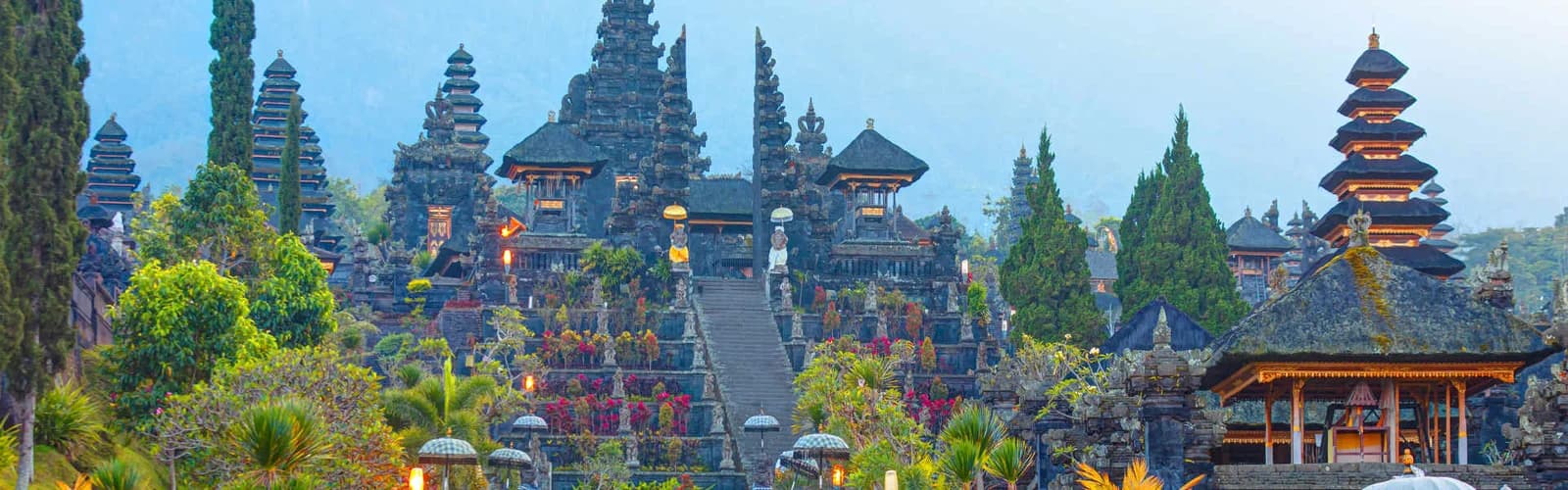
Besakih isn't a single shrine but a whole temple "city" on the volcano's flank: dozens of courtyards, stairways, and pagodas climbing toward Agung's crater. People come for the sheer scale, the atmosphere of living religion, and that classic Balinese view of tiered meru pagodas lined up against the volcano.
It rewards anyone interested in culture and history. Be honest about two things, though: tourists are admitted only to the outer courtyards (the inner ones are for worshippers), and the entrance can attract pushy touts — which is why Besakih is more comfortable with a guide.
How the Complex Is Laid Out
Besakih is roughly 23 separate temples rising across six or seven terraces on the mountainside. Every Balinese clan and district maintains its own ancestral shrine (pura dadia) here, which makes the complex truly island-wide.
- Pura Penataran Agung — the central, grandest temple, reached by a tall stone staircase. It is the spiritual core of the whole complex.
- Meru pagodas — multi-tiered towers with black thatched roofs; the number of tiers is always odd and reflects the rank of the deity.
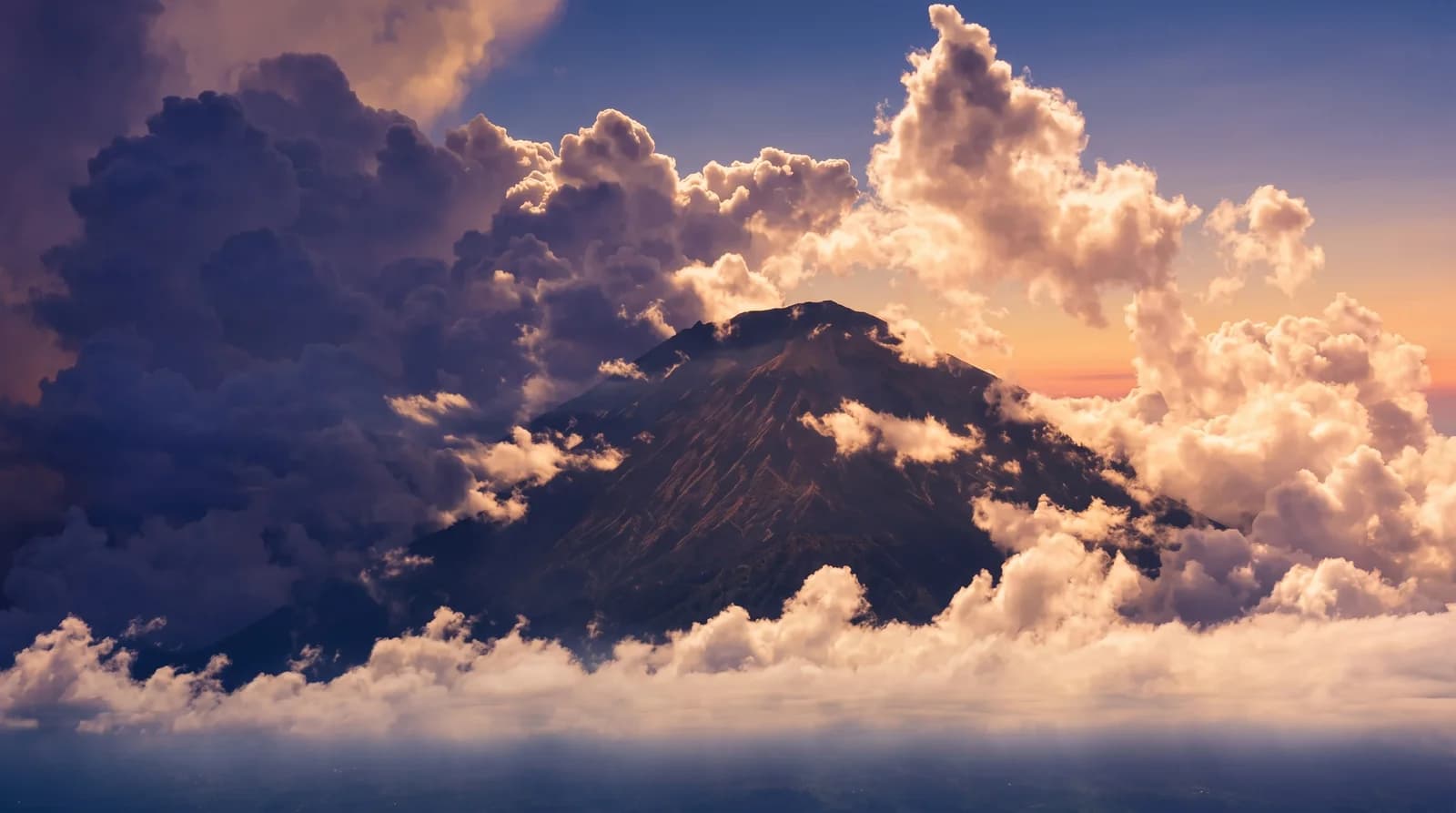
- The Agung backdrop — on a clear day the volcano's cone rises behind the pagodas, forming the iconic panorama photographers come for.
History
Besakih is one of Bali's most ancient holy sites: the slope's ritual significance reaches back more than 2,000 years, and the lower terraces were likely used in pre-Hindu times. By the 15th century Besakih had become the main state temple of the Gelgel dynasty, cementing its status as the island's central sanctuary.
The name traces to Basuki (Naga Besukian), the mythical dragon-serpent believed to dwell within Agung and guard the mountain.
The 1963 Eruption
Besakih is tied to perhaps the most famous Balinese story of a "miracle." During the catastrophic eruption of Agung in 1963, the lava flows passed within meters of the temple and parted around it, sparing the shrine. For the Balinese this was a sign: the gods showed their power but left the temple untouched.
The drama is sharpened by a coincidence: the eruption struck while Besakih was hosting the extremely rare Eka Dasa Rudra rite, performed only about once a century. That made the events of 1963 part of the island's living religious memory.
What to Know Before You Go
- Entry and shuttle. There's a paid entrance to the grounds; a renovated visitor center with parking and a shuttle now runs up to the temple gate. Exact amounts change — check on site.
- Dress code. A sarong and sash are mandatory (provided at the entrance), and shoulders must be covered.
- Where you can't go. Tourists explore the outer courtyards; the inner sanctums are open only to worshippers at prayer.
- Guide. Visits are made with a licensed local guide, who shows the best vantage points and keeps the touts at bay.
- When to come. Mornings on a clear day are best — by afternoon cloud often rolls up the slope and hides the volcano.
Combine Your Trip
Besakih pairs easily with other east-Bali sights. The volcano Mount Agung rises directly above the temple, while nearby lie the Tirta Gangga water palace, the Lempuyang temple with its "Gates of Heaven," and the dive village of Tulamben on the coast.
FAQ
What is Besakih? It's Bali's "Mother Temple" — the island's largest and holiest complex, around 23 temples on the slope of Mount Agung.
Can you go inside the temples? Only the outer courtyards are open to tourists. The inner sanctums are reserved for Balinese worshippers.
Do I need a sarong and a guide? Yes. A sarong and sash are required (provided at the entrance), and visits are made with a licensed local guide.
How much time should I budget? Usually 1.5–2 hours to see the complex; come in the morning before cloud covers the volcano.
Frequently asked questions
Excursions visiting Besakih