At a Glance
- Original name: Tirta Gangga ("water of the Ganges")
- Where: Ababi/Abang village, ~6 km from Amlapura, east Bali (Karangasem)
- Built: 1946, by the last raja of Karangasem
- Size: about 1.2 hectares
- Hours: roughly 7 AM to 6 PM
- Time needed: 1–1.5 hours
- Getting there: ~15 minutes from Lempuyang Temple, ~1.5–2 hours from Ubud
Tirta Gangga (Tirta Gangga) is a former royal water palace in eastern Bali, famous for its ponds, a tiered lotus fountain, and a path of stone stepping stones that lets you cross a pool of giant koi as if walking on water. The garden was built in 1946 and is fed by a sacred spring — hence the name, "water of the Ganges."
Why Visit
This is one of the most photogenic and peaceful spots in east Bali: a manicured water garden with cool spring water that's a pleasure to wander slowly. People come for the famous walk across the stepping stones among the koi, for the greenery and ponds after the hot beaches of the south, and as a natural stop on the way to Lempuyang Temple or Mount Agung.
It suits couples, families with kids (everyone enjoys feeding the koi), and photographers, who arrive at opening for soft light and empty paths.
History of the Water Palace
Tirta Gangga was built in 1946 by the last raja of Karangasem — a passionate, self-taught architect-king who had earlier created the nearby Ujung water palace (Taman Ujung). The garden was conceived as a retreat for the royal family and a place to receive guests.
In 1963 the palace was almost entirely destroyed by the eruption of Mount Agung: the lava never reached it, but earthquakes and a thick layer of ash killed the gardens and choked the ponds. What you see today is the result of painstaking restoration carried out from the late 1970s onward. So Tirta Gangga is both a monument to Balinese royal taste and a story of revival after catastrophe.
The Garden Layout
The roughly 1.2-hectare complex is arranged over several levels, with ponds, fountains, statues, and tropical planting.
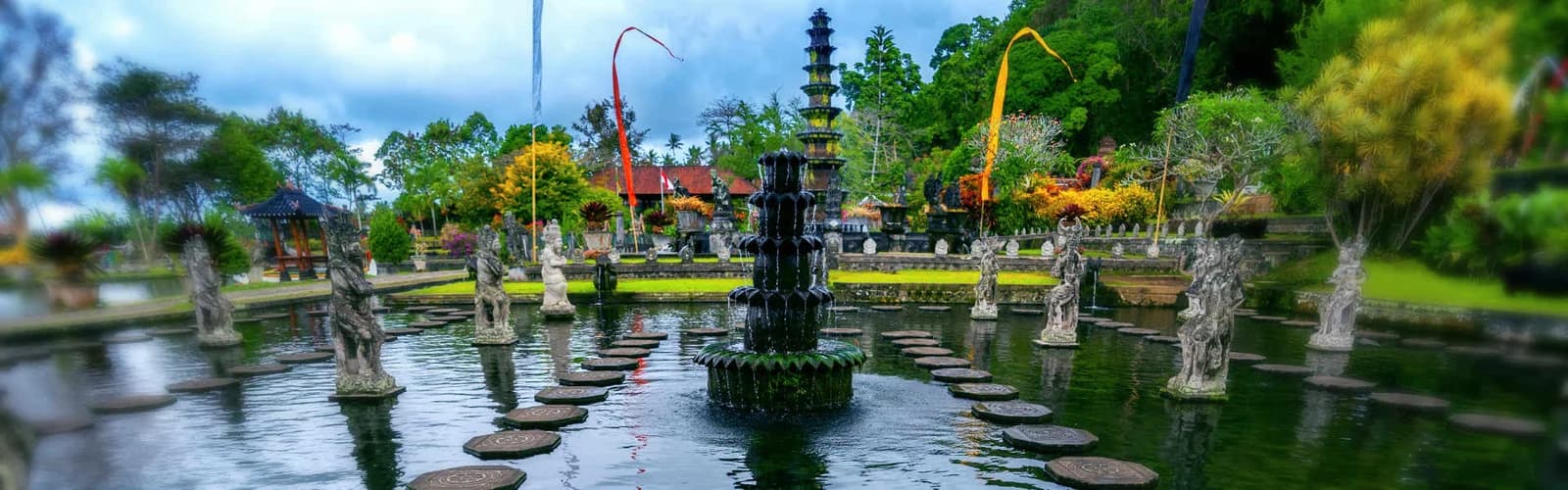
- The stepping stones are the site's signature image: a line of ornate stones set across a pond, which you cross from bank to bank among schools of koi. According to local lore, walking this path from the very beginning to the end bestows health and youth.
- The Nawa Sanga fountain is an eleven-tiered, lotus-shaped fountain at the heart of the garden. Its name refers to the nine guardian gods of the directions in Balinese Hinduism.
- Spring-fed swimming pools — two open pools filled with cool, clear water straight from the spring, where you can take a dip.
- Koi ponds — home to large golden and mottled carp that visitors are allowed to feed.
- Statues of gods and demons — the ponds and bridges are adorned with Hindu carvings. On the edge of one pool stands a large statue of the demon Rakshasa (depicted as a wild boar) spitting water. Balinese believe this dark spirit was displeased with the construction of this holy site, so the gods turned him to stone forever to guard the sacred spring.
The Sacred Water
The water here is more than decoration. The garden is fed by a natural spring the Balinese revere as holy, and the name "Tirta Gangga" itself evokes the waters of the Hindu river Ganges. The spring water is used in temple ceremonies and collected by locals, and its coolness and clarity are why the pools stay refreshing even in the heat.
Things to Do
- Cross the pond on the stepping stones and feed the giant koi — fish food is sold at the entrance.
- Swim in the spring-fed pools (bring a swimsuit and towel).
- Photograph the reflections of the fountain and stones on the water — best in morning light.
- Walk the surrounding rice terraces: scenic trails start at Tirta Gangga and wind through the fields with views over the hills of east Bali.
When to Visit
The best time is early morning, around opening at 7–9 AM: soft light, still water for reflections, and near-empty paths before the tour groups arrive. By midday a queue forms at the stepping stones for photos.
In the dry season (April–October) the garden is at its greenest and best kept. Because Tirta Gangga sits above the coast, it's a little cooler and more comfortable here than on the beaches.
Plan Your Visit
- Getting there — about 1.5–2 hours by car from Ubud and 15 minutes from Lempuyang Temple; the palace is by Ababi village, 6 km north of Amlapura.
- Tickets — there's a paid entrance to the grounds, plus a separate small fee to swim in the pools.
- What to bring — comfortable shoes (the stones by the water can be slippery), a swimsuit and towel if you plan to swim, and cash for fish food.
- Time needed — 1–1.5 hours for a relaxed look; half a day if you add swimming and a rice-terrace walk.
Combine Your Trip
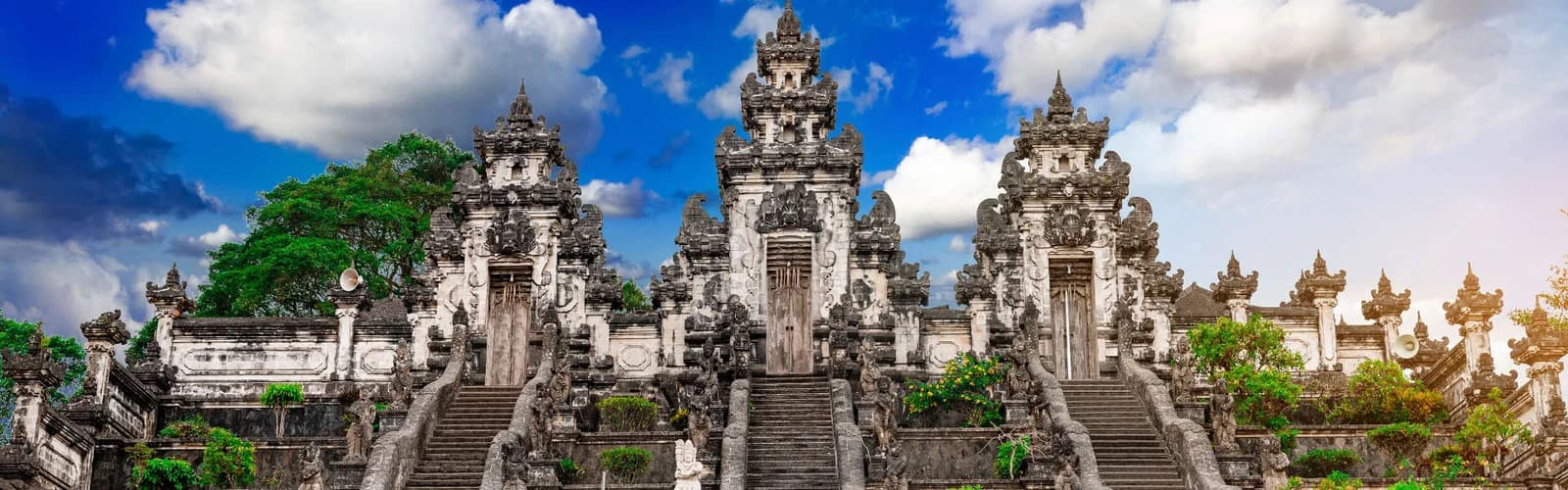
Tirta Gangga pairs easily with other sights in east Bali. Lempuyang temple, with its photogenic "Gates of Heaven," is 15 minutes away. Beyond it rise the sacred volcano Mount Agung and the "Mother Temple" of Besakih, while on the coast below the volcano lies the shipwreck dive village of Tulamben.
FAQ
Can you swim at Tirta Gangga? Yes. There are two open pools of cool spring water; a separate small fee applies to use them.
Is there an entrance fee? Yes — there's a paid entrance to the garden, and swimming in the pools is charged separately.
How much time should I budget? Usually 1–1.5 hours to look around; about half a day if you add a swim and a walk through the rice terraces.
When is the best time to visit? Early morning at opening: soft light, calm water for photos, and fewer people at the famous stepping stones.
Excursions visiting Tirta Gangga