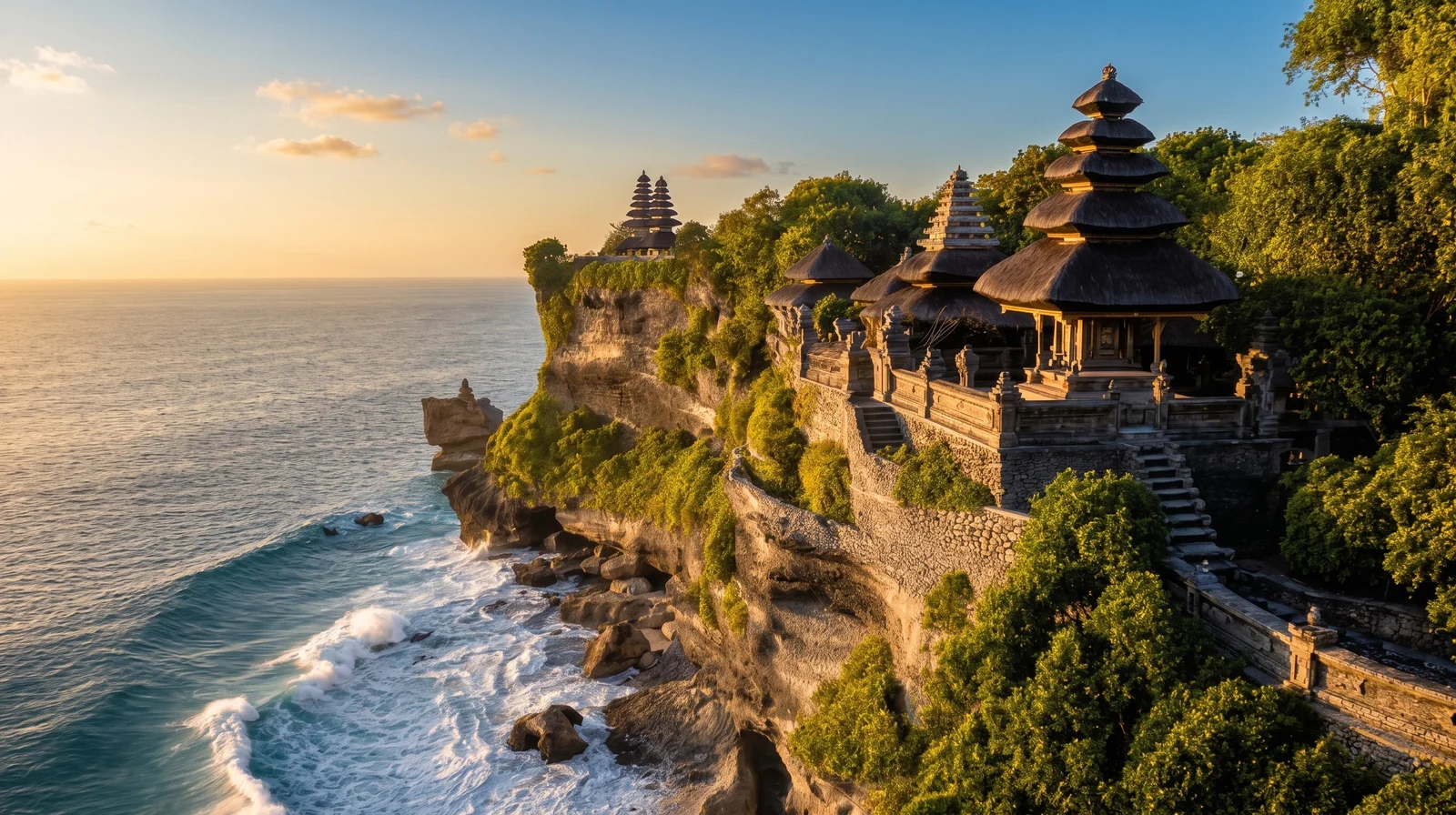
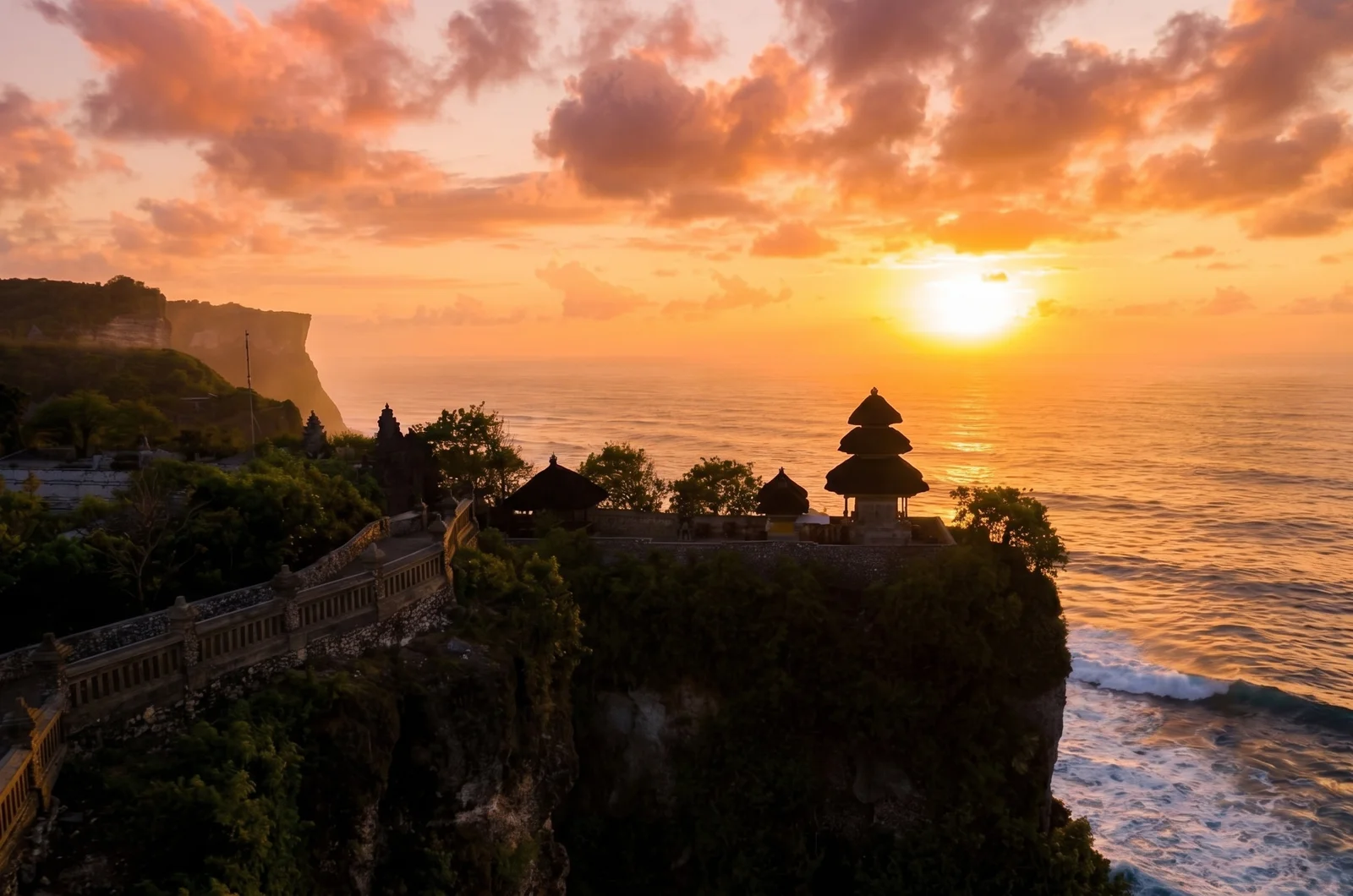
Imagine standing on a steep cliff, dropping straight into the crashing waves of the Indian Ocean. The sun slowly dips below the horizon, painting the sky in deep shades of gold and purple. In the center of a circular arena, a large torch bursts into flames, and a choir of fifty bare-chested men gathers around it. Suddenly, a sharp, synchronized shout cuts through the silence: "Chak-chak-chak!". This is how the Kecak dance begins — one of the most powerful, mystical, and memorable cultural performances you can witness in Indonesia.
The cultural heritage of Bali is deeply intertwined with spirits and deities, and the Balinese Kecak dance perfectly captures the raw, spiritual energy of the island. It is a unique musical drama that uses no instruments — the entire soundtrack is created solely by the voices of the performers.
History: From Trance Exorcism to Global Acclaim
Many travelers believe that Kecak dance Bali is an ancient ritual dating back thousands of years. In reality, the performance in its current dramatic form was created in the 1930s, though its roots are indeed very ancient.
The Sacred Sanghyang Ritual
Originally, the performance was based on the sacred Sanghyang ritual — an ancient Balinese exorcism and trance dance. During times of epidemics or disasters, villagers gathered in temples to banish evil spirits. A male choir chanted to help transition two young girls (mediums) into a deep trance, enabling them to communicate with the deities and ask for protection. The repetitive "chak" chants mimicked the sound of a bamboo rattle and acted as a sonic bridge between the human and spirit worlds.
The Role of Walter Spies
In 1930, Walter Spies, a German-Russian painter, musician, and choreographer living in Bali, recognized the incredible theatrical potential of this ritual chanting. Together with Balinese dancer and choreographer Wayan Limbak, they adapted the ceremony:
- They removed the sacred trance elements to make it suitable for public presentation without violating religious taboos.
- They overlaid the vocal choir with the story of the classical Hindu epic, the Ramayana.
- They created a full-scale dramatic performance with defined characters, vibrant costumes, and choreographed movement.
Thanks to their efforts, the Kecak dance achieved global fame, becoming an iconic symbol of Balinese culture.
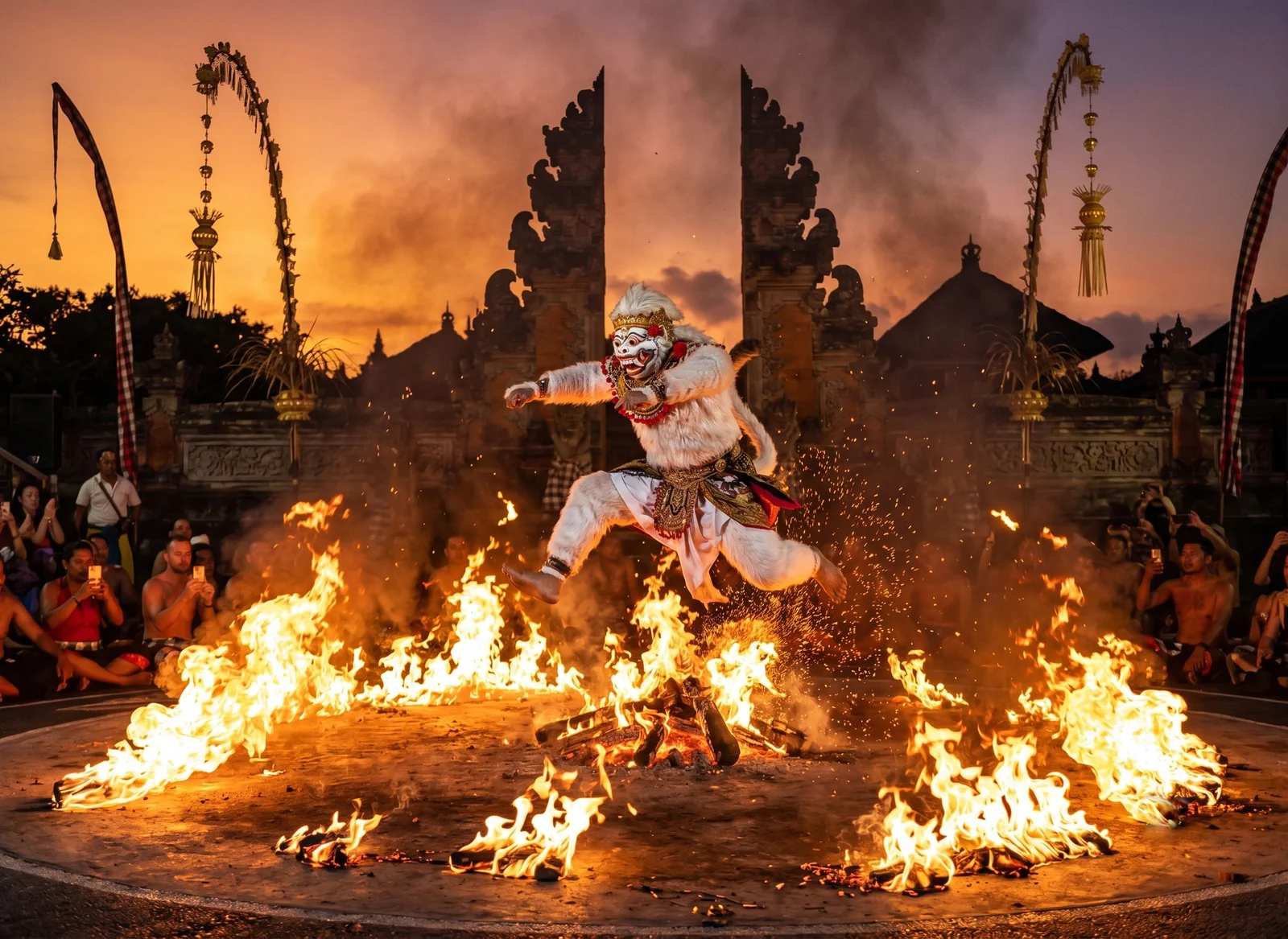 Hanuman the white monkey god in a circle of fire, Kecak dance climax.
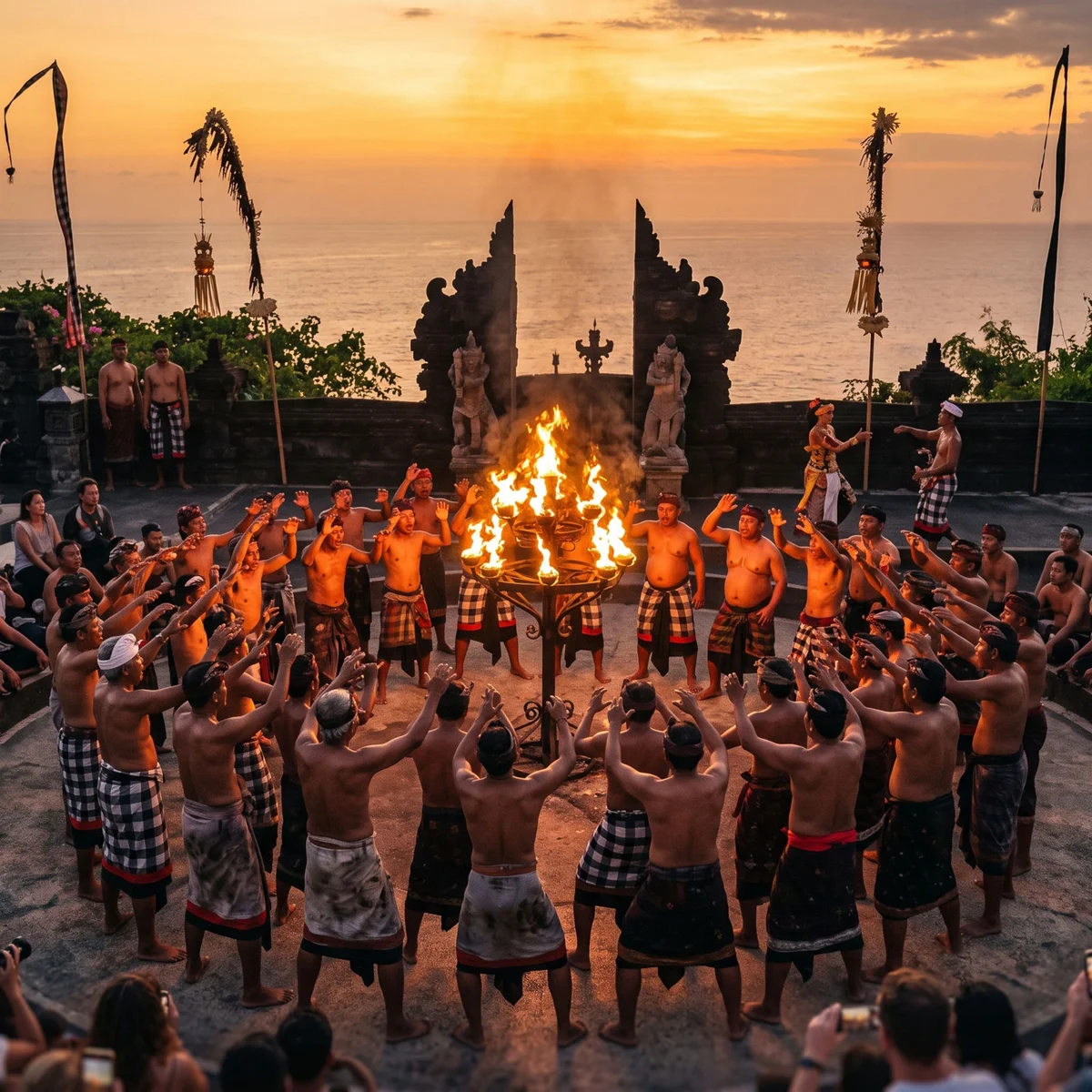 Kecak dance performance at sunset near Uluwatu Temple, featuring a choir around fire.
The Storyline: The Ramayana Monkey Chant
The narrative follows the dramatic battle between good and evil from the great Hindu epic "Ramayana." The main character, Prince Rama (an avatar of Vishnu), is exiled to the wild Dandaka forest along with his beautiful wife Sita and his loyal brother Lakshmana.
The performance unfolds in five key acts:
- The Kidnapping of Sita: The evil ten-headed demon Ravana, king of Lanka, is captivated by Sita's beauty. Using a trick (turning his servant into a golden deer), he lures Rama and Lakshmana away and kidnaps the princess, carrying her off to his kingdom.
- Hanuman the Messenger: The white monkey god Hanuman locates Sita imprisoned in Ravana’s garden and presents her with Rama's ring as a sign of hope. Ravana captures Hanuman and tries to burn him alive, but Hanuman uses his fiery tail to set the demon's palace ablaze and escape.
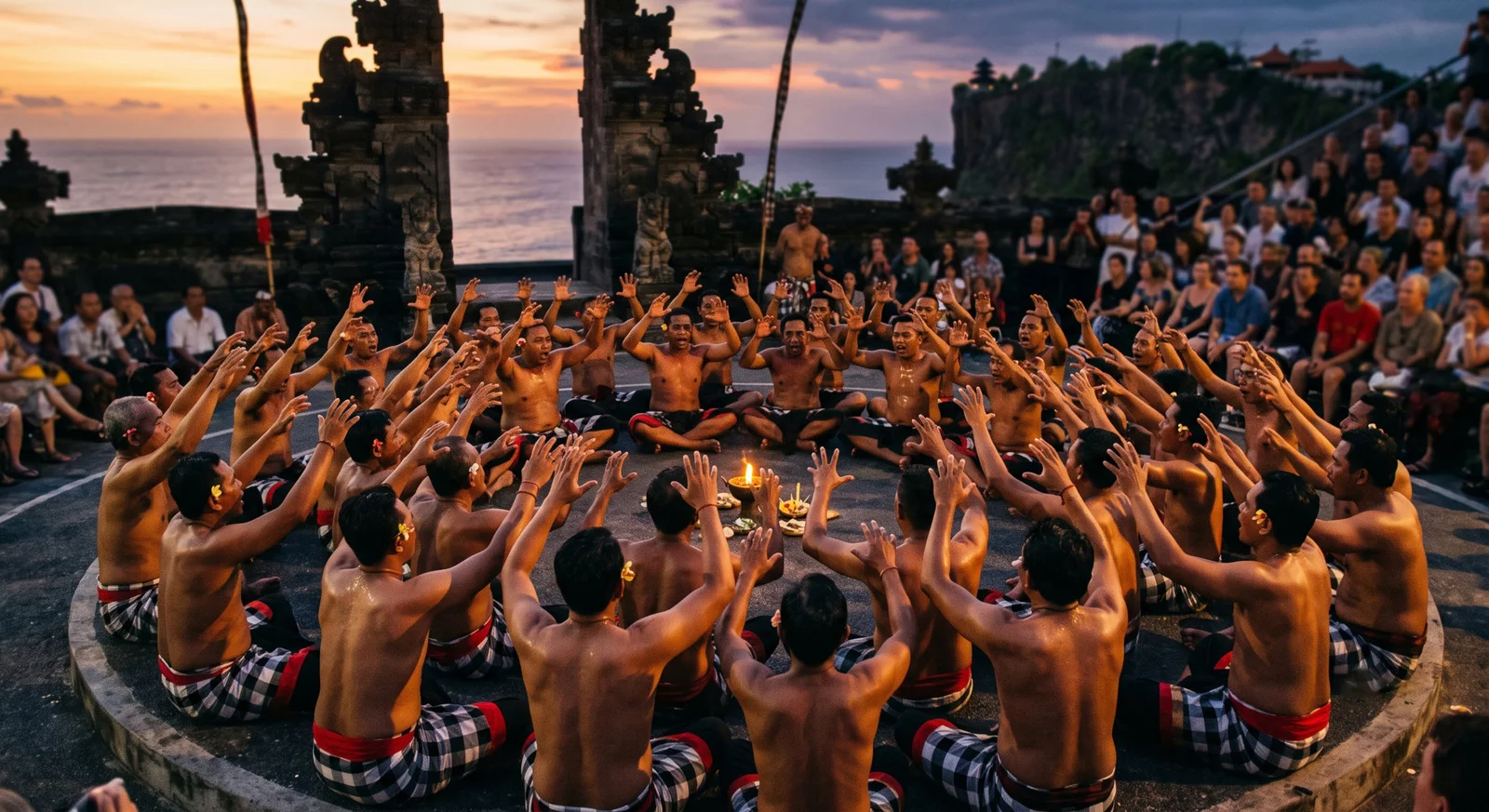
- The Battle of the Monkey Army: Rama gathers a mighty army of Vanaras (monkey-like warriors) led by King Sugriwa. The choir of men sitting in a circle represents this army. The dancers raise their arms, sway, and chant, representing the chaos of battle and their devotion to the prince.
- The Triumph of Good: Rama's forces defeat the demons, Rama slays Ravana in single combat, and he is joyfully reunited with Sita before returning home in triumph.
Where to Watch the Kecak Dance in Bali?
The dance is performed at several venues across the island, but the most famous and spectacular shows are located in the south.
1. Uluwatu Kecak Dance Show
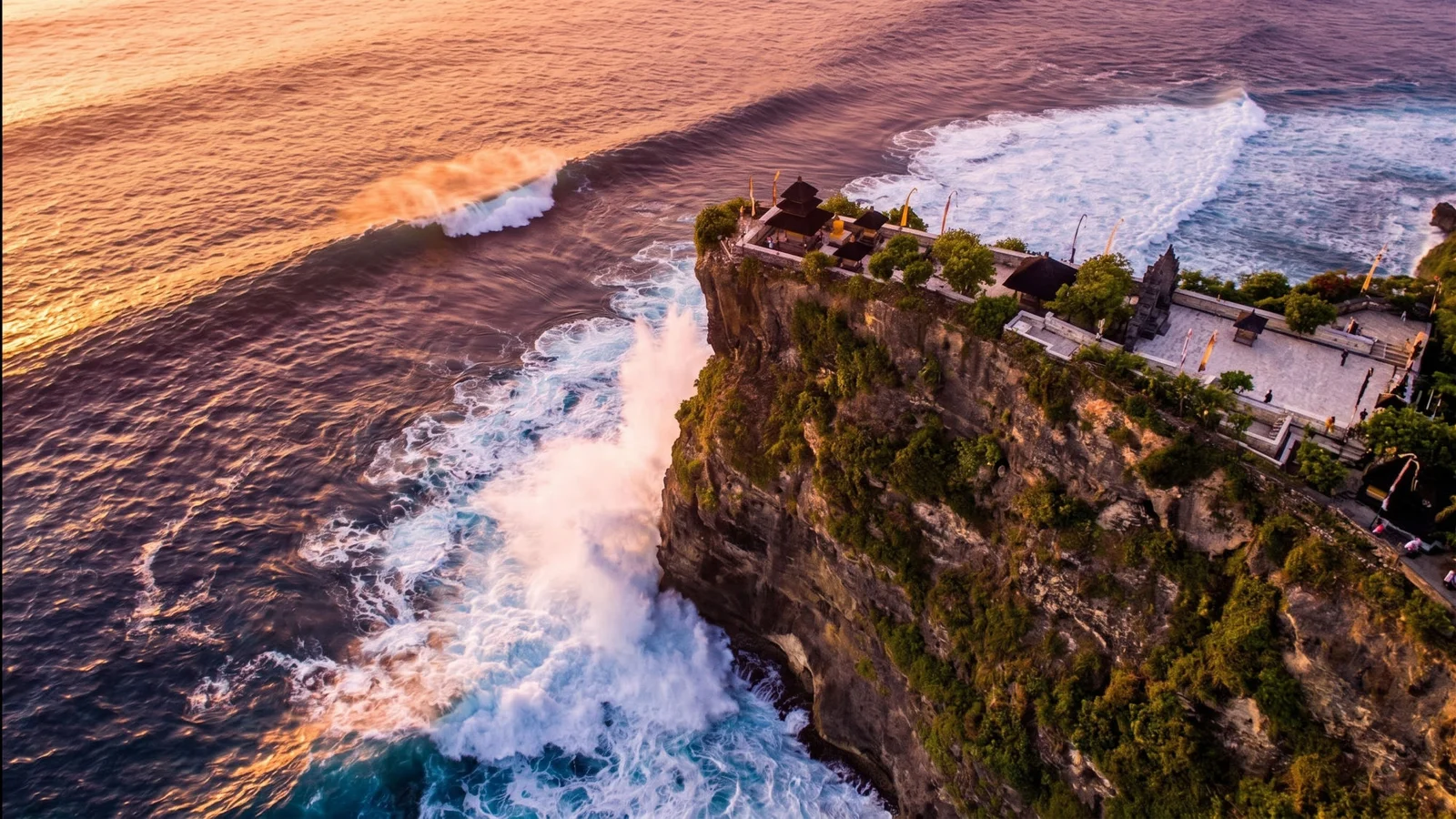
The most stunning arena is situated right beside the ancient cliffside temple of Uluwatu.
- Location: The Uluwatu Kecak dance show takes place in an open-air amphitheater on the edge of a 70-meter cliff.
- Time: The show begins daily at 6:00 PM, exactly as the sun starts sinking into the sea.
- Highlight: The breathtaking Balinese sunset serves as a natural backdrop for the performance. The fire show at the end (when flames surround Hanuman) looks spectacular in the twilight. It is highly recommended to buy tickets for the Kecak dance uluwatu in advance or arrive by 4:30 PM, as the seats fill up very quickly.
2. Ubud (Palace and Temples)
In Ubud, Bali's cultural heart, the performance is staged multiple times a week at various temples (such as Pura Dalem Ubud and Pura Padangtegal). The focus here is on academic precision, choreography, and dramatic acting.
3. Garuda Wisnu Kencana (GWK Park)
At the GWK cultural park, the dance is performed at the Lotus Pond square against massive limestone cliffs and the colossal statue of Lord Vishnu.
Tips Before You Go
To ensure your cultural experience is comfortable and enjoyable, keep these tips in mind:
- Sun and Monkey Protection: The Uluwatu arena opens for seating around 5:15 PM. The sun can still be quite intense at this hour, so bring a hat, sunglasses, and water. Be extremely careful with the wild monkeys around the temple: hide sunglasses, loose jewelry, phones, and shiny objects in your bags.
- Russian/English Pamphlets: Upon entry, guests receive a printed guide containing a scene-by-scene breakdown of the story. Reading it beforehand helps you follow along with the actions of the characters.
- Photo Session: Once the performance ends, all the actors (including Hanuman, Ravana, and Rama) gather on the stage. Visitors are welcome to join them for photos free of charge.
Book a guided tour through Balitourus.com, and we will handle all the details for you: secure the best tickets, guide you through the cliffside views of Uluwatu Temple, and share the deeper myths of this sacred land.
Watch this hypnotic clip from the documentary "Baraka" to get a taste of the incredible performance: