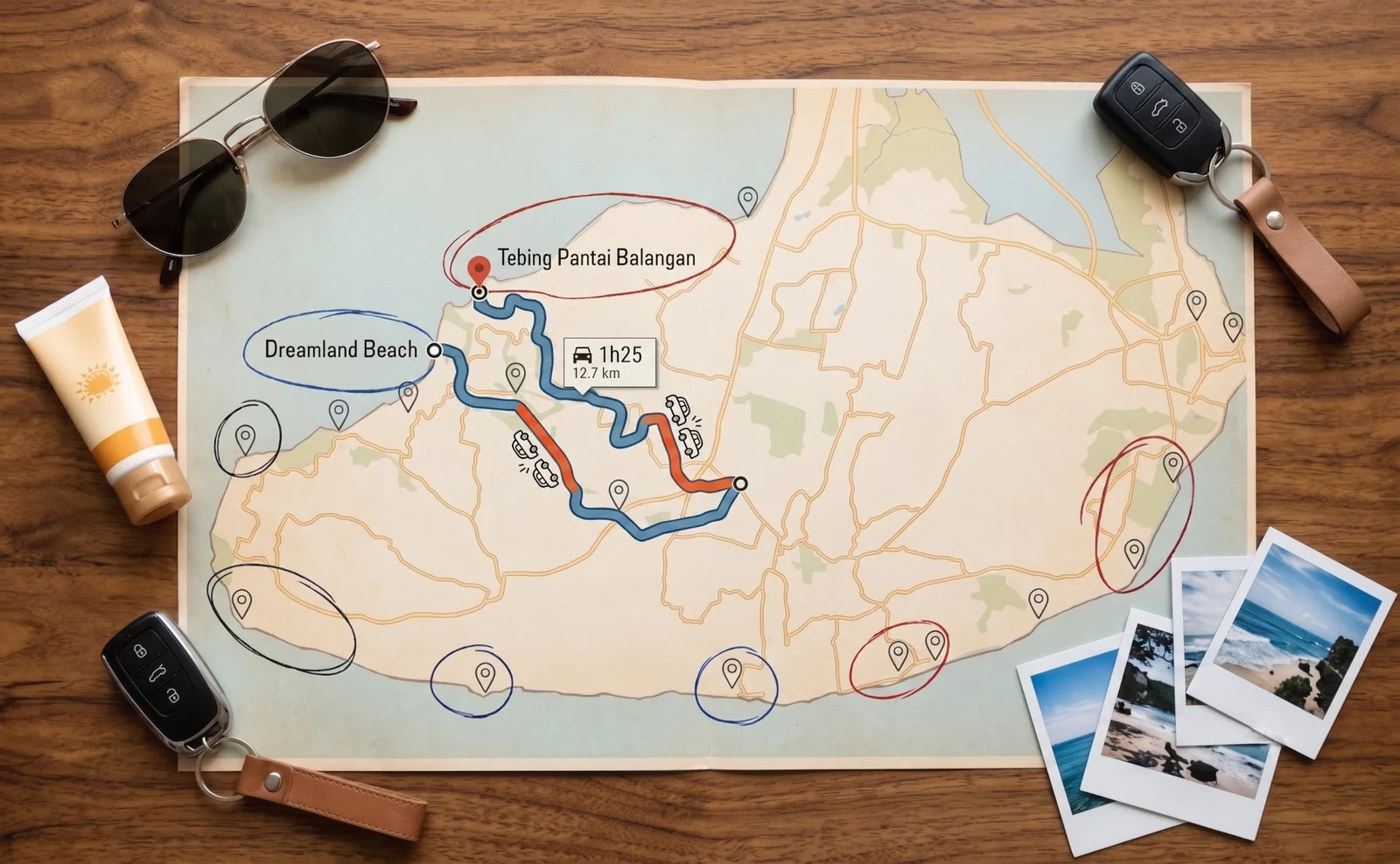



Getting around Bali works best when you choose transport by day, not for the whole trip at once. Distances look short on the map, but traffic, narrow roads, left-hand driving, parking, and local transport rules around popular spots can change the route quickly.
A calm working setup is simple: taxis or apps for short local rides, a scooter only with real experience and the correct license, a car with driver for full-day routes, and pre-arranged boat plus land transfers for islands. That keeps transport in service of the holiday rather than turning it into the main task of the day.
What is the best way to get around Bali on a first trip?
On a first Bali trip, combine transport modes: taxis for short rides, a car with driver for full-day routes, scooters only with confidence in dense left-hand traffic, and pre-arranged boat plus land transfers for nearby islands. One method rarely covers the whole holiday comfortably.
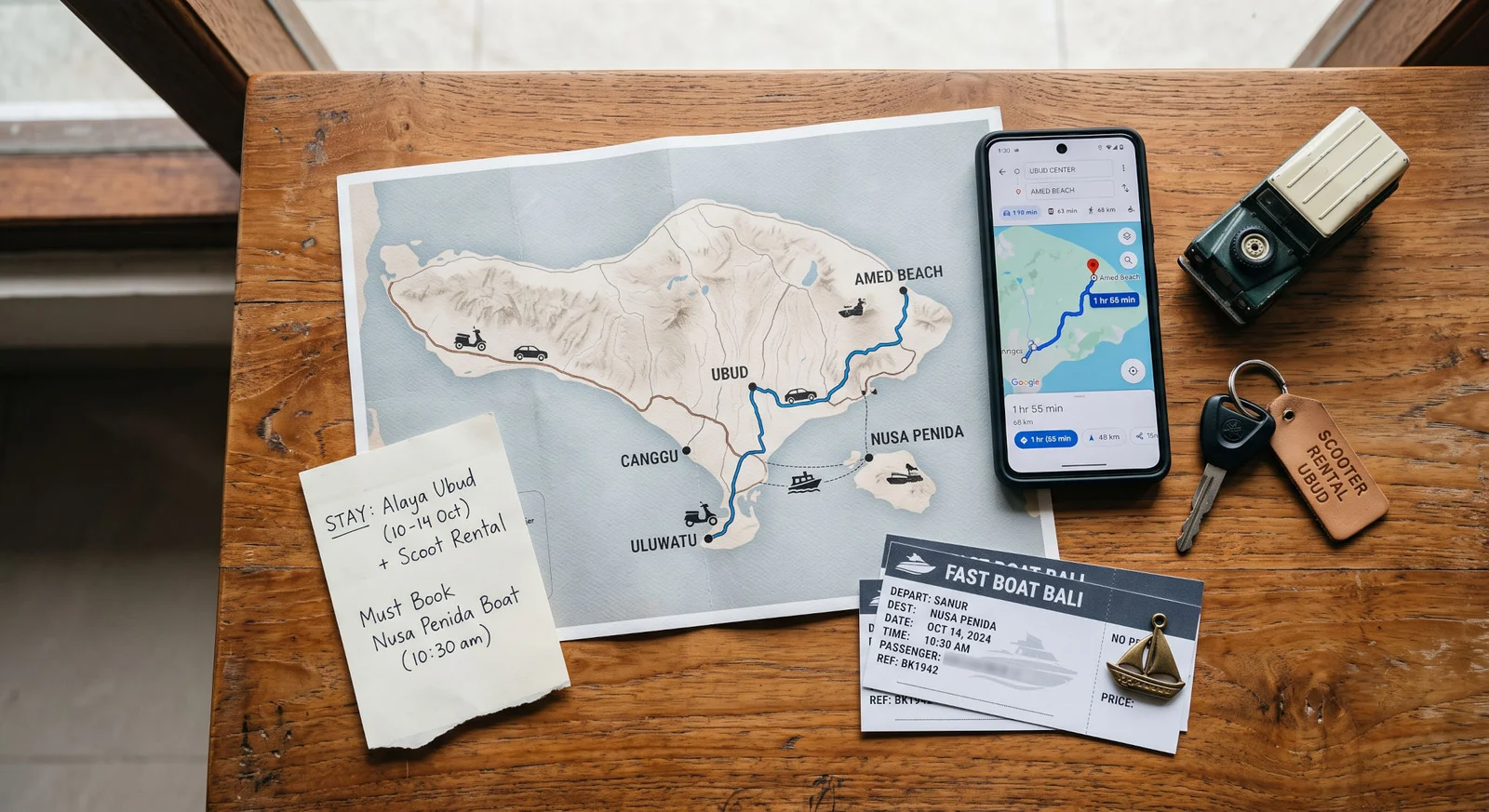
Quick logic:
- hotel area: taxi, ride-hailing app, or walking where pavements exist;
- nearby beach: taxi or scooter if you ride confidently;
- Ubud, temples, waterfalls: car with driver;
- Nusa Penida: port transfer, boat, and island transport;
- families with children: car is usually calmer and more practical than scooters;
- late arrival: pre-arranged airport transfer.

Do taxis and ride-hailing apps work in Bali?
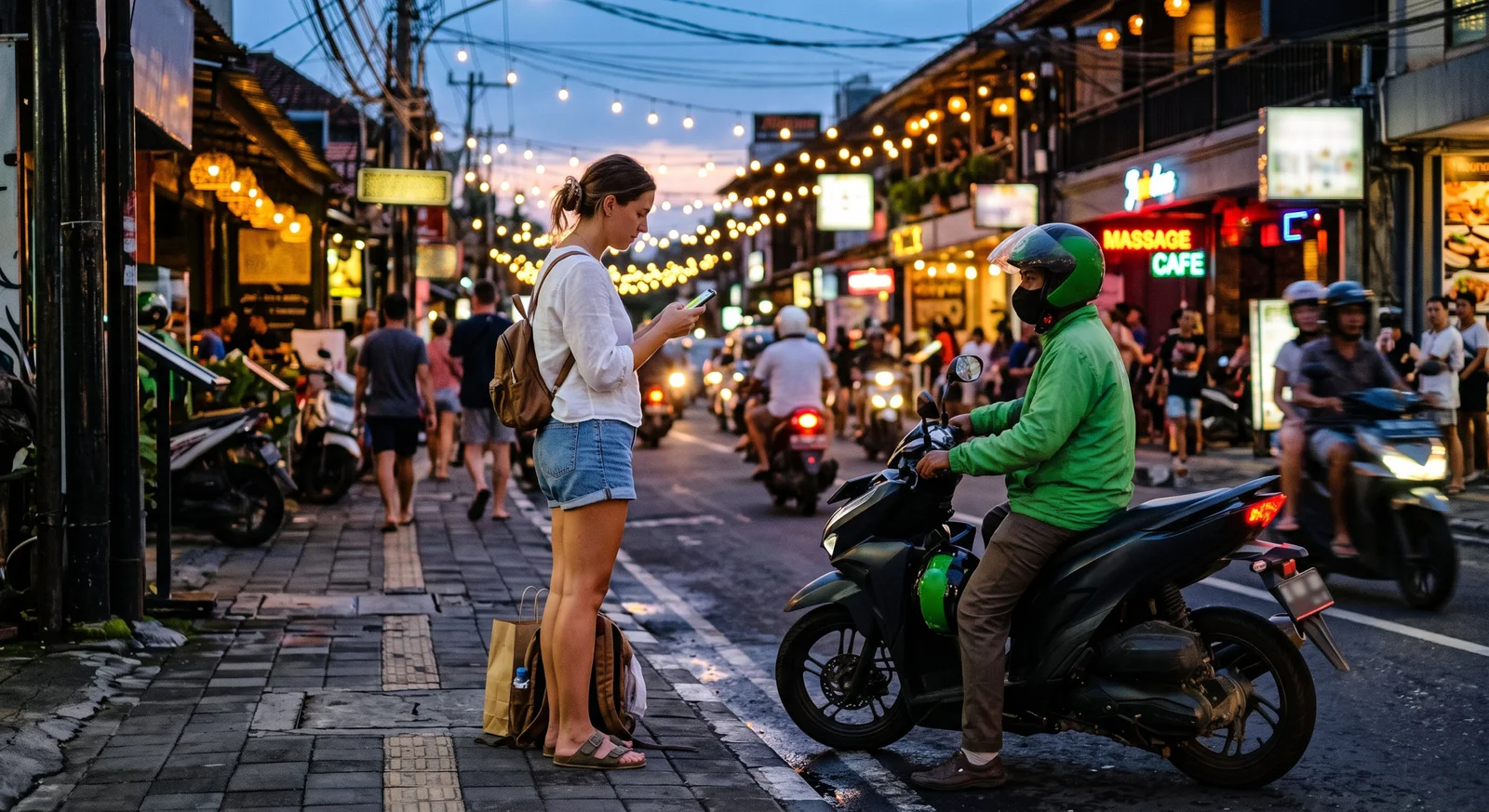
Taxis and ride-hailing apps are useful for short rides in tourist areas, but they are not equally predictable at every beach, temple, port, or viewpoint. Some areas have local transport rules, so it is often easier to agree on the pickup point before you enter.
Apps are helpful for route estimates and price orientation, but they are not ideal for every full sightseeing day. If you plan 4-5 stops, one driver for the route is often calmer than waiting for a new car after each stop.
Where taxis usually work well:
- Kuta, Seminyak, Sanur, Nusa Dua, Jimbaran;
- short evening trips to restaurants;
- hotel to nearby beach;
- light transfers within one area.
Where taxis may be inconvenient:
- Uluwatu with several beaches in one day;
- waterfalls and rice terraces;
- East and North Bali;
- ports and places with local transport rules;
- late returns from remote areas.
Should you rent a scooter in Bali?
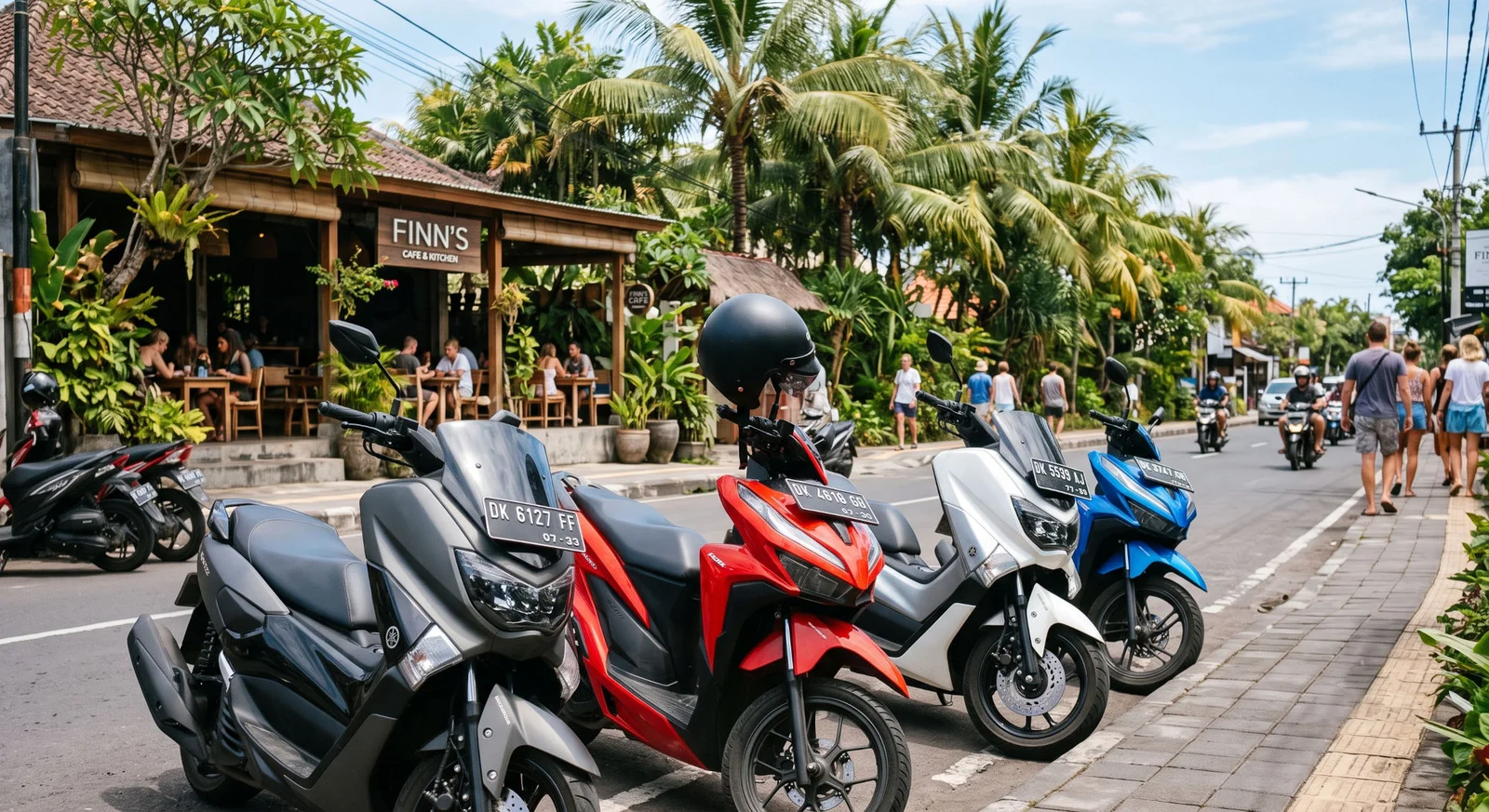
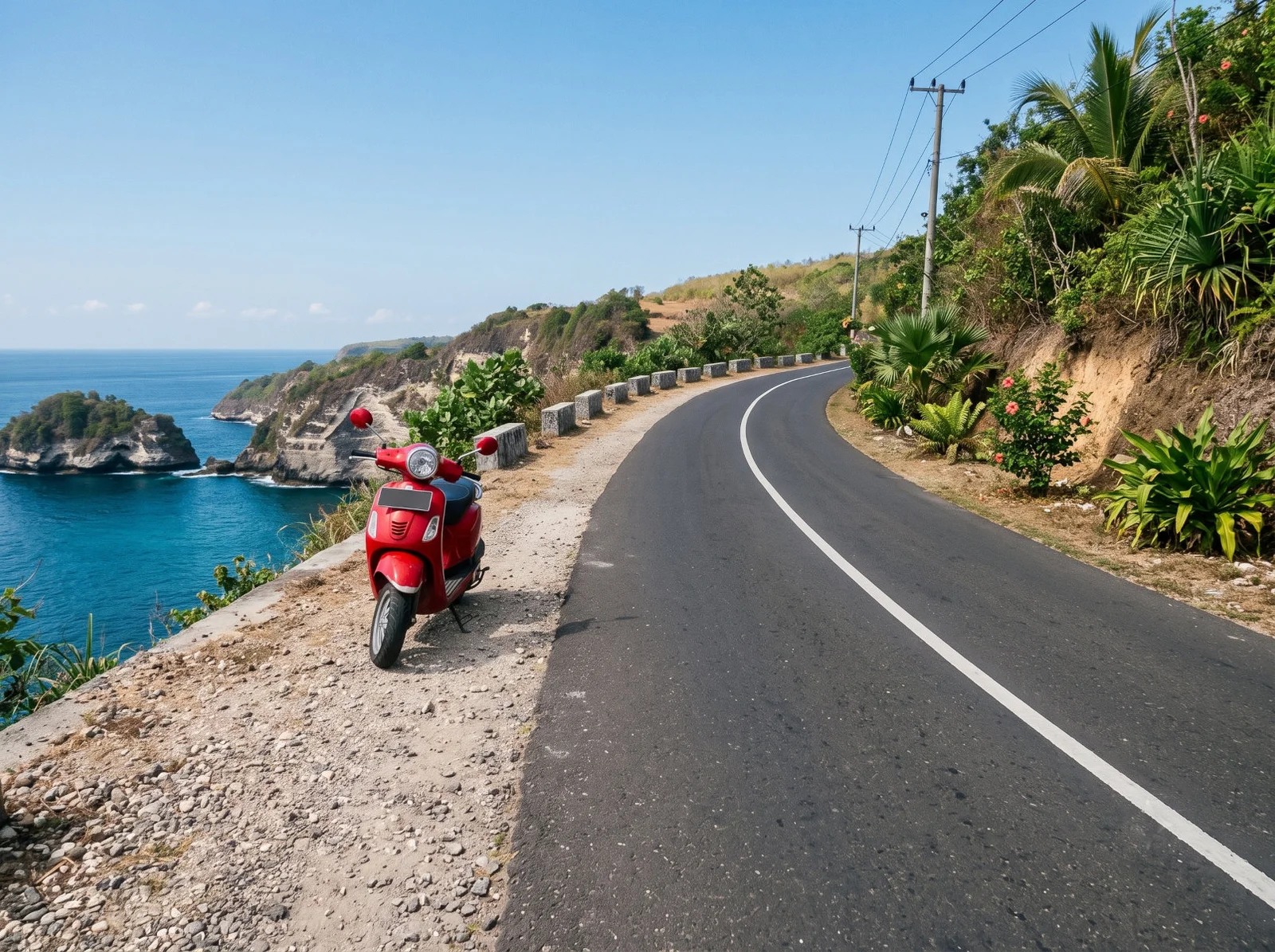
A scooter in Bali is useful for short routes when you already ride confidently and can handle left-hand traffic, dense roads, wet surfaces, and sudden maneuvers. For a beginner, it is often extra stress in traffic rather than an easy shortcut to freedom.
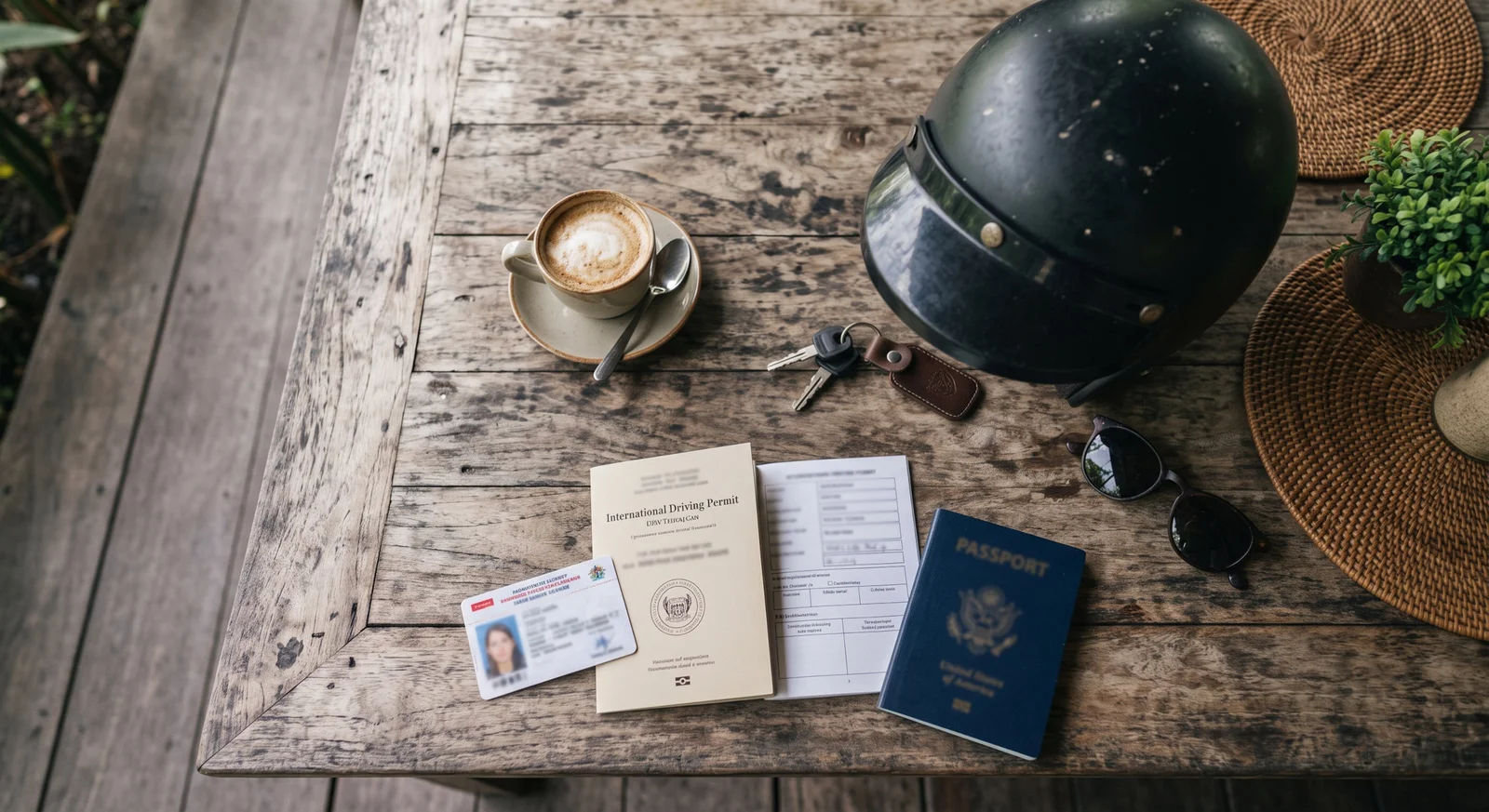
Use the simple document rule: your license needs to match the vehicle. For scooters, carry your national license plus an International Driving Permit with the correct motorcycle category. Insurance may refuse to cover scooter accidents if the category is wrong or policy terms are violated.
A scooter may suit you if:
- you have ridden scooters in Asia before;
- you stay calm in dense traffic;
- you are not carrying children or heavy luggage;
- you plan short routes within one area;
- you have the correct license category and helmet.
Postpone scooter rental if:
- it is your first time riding one;
- you are tired after a flight;
- you plan waterfalls, mountain roads, or long transfers;
- you are unsure whether insurance covers motorcycle accidents;
- you only want to "try it" in busy Canggu, Kuta, or Ubud traffic.
FAQ: scooters, license, and insurance
What driving license do you need in Bali?
For self-driving in Bali, tourists should carry their national license and an International Driving Permit with the correct category: motorcycle category for scooters and the appropriate car category for cars. The documents matter for roadside checks and insurance claims after an accident.
A common assumption is that any car license covers a scooter. It does not. Before you travel, check that the motorcycle category is clearly covered and that your insurance does not exclude motorcycle riding.
Keep with you:
- national driving license;
- International Driving Permit;
- passport and visa copy;
- rental contact details;
- photos or video of the scooter or car before use.
If police stop you, stay calm and show documents. If there is a real violation, ask for the official procedure rather than handling it emotionally at the roadside.
When is a car with driver better in Bali?
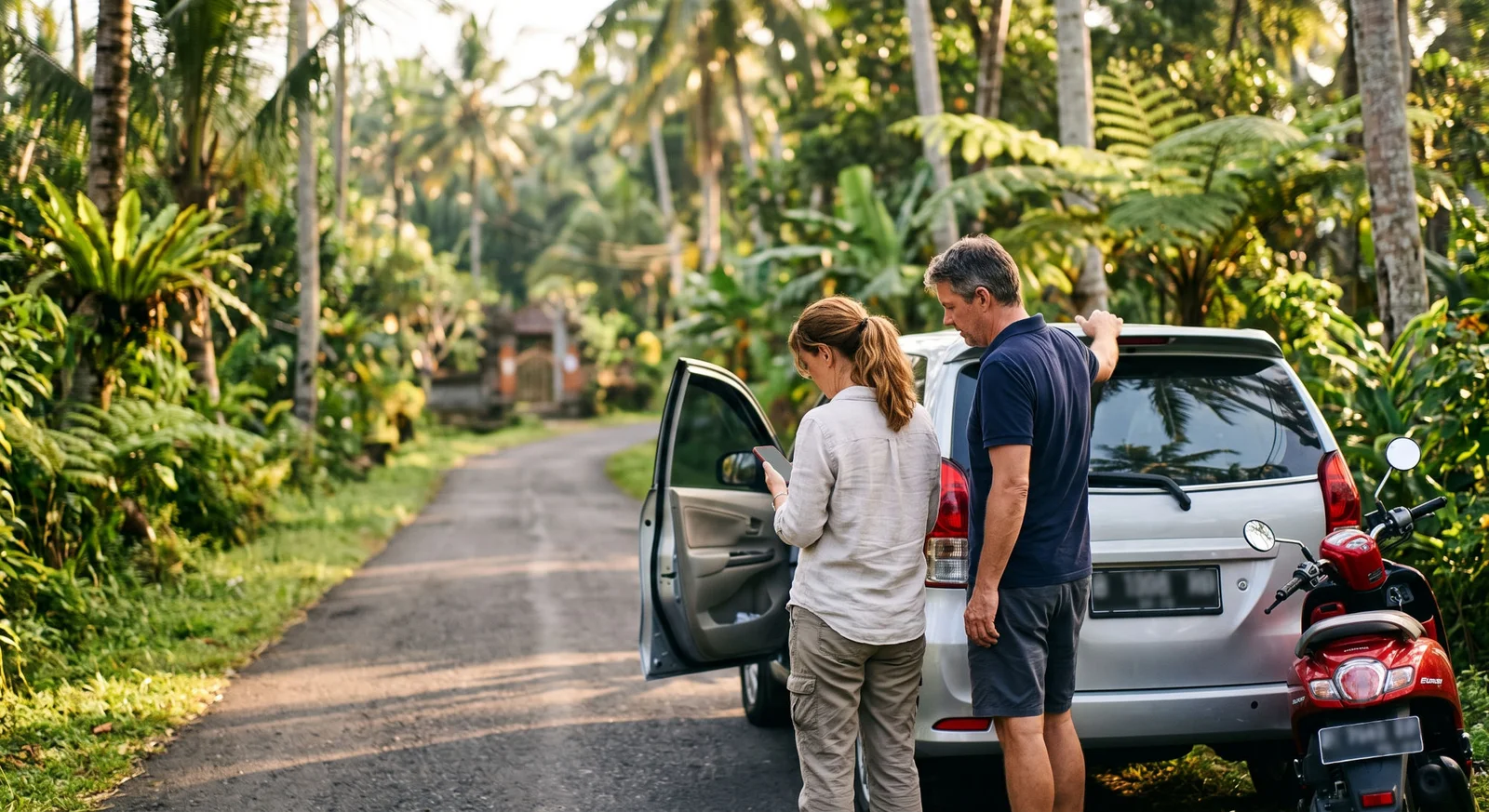
A car with driver is best for full-day routes: Ubud, waterfalls, temples, Uluwatu, Bedugul, East Bali, or transfers with several stops. A local driver knows access roads, parking, timing, and the order that keeps the day moving smoothly.
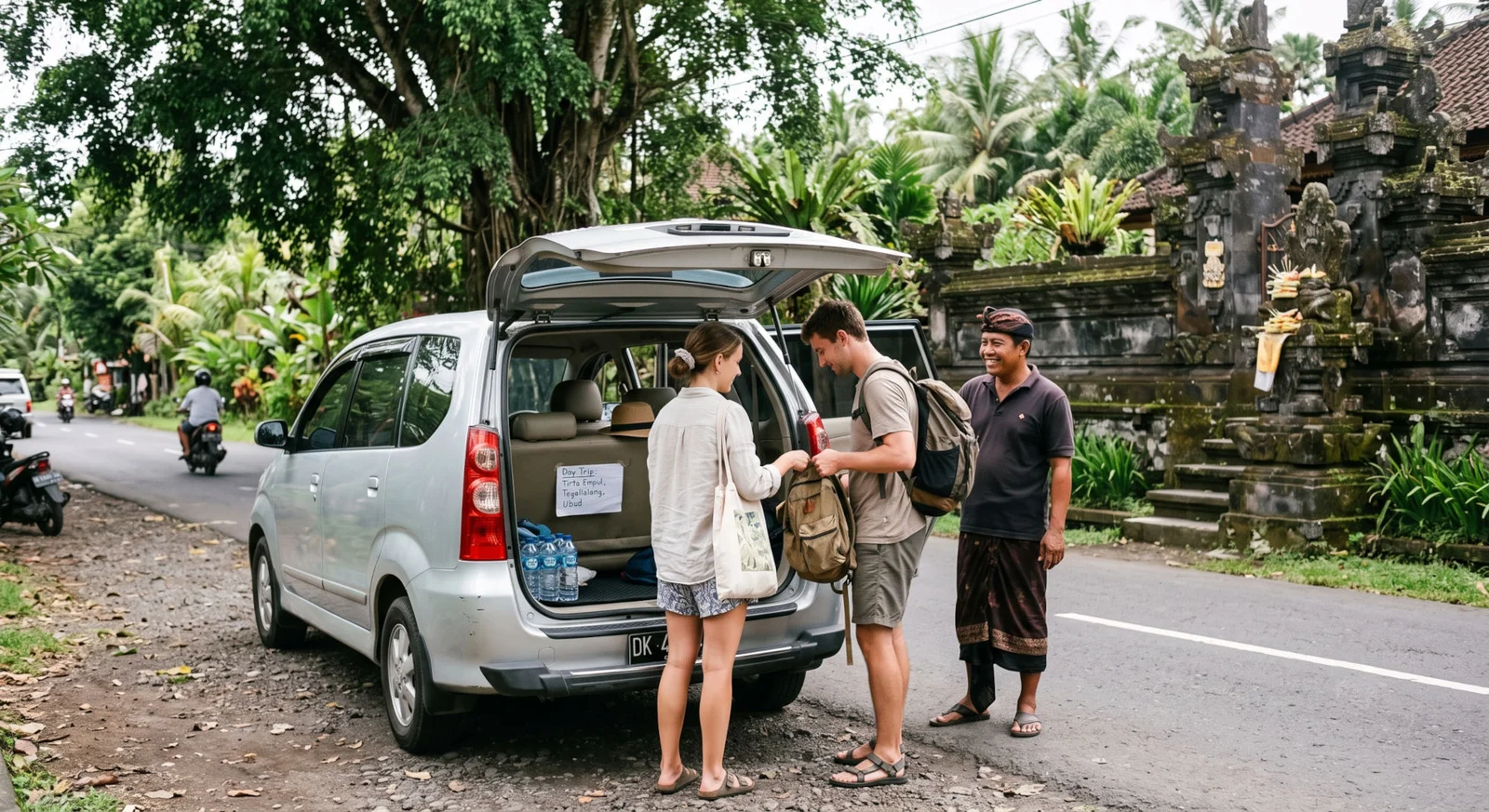
This does not always mean a formal guided tour. Sometimes it is simply better logistics: you choose the route, and the driver helps with timing, access, parking, and returning calmly from remote places.
A driver is especially useful for:
- families with children;
- routes with 4-6 stops;
- Uluwatu beach hopping plus sunset;
- Ubud from a south-coast hotel;
- waterfalls and temples outside town;
- transfers with luggage between areas.

FAQ: car with driver
How do you travel to Nusa Penida, Lembongan, and Gili?
Nearby islands are best handled as connected logistics: hotel transfer to the port, boat ticket, island transport, and return transfer. They are not normal beach rides; boat schedules, sea conditions, ports, and island roads all need buffer time.
For Nusa Penida, decide before you go who meets you after the boat and how you move around the island. Roads feel rougher, places are far apart, and popular viewpoints are not clustered in one easy walking zone.

For Lembongan and Gili, check departure port, baggage rules, return boat time, and transfer to your hotel. In wave season or rainy periods, leave buffer and avoid returning from an island on the same day as an international flight.
How should you choose transport by Bali area?
Transport choice depends on the area: South Bali has more taxis and apps, Ubud and Uluwatu need more route planning, while North and East Bali usually require a car or overnight stay. The farther you go from tourist zones, the more important it is to know how you will return.
| Area / scenario | Usually convenient | Watch out for |
|---|---|---|
| Kuta, Seminyak, Sanur | taxi, apps | evening traffic |
| Nusa Dua, Jimbaran | taxi, transfer | easy after airport |
| Ubud | driver, experienced scooter | center traffic and parking |
| Uluwatu | experienced scooter or driver | distance between beaches |
| Waterfalls and temples | driver | early start and route order |
| Nusa Penida | boat + island transport | roads, sea, schedules |
If you have only 7 days, keep it simple: stay in 1-2 bases and choose transport by day. That usually works better than changing hotels constantly.
How do you keep transport days calm in Bali?
Most Bali transport problems come from expectations: judging distance by kilometers instead of time, riding a scooter without experience, calling a taxi from a restricted zone, or putting a long route right after a flight.
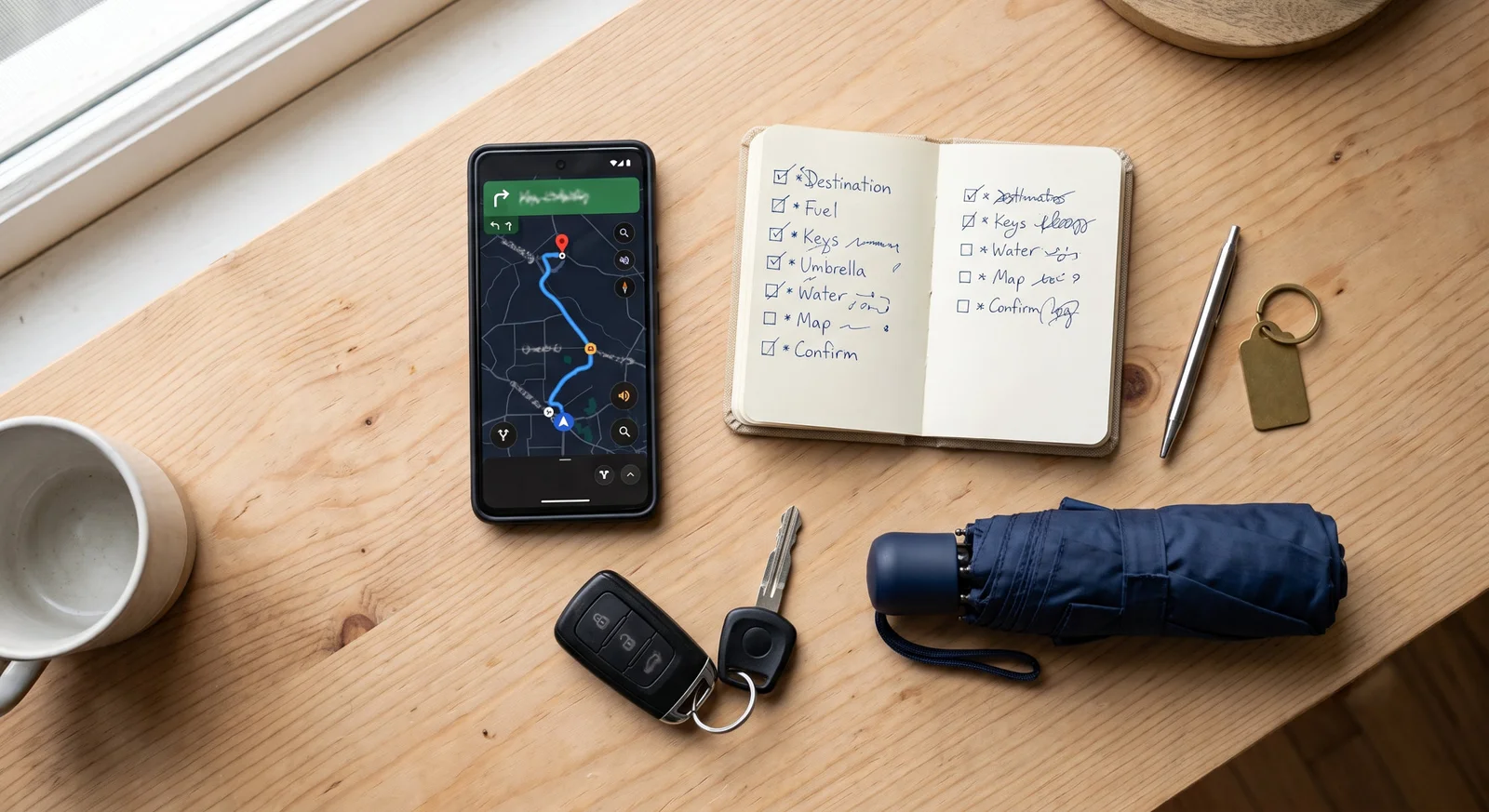
Checklist:
- do not plan a long route on arrival day;
- check travel time, not only distance;
- do not rent a scooter without license and experience;
- photograph rental condition before use;
- keep small cash for parking and local fees;
- agree on pickup points clearly;
- leave buffer for rain, traffic, and boat delays.
The core idea is simple: transport should support the holiday, not become the main event of the day. If the route is long, calm logistics are usually worth more than trying to optimize every transfer.