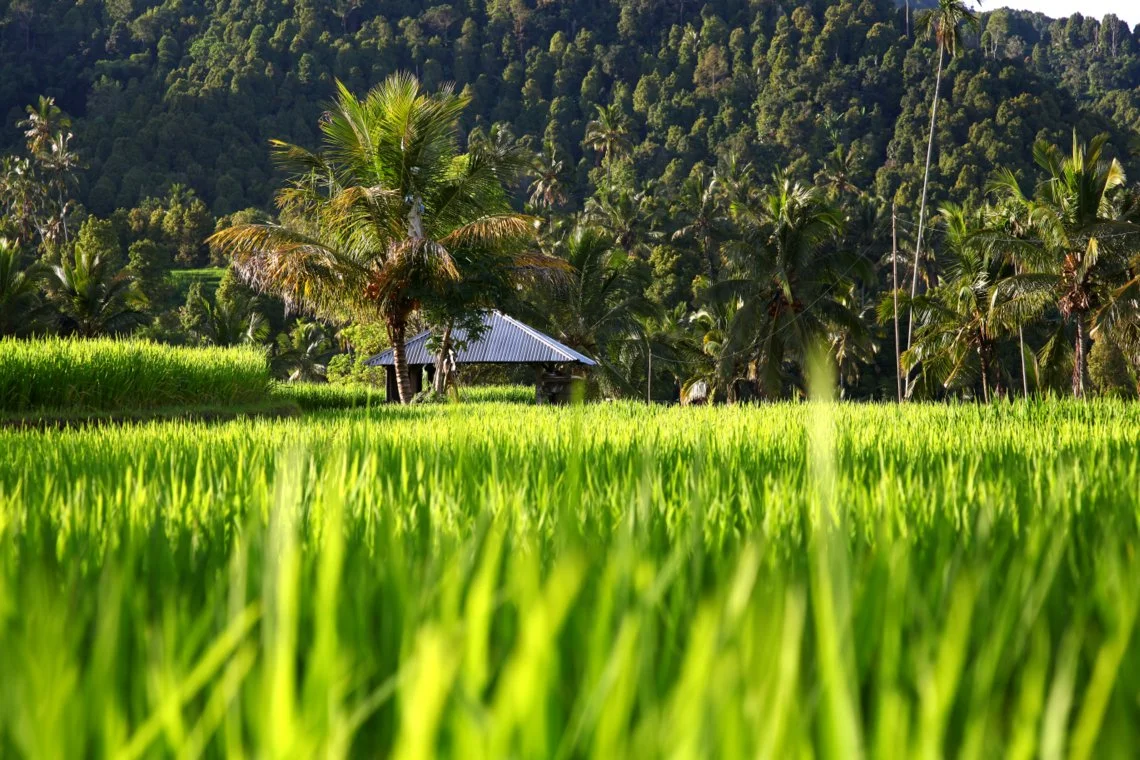
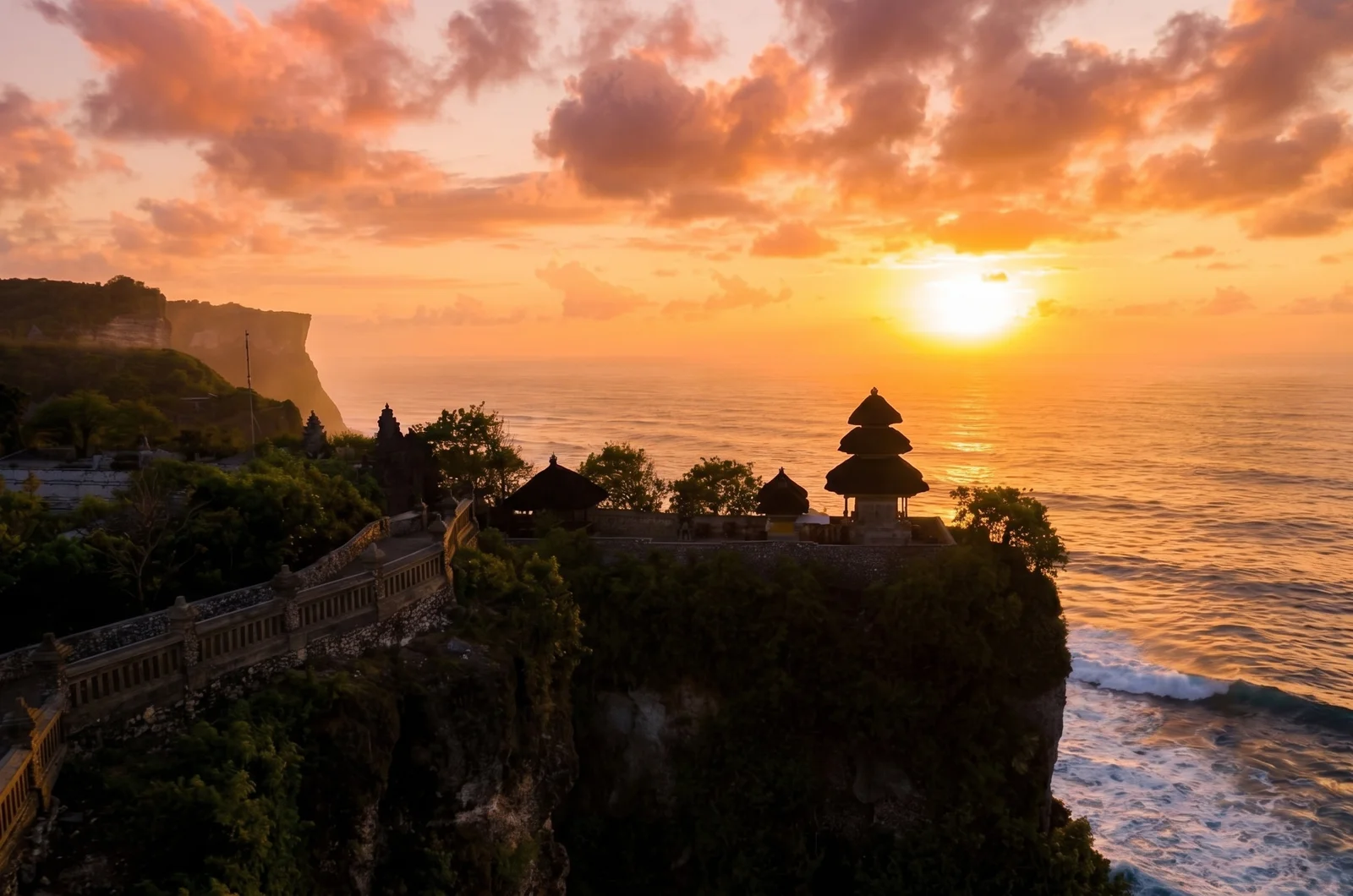
Ubud is the cultural heart of Bali, set inland in the foothills, where people come for rice terraces, temples, the Monkey Forest and Balinese art rather than beaches.
It's a green town of artists and yoga about an hour to ninety minutes from the airport, and within a short radius around it sit almost all of Bali's major non-beach sights.
This guide covers what to see in and around Ubud, how to get there, where to stay, how many days to allow, and how to build a route so you don't spend the whole time in a car.
How to Get to Ubud
Ubud sits inland, 60–90 minutes from the airport and the southern resorts, and people get there almost entirely by car — there's virtually no direct public transport to Ubud.
-
From the airport / the south (Kuta, Seminyak, Canggu) — 1–1.5 hours by taxi or transfer; from Canggu it's often quicker than from Kuta.
-
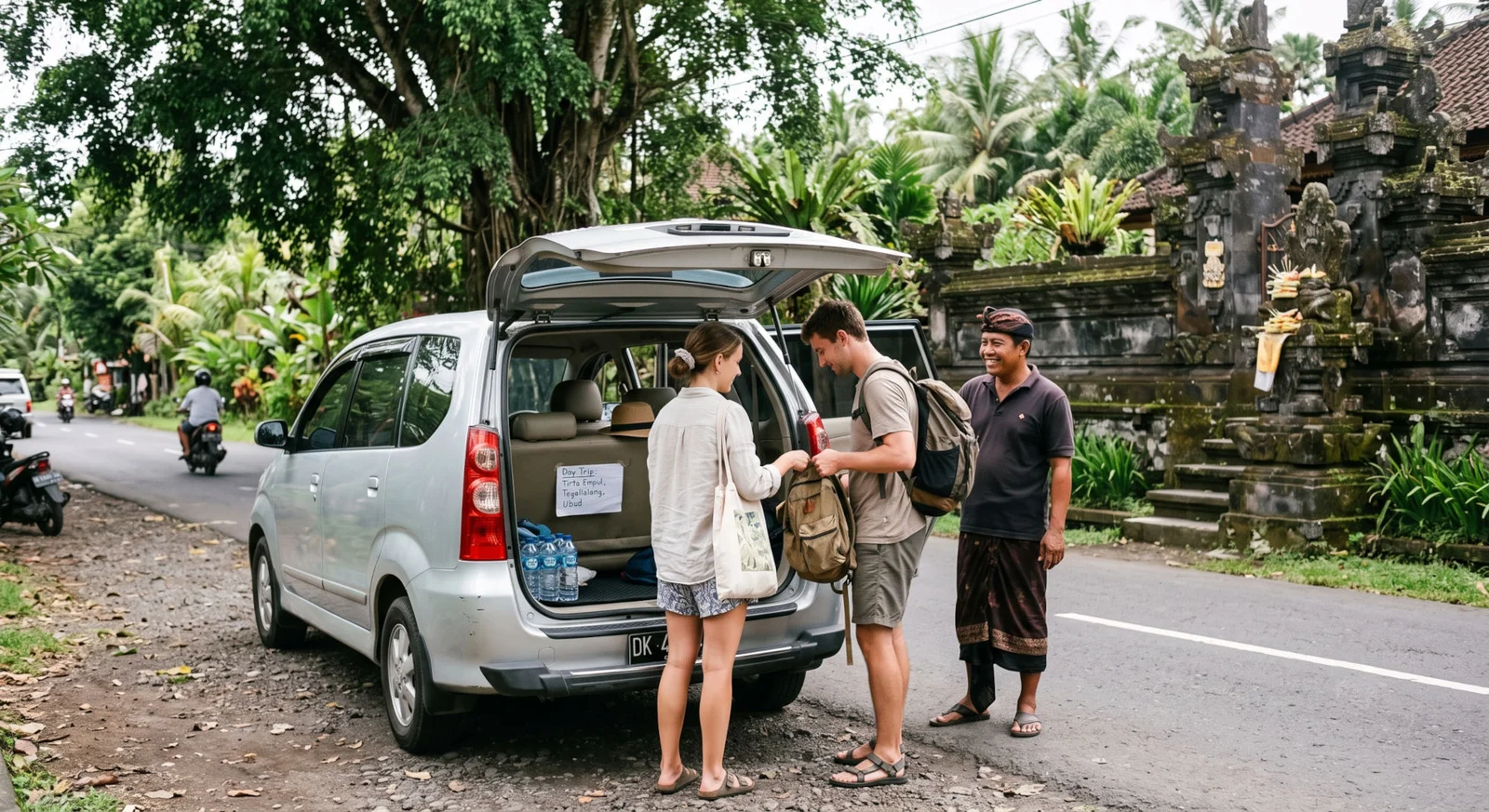
Taxis and apps — Grab and Gojek work in Ubud, though some spots have local-driver restrictions; a car with a driver for the day is the easiest option.
-
Scooter — popular for getting around the surroundings, but the town centre has narrow streets and heavy traffic.
How Many Days You Need and When to Go
The town itself takes about 1 day, but to see the surrounding terraces, temples and waterfalls without rushing, allow 2–3 days, or visit on one or two day trips from the south.
The best time is the dry season, April to October: fewer showers on the trails and terraces. In the wet season Ubud is especially green, but downpours tend to come after noon — plan sightseeing for the morning.
- In 1 day you can cover the centre: the palace, market, Monkey Forest and Campuhan ridge, plus one nearby stop — a terrace or a waterfall.
- In 2–3 days you add the temples (Tirta Empul, Gunung Kawi, Goa Gajah), Jatiluwih, and activities — rafting, yoga, swings.
What about beaches? Ubud has no sea or beaches — it's in the centre of the island, among rice fields and jungle. For a beach holiday head south (Kuta, Seminyak, Canggu, Nusa Dua); Ubud is for nature and culture, often paired with the coast.
What to See in Central Ubud
Central Ubud is compact: the palace, market, Monkey Forest and Campuhan Ridge Walk all connect on foot in a single day.
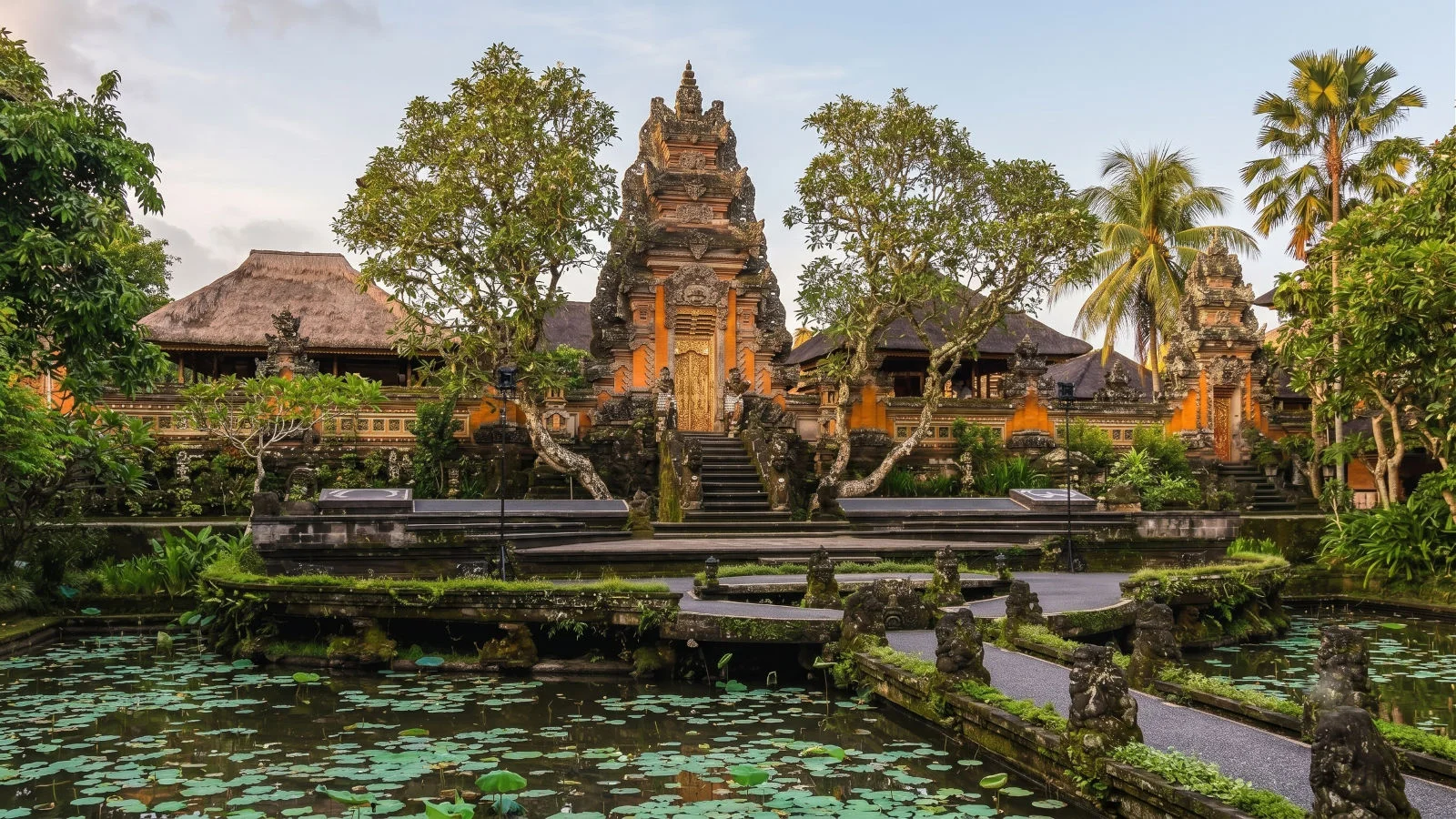
Ubud Palace (Puri Saren Agung) — the royal family's residence on the main crossroads: free daytime courtyards of Balinese architecture and traditional dance in the courtyard by night.
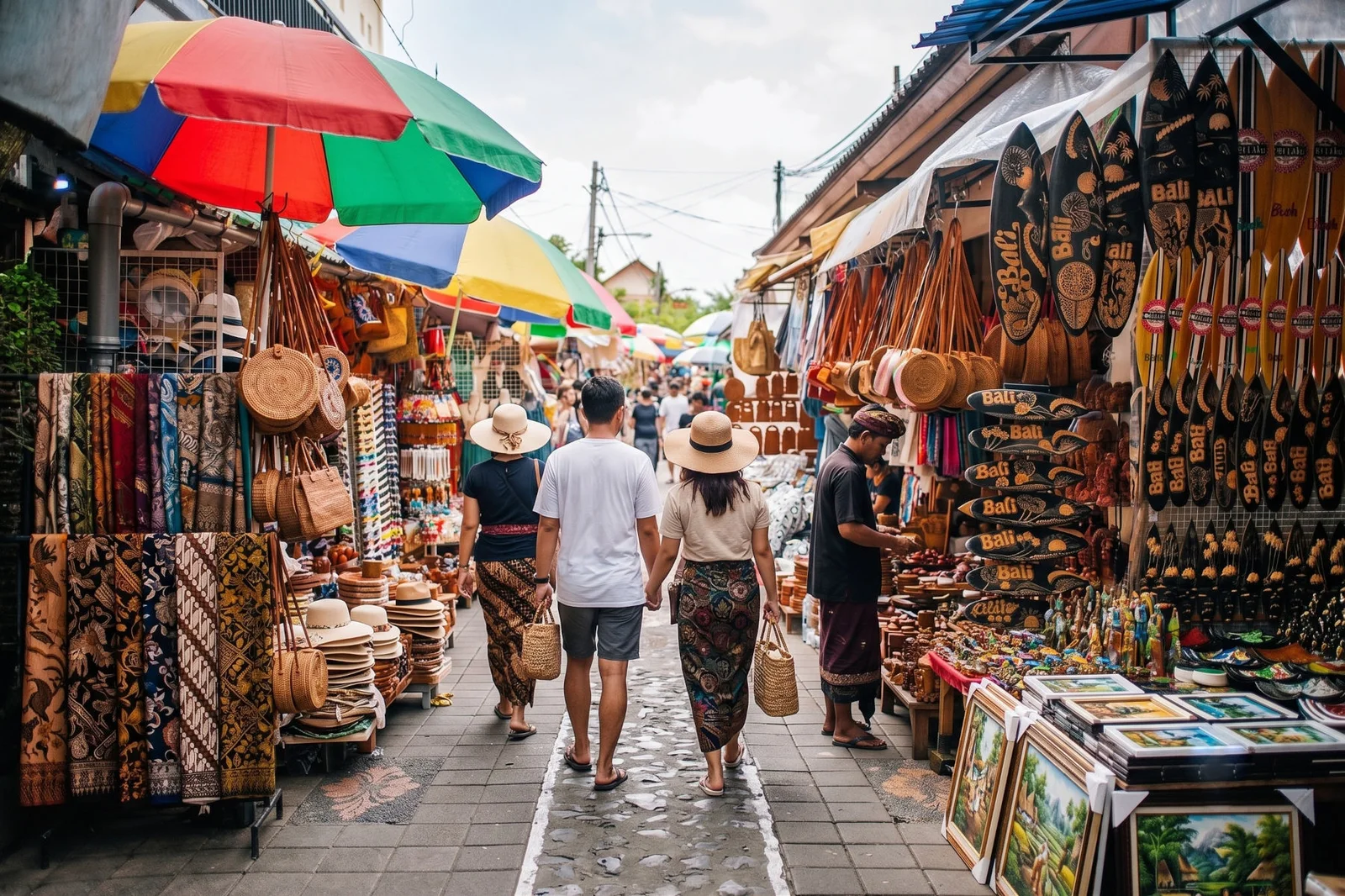
Ubud Art Market (Pasar Seni) — a covered handicraft market directly opposite the palace: textiles, woven bags, carvings and paintings, where bargaining is expected.
Sacred Monkey Forest — a sanctuary of hundreds of macaques and mossy temples at the south end of the centre; keep food and belongings away from their nimble hands.
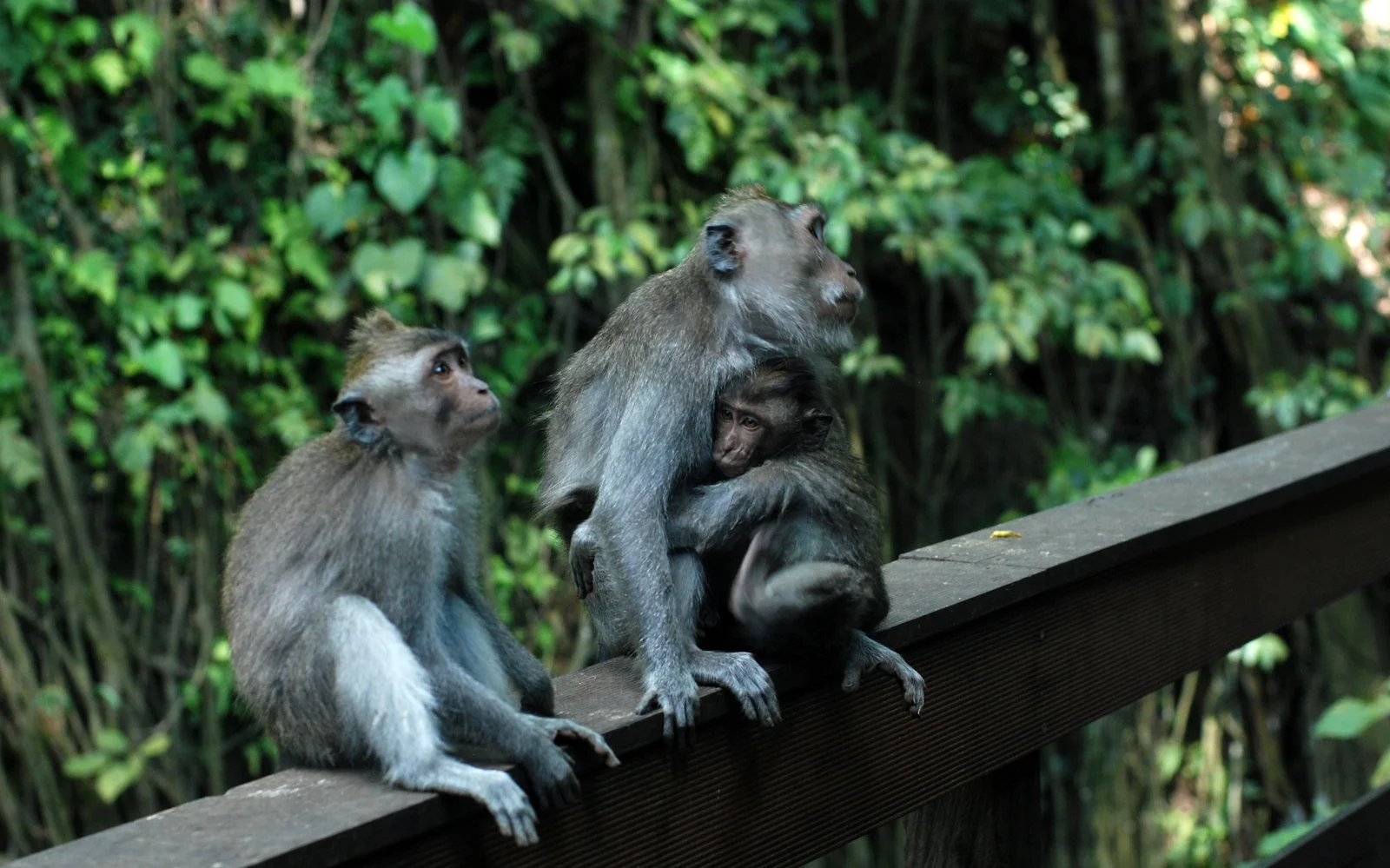
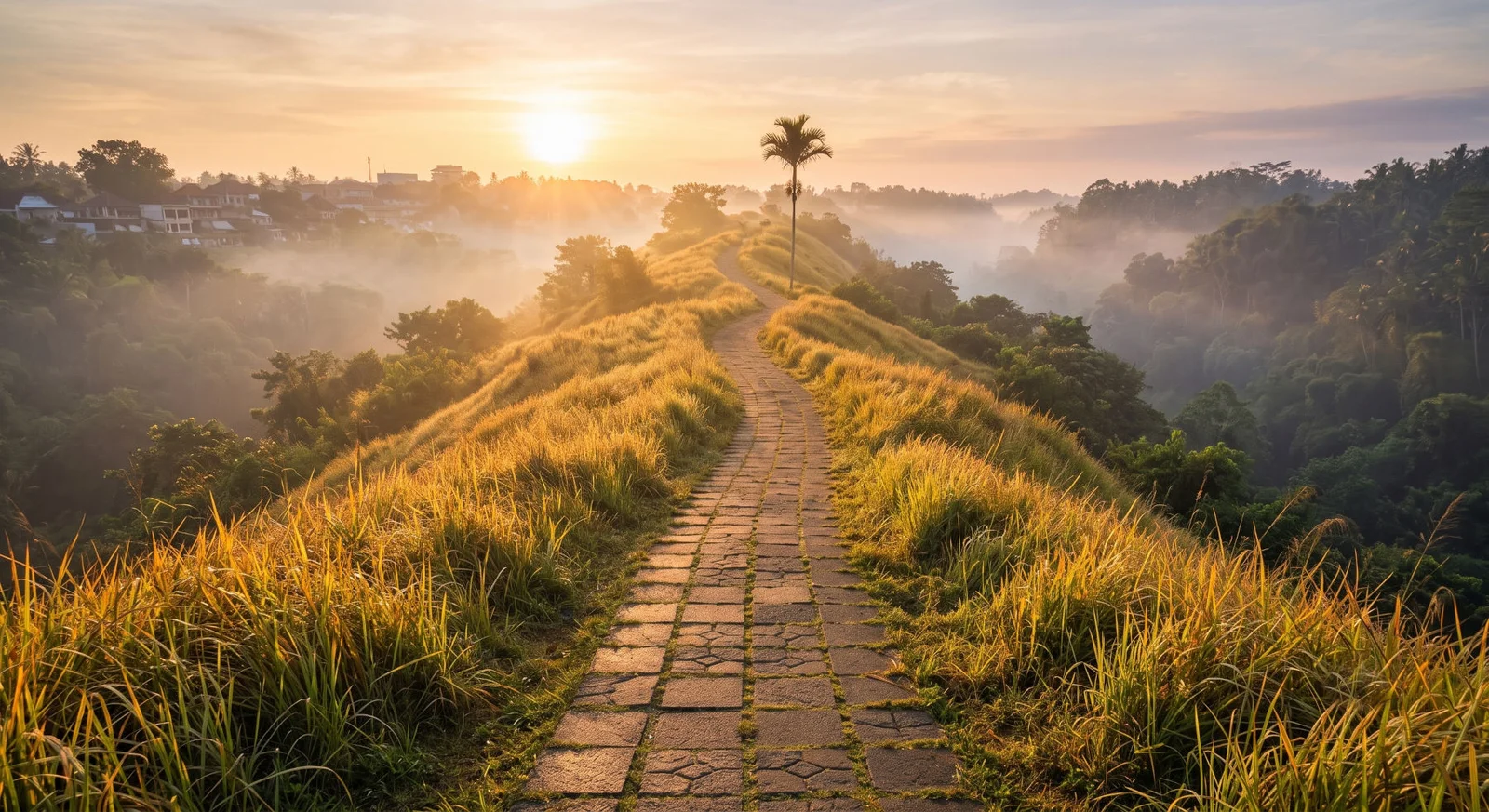
Campuhan Ridge Walk — a free morning stroll along a green ridge on the western edge of the centre, best at sunrise.
Rice Terraces: Tegalalang and Jatiluwih
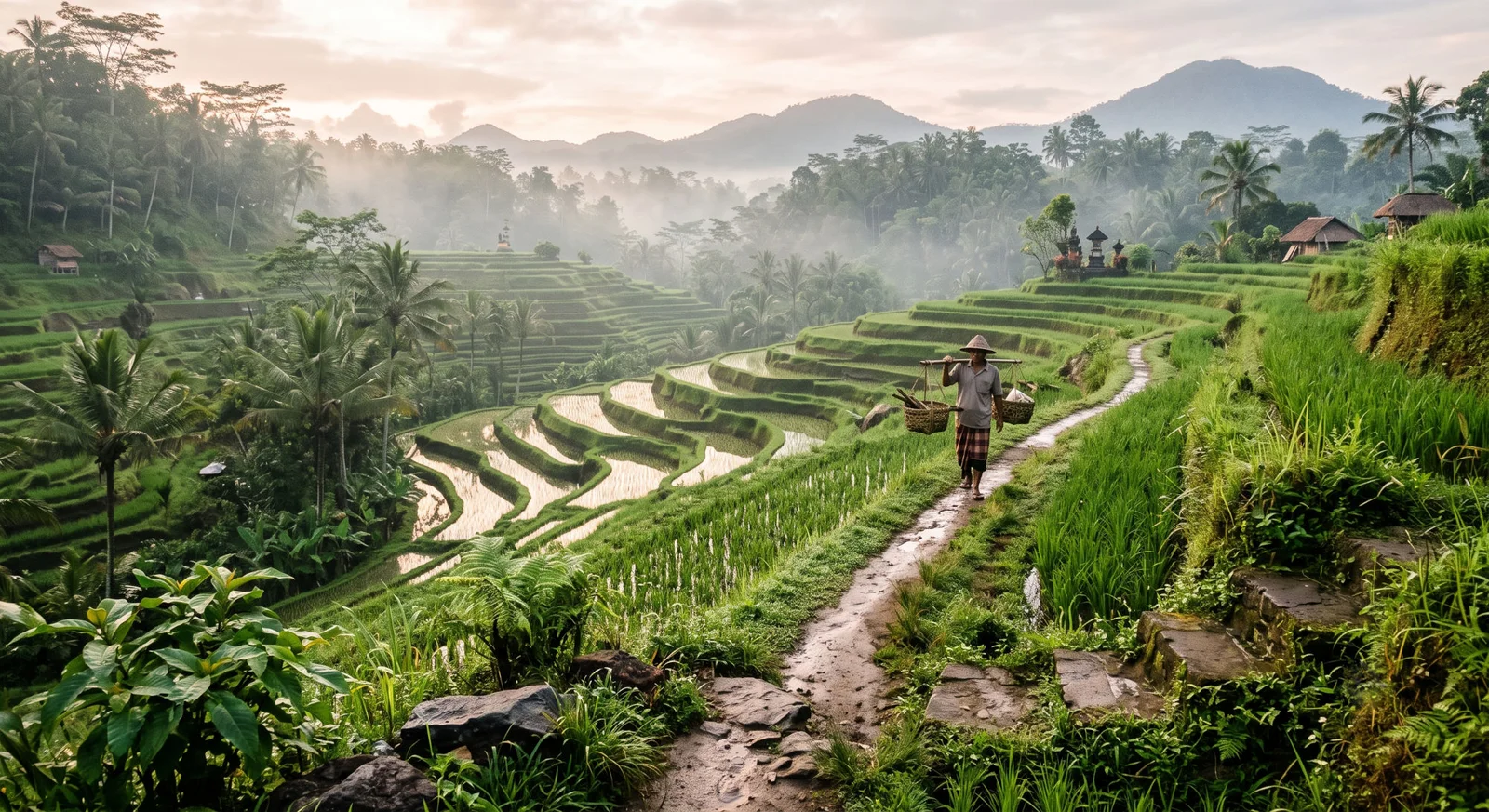
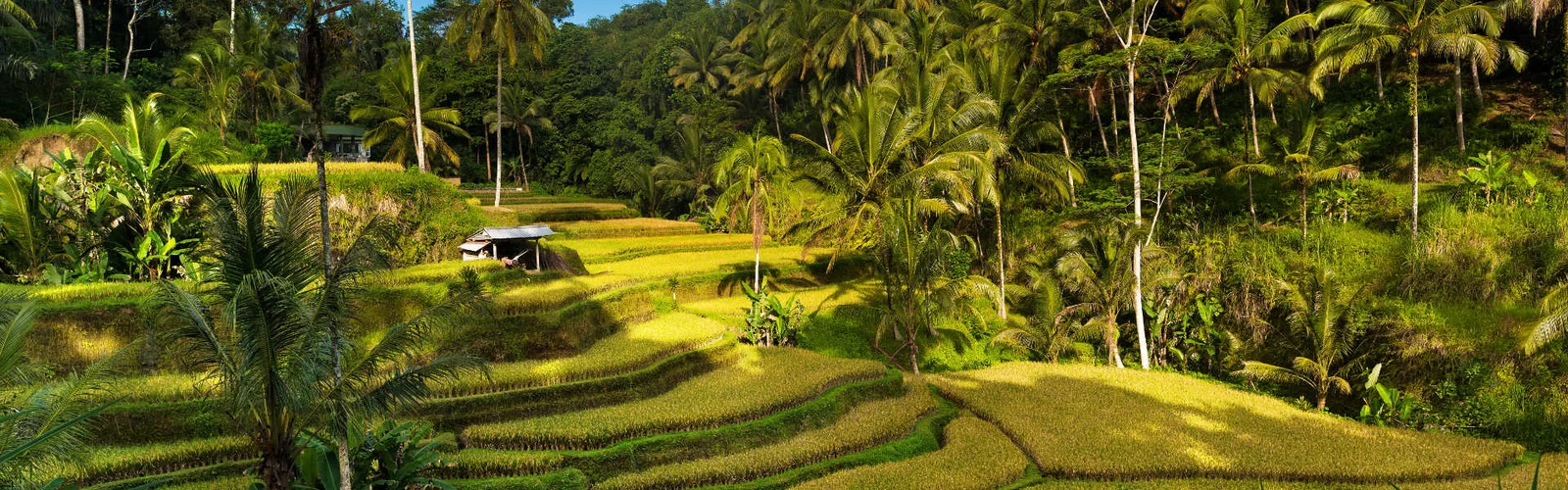
Stepped rice terraces are Ubud's signature and some of Bali's most photogenic scenery: the two main ones sit close to town and further out in the hills.
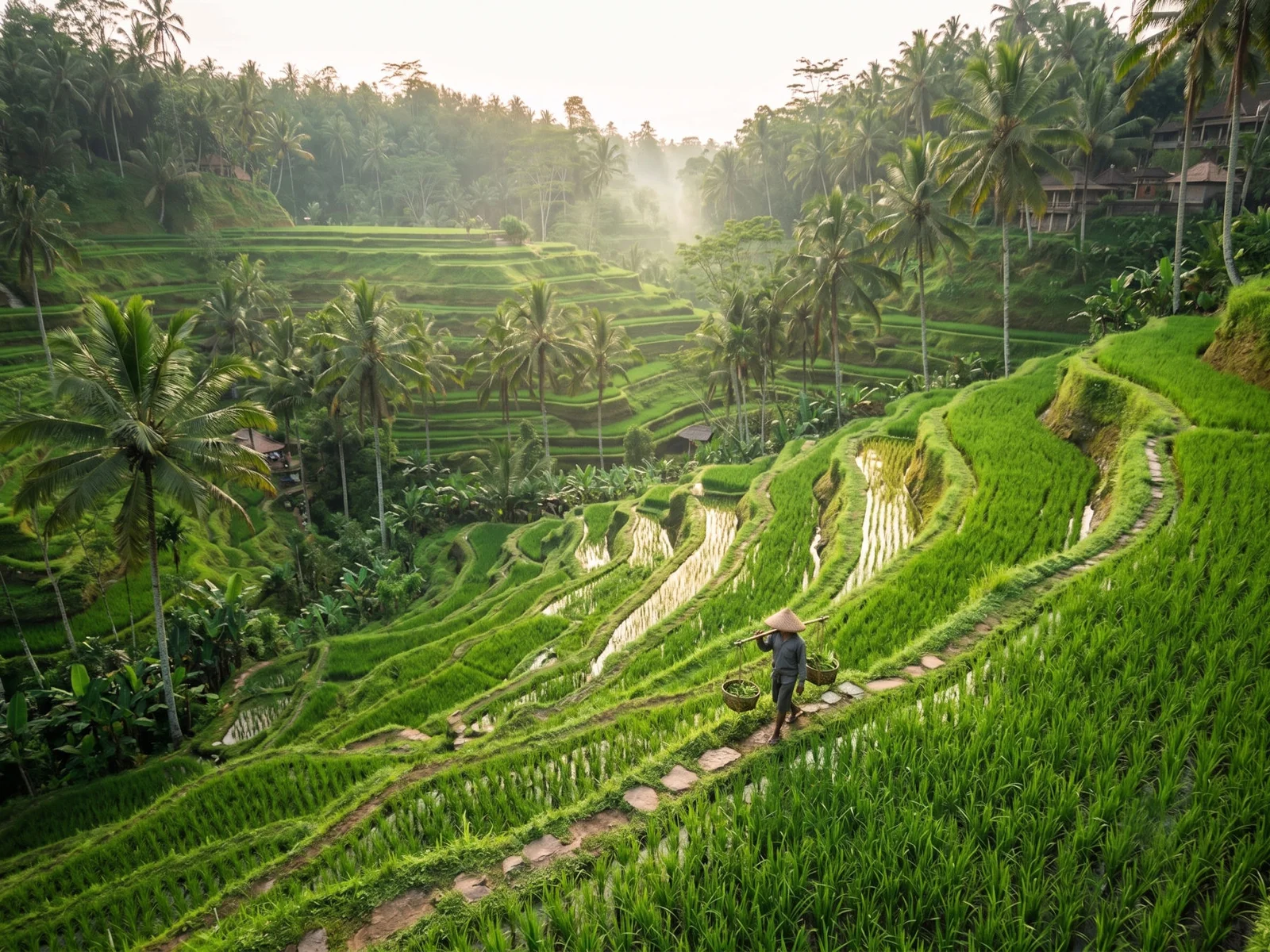
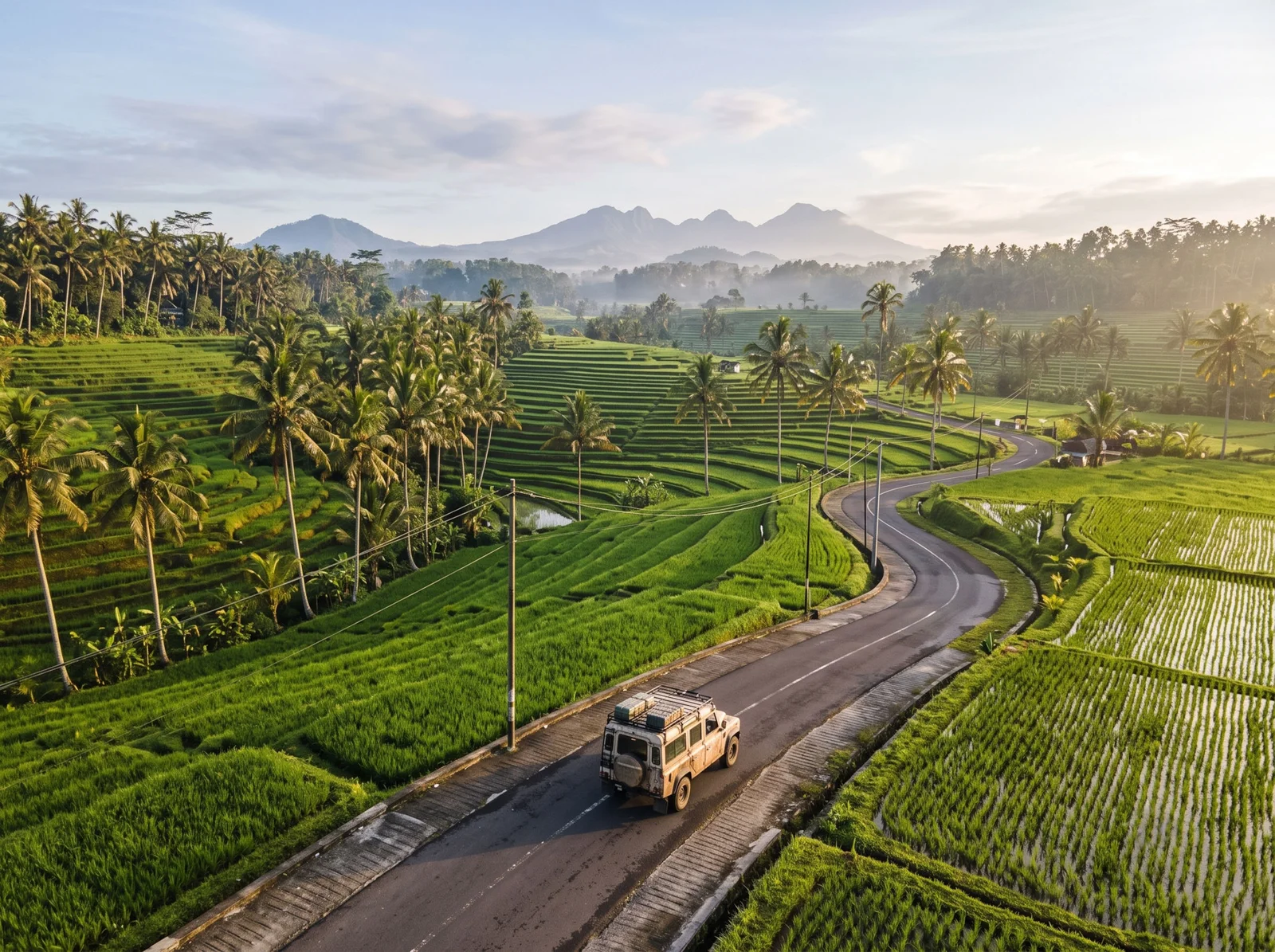
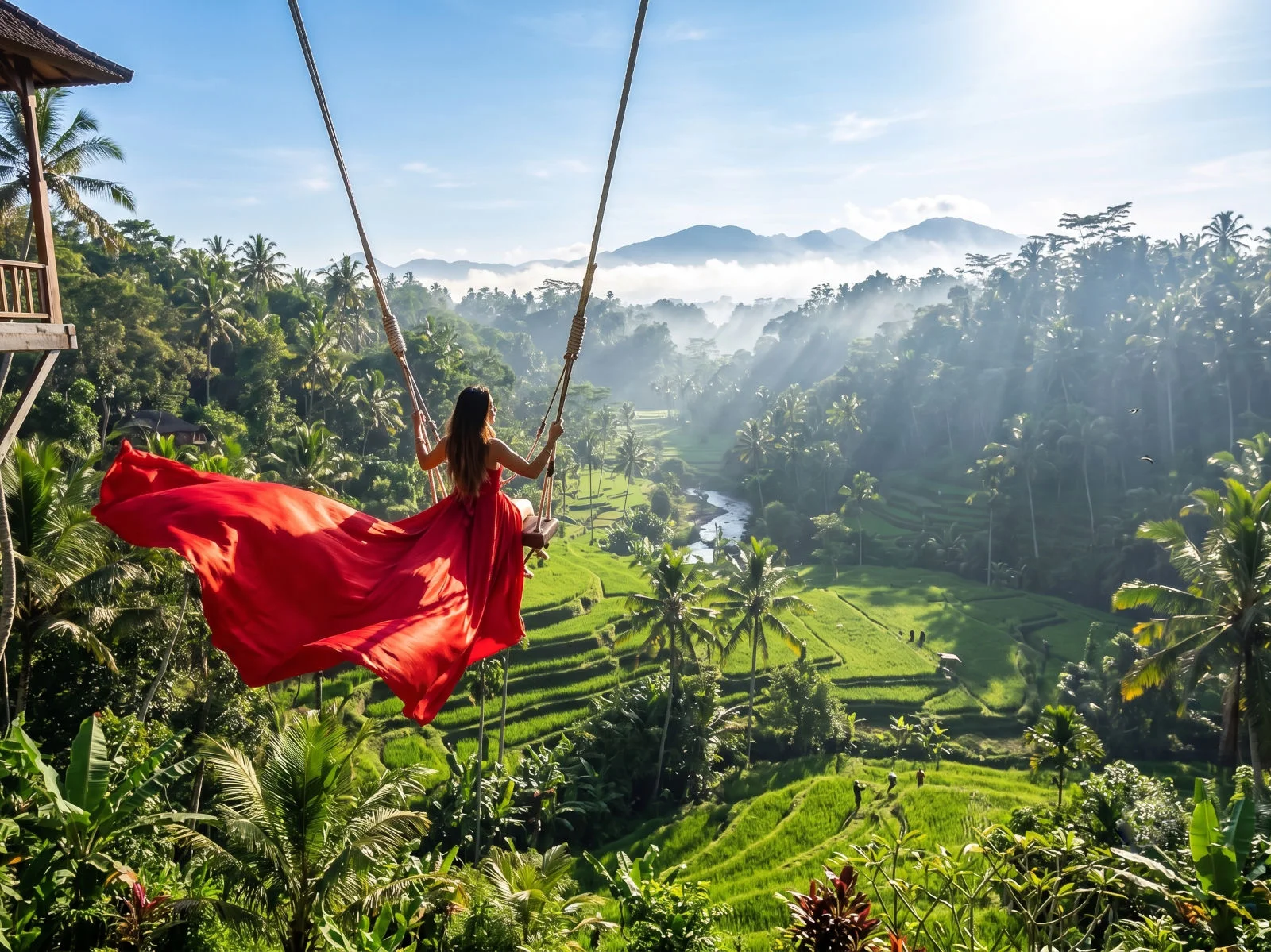
Tegalalang — the most famous terraces, 15–20 minutes north of Ubud, with paths between the tiers and swings over the valley.
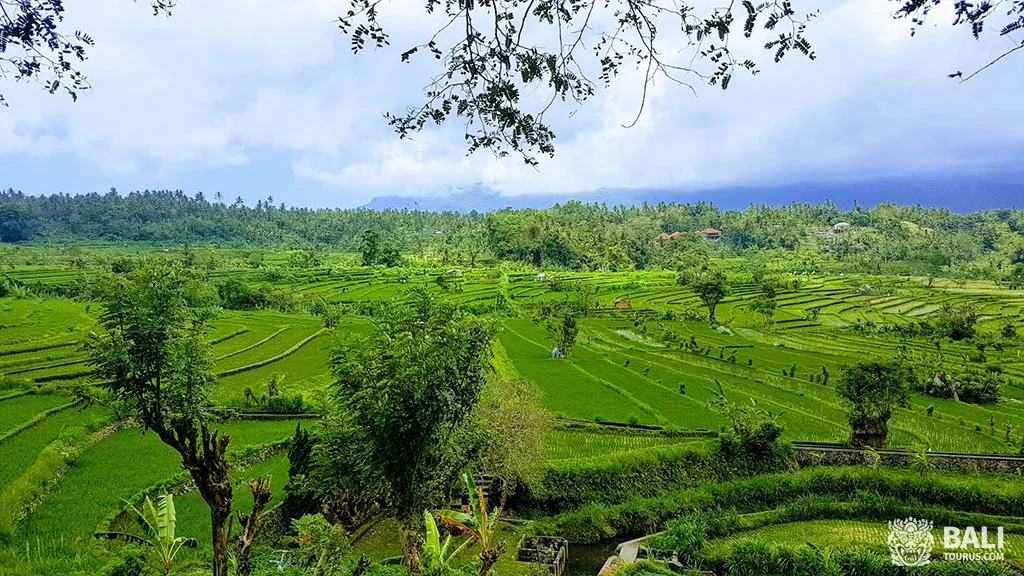
Jatiluwih — vast UNESCO-listed terraces in the hills to the west, quieter and more sweeping than Tegalalang; worth a dedicated trip.
For how Tegalalang and Jatiluwih differ, when to go and how to frame the shot, see the dedicated Bali rice terraces guide.
Temples around Ubud
Northeast of Ubud, toward Tampaksiring, several important temples cluster together, easy to combine into one temple day.
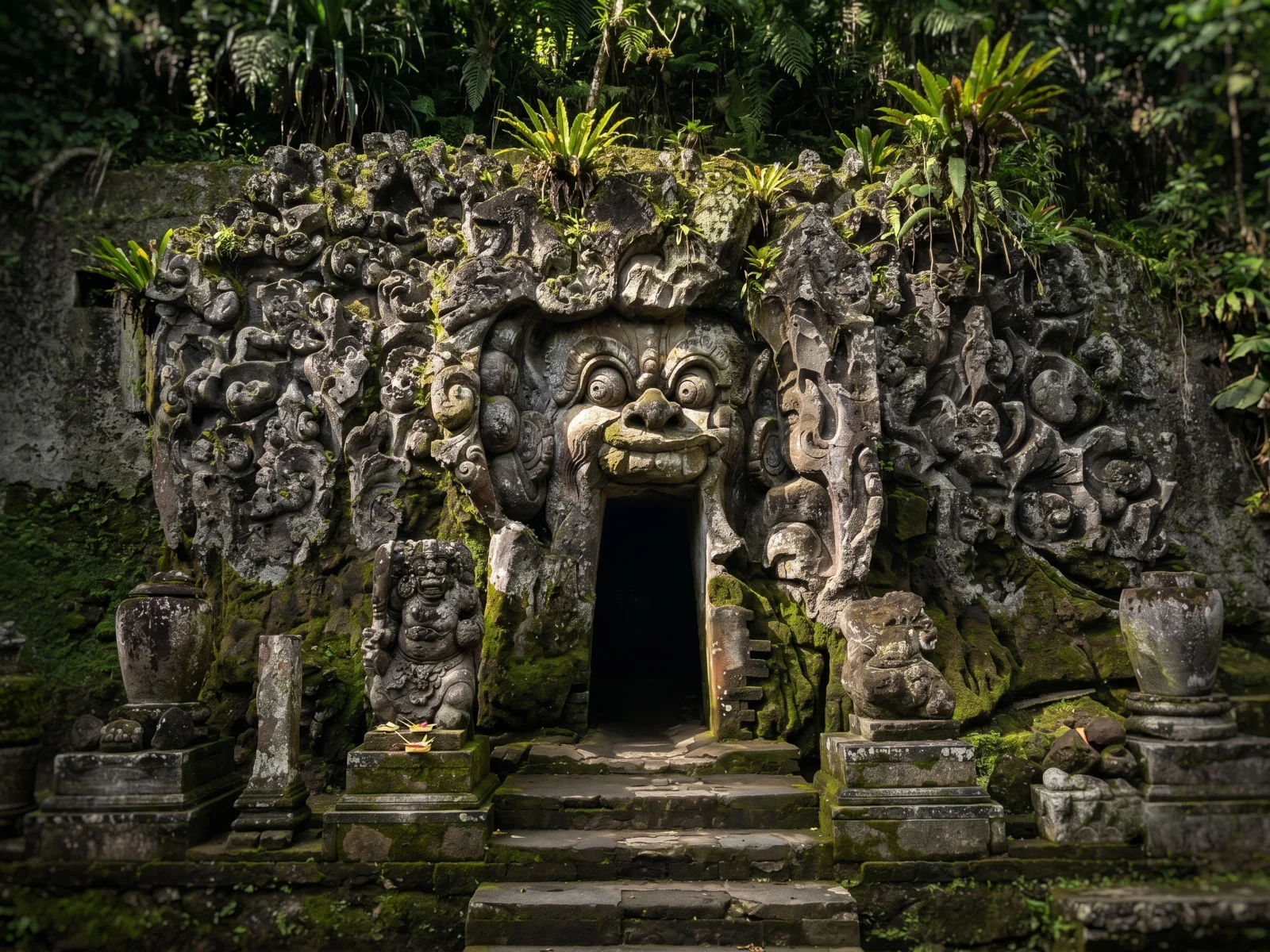
Goa Gajah (Elephant Cave) — an ancient 11th-century cave temple with a demon-mouth entrance and bathing pools with nymph statues, 15 minutes from the centre.
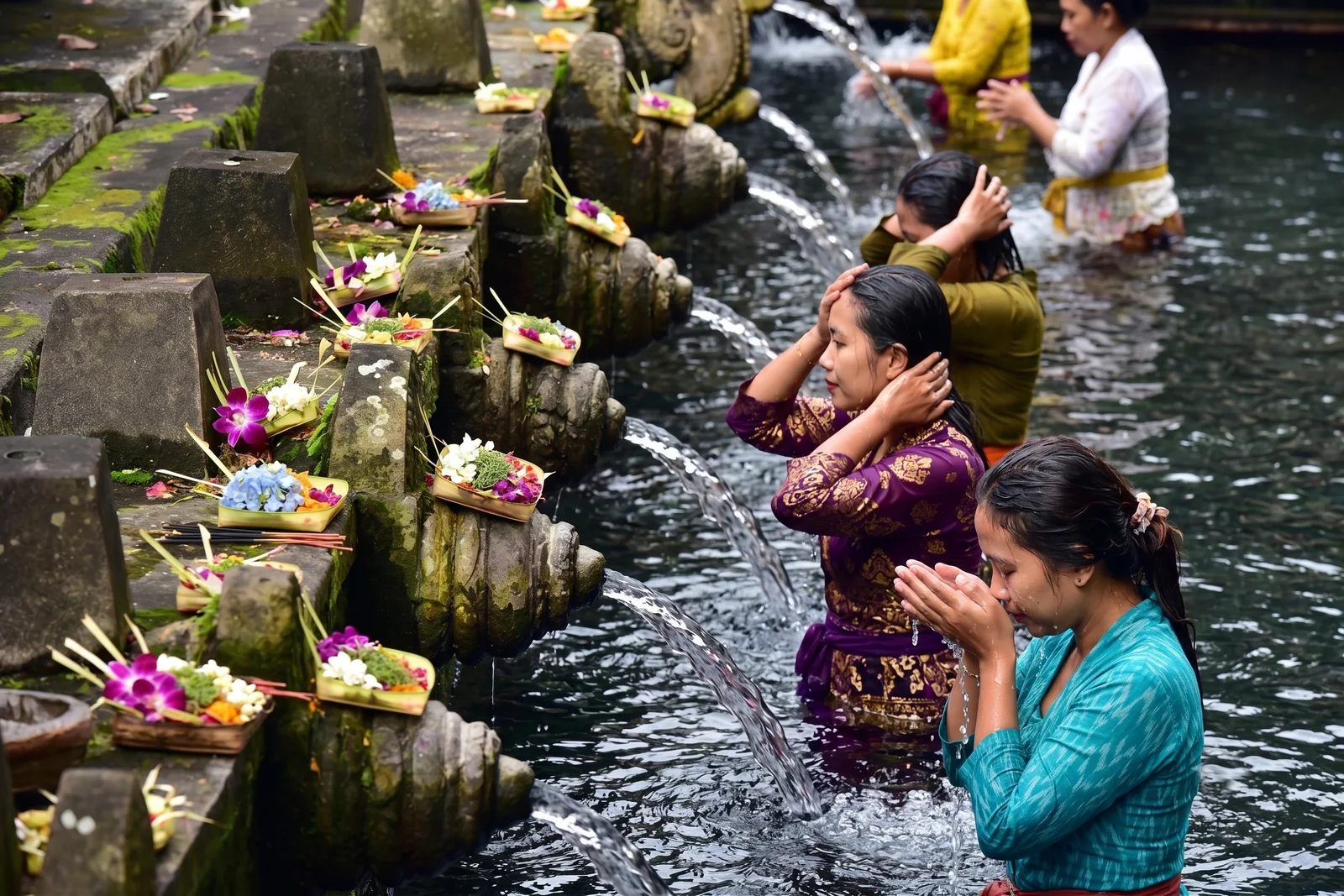
Tirta Empul — a sacred water temple where Balinese have performed the melukat purification ritual under spring spouts for over a thousand years.
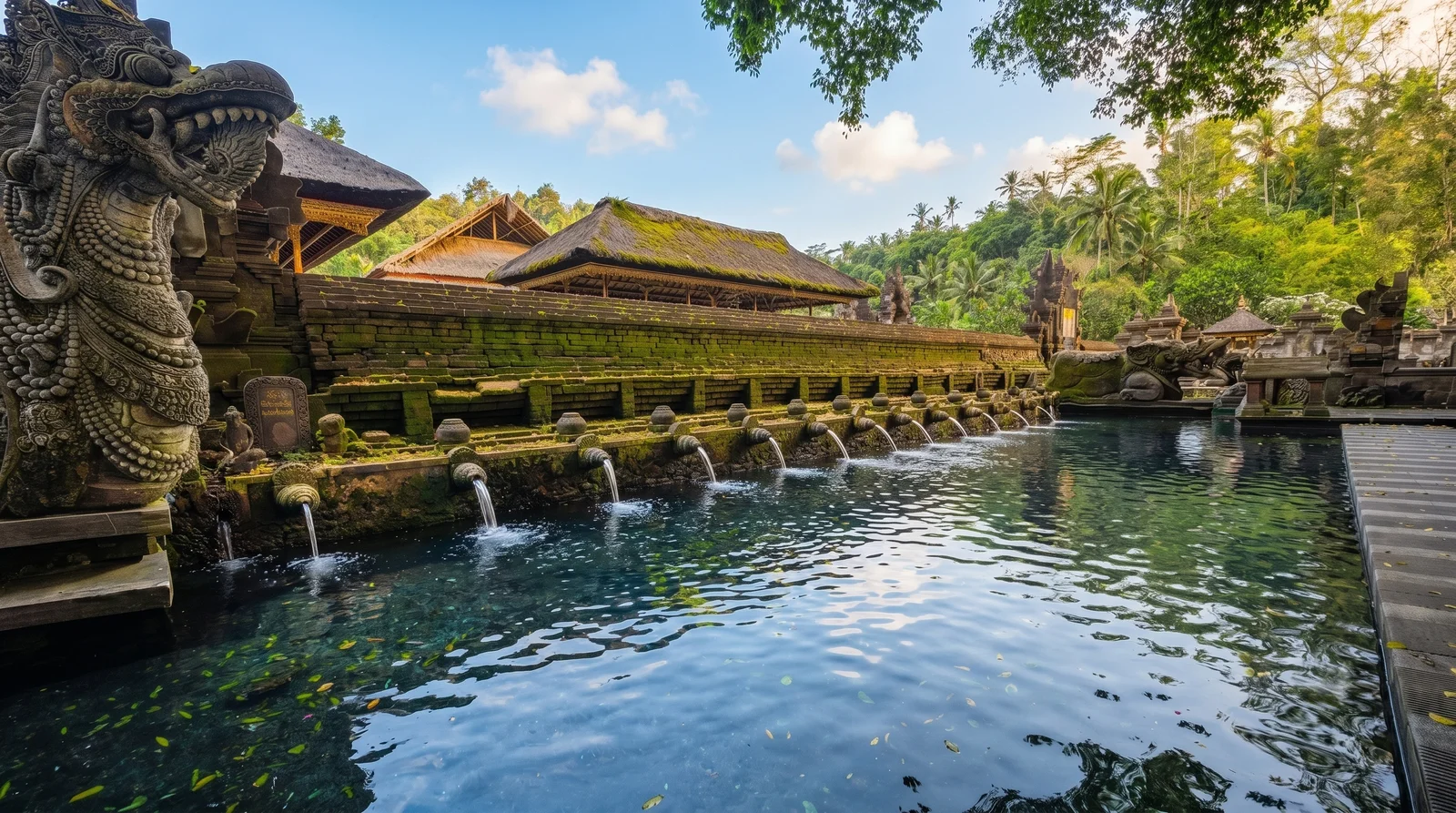
Gunung Kawi Sebatu — a quiet water temple with ponds and springs in Sebatu village, far less crowded than Tirta Empul.
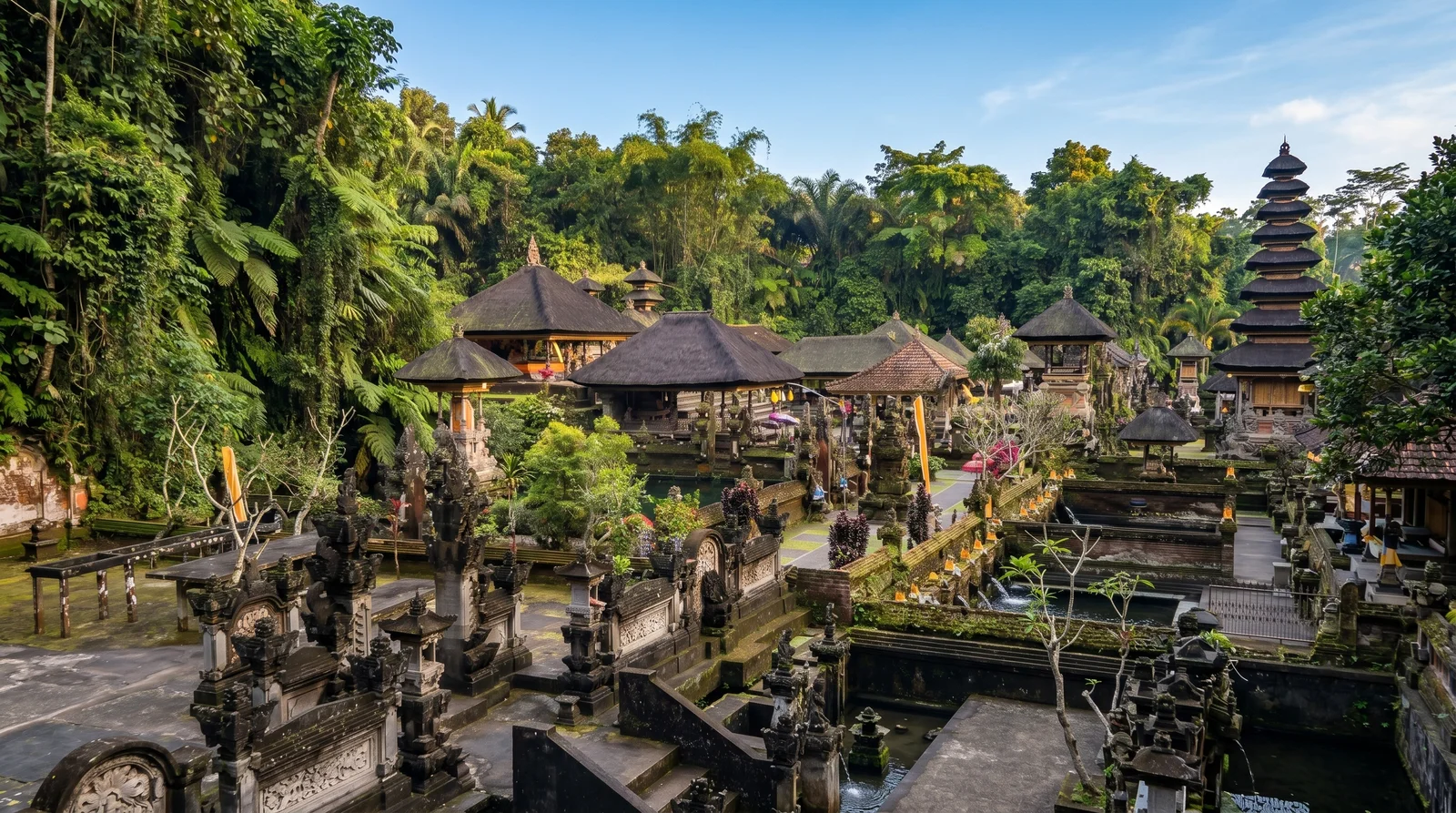
Waterfalls, Jungle and Swings
Around Ubud, ravines with waterfalls and jungle above the Ayung River hold most of the region's active attractions.
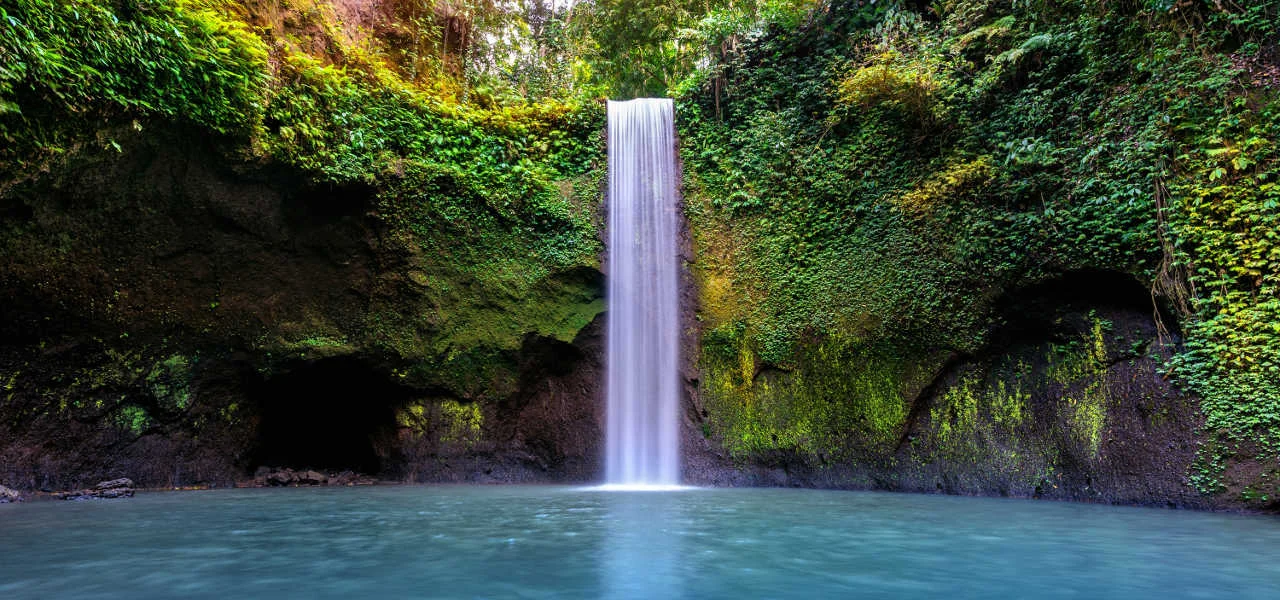
Tegenungan Waterfall — a big waterfall half an hour south of Ubud, with photo decks and a swim at the base.
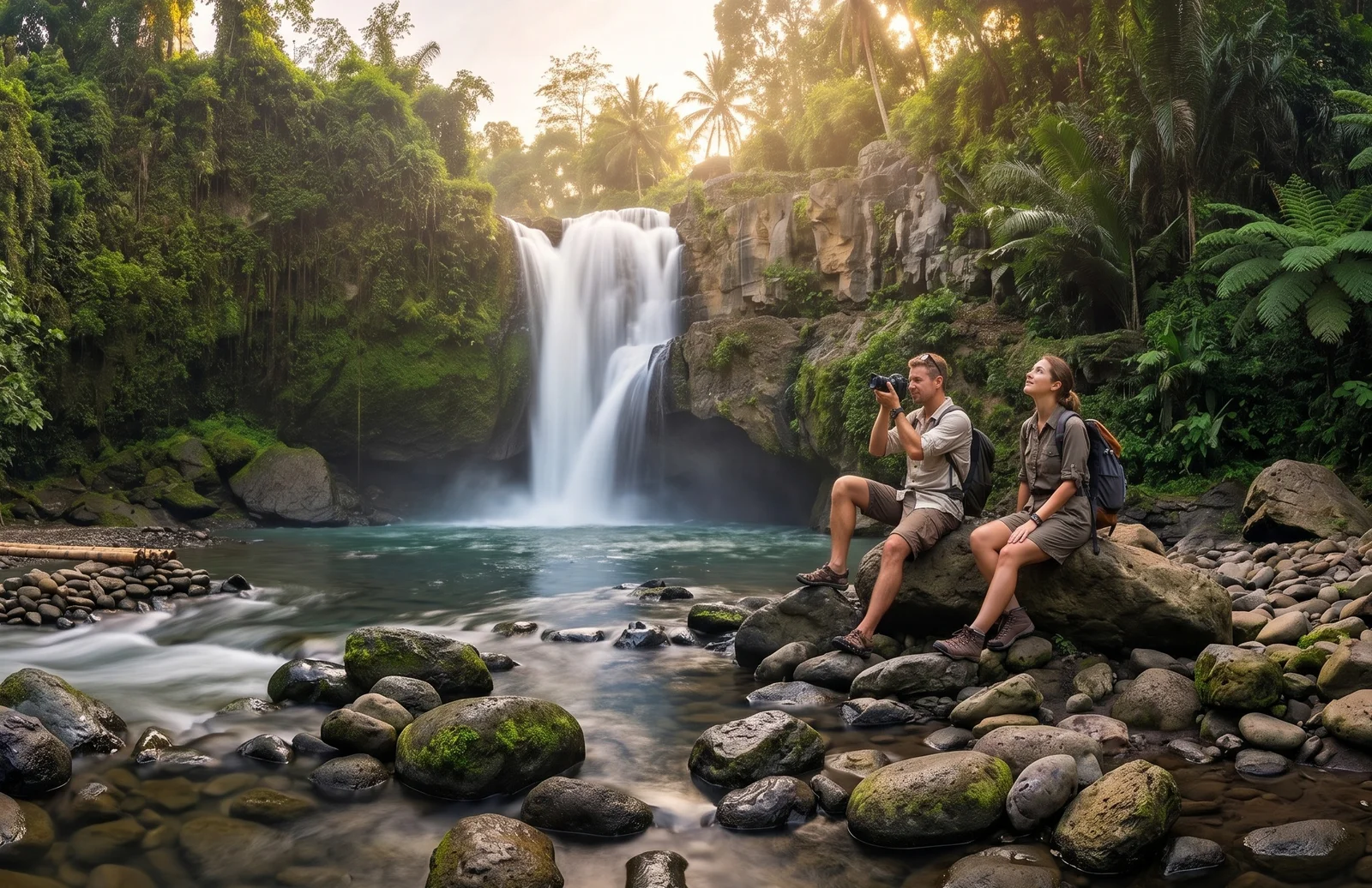
Bali Swing (jungle swings) — parks of giant swings and photo platforms over the Ayung River valley for the classic flowing-dress shot.
Activities: Yoga, Spa and Rafting
Ubud is Bali's wellness capital, and many come here specifically for yoga, spa practices and rafting on the Ayung River.
- Yoga — dozens of studios and retreat centres; the best known are around Penestanan and in the centre.
- Spa and massage — from budget salons to resort spas in the valleys; a Balinese massage is worth trying at least once.
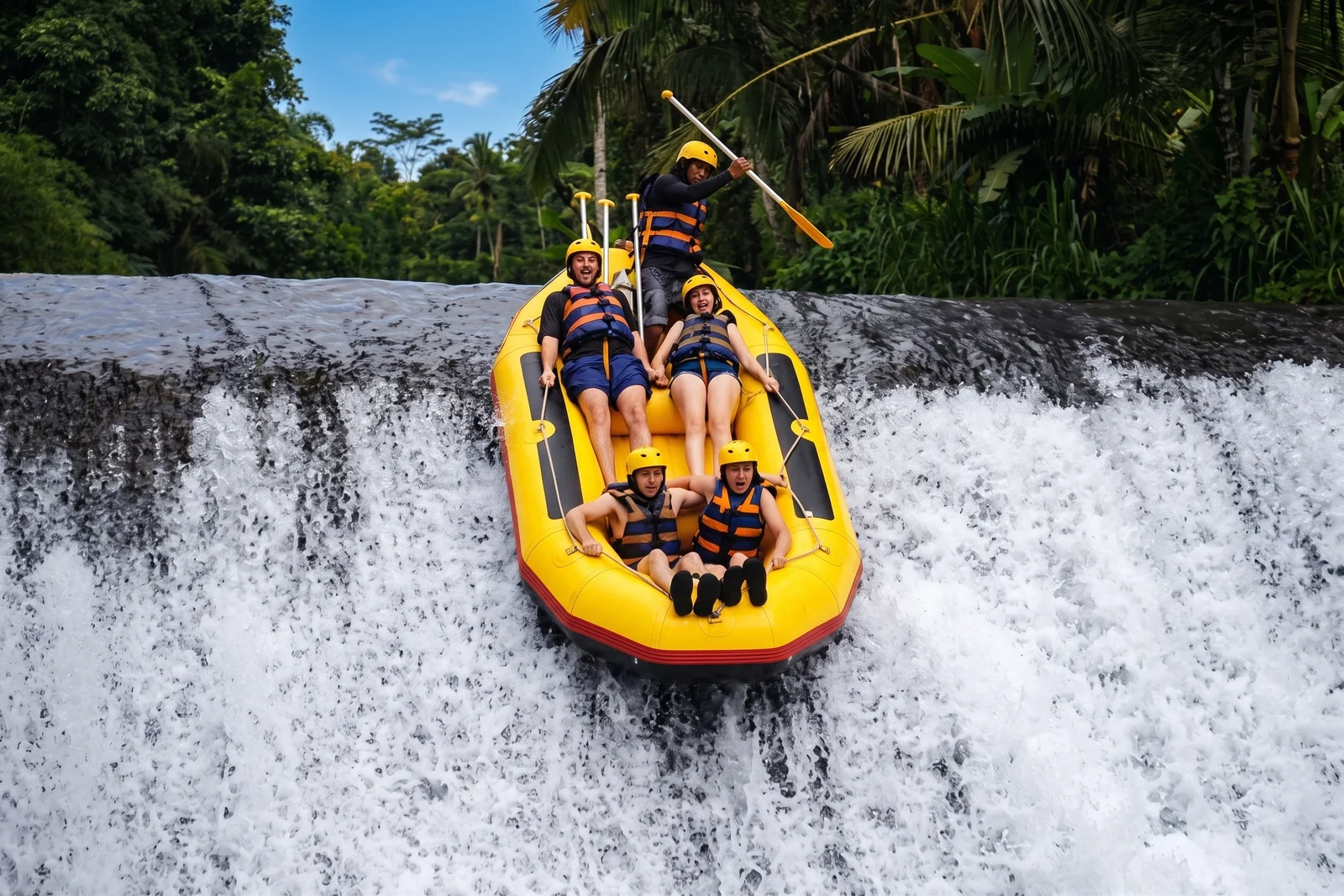
- Ayung River rafting — a moderate white-water run through jungle with waterfalls along the banks, a great pick for an active day.
Ubud Tours with Balitourus
The easiest way to see Ubud and its surroundings in a day is with a driver-guide who handles the logistics and the order of stops, covering the terraces, the Monkey Forest, a waterfall and the temples in one trip.
The drive between the terraces, the Monkey Forest, a waterfall and the temples takes longer than the stops themselves if you don't plan the route in advance — that's exactly what a driver-guide solves.
Ubud Tour
Where to Stay in Ubud
Accommodation in Ubud ranges from guesthouses in the centre to pool villas in the rice fields. The centre is handy for walking (palace, market, cafés), while the Penestanan, Sayan and Nyuh Kuning valleys are for quiet and views but further from the sights. Specific hotels and villas are easiest to compare on booking sites for your budget and dates.