At a Glance
- Local names: Kawah Ijen / Gunung Ijen
- Where: East Java, on the Banyuwangi and Bondowoso regency border
- Elevation: 2,769 m for the Ijen volcanic complex profile
- The draw: blue fire, an acid crater lake and sulfur mining
- Trail: starts from Paltuding, about 3 km up to the crater rim
- Time needed: 4-6 hours for the night climb, sunrise and descent
- Best timing: dry season and a clear night; blue fire is visible only in darkness
- Important: access depends on volcanic gas and activity; bring a mask, warm layers and a local guide
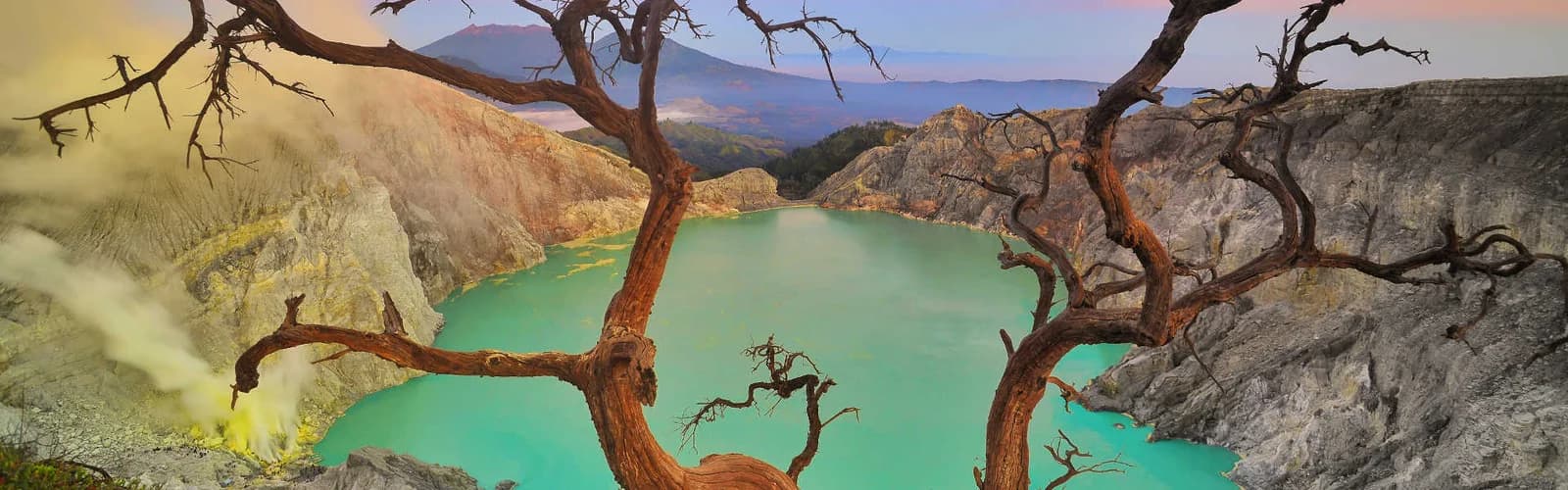
Mount Ijen (Kawah Ijen) is one of Indonesia's most unusual volcanic landscapes: at night, sulfur gases burn with a blue fire inside the crater, and at sunrise a turquoise acid lake appears below the rim. This is not a casual viewpoint or a simple summit hike; it is an active industrial and geological landscape where tourists share the route with sulfur miners.
Ijen sits in far eastern Java, just across the strait from Bali. For travelers starting in Bali, it is usually part of a multi-day East Java route, most often paired with Mount Bromo.
Why Visit Mount Ijen
Mount Ijen is worth visiting for its sharp contrasts: a dark night climb, blue flames in the crater, sulfur fumes, miners carrying heavy loads, and then a cold sunrise over a lake that looks almost unreal. It suits travelers who want a strong natural experience with real geology and human context, not just a pretty lookout.
It is also a place to approach with care. The hike is cold, dark and dusty, and volcanic gases can irritate your eyes and lungs. If you have asthma, serious respiratory issues or high sensitivity to smoke, choose a gentler volcanic route instead.
What Is the Blue Fire at Ijen?
Ijen's blue fire is not blue lava. It is burning sulfur gas escaping from cracks near the fumaroles. When the hot gas meets oxygen, it ignites and creates an electric-blue glow; some sulfur condenses, flows briefly as liquid and then hardens into yellow crusts.
The phenomenon is visible only before sunrise. Once daylight arrives, the blue glow fades, but the crater itself becomes clearer: yellow sulfur deposits, dark volcanic walls, white steam and the turquoise lake below.
Access down toward the blue-fire area depends on current safety rules. If gases are dense or volcanic activity rises, local authorities may restrict descent into the crater or close sections of the route. At Ijen, listening to the guide matters more than chasing a photo.
The Kawah Ijen Acid Lake
Kawah Ijen's crater lake is known as one of the world's largest highly acidic crater lakes. Volcanological descriptions place the active crater at roughly 700-800 m across, around 200 m deep, with its bright turquoise color created by acids, minerals and volcanic gases.
Treat it as a hazardous volcanic feature, not a mountain lake. The water is toxic and extremely acidic: no swimming, no touching and no leaving the permitted route to get closer. Its beauty comes from the same active hydrothermal system that makes it dangerous.
Sulfur Miners on the Trail
Ijen is famous not only for blue fire but also for manual sulfur mining. Near the fumaroles, volcanic gases are channeled through pipes, cool into liquid sulfur and solidify into bright yellow slabs. Miners break the sulfur by hand and carry it out in baskets.
Loads can reach 75-90 kg, and the route climbs from the crater floor to the rim before continuing down toward Paltuding. For visitors, this is one of the most sobering parts of Ijen: the landscape is spectacular, but it is also a workplace. Give miners the right of way, do not block narrow sections and ask before taking close portraits.
How the Night Trek Works
The standard route starts at Paltuding. The climb to the crater rim takes about 1.5-2 hours on a wide but steadily rising trail, so a slow, even pace works best. From the rim, some routes descend toward the fumaroles to see the blue fire; that section is steeper, darker and only possible when permitted.
Around sunrise, most hikers return to the upper rim. This is the best moment for the lake view: the light rises over the crater walls, the steam turns white, and the turquoise water begins to stand out against the grey volcanic slopes.
What to Bring and How to Prepare
- Warm layers: nights at altitude are cold and windy, especially after the climb.
- Headlamp: you need both hands free on dark sections.
- Respirator or gas mask: a cloth face covering is not enough for sulfur fumes.
- Closed hiking shoes: volcanic dust, loose stones and crater paths need proper soles.
- Water and a light snack: the route is overnight and facilities are limited.
- Eye protection: wind can push smoke and dust across the trail.
Do not leave the path, stand on the rim for risky photos or ignore gas warnings. Ijen is beautiful because it is active, but an active volcano rewards discipline.
When to Visit and What to Combine It With
The dry season offers the best chance of a clear night and open sunrise view. During the rainy season the route can be slippery, clouds may cover the lake more often, and access can be limited by weather or volcanic conditions.
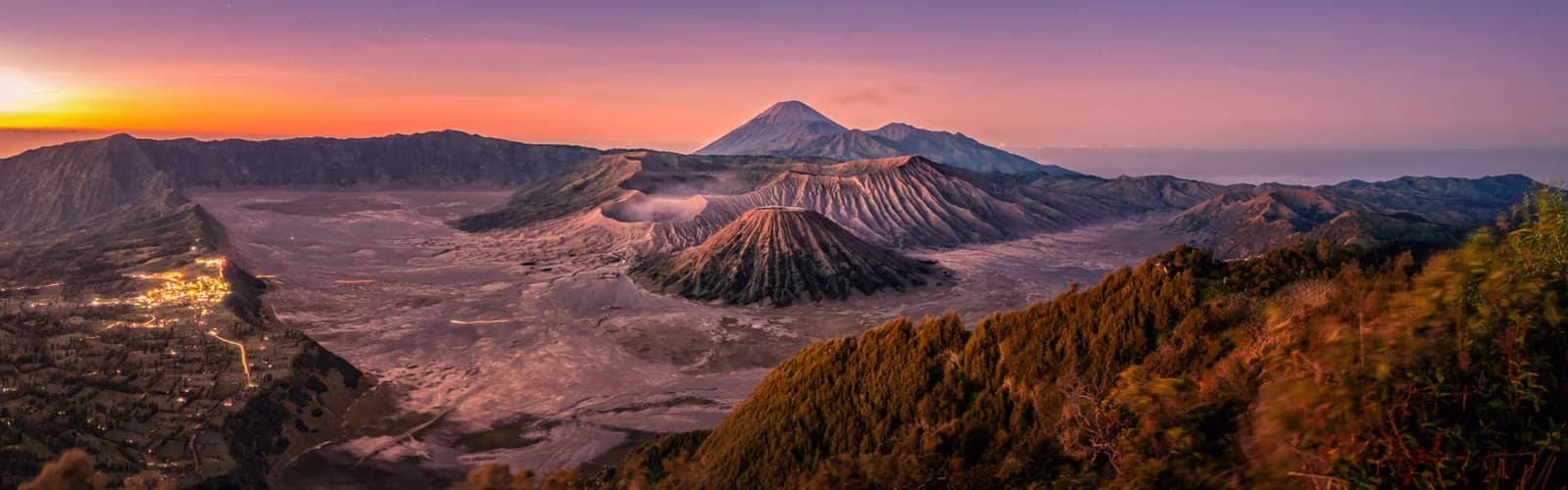
Ijen pairs naturally with Mount Bromo: first a sunrise over Bromo's sea of sand, then a night trek to Ijen's blue fire. It is one of East Java's strongest routes, but it involves two early starts, so avoid placing it immediately after a long international flight.
FAQ
What is the blue fire at Mount Ijen? It is burning sulfur gas, not blue lava. The gas escapes through cracks, ignites in contact with air and creates a bright blue glow visible only in darkness.
How hard is the Mount Ijen hike? The climb is moderately challenging: about 3 km each way and 1.5-2 hours to the rim. The harder parts are the night start, cold air, sulfur smoke and any permitted rocky descent into the crater.
Can you hike Ijen without a guide? A local guide is strongly recommended for the night route and crater area. Access rules can change because of gas or volcanic activity, and the trail is easy to misread in the dark.
Is the Ijen acid lake dangerous? Yes. The water is extremely acidic and toxic, so it should not be treated like a normal mountain lake. Do not swim, touch the water or leave the permitted route.
When can you see the blue fire? The blue fire is visible at night before sunrise. After the sun comes up, the glow disappears in daylight, but the crater lake view becomes visible.
Can I combine Ijen with Bromo? Yes. Bromo and Ijen are the classic East Java volcano pairing, usually done over several days because both require night or pre-dawn starts.
Excursions visiting Ijen
Bromo & Ijen Volcanoes
Private Tour