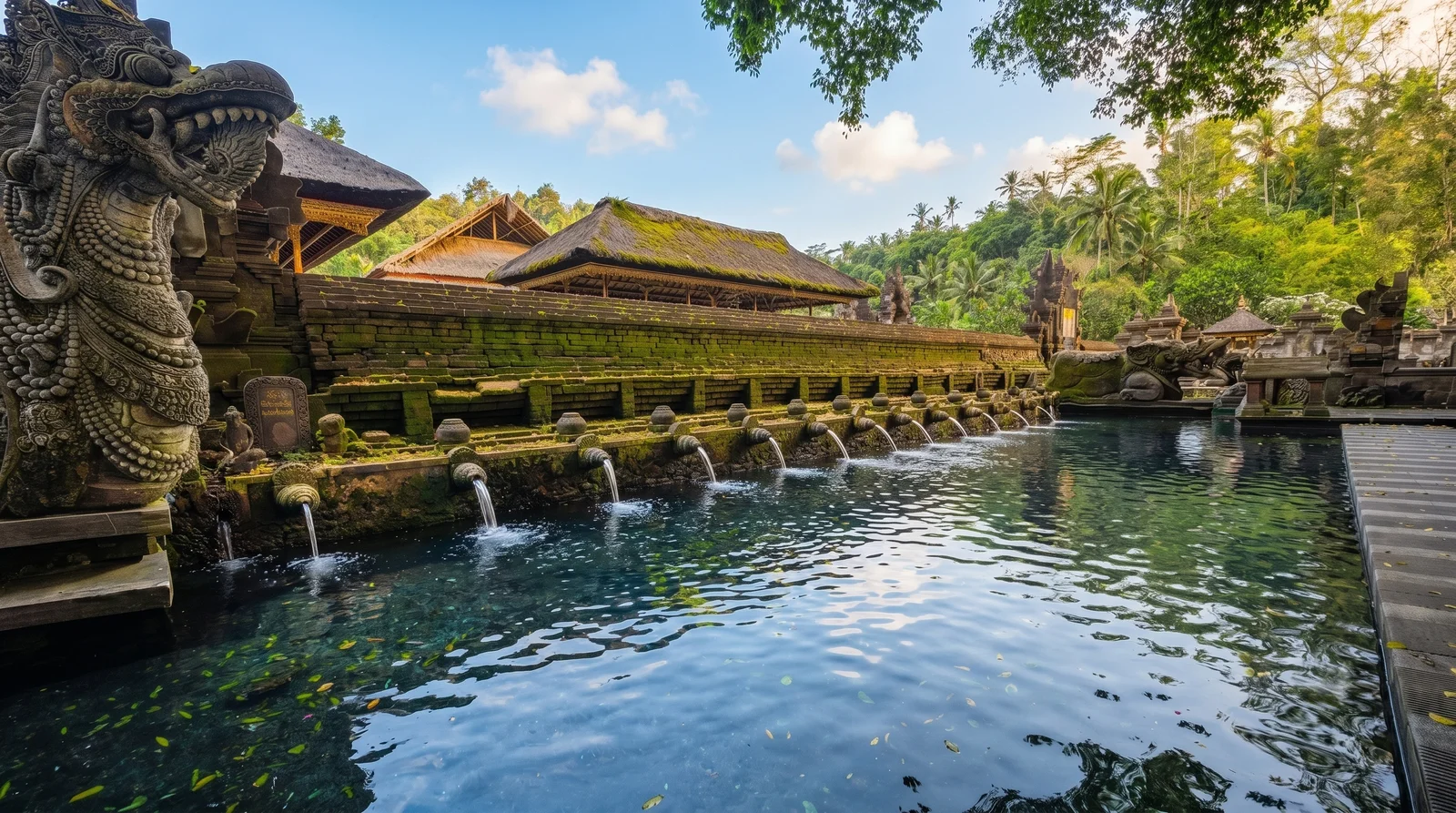


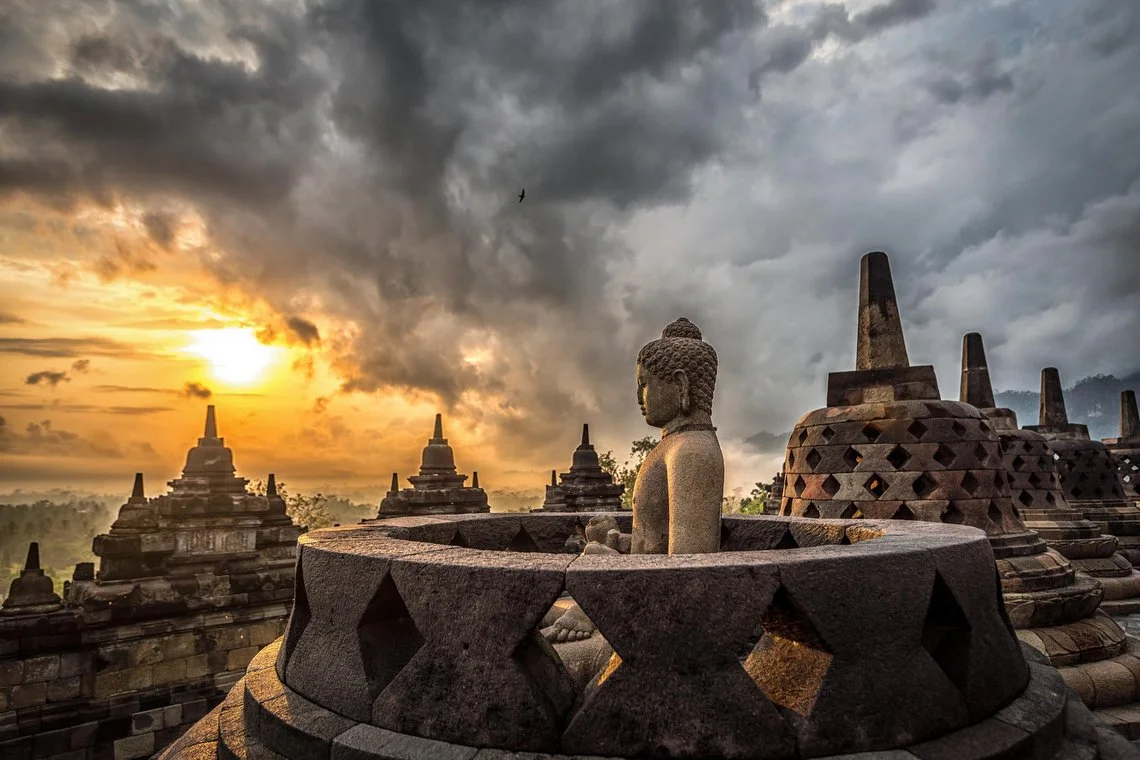
Bali is often referred to as the "Island of a Thousand Temples," but it could just as easily be called the "Island of a Thousand Ceremonies." The life of every Balinese Hindu — from their first breath to their final transition — is guided by a complex chain of religious rituals designed to maintain harmony between the worlds of gods, humans, and spirits. Among these, the balinese customs surrounding childbirth hold a deeply sacred and protective significance.
In balinese culture, the birth of a child is not merely a biological event. It represents the arrival of a pure soul, often believed to be the reincarnation of a beloved ancestor. Because of this, the birth and the days following it are marked by delicate, ancient rituals.
The Four Spiritual Siblings: The Philosophy of "Kanda Empat"

To understand the traditions in bali surrounding newborns, one must understand the core concept of Kanda Empat (The Four Spiritual Siblings). The Balinese believe that every child is born accompanied by four invisible guardian spirits who watch over and protect them throughout their physical life.
In the physical world, these four guardians manifest during childbirth as four substances:
- Yeh Nyom — the amniotic fluid.
- Getih — the blood.
- Ari-ari — the placenta.
- Lamas — the vernix caseosa.
After birth, the placenta (Ari-ari) is treated with immense respect. The Balinese view it as the child's physical "twin," leading to a highly detailed burial ritual.
The Sacred "Ari-Ari" Placenta Burial Ritual
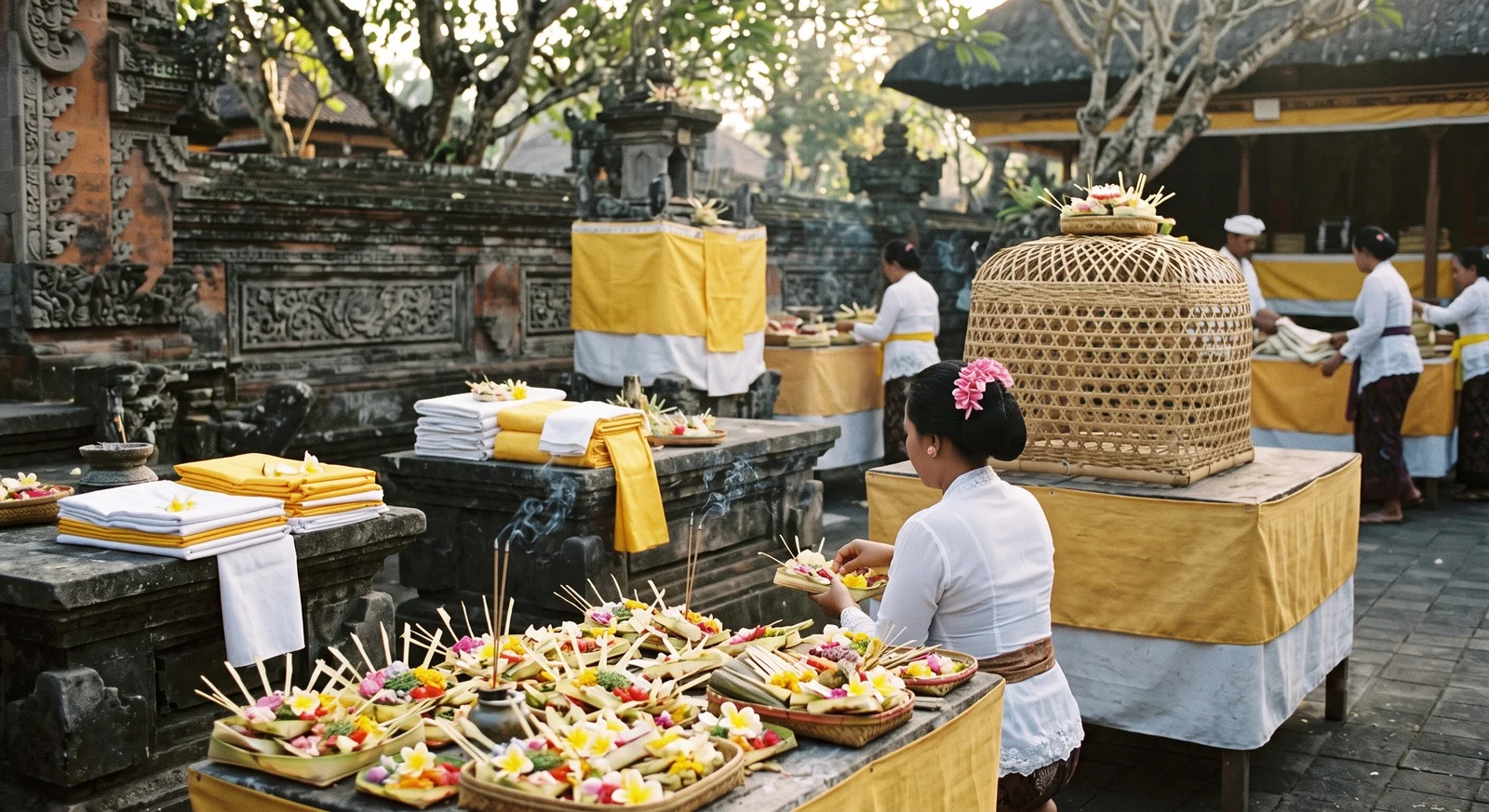

While the new mother rests, the father of the child or a local midwife prepares the placenta for its ritual burial:
- Cleansing: The umbilical cord and placenta are carefully washed with clean running water (ideally river water) and dried.
- The Coconut Shell: The placenta is placed inside a clean, young coconut shell, which serves as a natural coffin representing the macrocosm.
- Symbolic Items: Parents place symbolic items inside the shell alongside the placenta to guide the baby's future character and talents. For example:
- A pen, paper, or book — for intelligence, wisdom, and academic success.
- A needle and thread — for industriousness, craft, and precision.
- Nails, tools, or coins — to invite prosperity and skill in crafts.
- Burial: The coconut shell is wrapped in a white sacred cloth. Early the next morning, the father digs a small hole outside the house, burying it while burning incense and saying prayers. By tradition, if the baby is a boy, the shell is buried on the right side of the main door; if a girl, it is buried on the left. The burial site is then covered with a flat stone and protected by a woven bamboo basket to prevent animals from disturbing it. A small lantern is kept lit over the site for several weeks.
Following this ritual, the parents are considered temporarily "unclean" (sebel) and are forbidden from entering the kitchen or preparing food for three days.
The 105-Day Ceremony (Nelubulanin) and the First Step on Earth
For the first few months of life, a Balinese infant is regarded as a divine being (Dewata) who has recently descended from the heavens. The soul is not yet fully anchored to the earthly realm.
- Forbidden to Touch the Ground: Until the baby reaches three Balinese months (exactly 105 days in the pawukon calendar), they must never touch the ground. The earth is associated with the material world and lower spirits. Instead, the baby is carried constantly by the mother, father, or close relatives.
- The Nelubulanin Ceremony: On the 105th day, a elaborate purification ceremony is held. The baby's feet are washed with holy water, prayers are chanted by a priest, and the baby's bare feet are lowered onto the soil for the very first time. From this day forward, the child is officially welcomed into the human world and recognized as a member of the community.
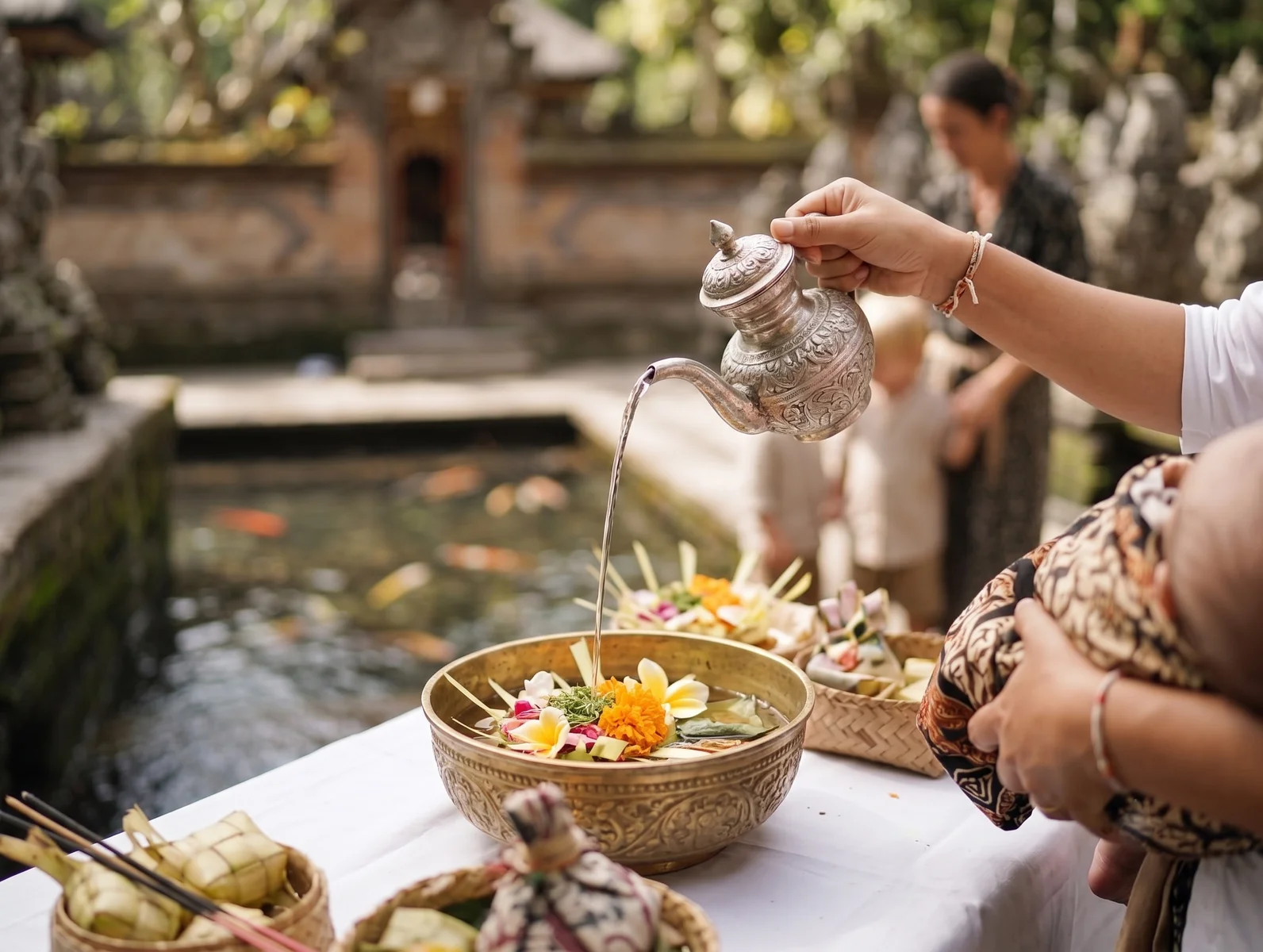

Sacred spring water from Tirta Empul Temple is heavily utilized in these cleansing ceremonies to purify the child and parents.
Coexistence of Life and Death: The Balinese Way
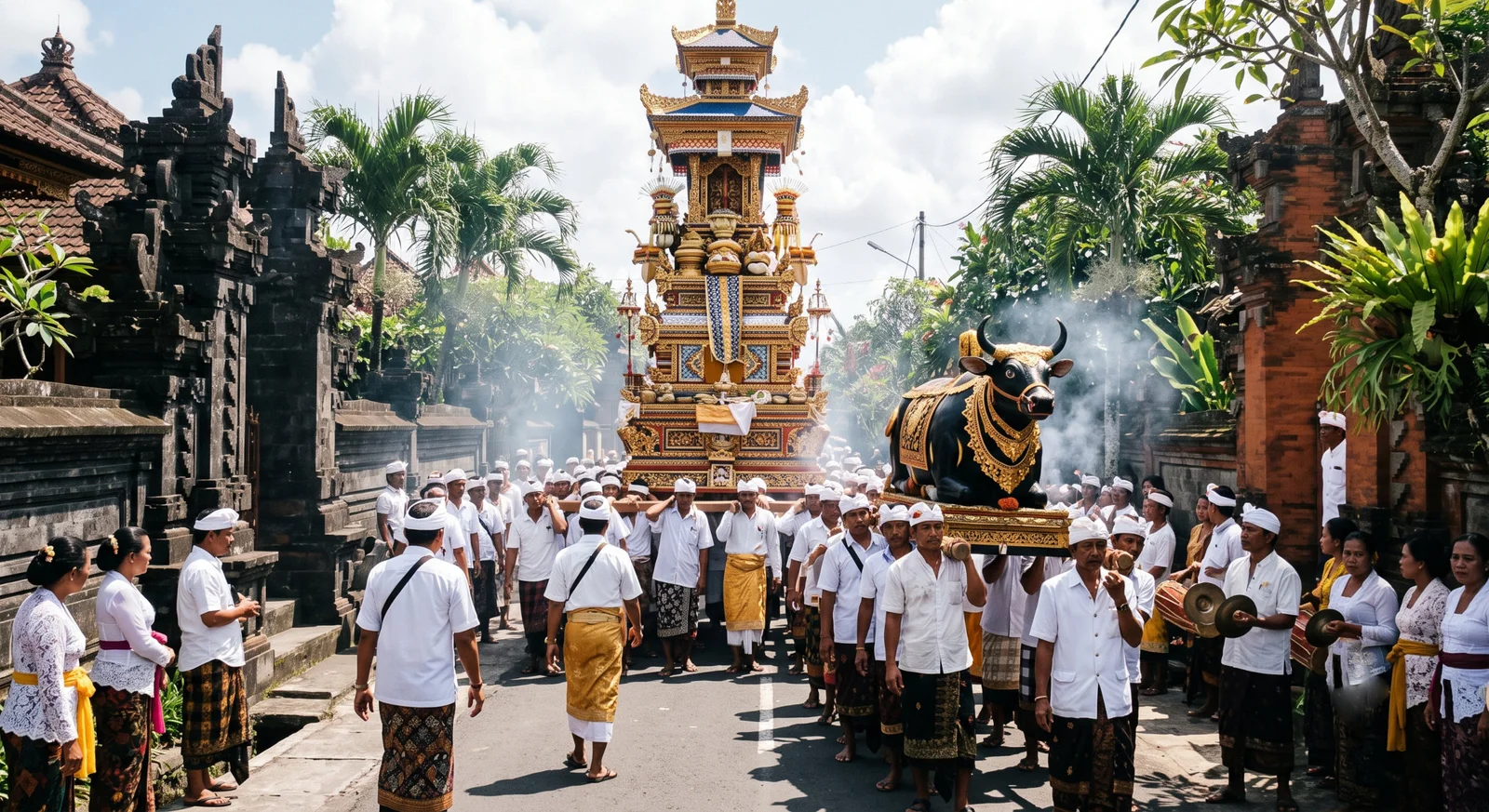
The Balinese life cycle is a continuous wheel of transitions. Just as birth is protected by dozens of custom rituals, a person's departure is marked by the grand Balinese cremation ceremonies (Ngaben). Visitors often note that funerals in Bali look less like mourning and more like a celebratory festival. The colorful multi-tiered towers and the burning of bull-shaped sarcophagi represent the liberation of the soul for its next cycle of reincarnation.
Ultimately, balinese traditions teach that life and death are beautiful, connected phases. Whether cleansing a newborn's placenta or returning a physical body to the ashes, the goal is always the same: purifying the spirit and guiding it back to the divine source.
To experience the authentic culture and sacred traditions of Bali away from the typical tourist spots, book a private custom tour with Balitourus.com. Our experienced local guides will help you understand the beautiful, complex philosophy of Hindu Dharma.