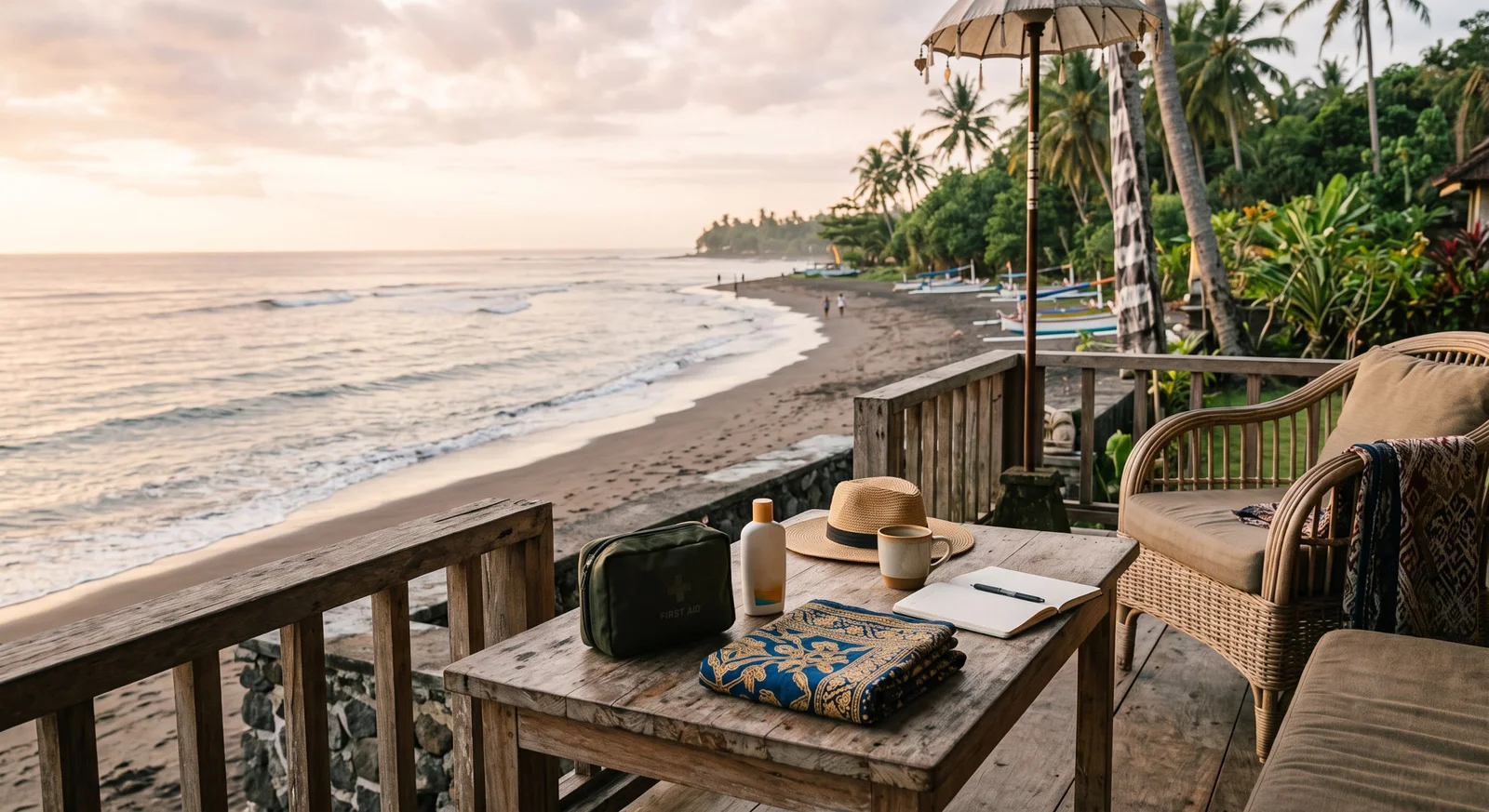



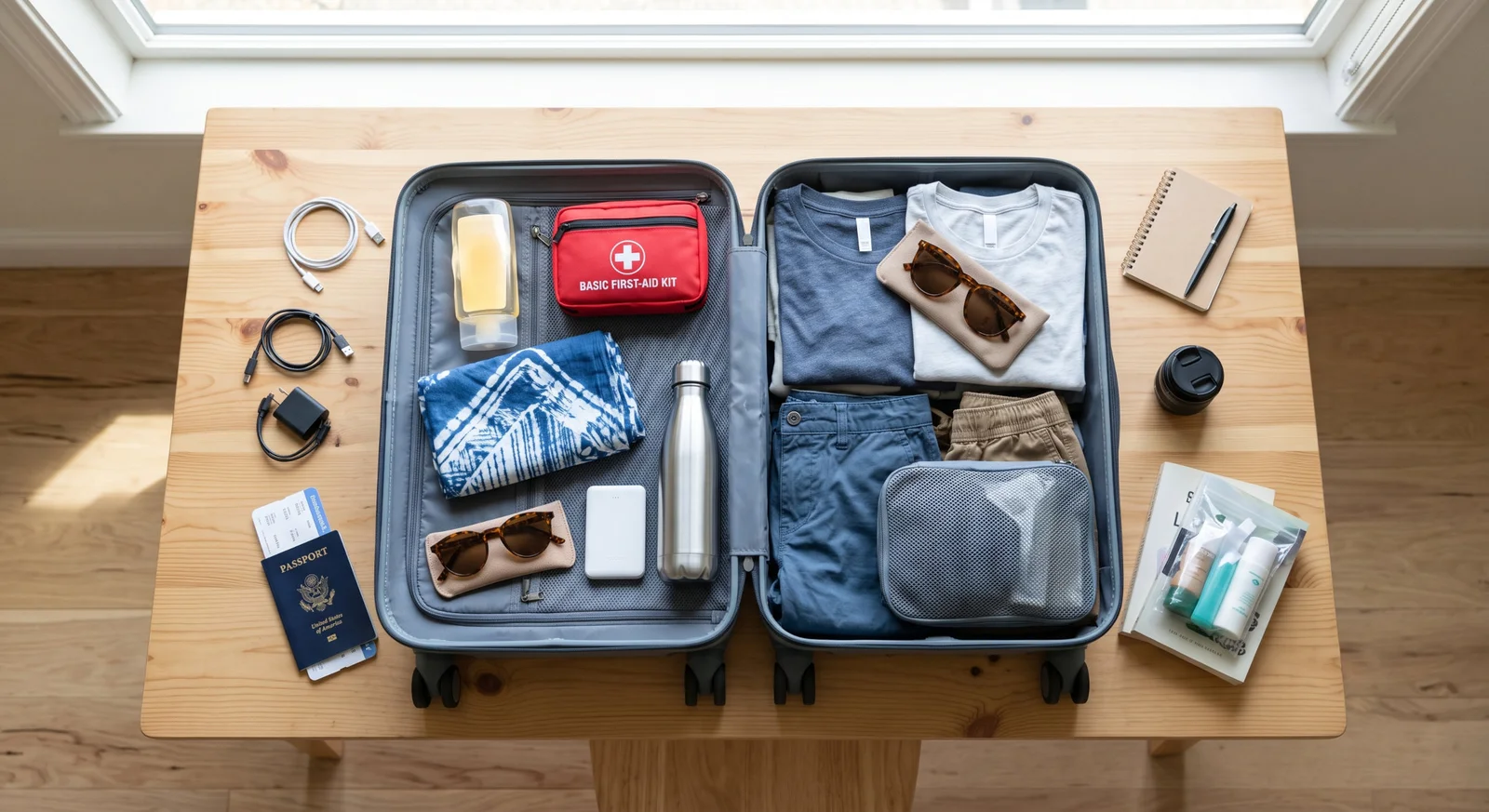
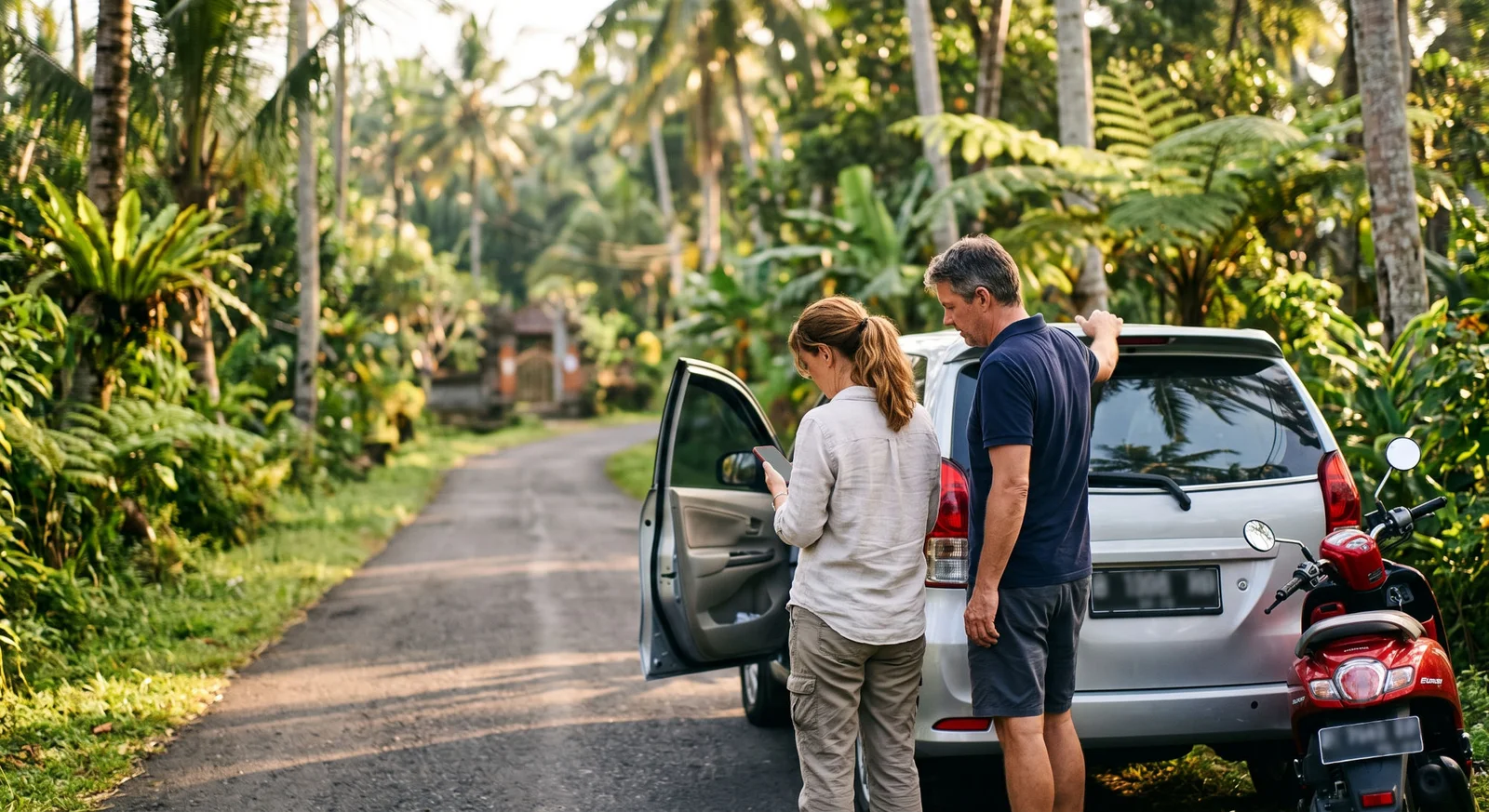


Bali works well for independent trips, family holidays, and active routes when you understand where the island asks for attention. Safety here is less about fear and more about preparation: respect the ocean, avoid scooters without the right skills, keep insurance usable, protect yourself from sun and mosquitoes, and behave calmly in temples and public places.
Use this as a practical system for a normal Bali trip: what to check before flying, how to choose beaches, when a driver is smarter than a scooter, why insurance matters, and what to do if you need medical care.
Is Bali safe for tourists?
Bali is usually comfortable for tourists who follow practical precautions. The main questions are everyday ones: ocean conditions, road traffic, paid medical care for foreigners, tropical heat, animals, and local rules, not a reason to avoid the island.
Think about safety in 6 areas:
- ocean, waves, and currents;
- scooters, roads, and left-hand traffic;
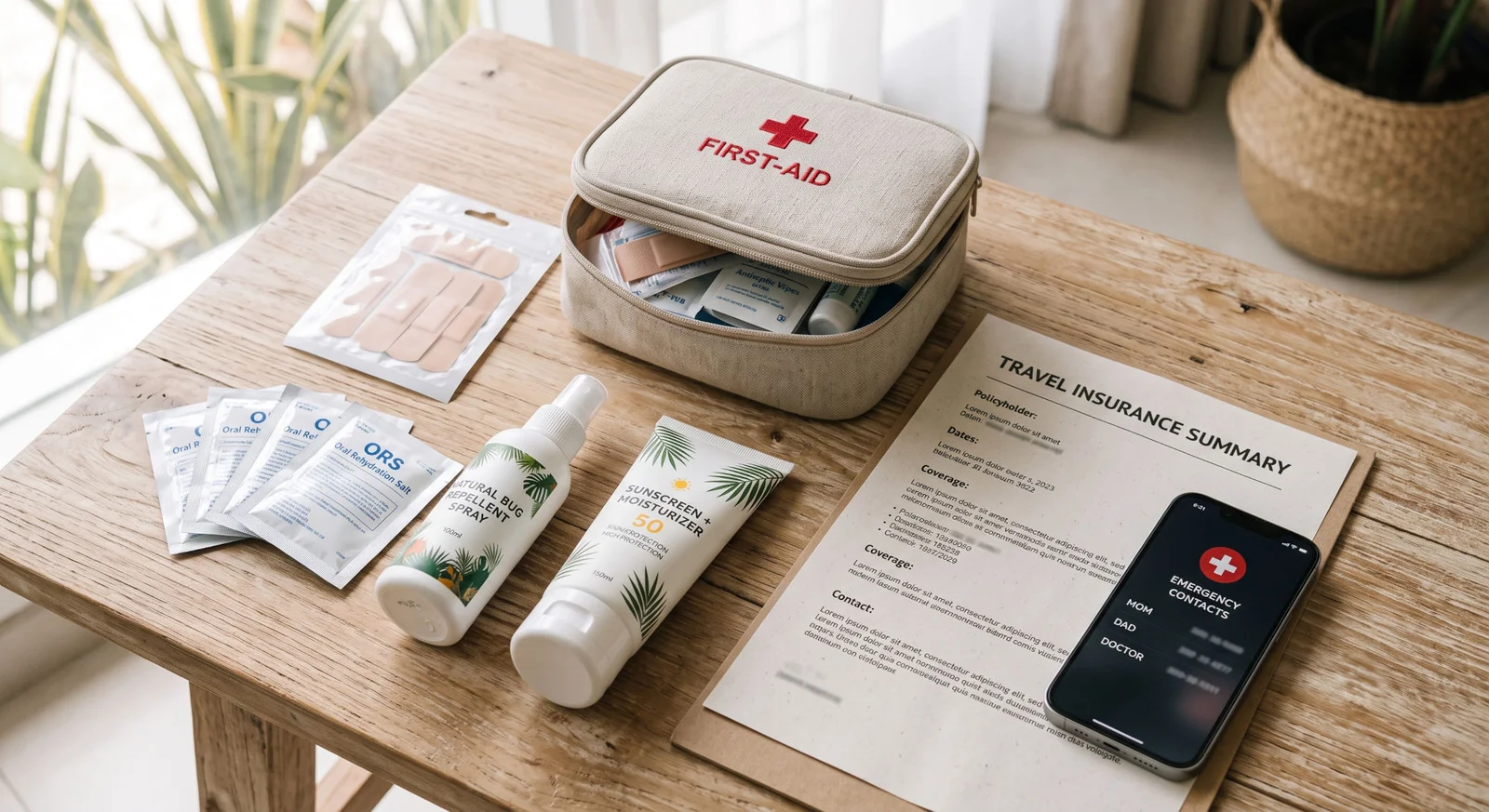
- medical care, insurance, and medicines;
- mosquitoes, dengue, and tropical illnesses;
- food, water, sun, and heat;
- local customs, temple etiquette, and public behavior.
If you are traveling with children, older relatives, or after a long flight, make the first day soft: hotel, food, sleep, a short walk. Fatigue is often what turns a simple decision into a bad one.
How do you swim safely in Bali?
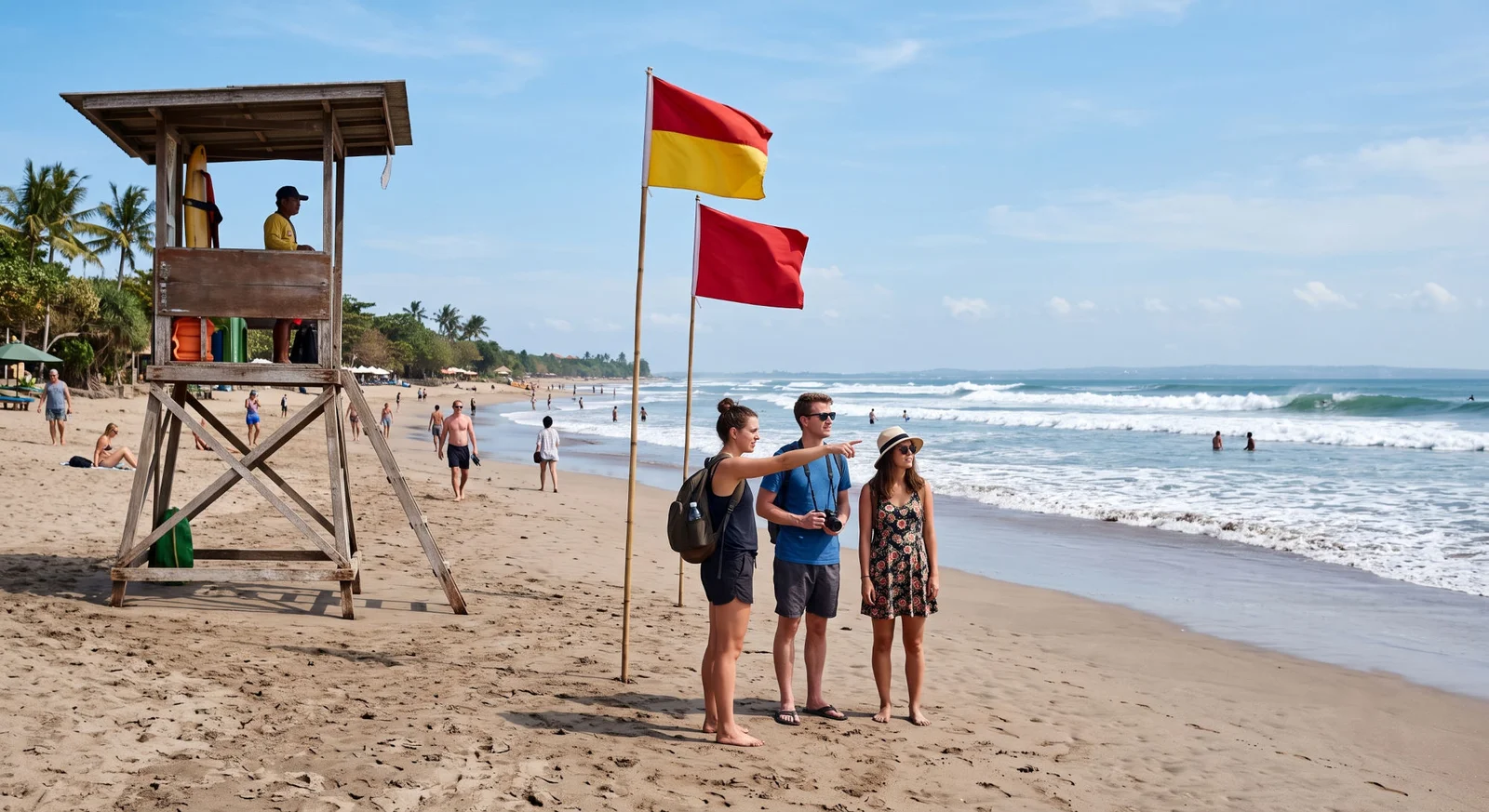
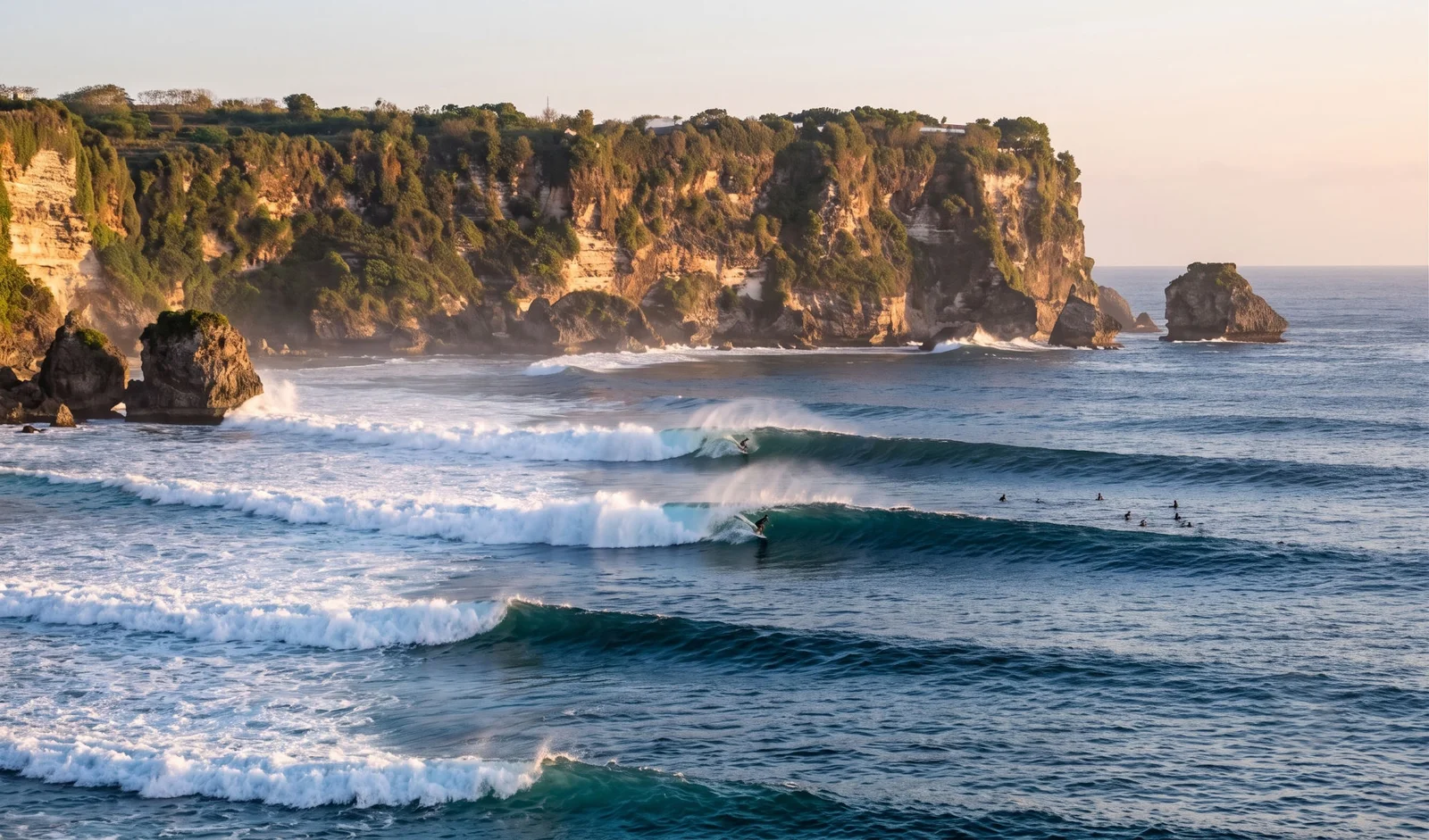
Bali's beaches are all different: some are good for relaxed swimming, some are surf breaks, and some are better admired from shore. A good beach day starts with a simple check: today's waves, flags, current, and entry point on that exact beach.
What helps:
- choose beaches with lifeguards and clear infrastructure;
- read flags, signs, and local warnings;
- stay on shore during red-flag conditions or heavy shore break;
- do not fight a rip current directly toward shore; conserve energy and move sideways along the beach;
- avoid night swimming, alcohol swimming, and solo swimming;
- on Nusa Penida and cliff beaches, check whether swimming is realistic, not only whether the viewpoint is photogenic.
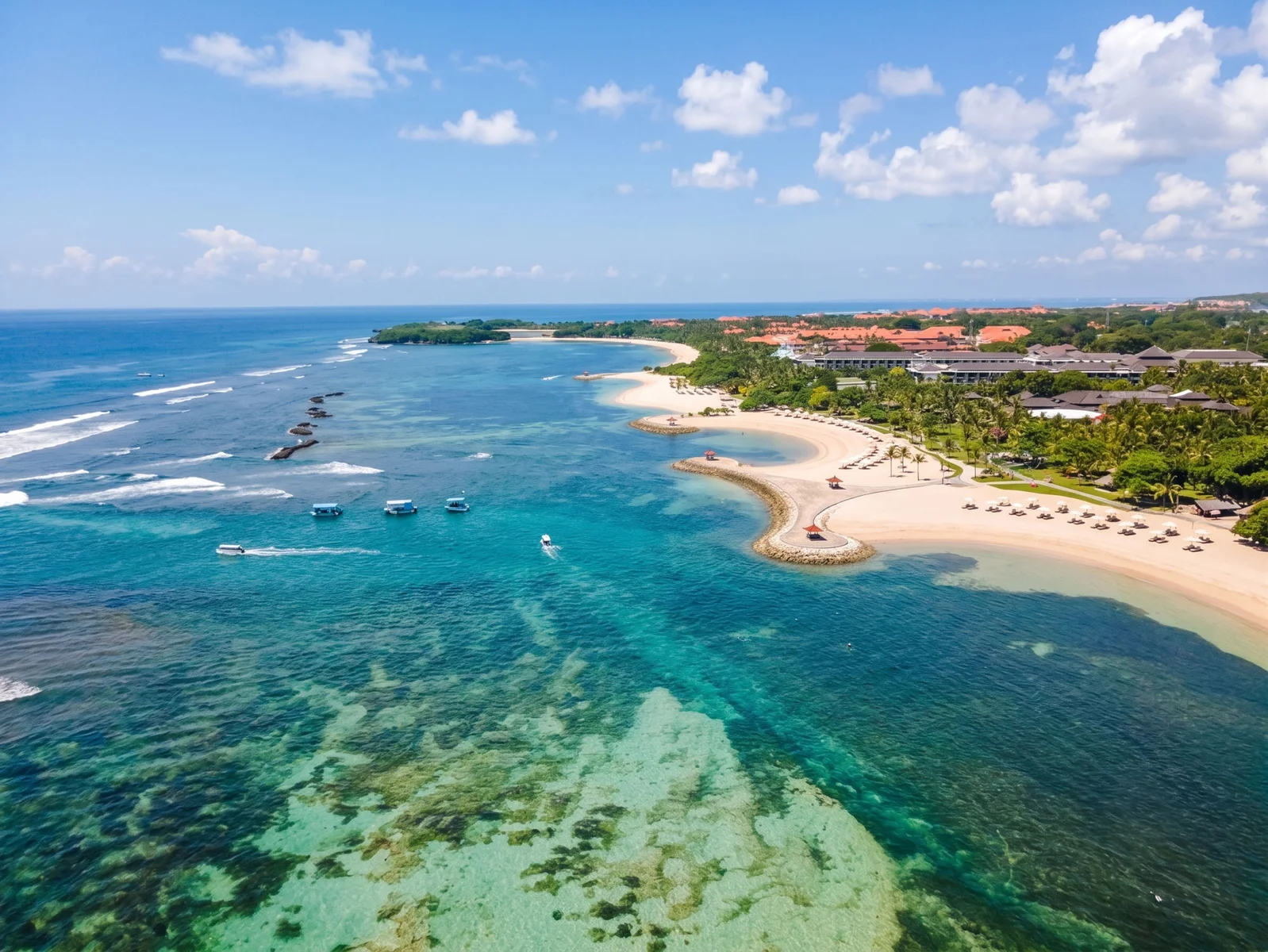
For a calmer beach stay, many visitors choose Nusa Dua, Sanur, or protected sections with easier access and clearer facilities. Uluwatu, Canggu, Kuta, and many Nusa Penida beaches are beautiful, but they need more attention to waves, stairs, rocks, and seasonal conditions.
FAQ: ocean and beaches
Should you ride a scooter in Bali?
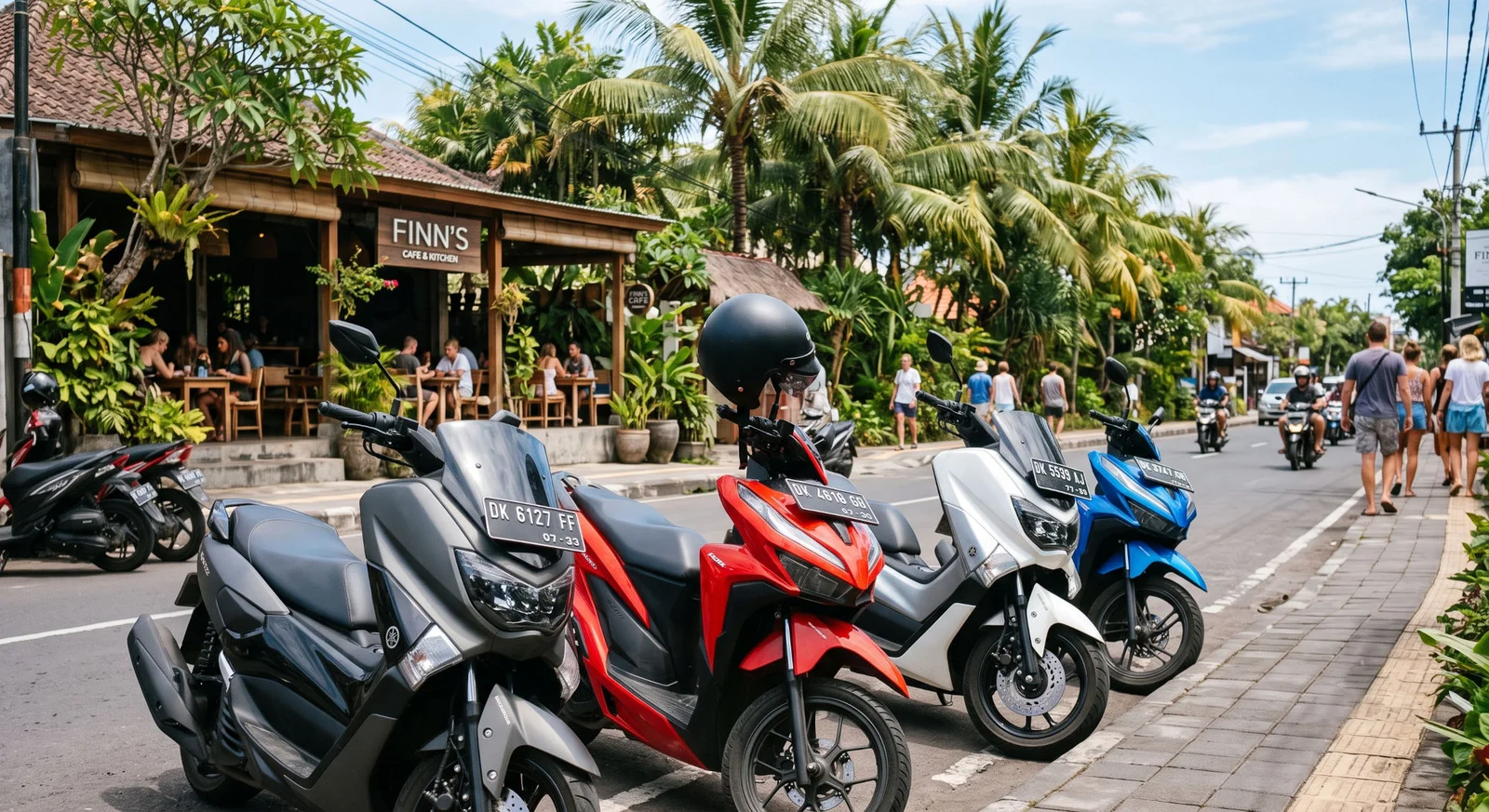
Scooters are useful in Bali for riders who are already confident on a scooter or motorbike and understand left-hand traffic. For beginners, they are not the best way to "try freedom": traffic is dense, roads can be wet, markings are slippery, and exits or turns can appear suddenly.
Before renting, check 3 things:
- you hold an International Driving Permit with the correct motorcycle category;
- your insurance covers motorcycle accidents under those license conditions;
- you have real scooter or motorbike experience in dense traffic, not only a few holiday rides.
A car-only license is not enough for riding a scooter. If your paperwork is wrong or the policy excludes motorcycles, your insurer may refuse a claim after an accident. For children, luggage, rain, mountain roads, long routes, and late returns, a car with driver is usually calmer and safer.
A useful self-test: if you are still debating whether you are confident enough for a scooter, you probably do not need one on your first trip. Taxis, transfers, and drivers often give you more holiday, especially for Uluwatu, waterfalls, Ubud, and long routes.
FAQ: scooters, license, and insurance
What travel insurance do you need for Bali?
For Bali, choose travel medical insurance that covers treatment, hospitalization, and emergency evacuation or repatriation. If your plans include scooters, diving, volcano trekking, snorkeling, boats, or active tours, check those sections specifically because basic policies often exclude them or require an add-on.

Check the policy for:
- overseas medical treatment;
- emergency evacuation and repatriation;
- motorcycle accidents if you have the correct license category;
- trekking, diving, snorkeling, and water activities;
- pre-existing conditions, pregnancy, or child-specific needs if relevant;
- 24/7 assistance and a clear claims process.
Tourists usually pay for medical care in Indonesia, and clinics may ask for insurance confirmation, a deposit, or a payment guarantee before treatment. Keep a working phone, a backup payment method, and your insurance number somewhere easy to find offline.
What should you do if you need a doctor or clinic in Bali?
Bali has private clinics and hospitals, especially in tourist areas, but medical options vary by location. Simple cases may be handled near your hotel; serious injuries, complex conditions, or surgery can require a larger hospital or evacuation.
Before you travel, save:
- insurance emergency number and policy number;
- your hotel address in English;
- an emergency contact;
- passport, visa, and ticket copies;
- medicine list and diagnoses in English;
- the nearest major clinic or hospital to your base.
After an injury, road accident, animal bite, high fever, dehydration, breathing trouble, chest pain, confusion, or suspected fracture, it is better not to wait overnight to "see how it goes." Contact your insurer, ask which clinic to use, and request written confirmation where possible.
FAQ: medical care and first-aid kit
How do you handle mosquitoes, sun, and heat?
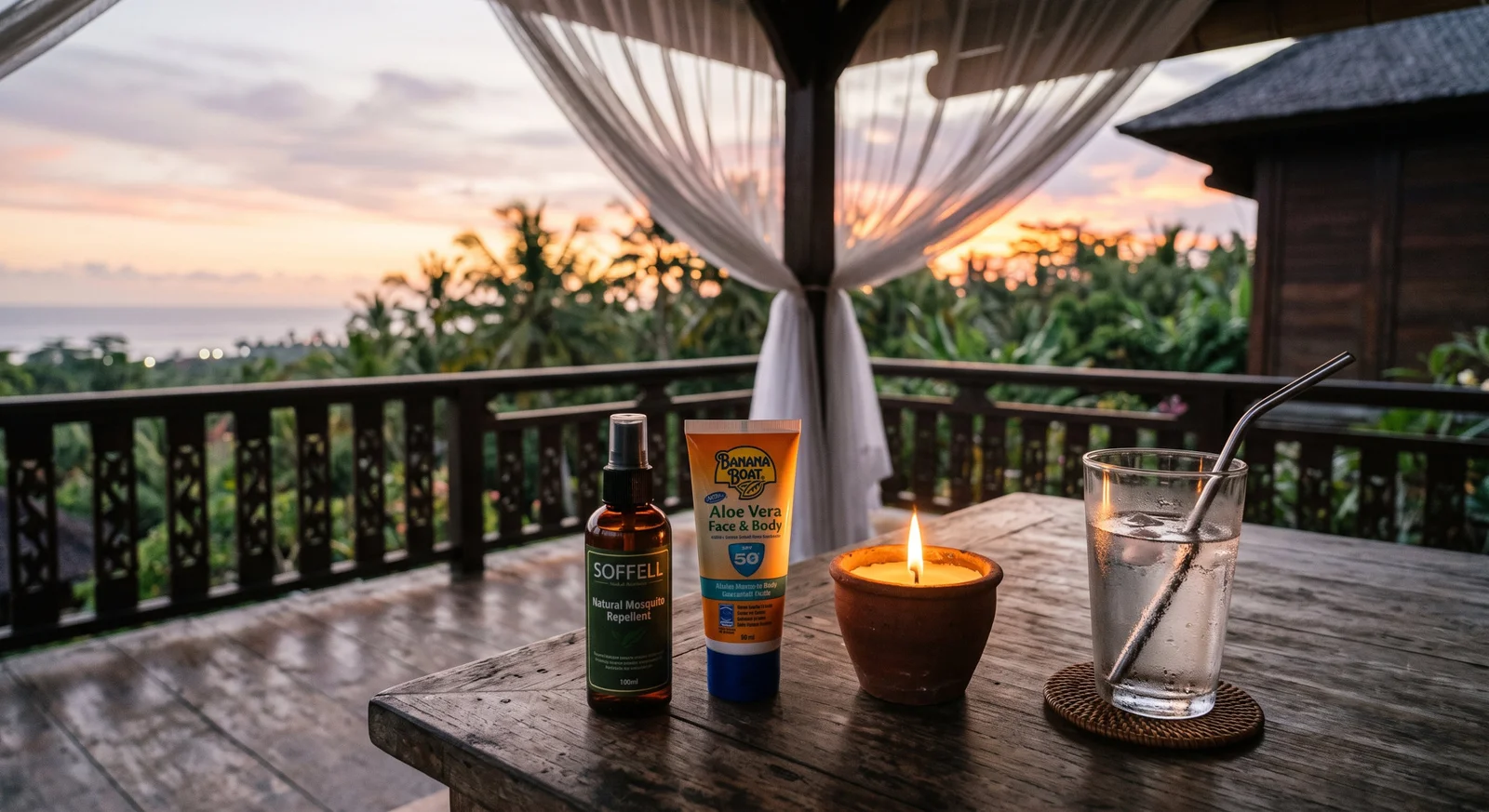
Mosquitoes, sun, and humidity are normal parts of the tropics, not a reason to avoid tours and walks. CDC notes no malaria transmission in Bali resort areas, but Indonesia has dengue, Zika, and other mosquito-borne illnesses, so repellent and sun protection should become daily habits.
What helps:
- use repellent daily, especially morning and late afternoon;
- choose rooms with air conditioning, screens, or good sealing;
- avoid standing water around outdoor areas;
- wear light long sleeves in nature;
- take repellent to waterfalls, rice fields, and evening routes.
- drink water before you already have a headache;
- use SPF and a hat on beaches, boats, and waterfall days.
If you develop fever, severe body aches, rash, unusual weakness, or bleeding symptoms during or after Bali, tell your doctor you were in Indonesia. It helps them choose the right tests faster.
What about animals, monkeys, and bites?
Monkeys, dogs, and cats in Bali may look familiar, but it is better to watch them from a little distance. CDC notes that rabies is present in Indonesia; after a bite, scratch, or saliva contact with broken skin, get medical advice quickly and before symptoms appear.
Practical rules:
- do not hand-feed monkeys;
- keep food, sunglasses, and phones secured in Monkey Forest and similar places;
- do not pet street dogs or cats;
- after a bite or scratch, wash the wound thoroughly with soap and water;
- go to a clinic the same day and ask about post-exposure rabies treatment.

Treat even a small animal scratch calmly but seriously: wash it, take a photo, contact your insurer, and show a doctor. That is normal practical travel hygiene, not panic.
What local rules should tourists respect?
Bali safety also means respecting local law, religion, and public behavior. The island is welcoming, but it has its own religious, legal, and social rules, and the trip feels easier when you treat those rules as part of the culture.
Remember:
- wear a sarong and cover shoulders or knees when required at temples;
- do not climb sacred trees, statues, temple gates, or shrines;
- do not film people or ceremonies intrusively;
- do not do commercial work or paid content creation on the wrong visa;
- stay calm with police, immigration, and local officials;
- do not possess or use illegal drugs.
Bali is welcoming, but public anger, disrespect at sacred sites, visa misuse, and illegal drugs can have serious consequences. The simplest approach is to stay calm, ask if unsure, and avoid turning a misunderstanding into a scene.
Bali safety checklist before you travel
A calm Bali trip starts before the flight: insurance, documents, emergency contacts, first-day logistics, medicine, and a realistic transport plan. These basics take little time and make the island much easier to enjoy.
Check:
- insurance covers medical care, evacuation, and planned activities;
- your license matches the vehicle you plan to drive;
- passport, visa, ticket, and policy copies are backed up;
- hotel, insurer, and emergency contacts are saved offline;
- you packed repellent, sunscreen, first-aid basics, and personal medicines;
- arrival day is not overloaded;
- you know where it is safe to swim near your hotel;
- payment methods and cash are split between bags.
The core idea is simple: Bali opens up better when you do not try to improvise everything. Respect the ocean, avoid scooters without proper skill and documents, treat insurance as a working tool, and let the first days be slower than your itinerary wants them to be.