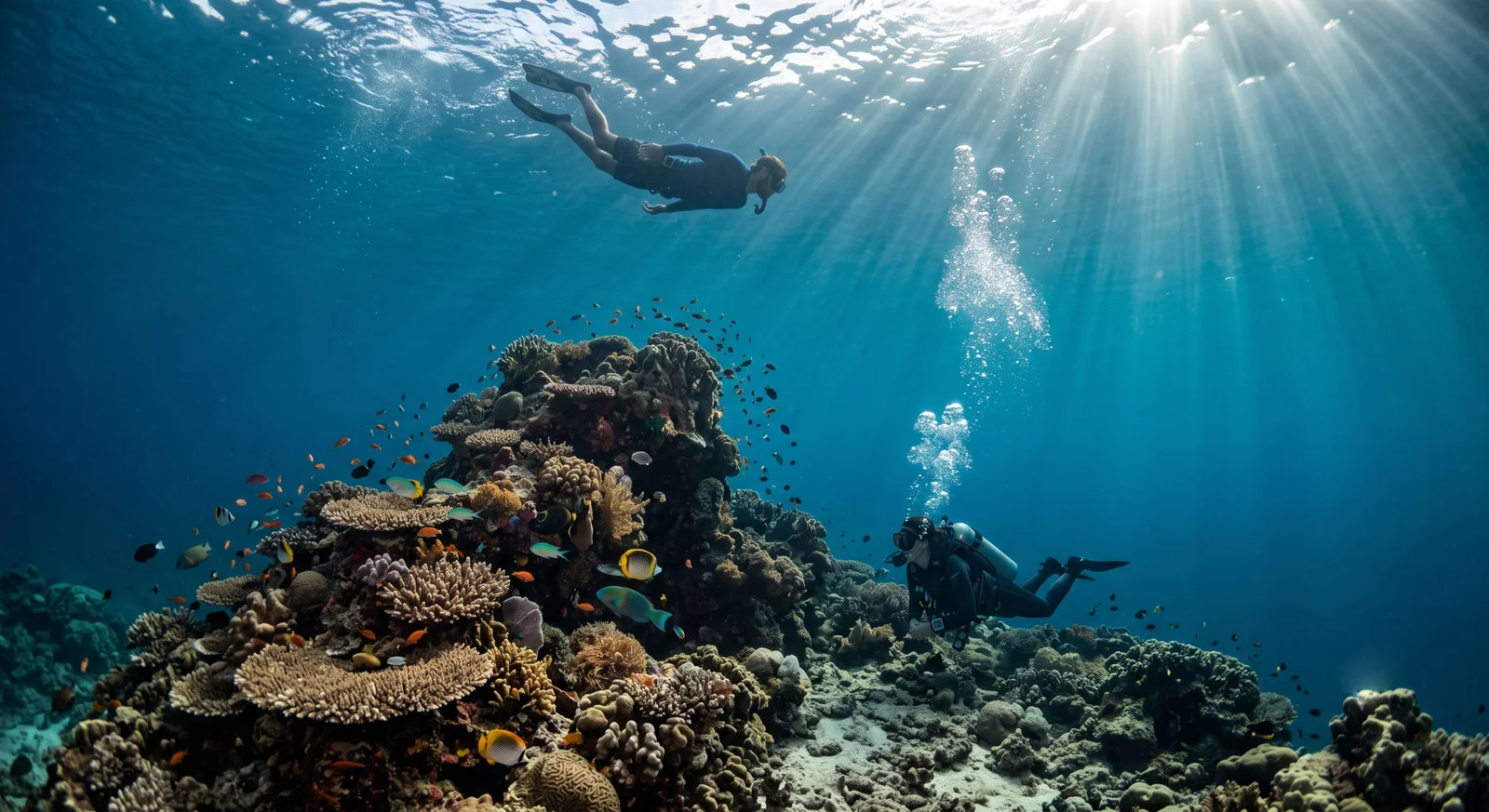
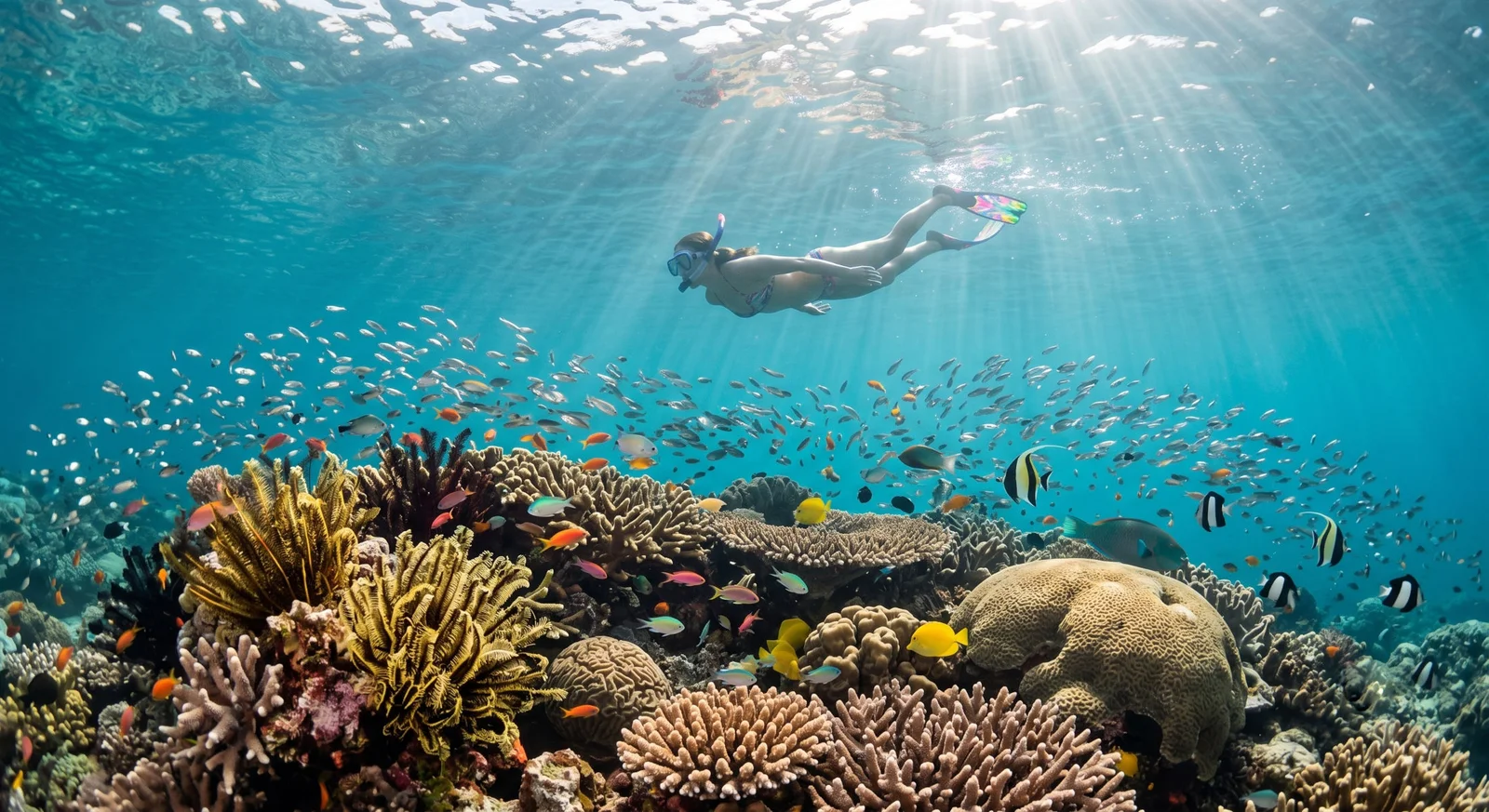
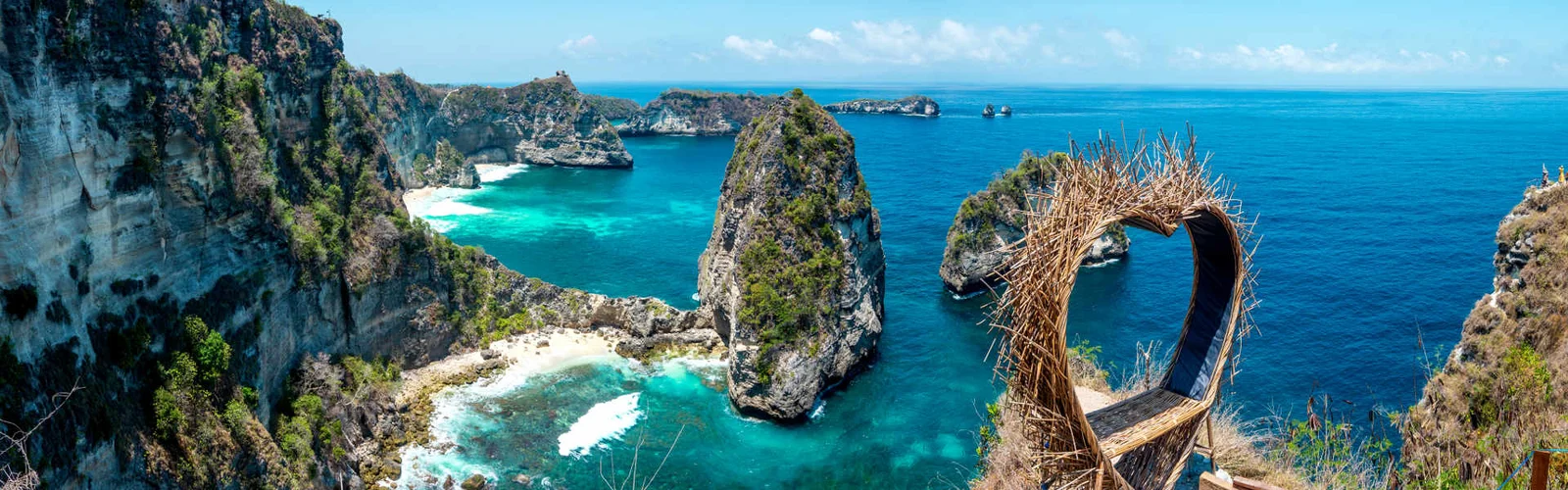
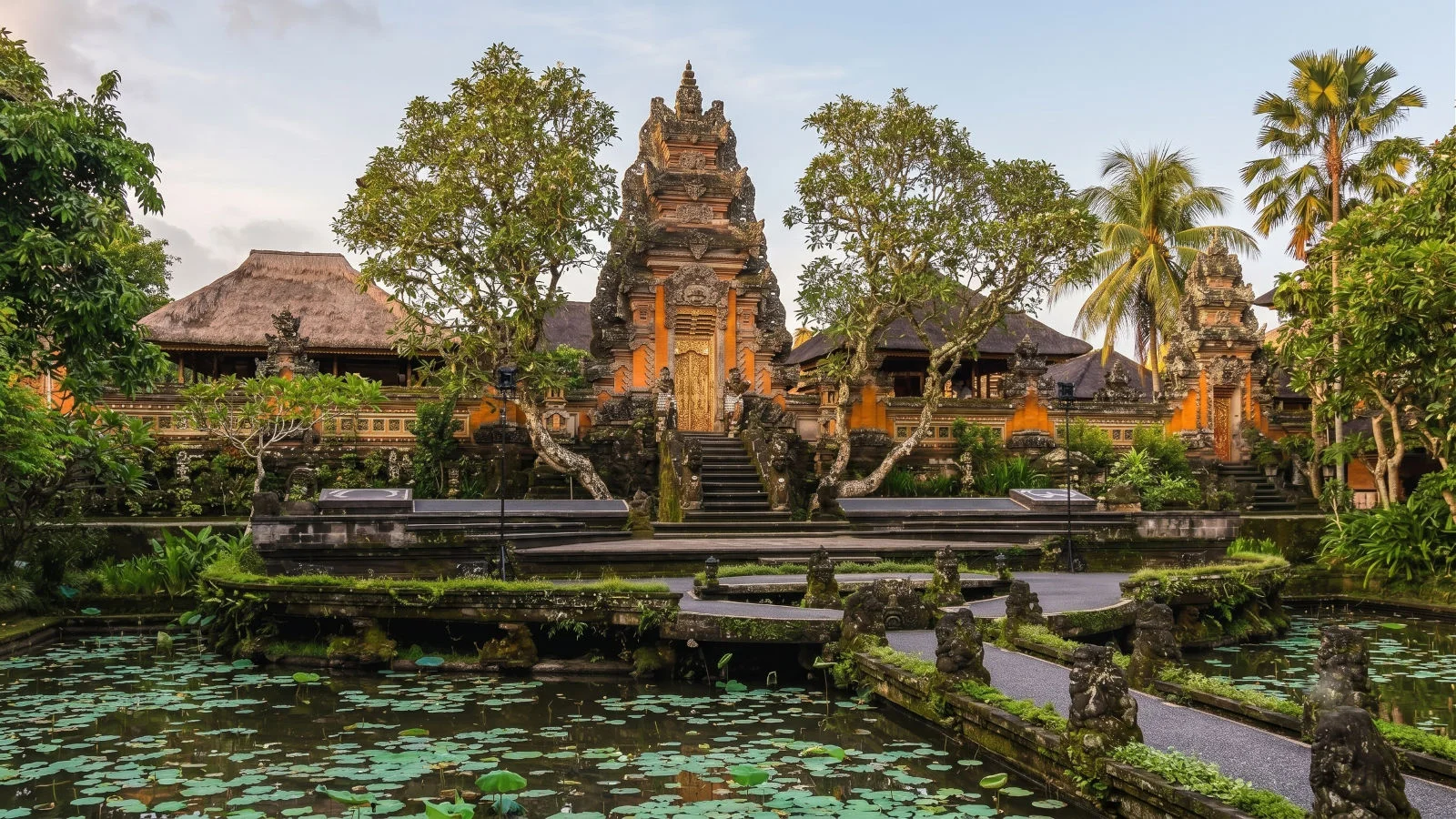

Bali is one of the few islands in the world where, within 40 minutes of each other, you can find gentle reefs for beginners, a legendary shipwreck, and encounters with giant manta rays.
The difference between diving and snorkeling here isn't the quality of the underwater world — it's depth and preparation: snorkeling is open to anyone who can swim, while diving needs at least an introductory briefing with an instructor.
Where are the best diving spots in Bali?
Three sites carry most of the island's diving traffic: Tulamben with its shipwreck, Menjangan with its coral walls, and the waters off Nusa Penida and Lembongan, where manta rays gather.
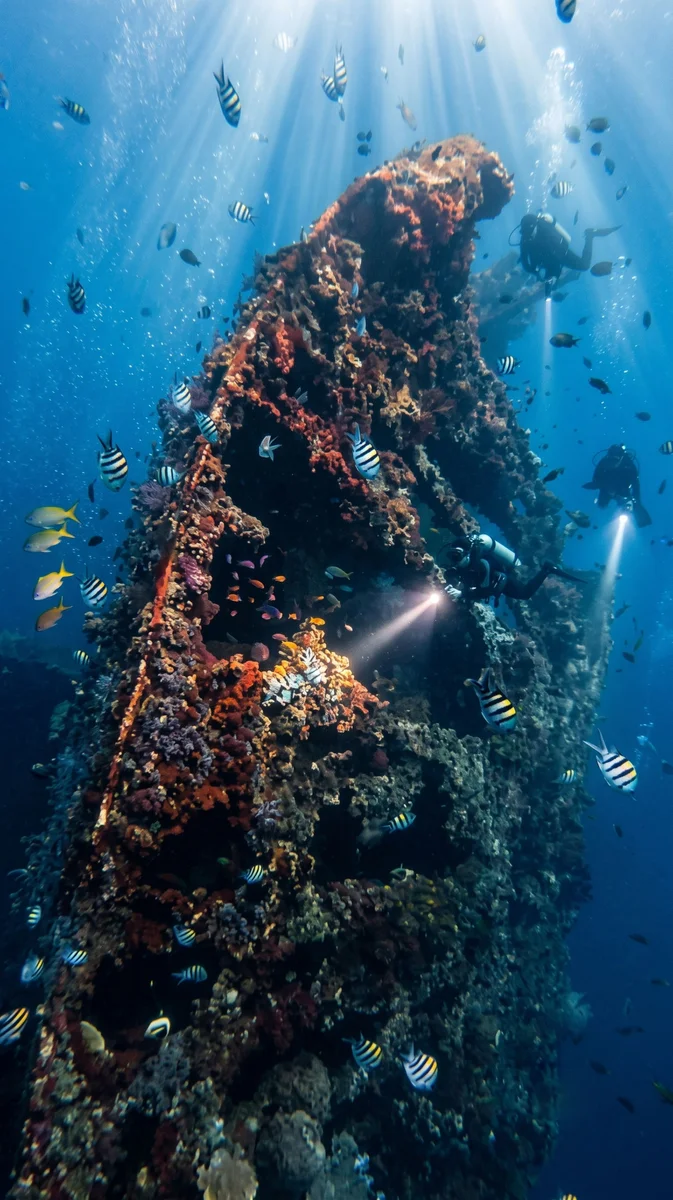
- Tulamben (Amed) — the sunken US Army transport ship USS Liberty at 5-30m depth, shore entry, suitable for both beginners and certified divers;
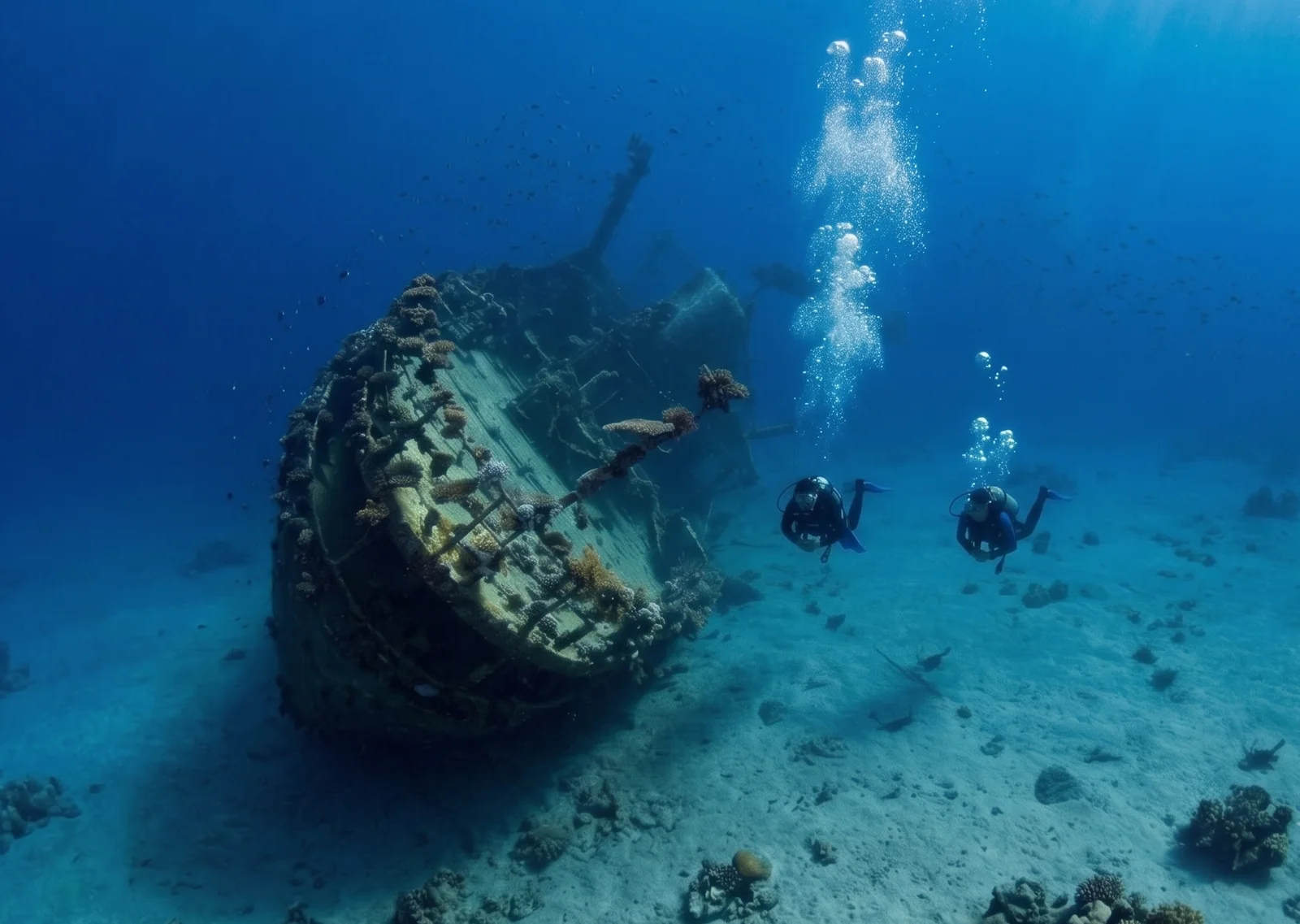
- Menjangan — a national park in the northwest, vertical coral walls and visibility up to 40m, almost no currents;
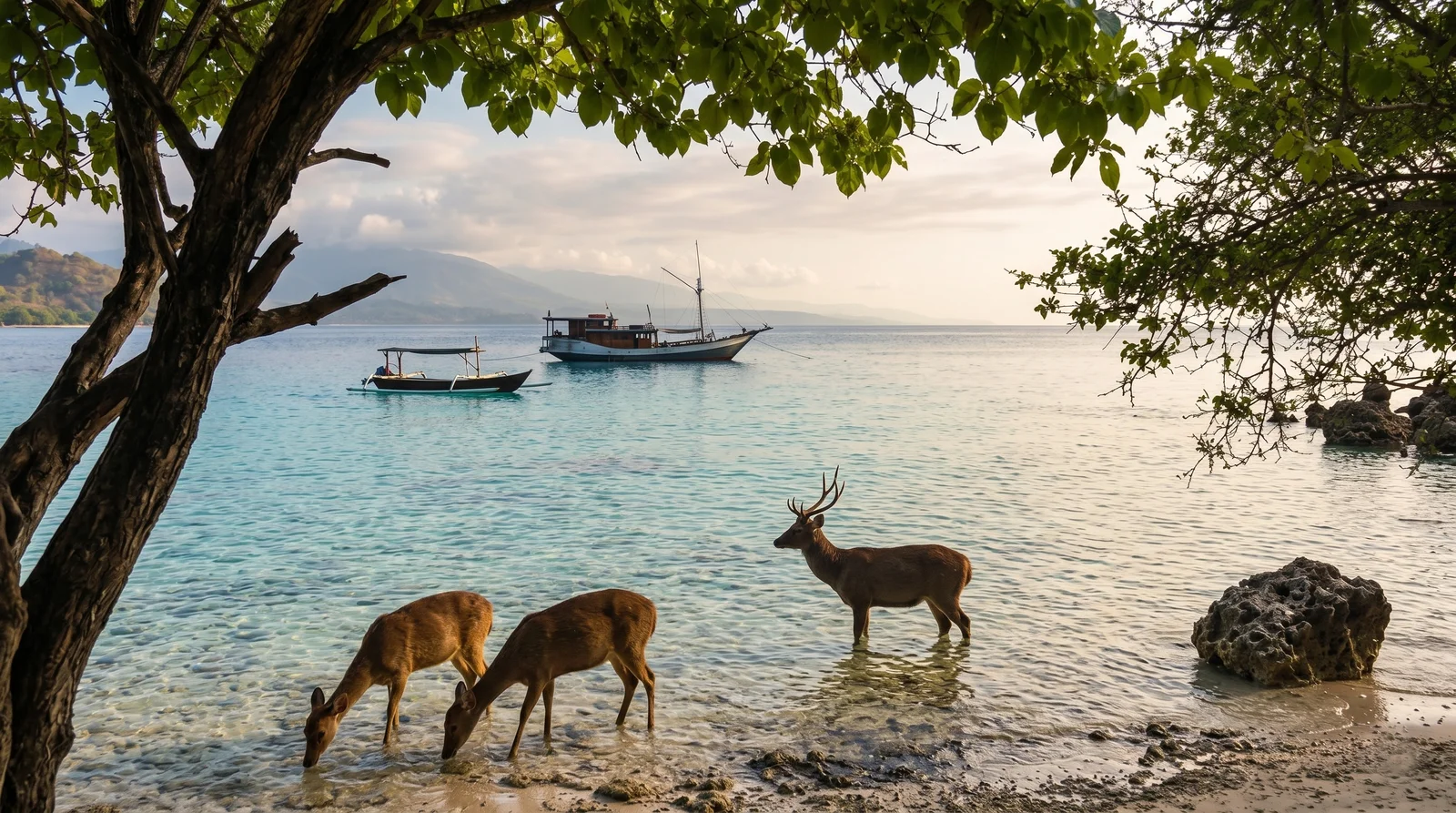
- Nusa Penida and Lembongan — drift diving with a real chance of spotting a manta ray or the rare sunfish (mola-mola) in season;
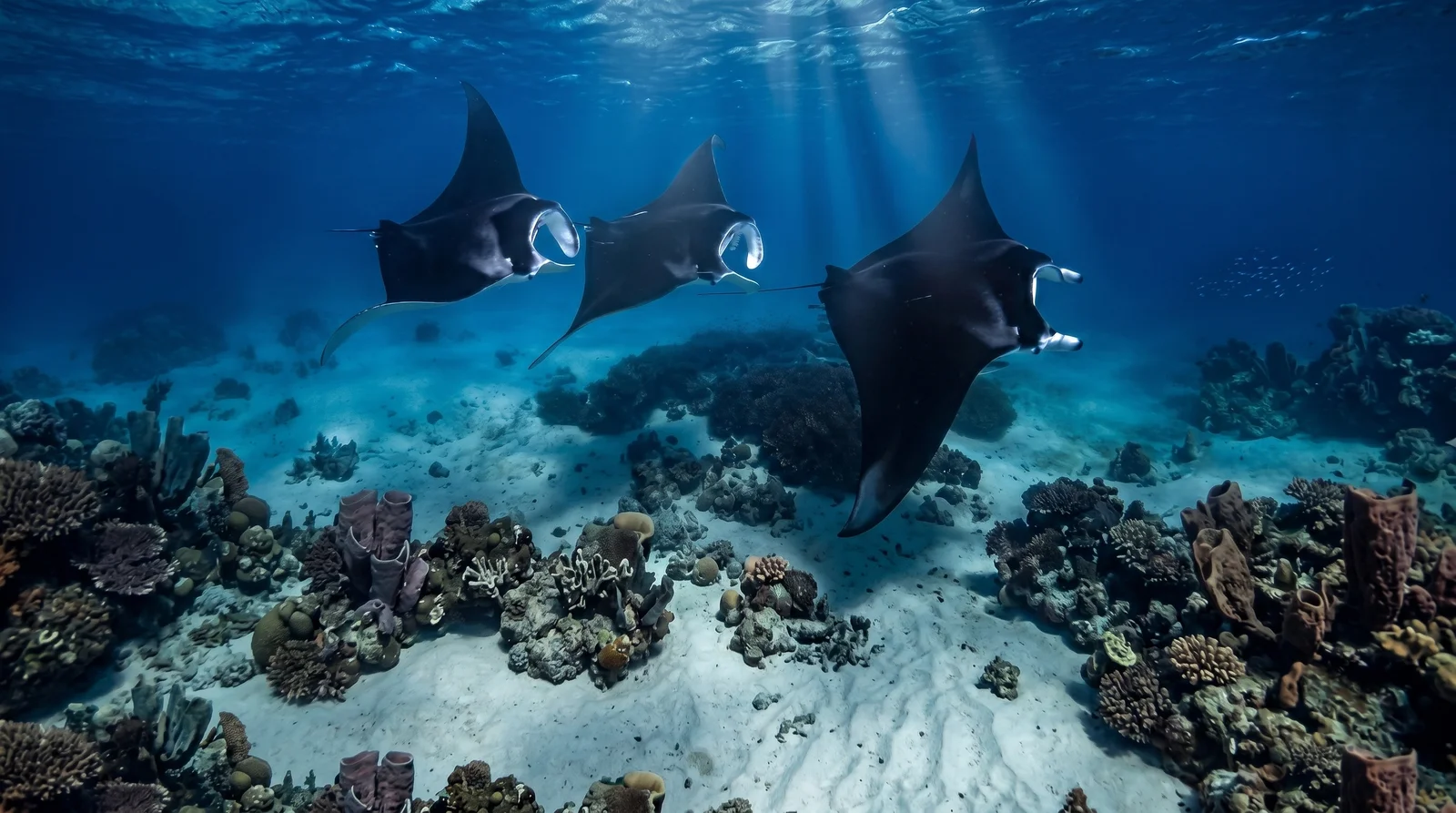
- Tanjung Benoa (Nusa Dua) — the easiest option: shallow water and a calm sea right next to the southern resorts.
Where is the best snorkeling in Bali?
Snorkeling doesn't need a shipwreck or deep water — what matters is calm water and reefs close to the surface, and Bali has several of those.
The beaches around Amed and Tulamben work for snorkeling too: the same coastal strip where divers go is just as rich in fish and soft coral near the surface. The strait between Nusa Penida, Lembongan, and Ceningan is the second most popular option, but you'll need a boat to get there.
- Amed's beaches — calm water, shore entry, fish right at the surface;
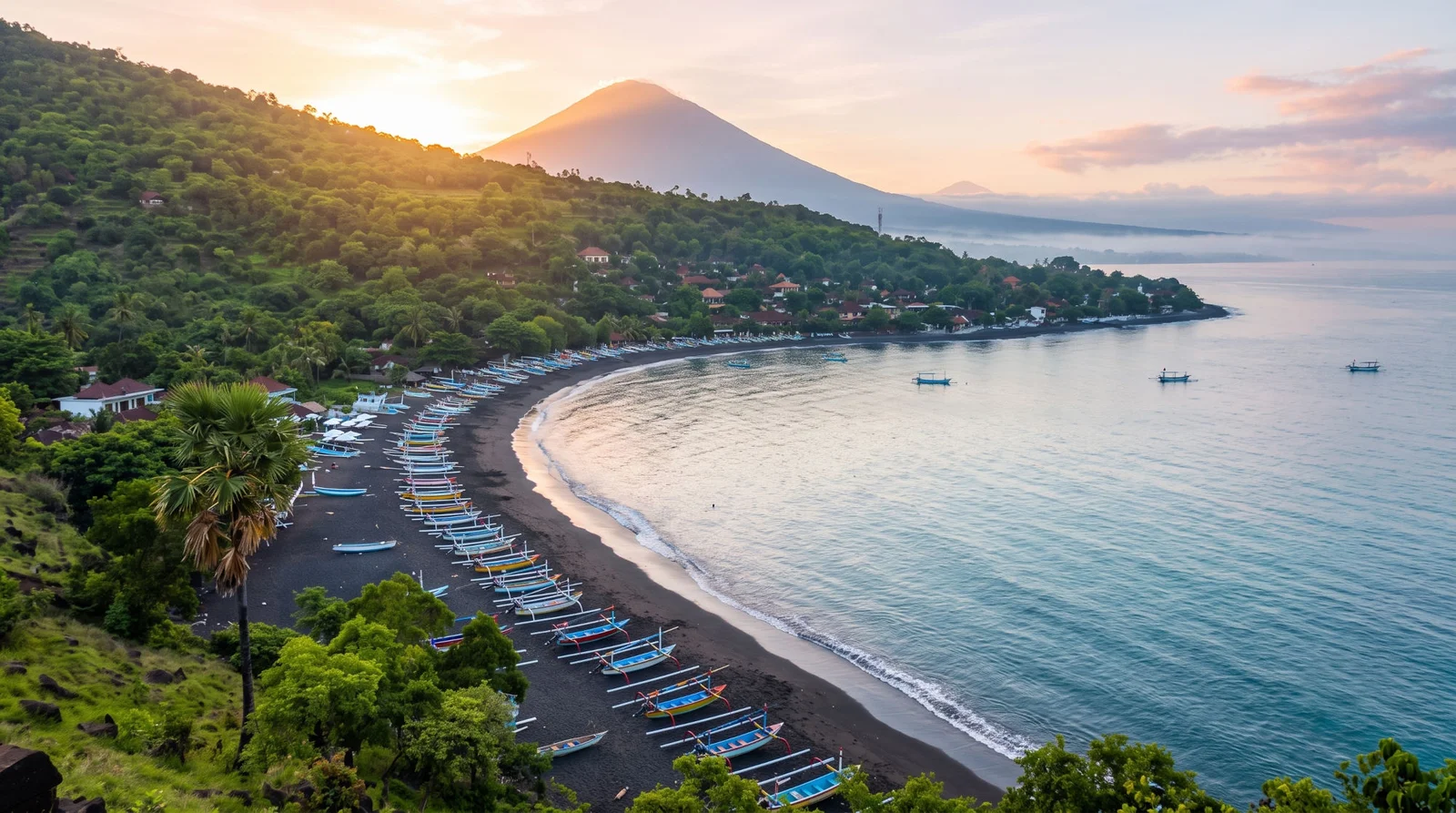
- the reef at Tulamben — you can snorkel right next to where divers explore the USS Liberty, no certification needed;
- Crystal Bay off Nusa Penida — clear water, but stronger currents, better with a guide;
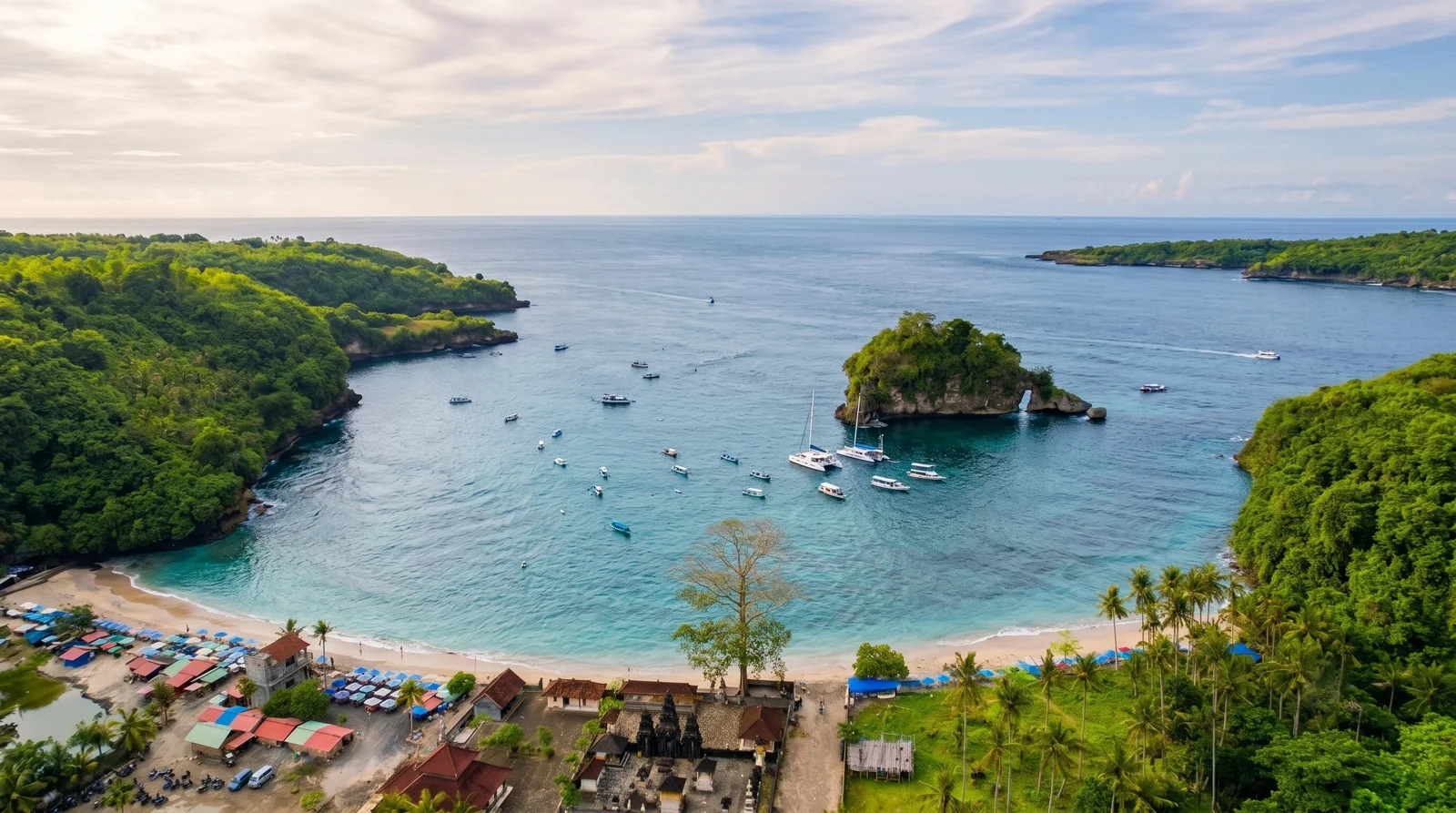
- Lembongan's mangroves — shallow and safe, a good first-time spot.
Where can you swim with manta rays in Bali?
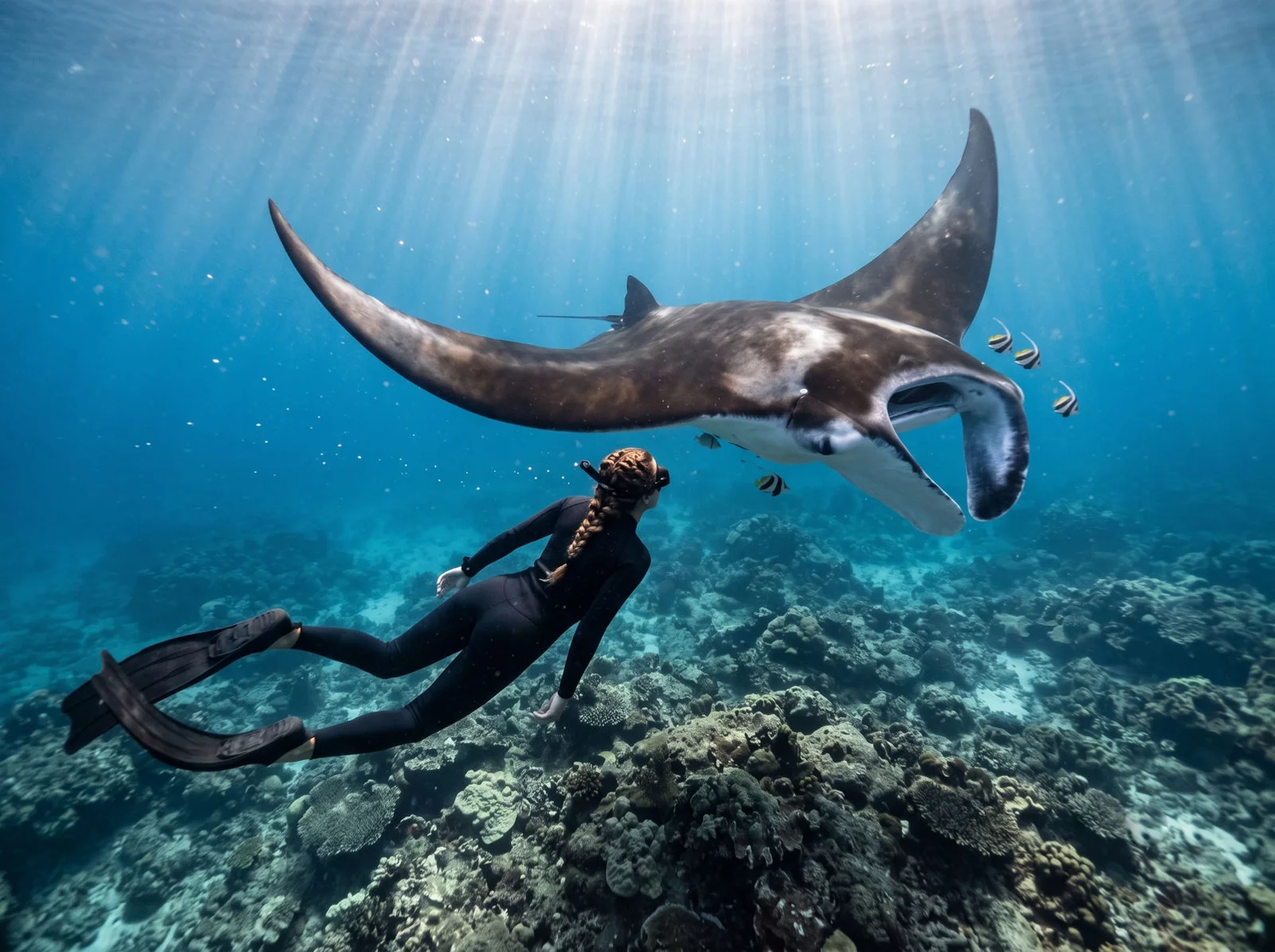
Manta Bay off Nusa Penida is the most reliable place in Bali to swim alongside giant rays: the chance of an encounter there is over 90%.
Manta rays stay near Nusa Penida almost year-round because currents bring in plankton — their only food. The rays are completely harmless: they have no venomous barbs, and some individuals have a wingspan of up to 9 meters. This kind of trip doesn't require any diving experience — snorkeling gear and a life vest are enough.
Manta Bay is only reachable by boat — there's no way to swim there from shore on Nusa Penida's south coast.
Guided or independent diving: what to pick?
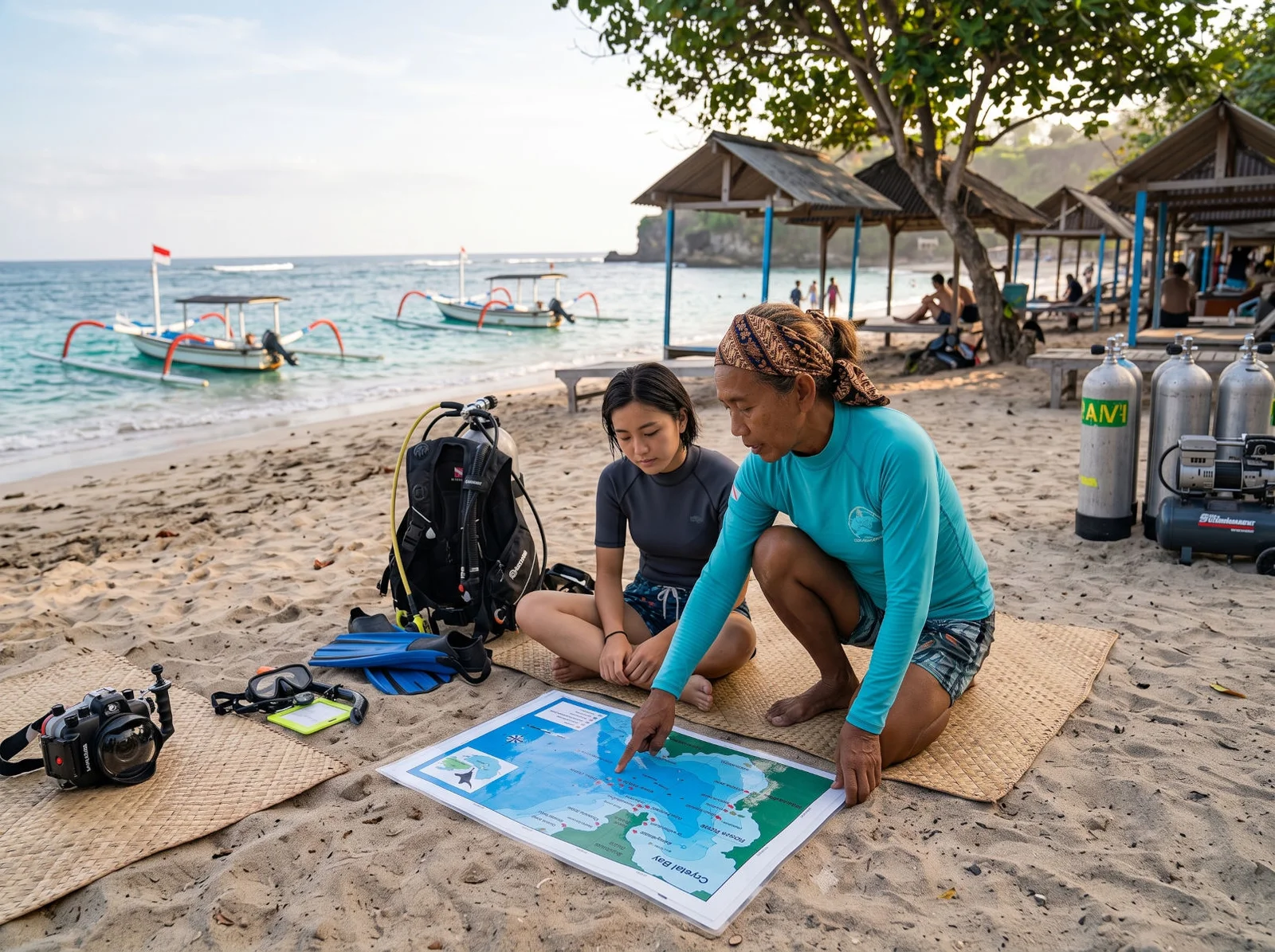
No dive center in Bali legally sells unsupervised diving without certification or a guide — the real question isn't "with a guide or not," but "with which instructor."
The price of a dive depends on the site (Tulamben and Menjangan are farther from the south of the island, so transfers cost more), the number of days, and whether you need a Russian-speaking instructor — specialized Russian dive clubs charge slightly more than general dive centers, but they remove the language barrier during the safety briefing, which matters more to a beginner than saving a little money.
Divers in Bali usually choose between four directions: Tanjung Benoa for a first try, Tulamben with the USS Liberty, Lembongan for a chance at a manta ray, and the protected waters of Menjangan.
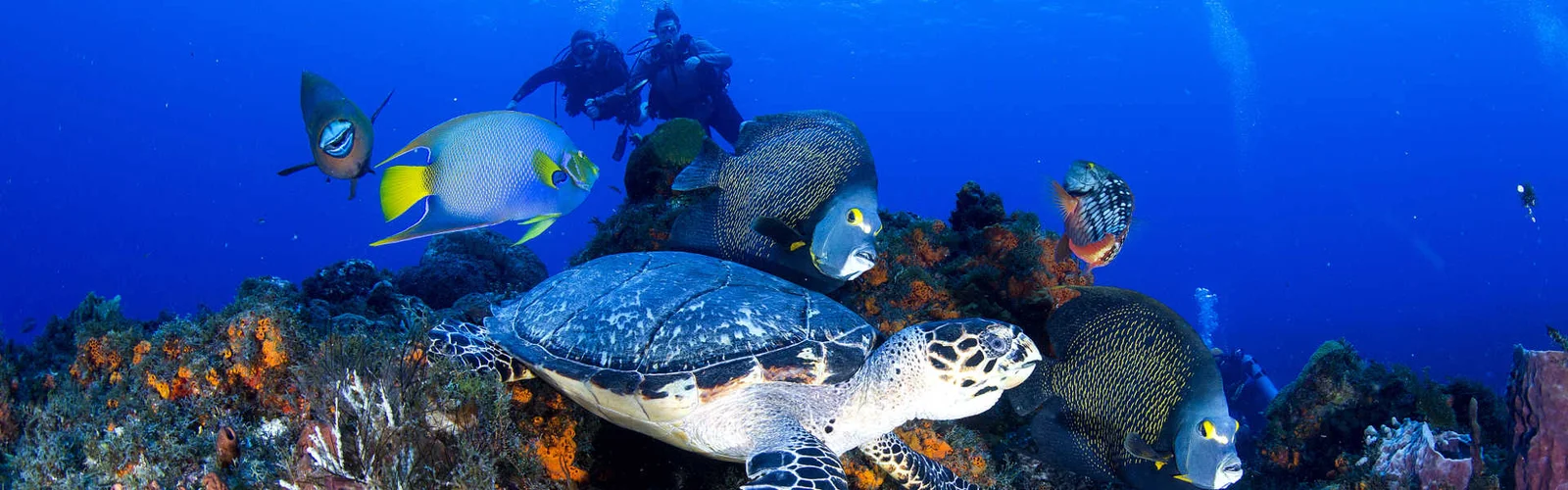
For a diver with no English, what matters isn't just translated underwater signals — it's accurately understanding the safety briefing on land.
What should you know before your first dive?
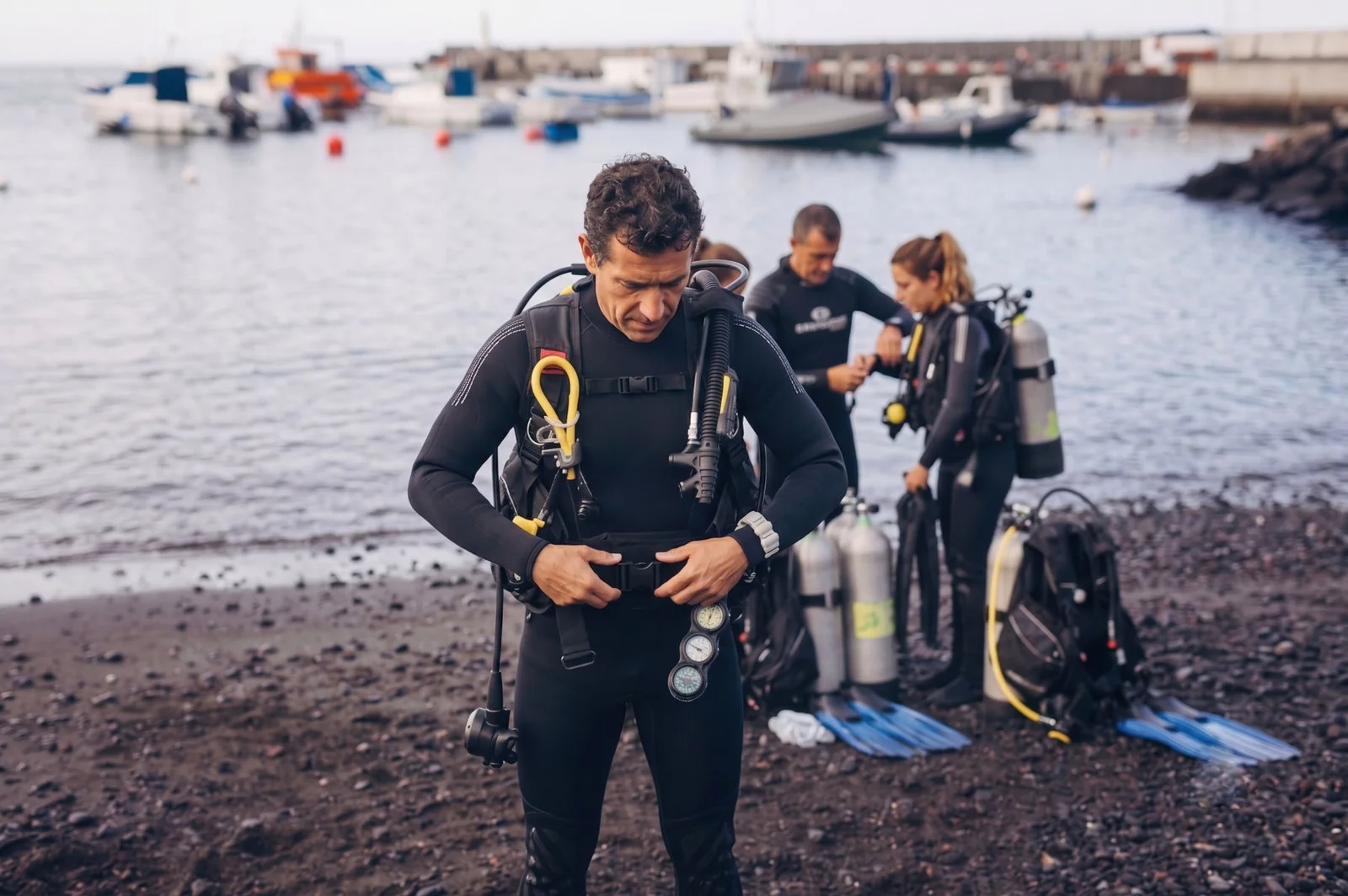
No certification is needed for a first trial dive — the instructor runs a short briefing on land and personally accompanies you underwater.
There are a few medical restrictions shared by diving and more strenuous snorkeling: serious heart conditions, epilepsy, pregnancy, recent lung surgery. At least 18 hours should pass between your last dive and your flight home — that's a flight-safety rule, not a dive center policy.