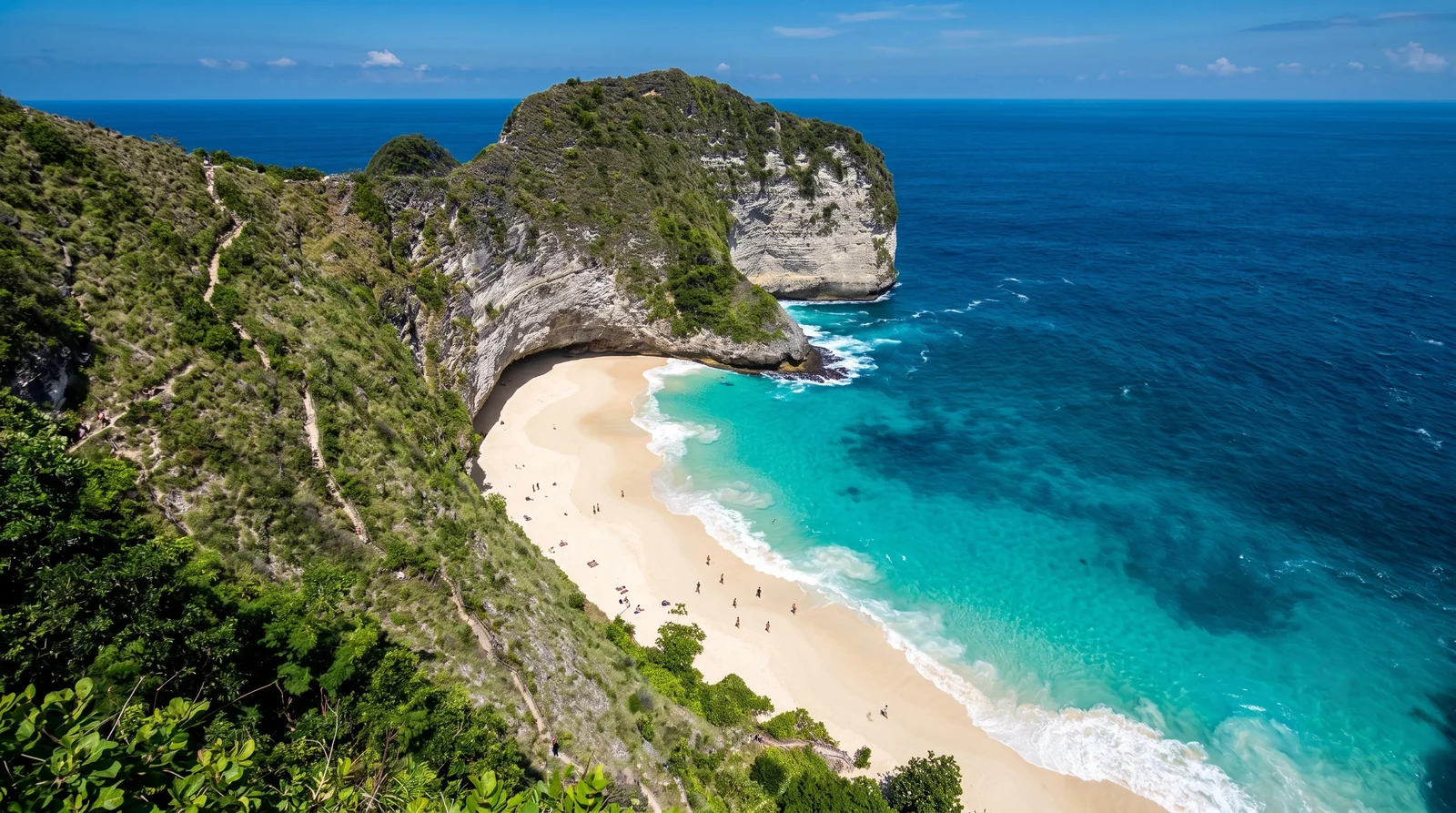
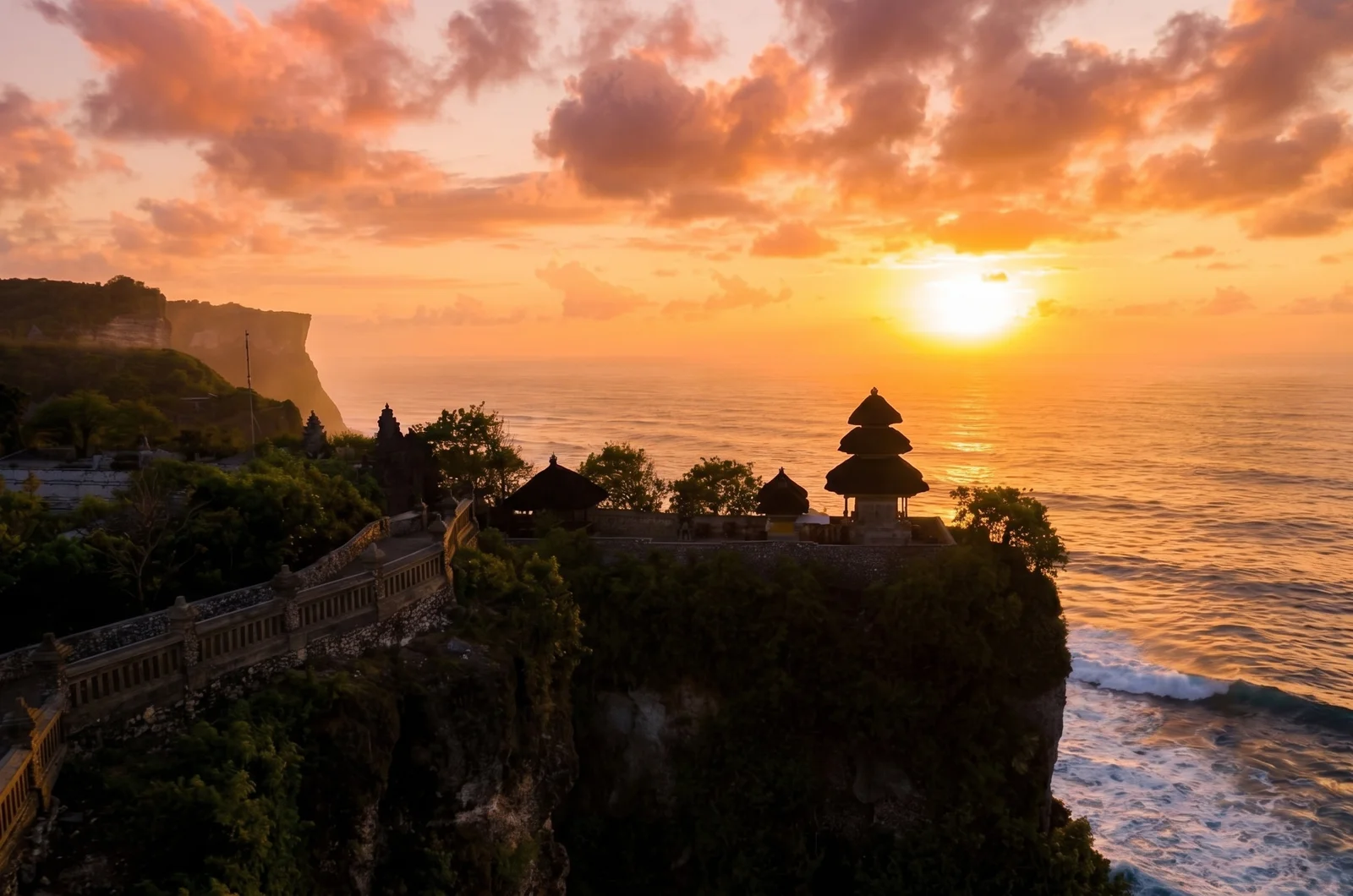
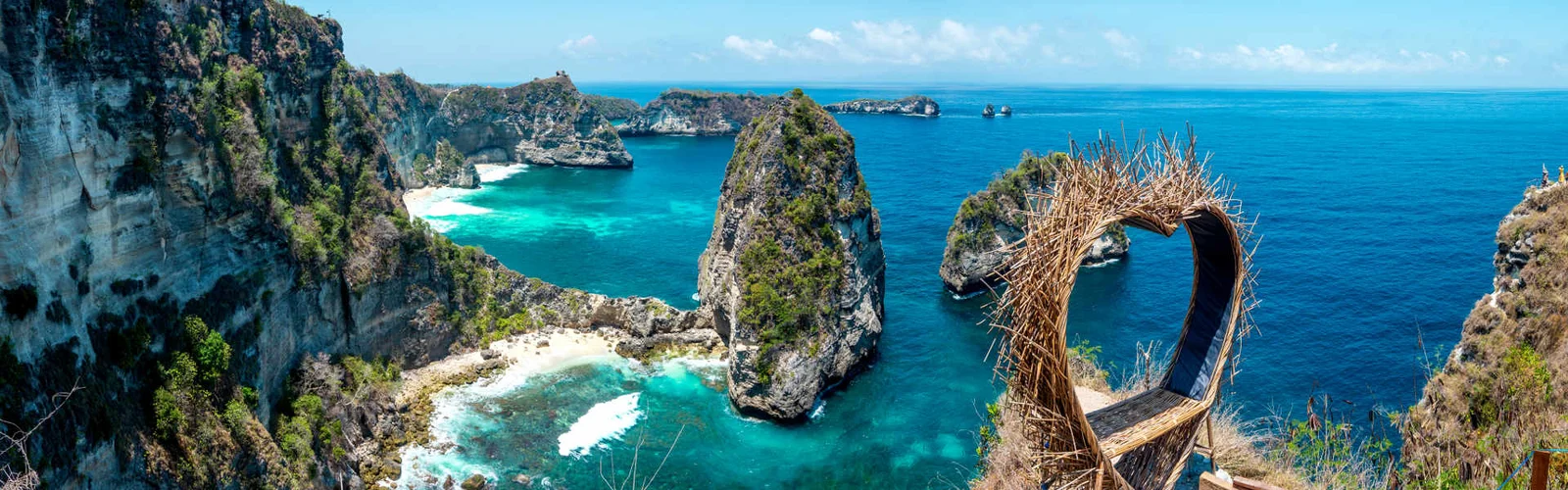
Nusa Penida is the largest of the three Nusa islands off Bali's southeast coast and the most dramatic scenery in the whole region: sheer limestone cliffs nearly two hundred metres high, turquoise bays and snorkeling with giant manta rays.
People come for the T-Rex-shaped Kelingking headland and for an edge-of-the-world feeling that has all but vanished from mainland Bali.
This guide covers the essentials for planning your trip: how to get there from Sanur, how much time to allow, what to fit into one day and into two, where it's safe to swim, and whether it's even worth it. The island is wild with rough roads, so the route matters more here than almost anywhere else.
How to Get to Nusa Penida from Sanur
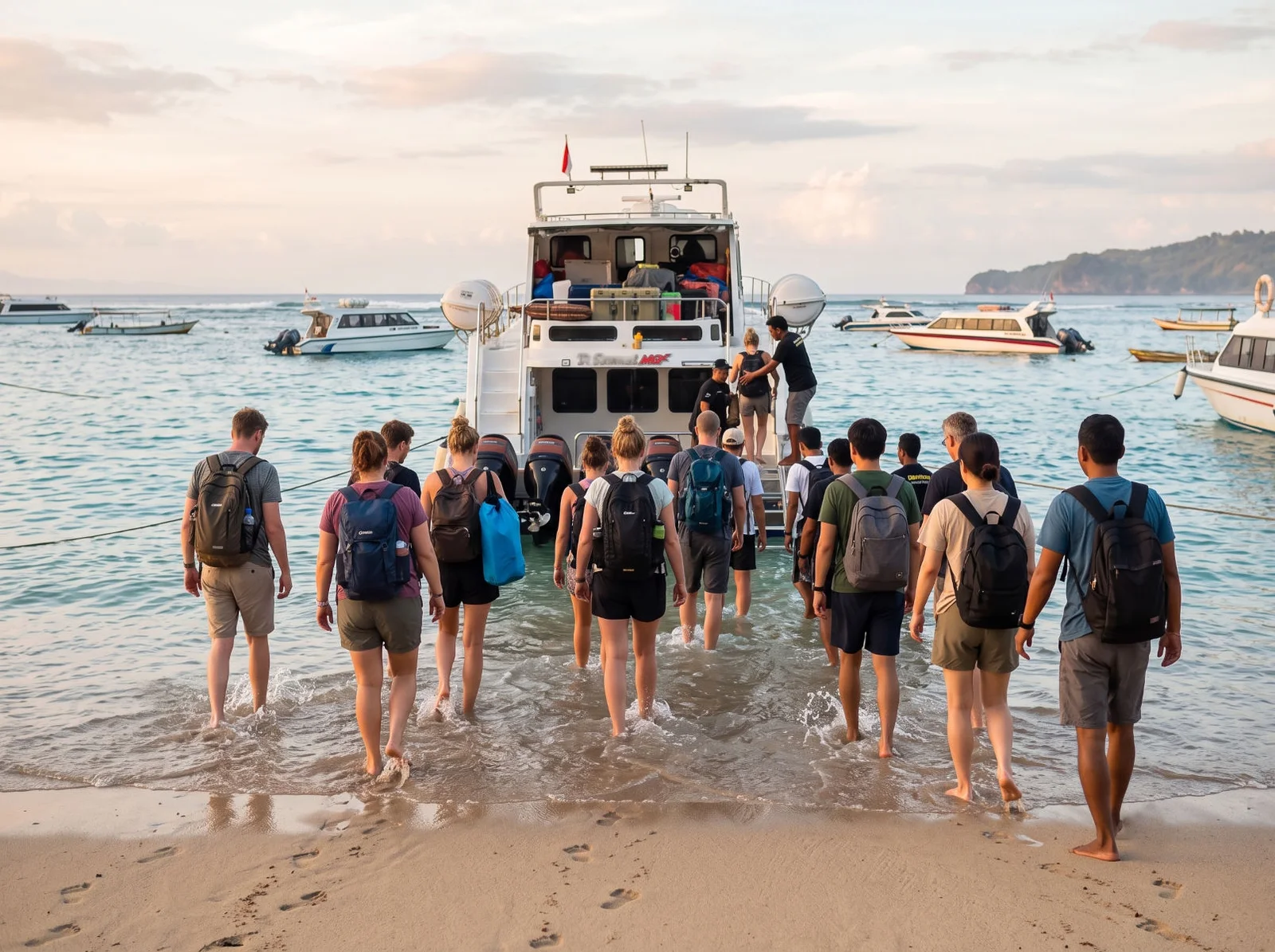
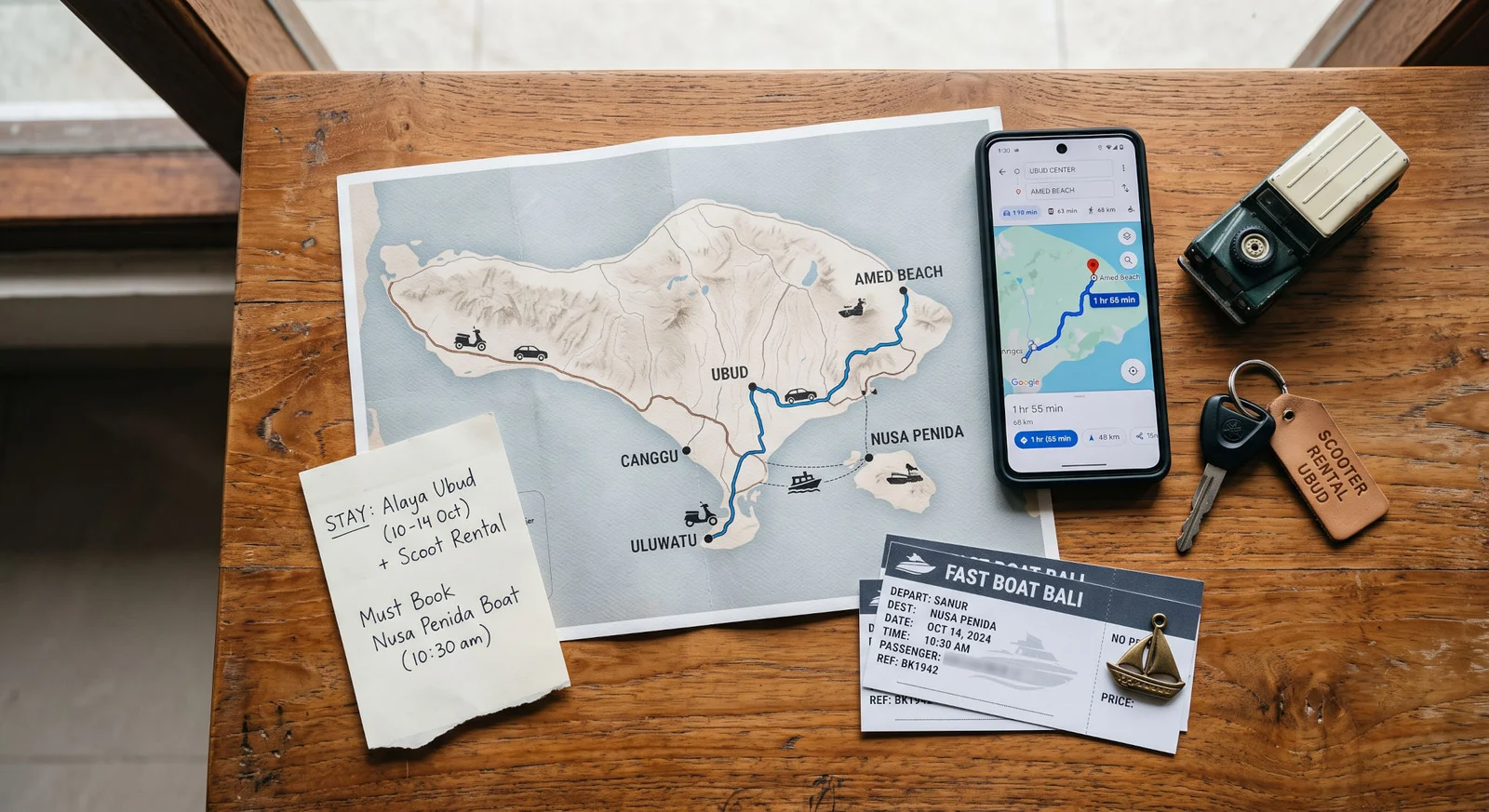
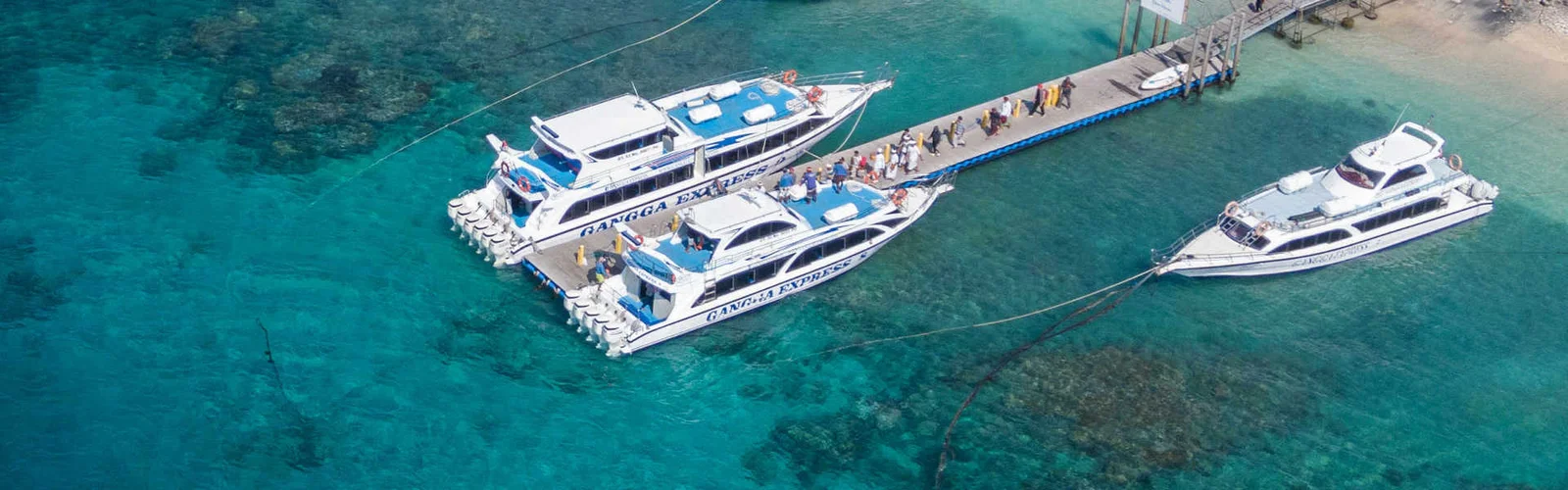
You can only reach Nusa Penida by boat — there is no bridge from Bali. Fast boats (speedboats) run mainly from Sanur and take 30–45 minutes, arriving at the Toyapakeh, Banjar Nyuh or Sampalan piers.
- From where: the main departure port is Sanur on Bali's southeast coast. Boats occasionally run from Padang Bai and Kusamba too.
- Travel time: the overland drive from Kuta or Ubud to Sanur is a separate 40–90 minutes, so you'll need an early start from your hotel.
- Tickets: seats on popular sailings sell out in high season, so book the boat ahead rather than buying a ticket on the pier on the day.
- Schedule: the first boats leave around 07:00–08:00 and the last returns are in the afternoon; exact times depend on the operator.
Fast Boat Tickets
How Many Days You Need and When to Go
The island is large and the roads are slow, so a single day trip from Sanur only lets you see part of it: one day covers the west coast, while the whole island is better split across 2 days with an overnight.
- In 1 day you can cover one loop — usually the west, with the famous "postcards": Kelingking, Broken Beach, Angel's Billabong and Crystal Bay. This is the most popular day-trip format from Bali.
- In 2 days with an overnight you can comfortably do both the west and the east without spending all day in a car, and add snorkeling with mantas.
The best time is the dry season, April to October: drier roads, safer trails down to the beaches, and clearer water for snorkeling. In the wet season (November–March) the steep trails turn slippery and dangerous, and rougher seas mean more boat cancellations.
What to See in One Day: The West Coast
The west coast is Nusa Penida's calling card and the source of most of its famous photos: Kelingking, Broken Beach, Angel's Billabong and Crystal Bay sit close together and pair well in one day.
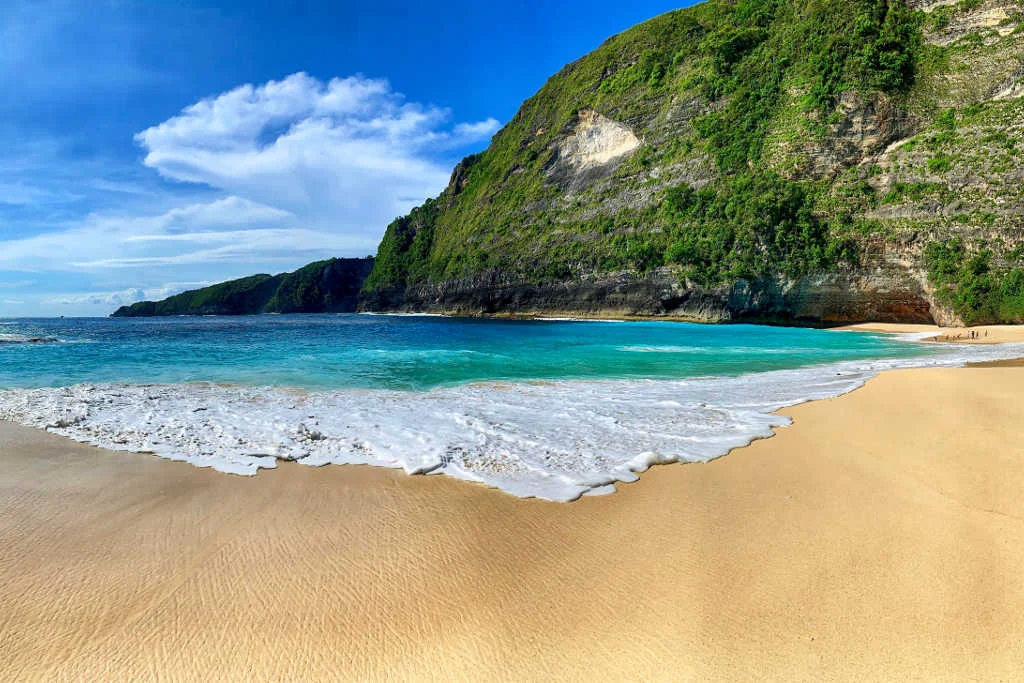
Kelingking Beach — a roughly 180-metre cliff shaped like a Tyrannosaurus head, the reason the spot is nicknamed the "T-Rex". A steep staircase (30–40 minutes down, longer back up) is the only way to the beach below; the glass elevator stays closed since construction stopped in 2025. Strong currents make swimming below dangerous, so most visitors admire the view from the lookout — keeping an eye on their belongings and a distance from the bold monkeys.
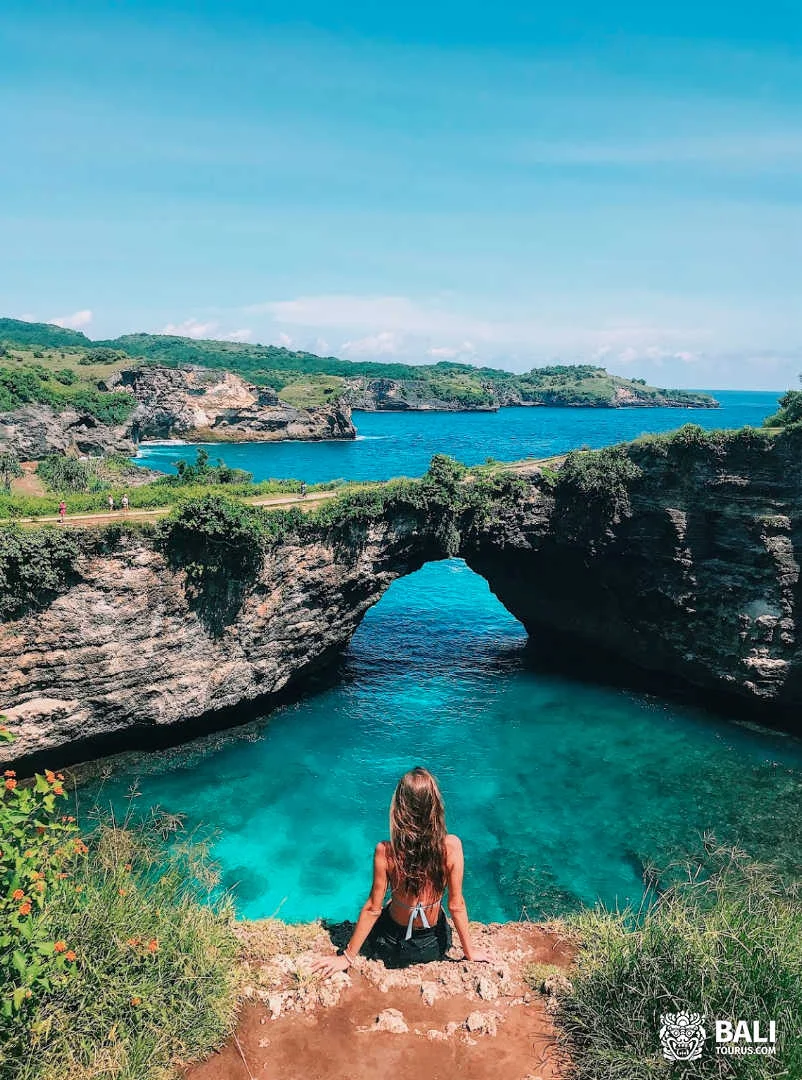
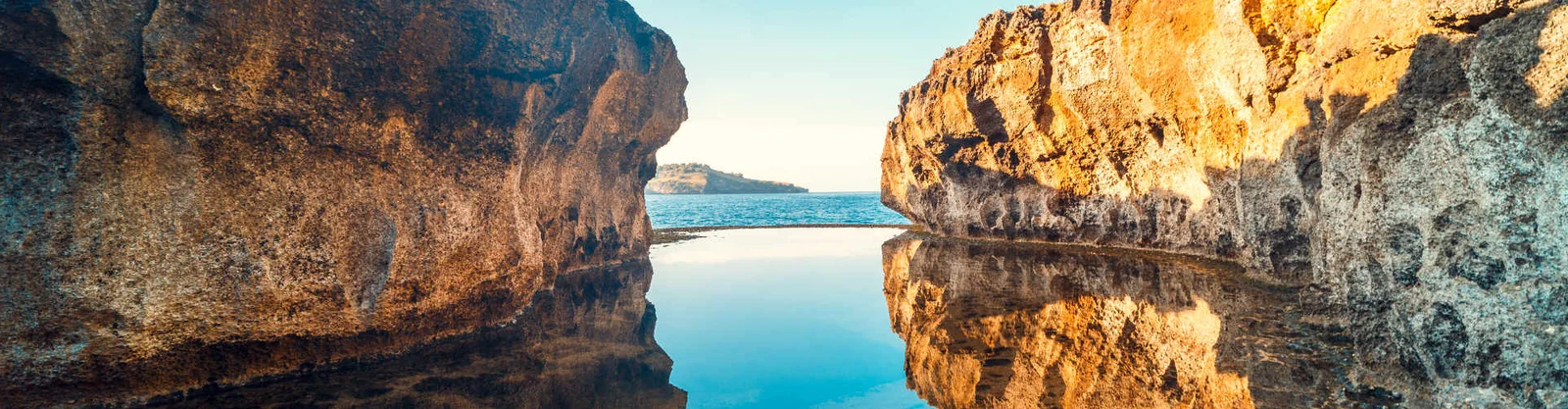
Broken Beach (Pasih Uug) — a circular collapsed cove with a natural stone arch through which the ocean flows into the lagoon. No swimming, but the views and the clifftop walk are stunning.
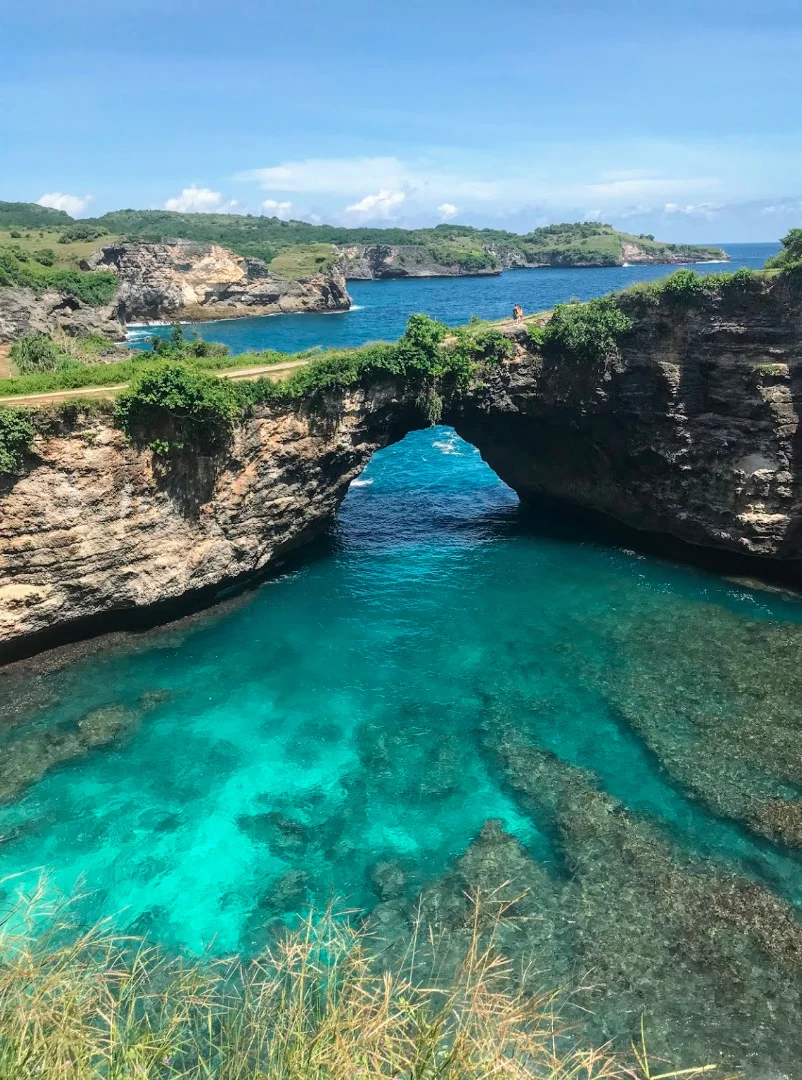
Angel's Billabong — a natural rock pool of emerald water right beside Broken Beach. Only enter in calm seas at low tide — it's dangerous at high tide.
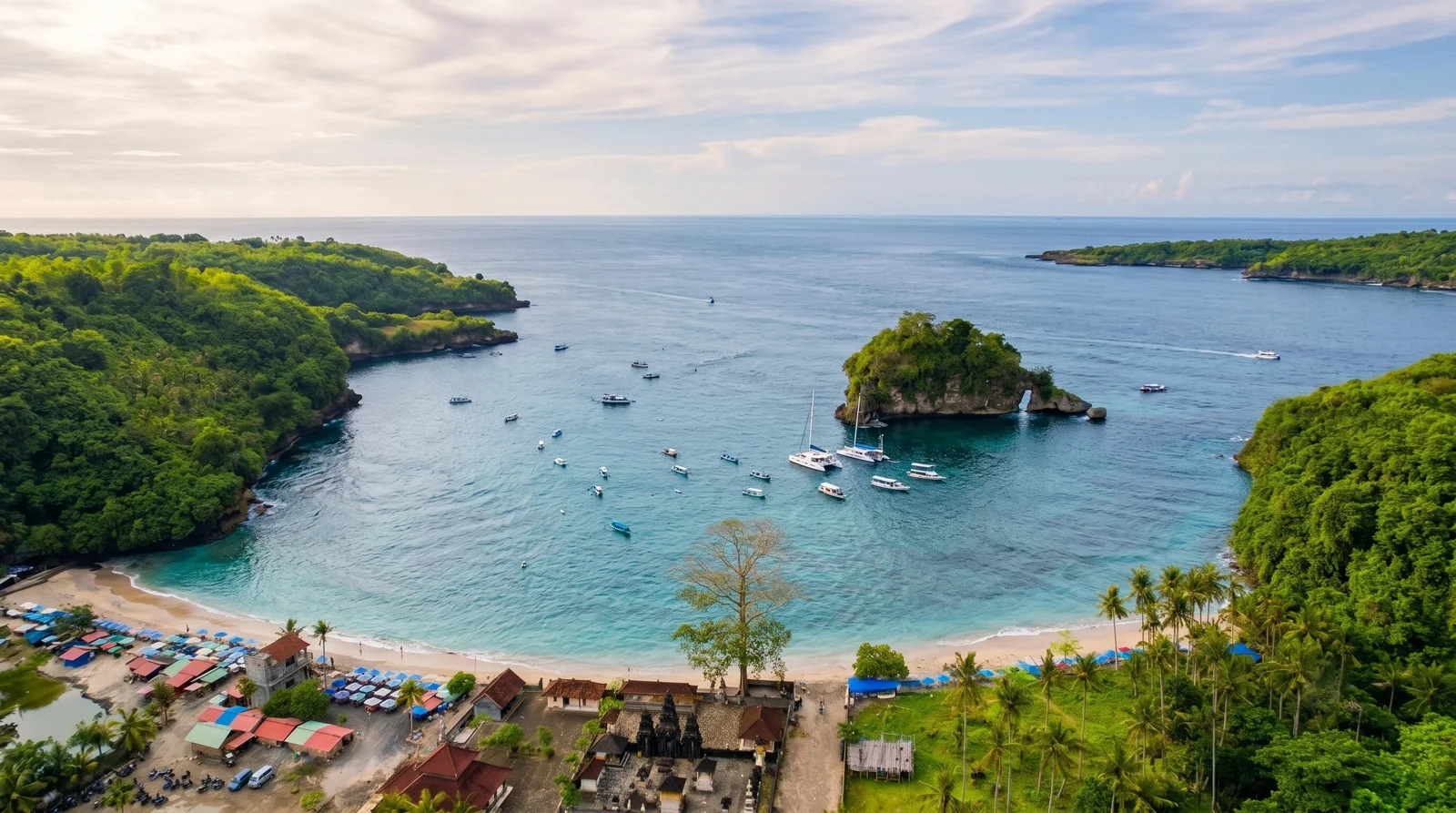
Crystal Bay — the main beach for swimming, snorkeling and sunsets, with clear water and visibility often beyond 30 metres.
The East Coast: Beaches and Viewpoints
The east coast is quieter and greener than the west, and its beach descents are a real workout for the legs: Diamond Beach, Atuh, the Thousand Islands viewpoint and Teletubbies Hills are best tackled as a separate day.
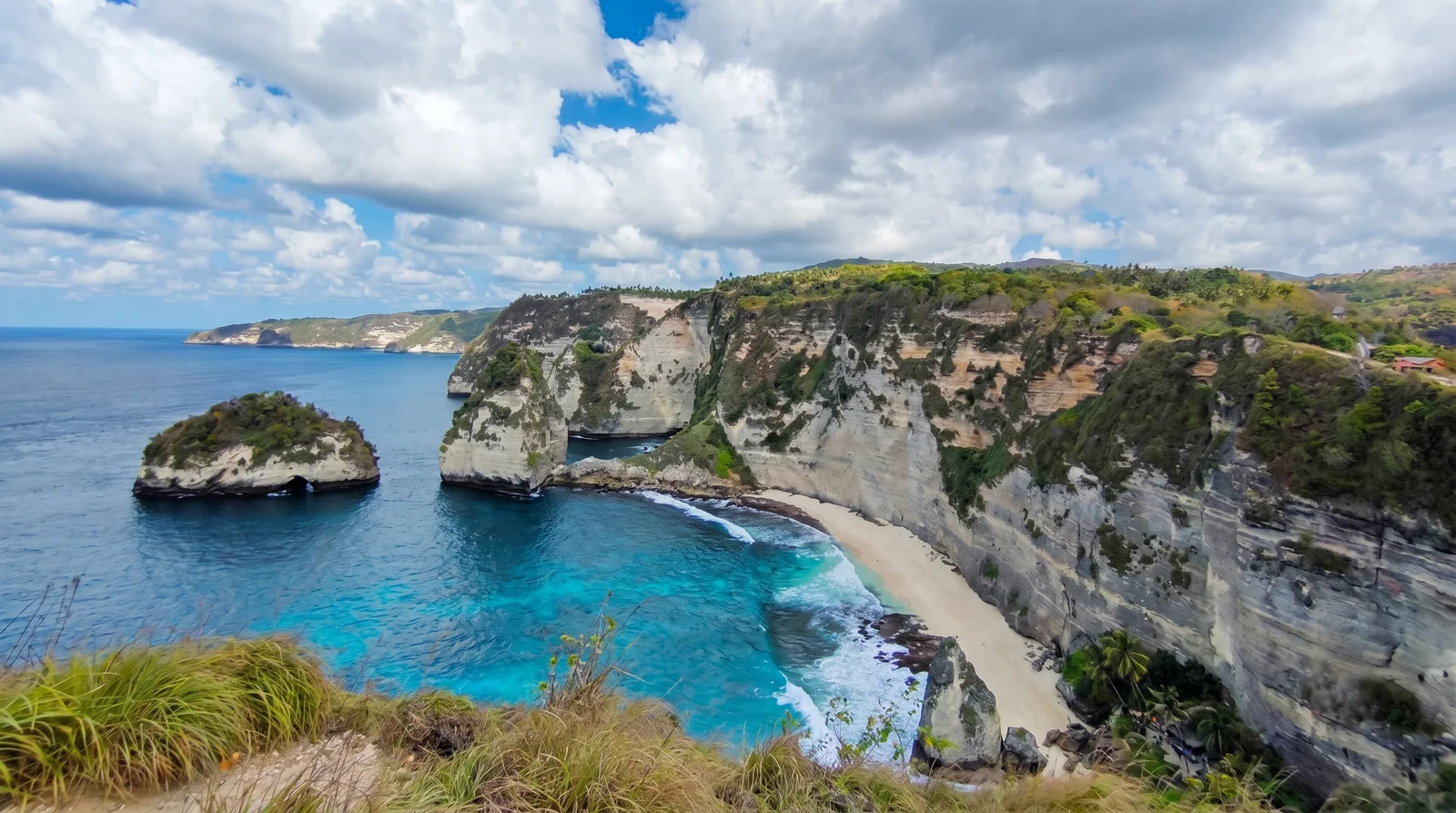
Diamond Beach — white sand and sea stacks rising from turquoise water beneath a tall cliff; a scenic staircase carved into the rock leads down.
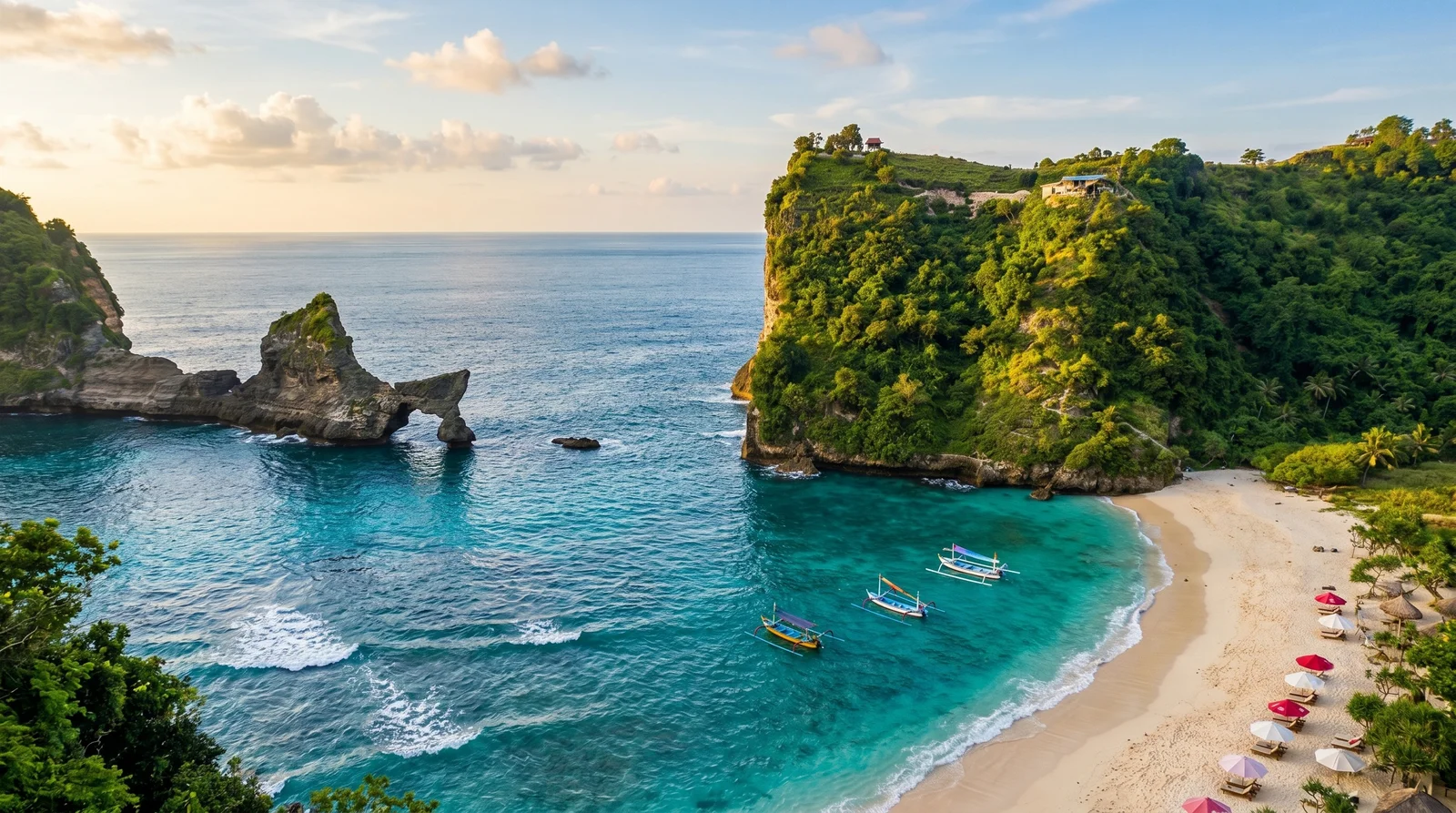
Atuh Beach — the secluded beach next to Diamond in the same bay, reached by a steep path down.
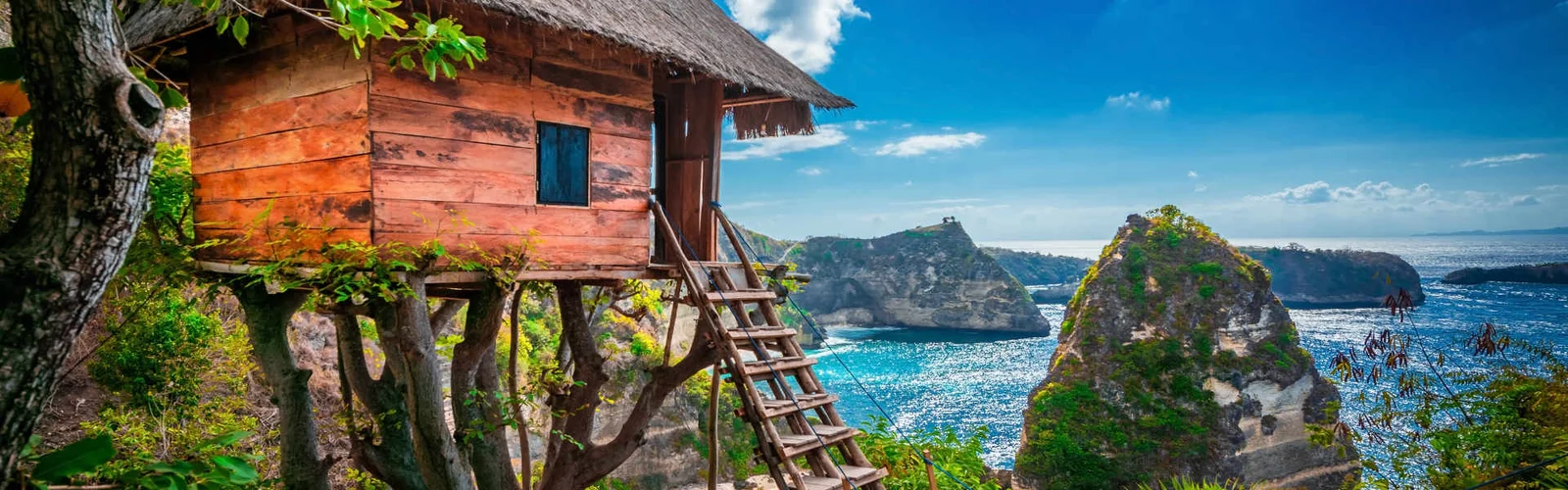
Thousand Islands viewpoint — a panorama of the jagged coastline scattered with rocky islets, and one of the island's most recognisable views.
Rumah Pohon tree house — the famous clifftop hut beside the viewpoint, the classic Instagram shot of Nusa Penida.
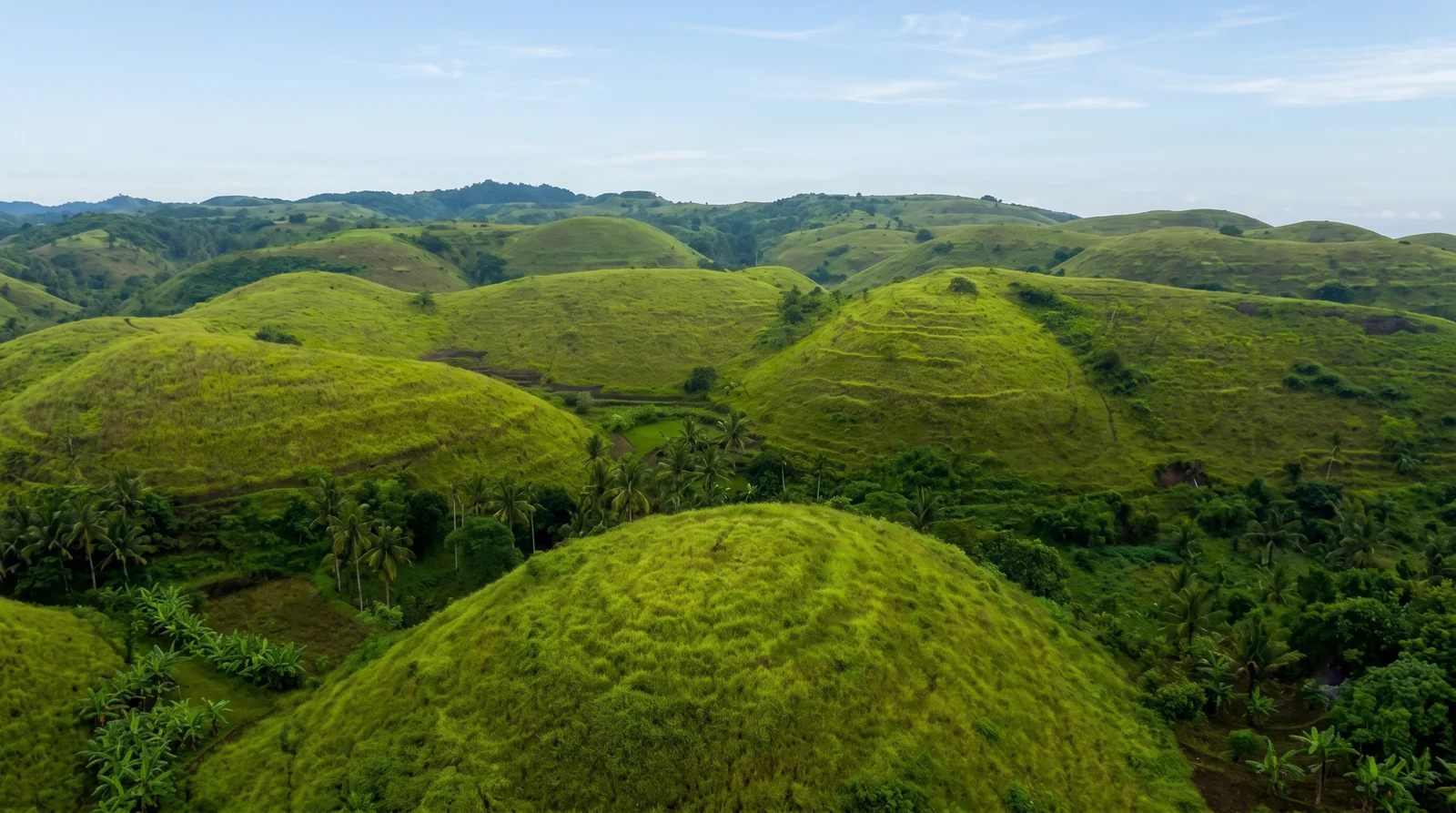
Teletubbies Hills — a row of near-identical green dome-shaped hills, at their greenest at the end of the rainy season.
Snorkeling and Diving with Mantas
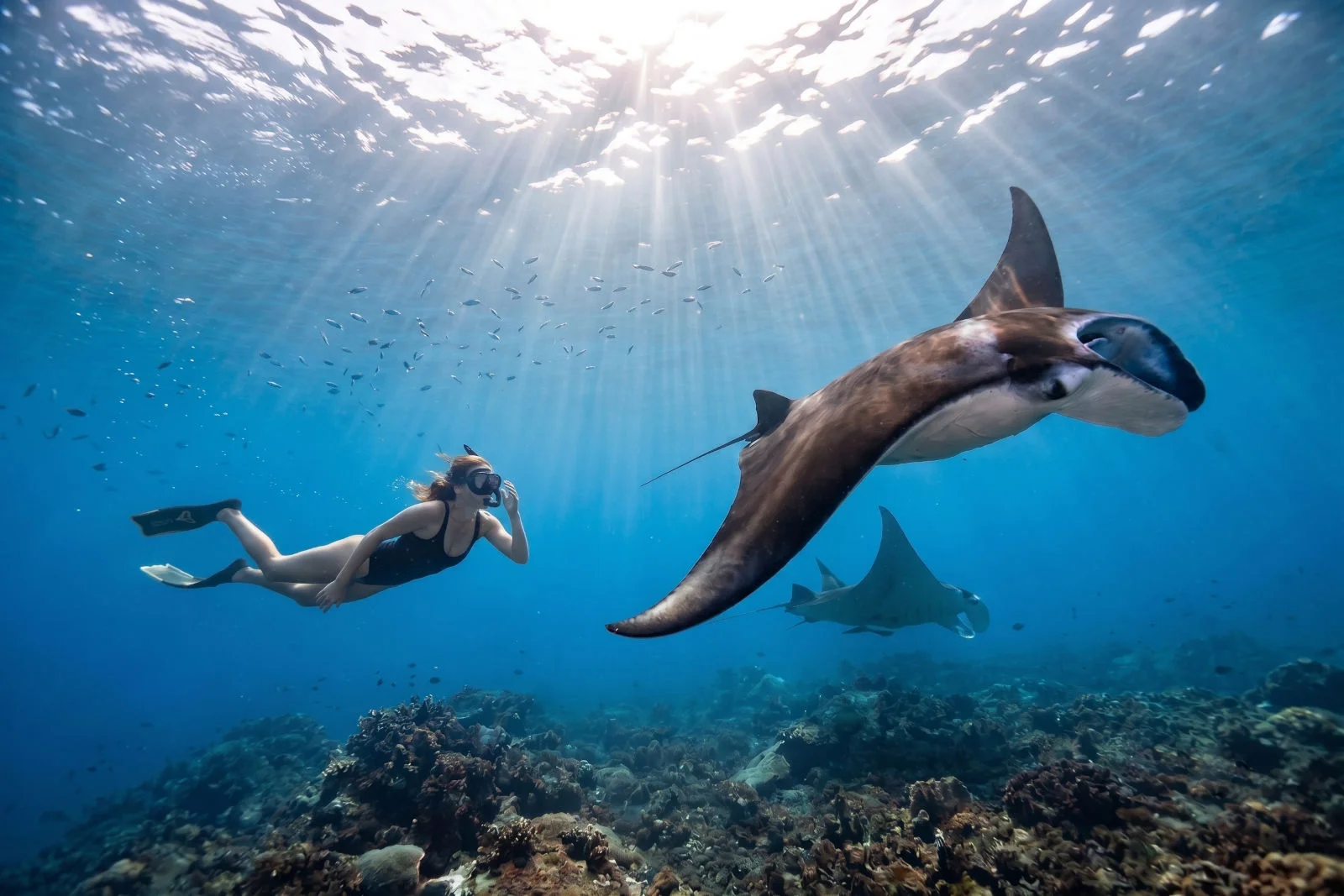
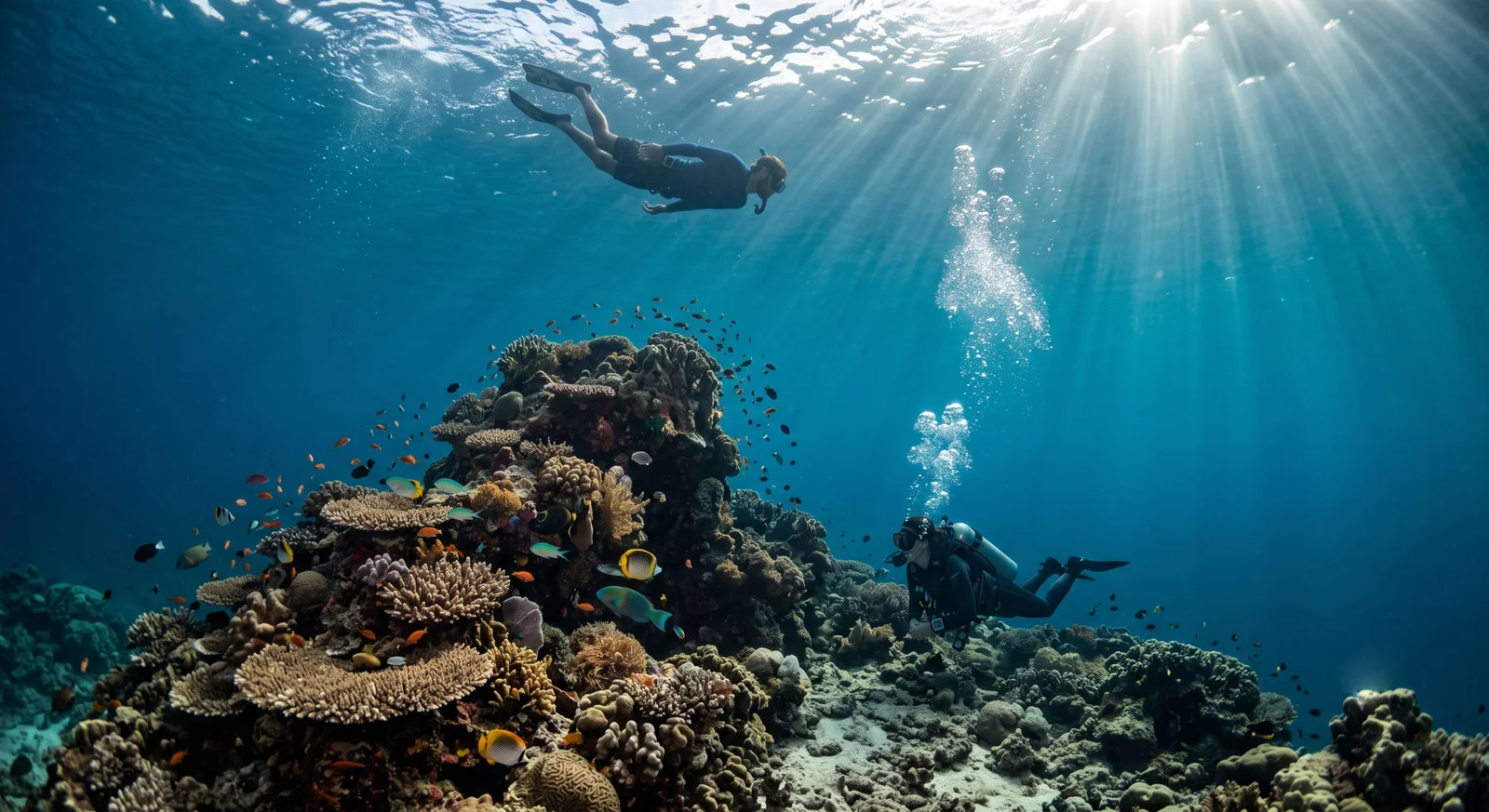
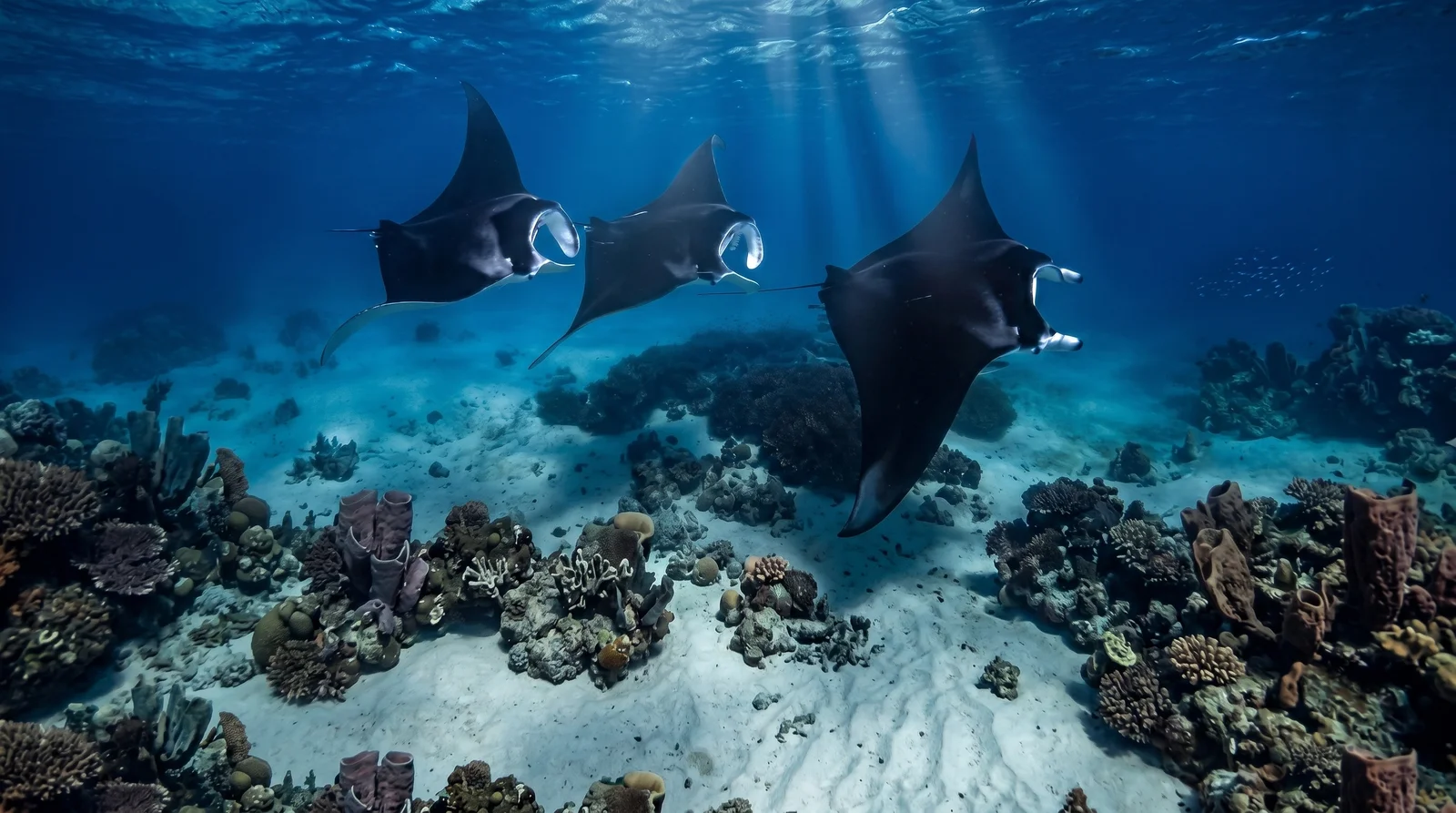
Nusa Penida is one of Bali's best places for snorkeling and diving: the island lies within the Coral Triangle and is washed by cold, plankton-rich currents that draw giant mantas and other large pelagic fish.
Manta Point — off the southwest coast reef mantas gather at cleaning stations year-round; you can snorkel right alongside rays several metres across.
- Crystal Bay — the top spot to meet the oceanic sunfish (mola mola). These huge deep-water fish rise toward the reefs in the cold season, roughly from July to October.
- A standard snorkeling tour usually links several sites: Manta Bay, Crystal Bay, Gamat Bay and Wall Point.
Snorkeling with Mantas
Getting Around the Island
Roads on Nusa Penida are narrow, broken and very steep in places, and distances on the map are deceptive: crossing between west and east takes longer than it looks.
- A car with a driver or an organised tour is the easiest and safest option, especially for a day trip. The driver knows the order of the stops and the parking, and you save your energy for the sights.
- Renting a scooter is possible and cheap, but it demands experience: steep descents, broken tarmac and heavy traffic near the popular spots make it risky for beginners.
- There are effectively no metered taxis on the island — only private drivers, with the fare agreed in advance.
- Going independently suits those staying 2–3 days who ride a scooter confidently; for a day trip a ready-made tour is almost always the better value.
Because of the poor roads and steep beach descents, bring sturdy shoes with good grip, cash, water and sunscreen.
Is Nusa Penida Worth It: Reviews and Tips
By traveller reviews, Nusa Penida leaves the strongest impression anywhere around Bali — it's a trip about views, adrenaline and snorkeling with mantas, not quiet beach relaxation.
- What people praise: the dramatic Kelingking scenery, snorkeling with mantas and the colour of the water you won't find on Bali itself.
- What they warn about: bumpy roads, steep staircases down to the beaches, midday crowds at the viewpoints, and dangerous currents — you can't swim everywhere.
- Top tips from reviews: start early to reach Kelingking before the crowds; don't skimp on footwear; don't try to circle the whole island in one day.
Who it's for: lovers of nature, photography, snorkeling and active travel. Who should think twice: anyone wanting to relax quietly by the water — neighbouring Lembongan or Bali itself suit that better.
What's Nearby: Lembongan, Ceningan and the Gilis
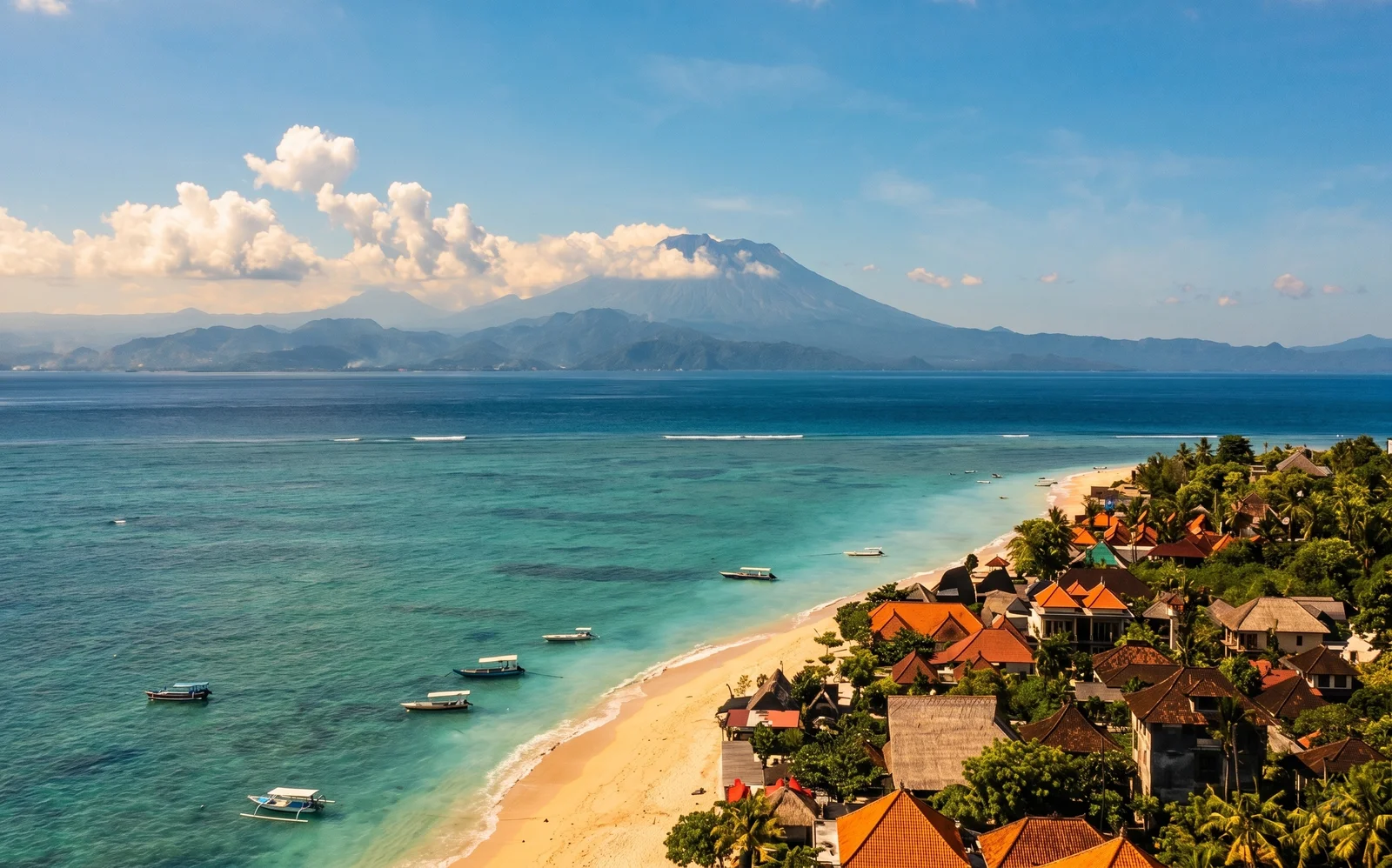
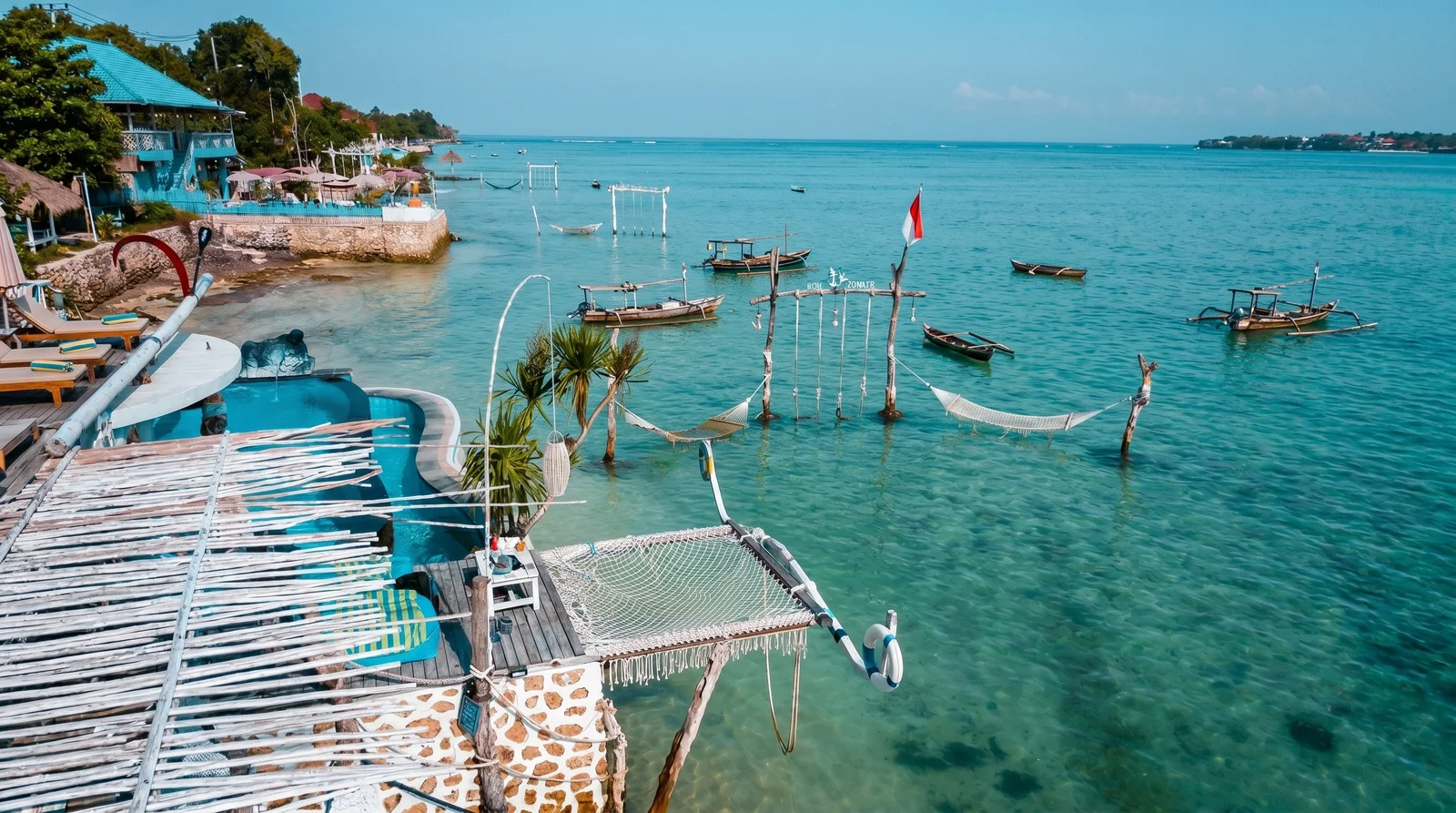
Nusa Lembongan — the smaller, more developed island with beaches, cafés and a laid-back pace; a good base for an overnight paired with Penida.
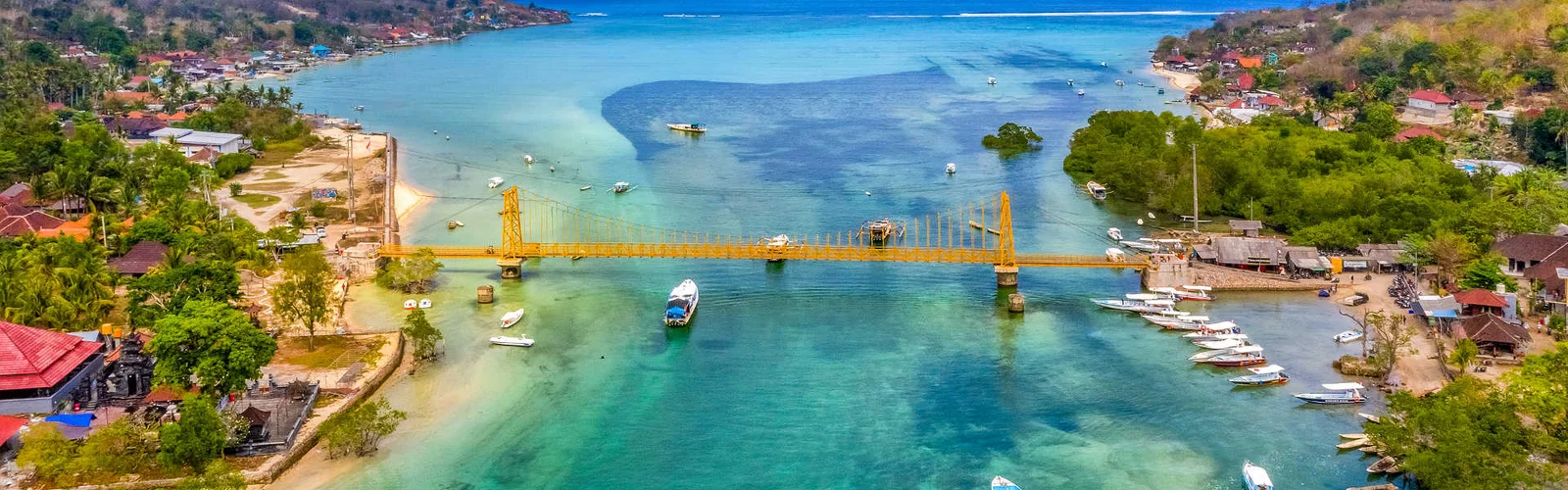
Nusa Ceningan — linked to Lembongan by the Yellow Bridge and known for its Blue Lagoon.
The Gili Islands — direct boats also run from Nusa Penida if you're continuing toward Lombok.