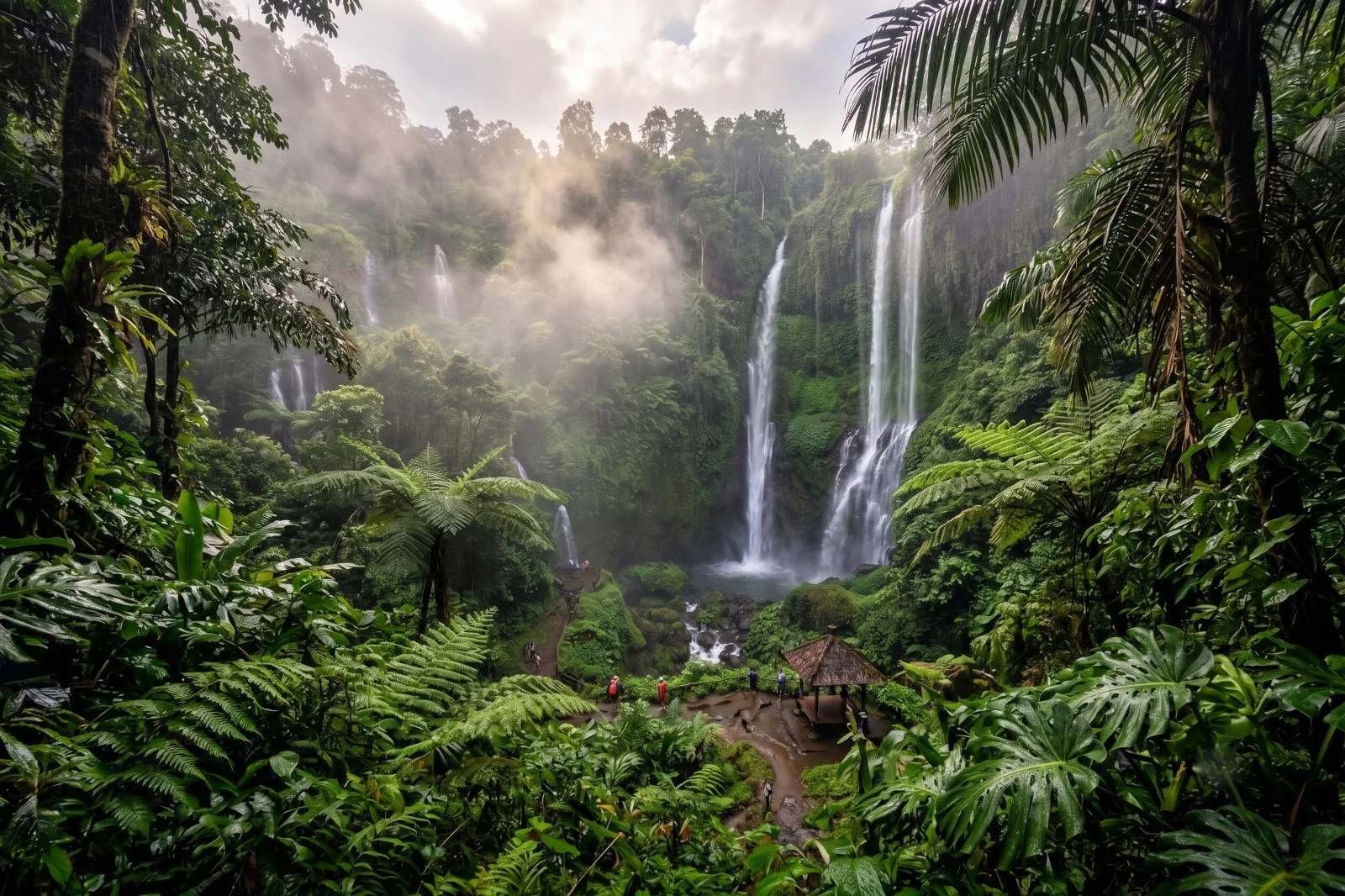
Bali waterfalls vary much more than their photos suggest. Sekumpul is a dramatic northern valley, Tegenungan is easy to reach near Ubud, Tibumana is softer and swim-friendly, Tukad Cepung is a light-filled cave, Kanto Lampo is built for layered photos, and Nungnung is a powerful drop reached by many steps.
This guide organizes Bali waterfalls by route logic: which ones are near Ubud, which are worth the longer drive, which are easier with children, and which require more walking, stairs, and proper shoes. The key rule is simple: do not mix north, central Bali, and East Bali into one overloaded waterfall day.
Which Bali waterfalls should you visit first?
For a first waterfall day in Bali, choose 2-3 waterfalls in the same region. Near Ubud, combine Tegenungan, Tibumana, Kanto Lampo, and Tukad Cepung; for the strongest landscape, go to Sekumpul; for a powerful vertical drop, choose Nungnung; for a northern route, look at Gitgit and Munduk.
Quick choices:
- Most dramatic: Sekumpul.
- Easiest popular stop: Tegenungan.
- Cave and light: Tukad Cepung.
- Swimming and softer mood: Tibumana.
- Powerful drop: Nungnung.
- Northern route: Gitgit, Munduk, Banyumala.
- Short Ubud route: Kanto Lampo, Rang Reng, Tibumana.
Is Sekumpul Waterfall worth the long drive?
Sekumpul is often called one of Bali’s most beautiful waterfalls because it is not a single stream, but a green valley with several tall cascades. The tradeoff is distance: from the southern resorts it becomes a long day, and the route requires more effort than a quick roadside stop.
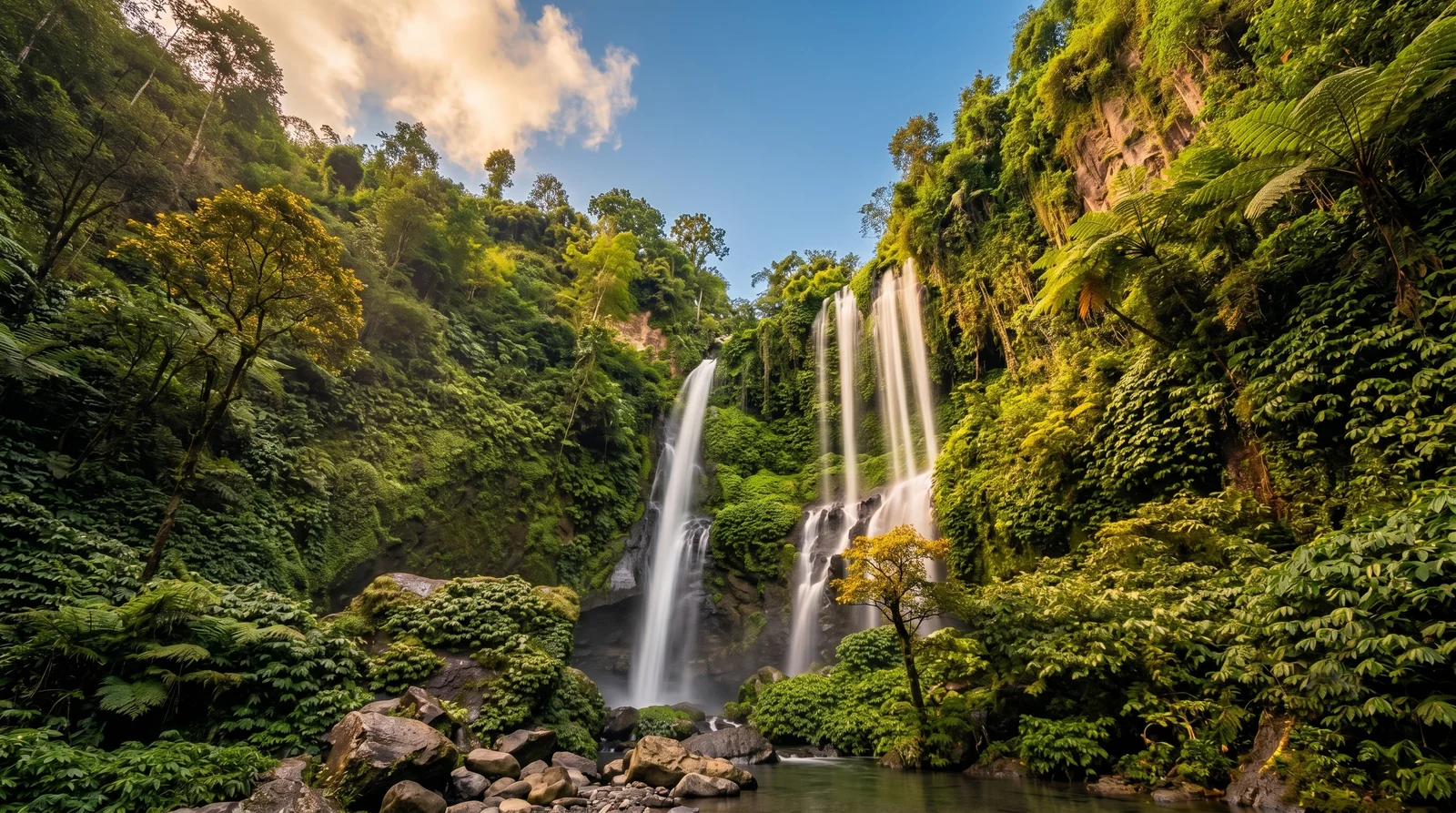
Plan Sekumpul as a dedicated northern day or part of an overnight stay in Munduk or Lovina. From Nusa Dua, Canggu, or Seminyak, it means an early start, a long transfer, and a tired return.
If you want a strong nature day, Sekumpul is worth it. If you just want a quick waterfall between cafes and beach time, choose Tibumana, Kanto Lampo, or Tegenungan instead.
Tegenungan, Tibumana, and Kanto Lampo: waterfalls near Ubud
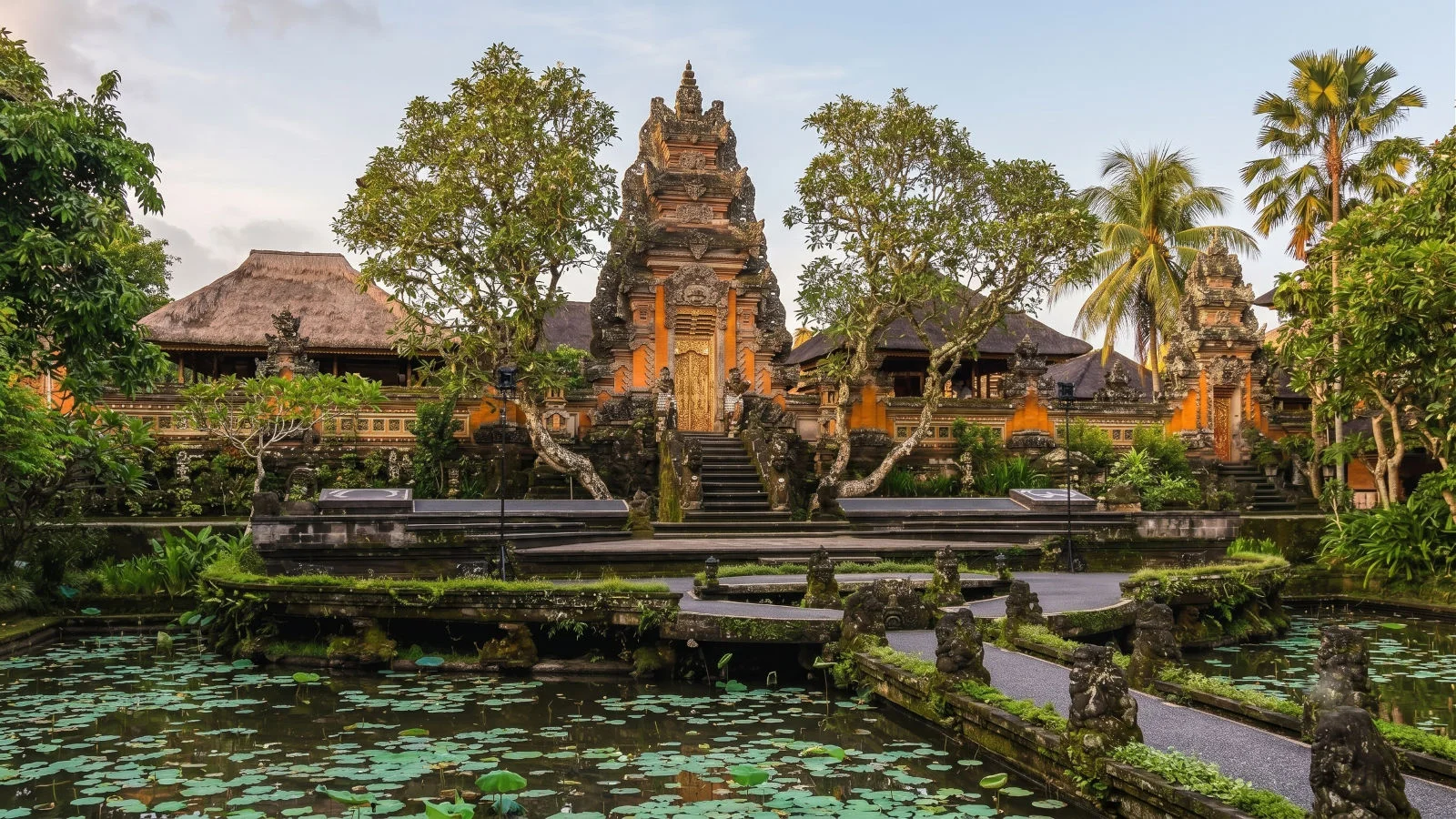
Near Ubud, the easiest waterfall cluster includes Tegenungan, Tibumana, Kanto Lampo, Rang Reng, and Pengibul. These are easier to combine in one day than the northern cascades and suit travelers staying in Ubud or adding nature to a cultural route.

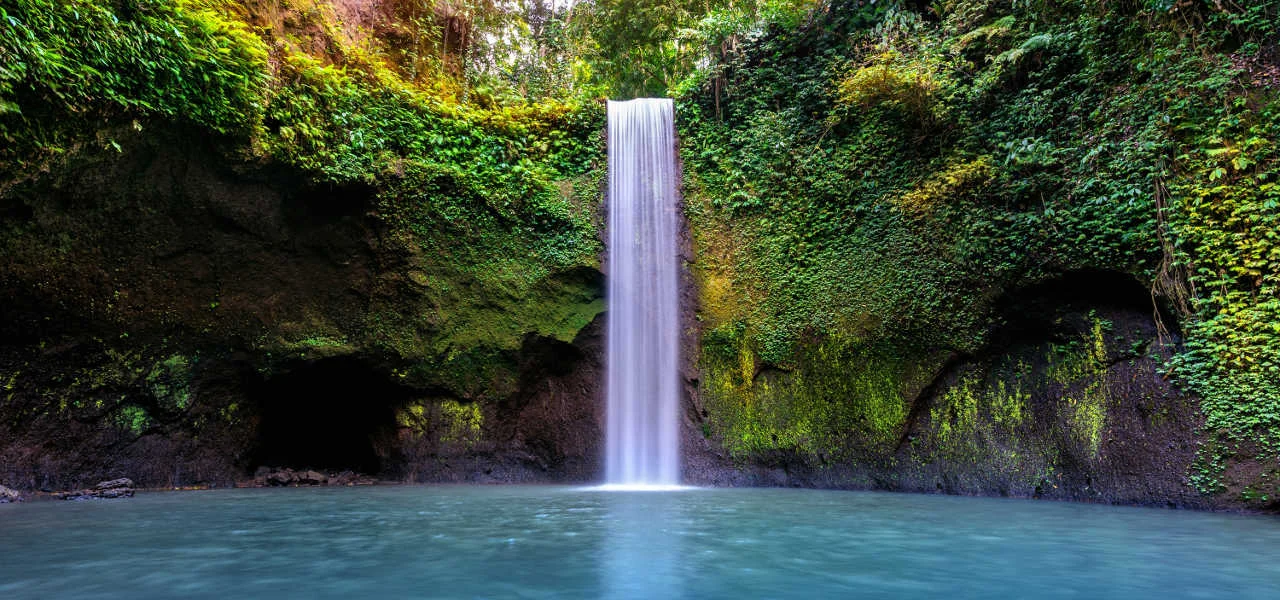
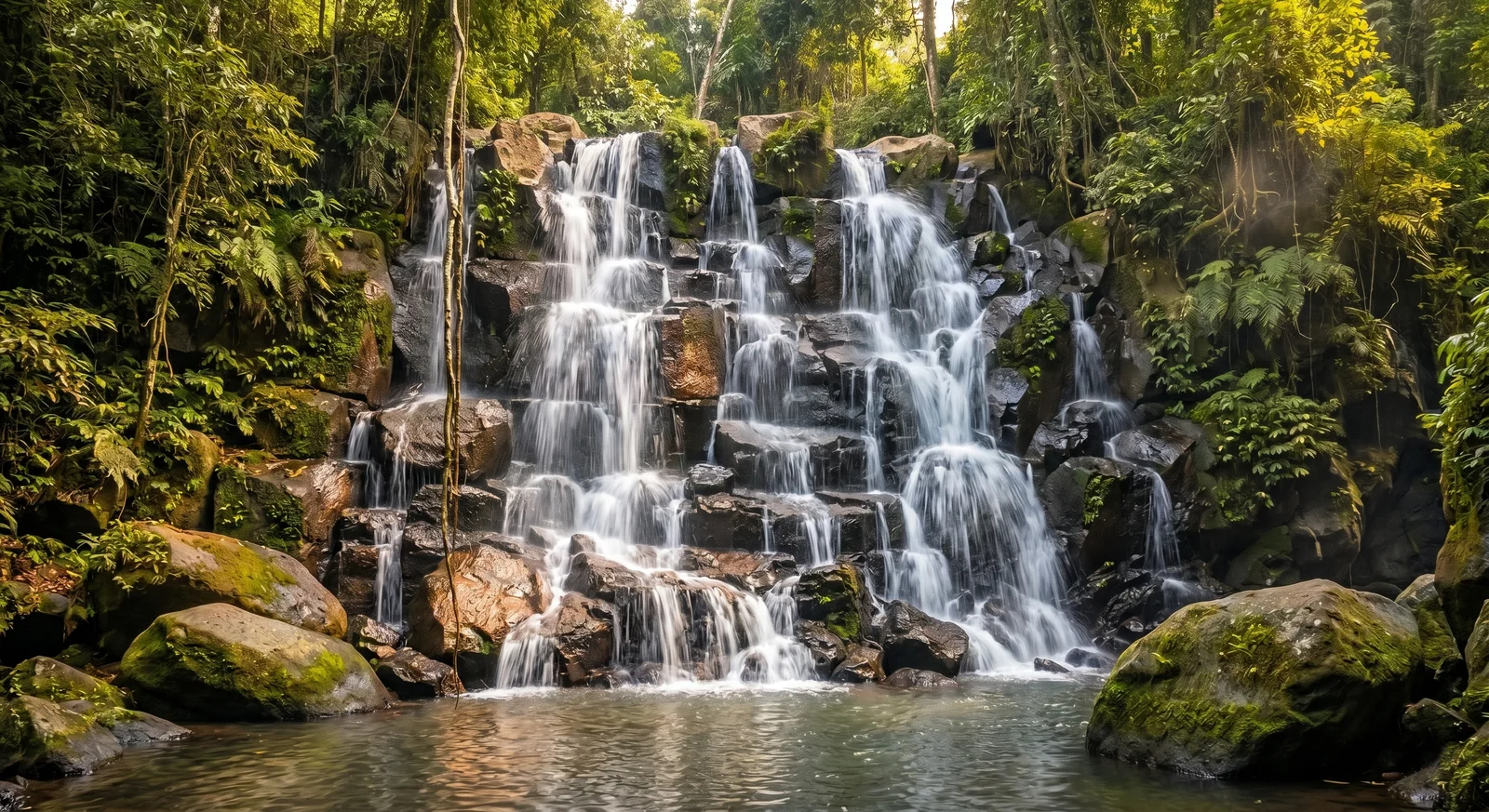
Tegenungan is the most accessible and therefore the busiest. Tibumana feels gentler and often works better for a swim. Kanto Lampo is photogenic because water spreads over layered rock like a wide curtain.
Tukad Cepung: cave waterfall and morning light
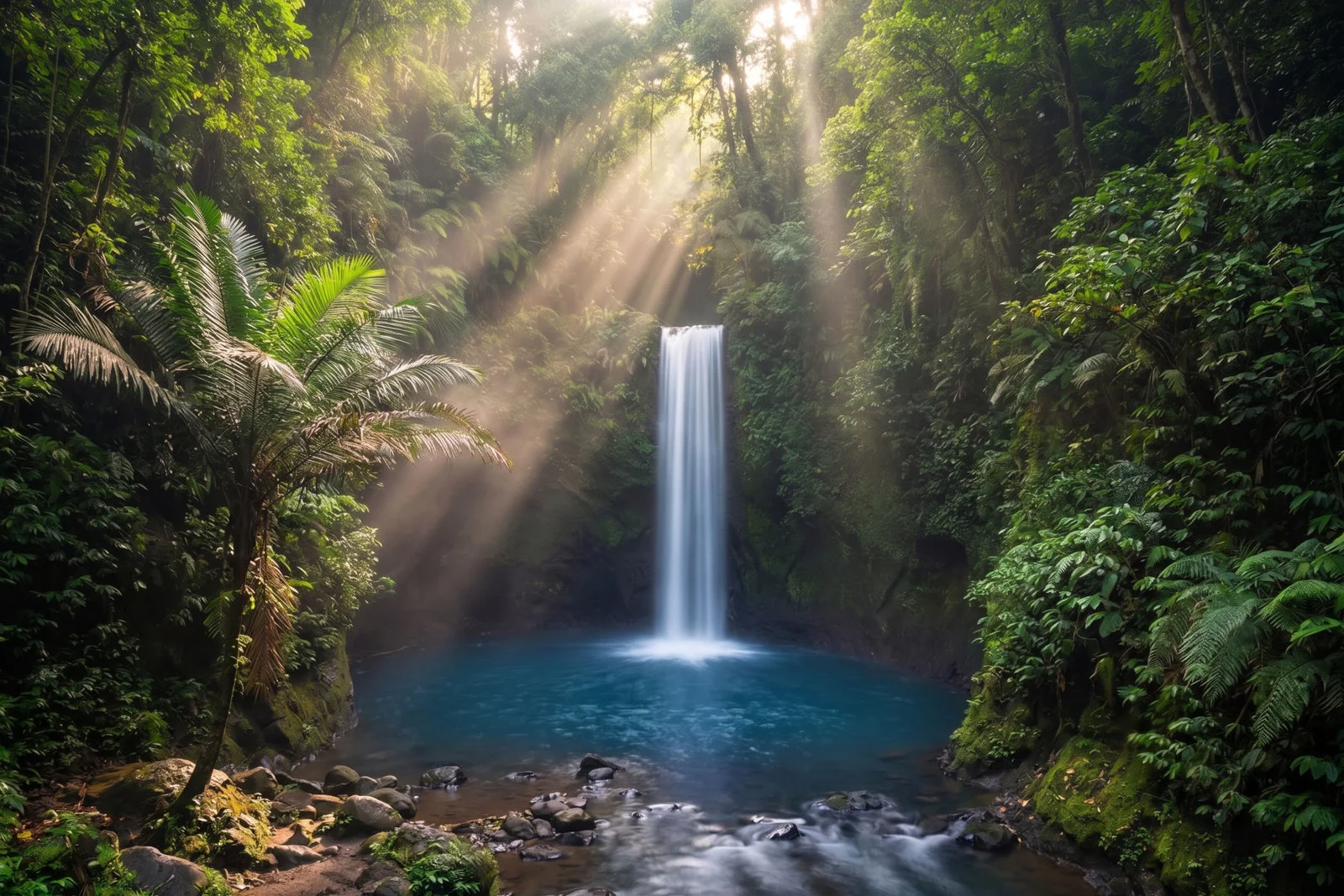
Tukad Cepung is different from most Bali waterfalls: the stream drops inside a rocky chamber, and in the morning light can cut through the opening above. Visit for atmosphere, photography, and unusual geology rather than for long swimming.
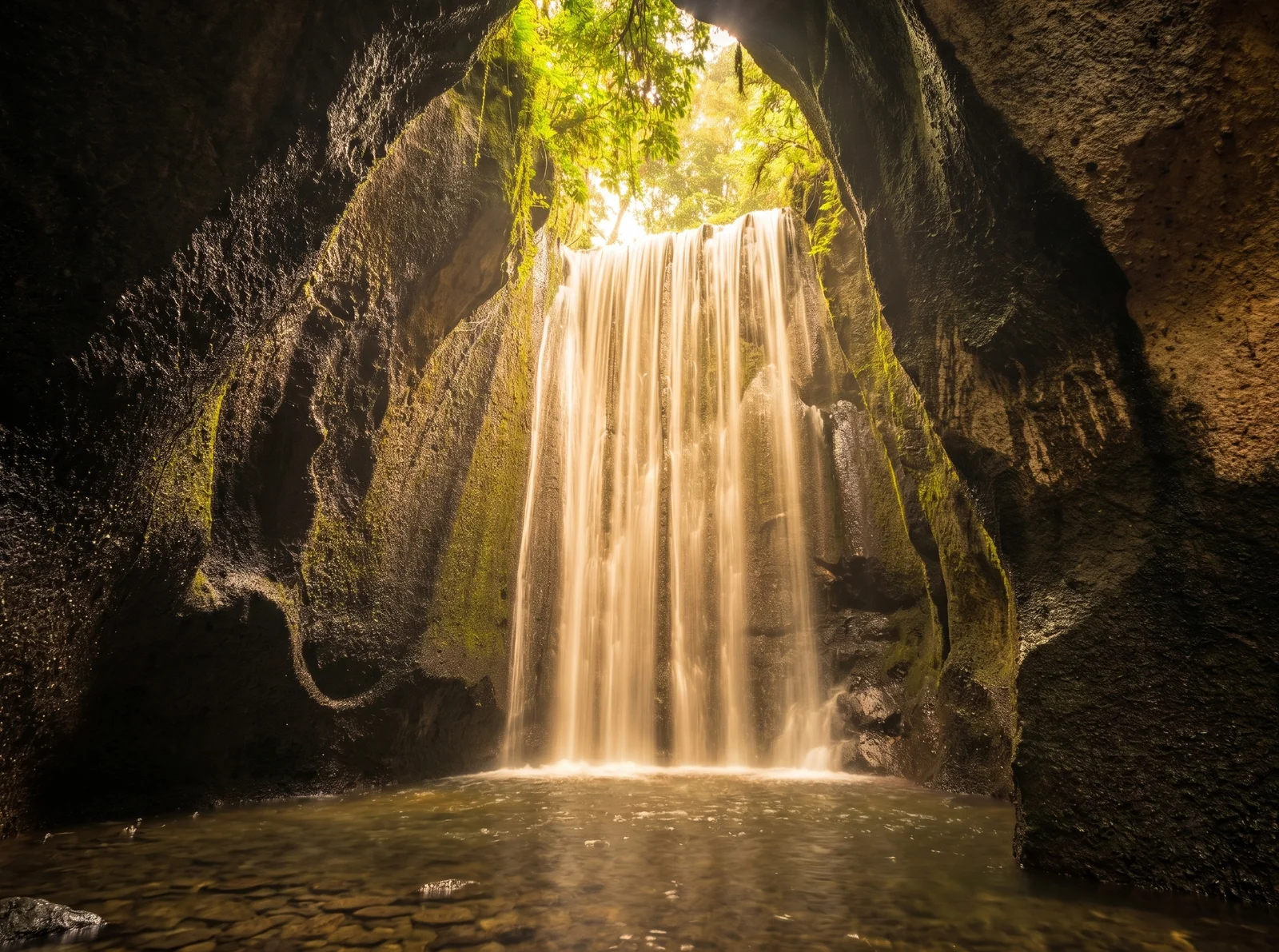
Morning is best, both for lighter crowds and a better chance of sunbeams. After rain, the rocks can be slippery and the water stronger than expected.
Tukad Cepung pairs well with Tibumana, Kanto Lampo, Pengibul, and Ubud. Avoid combining it with Sekumpul unless you want an exhausting pin-collection day.
Nungnung, Gitgit, and Munduk: northern Bali waterfalls
Northern Bali waterfalls bring cooler air, greener roads, and a more mountainous mood, but almost always require longer transfers. Nungnung is known for its powerful drop and long staircase, Gitgit is a classic north Bali stop near the Singaraja route, and Munduk works as a whole waterfall-and-coffee area.
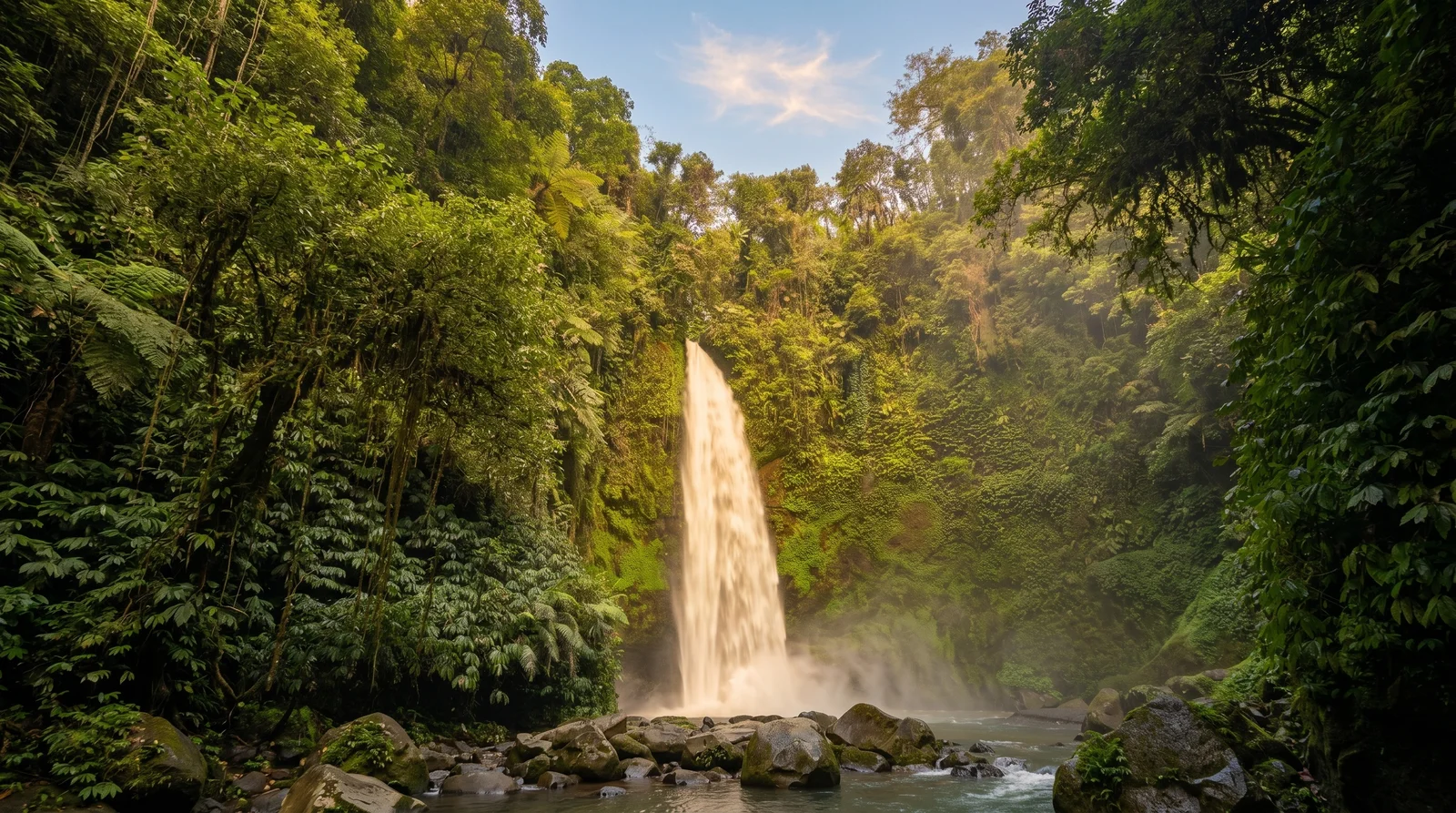
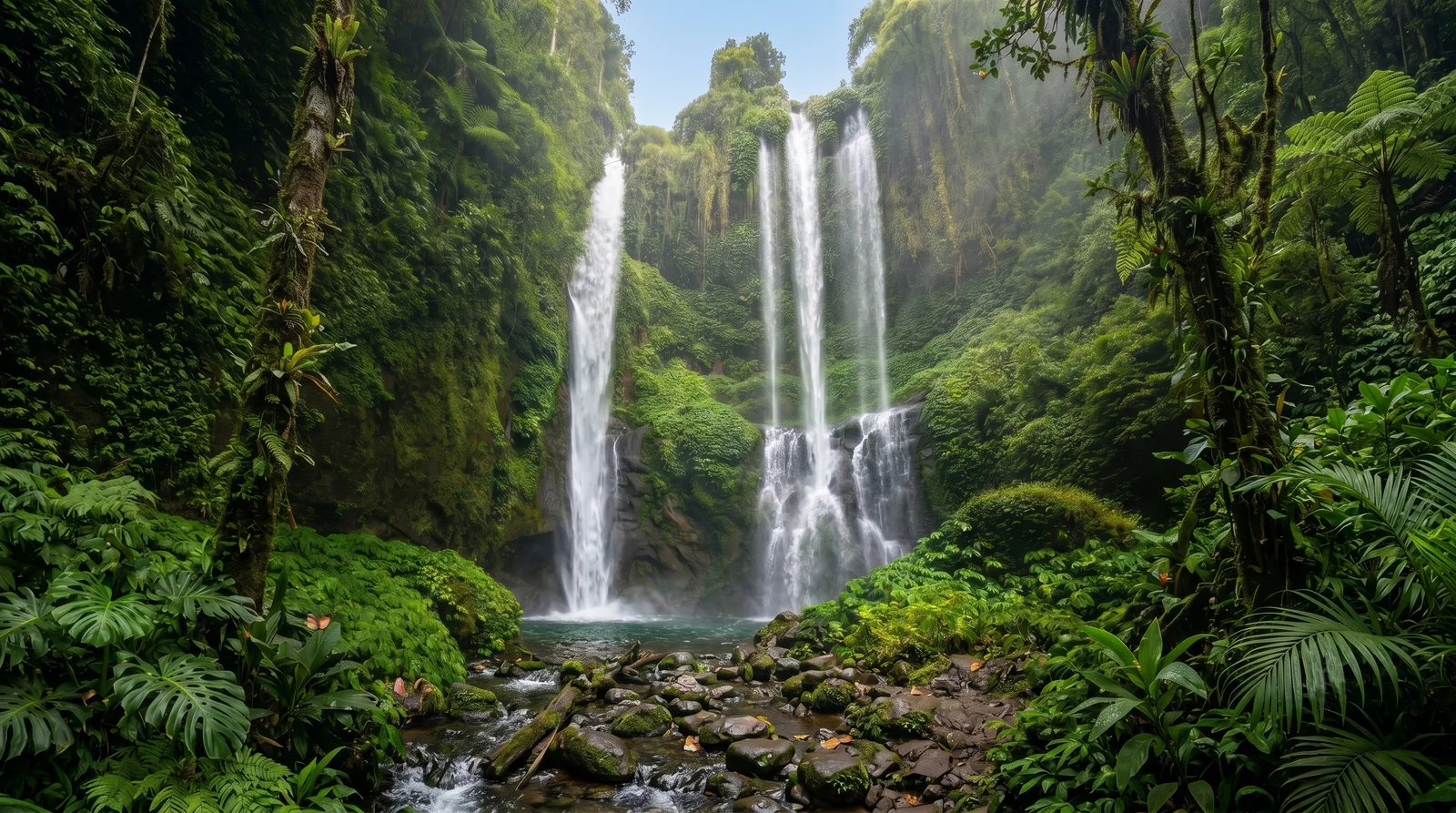
Nungnung is impressive, but the climb back can be hard in heat. Gitgit is easier to include on a Lovina or Bedugul route. Munduk should be treated as an area, not one quick pin: waterfalls, lakes, coffee, and mountain roads make it better with time.

How should you plan Bali waterfalls on a map?
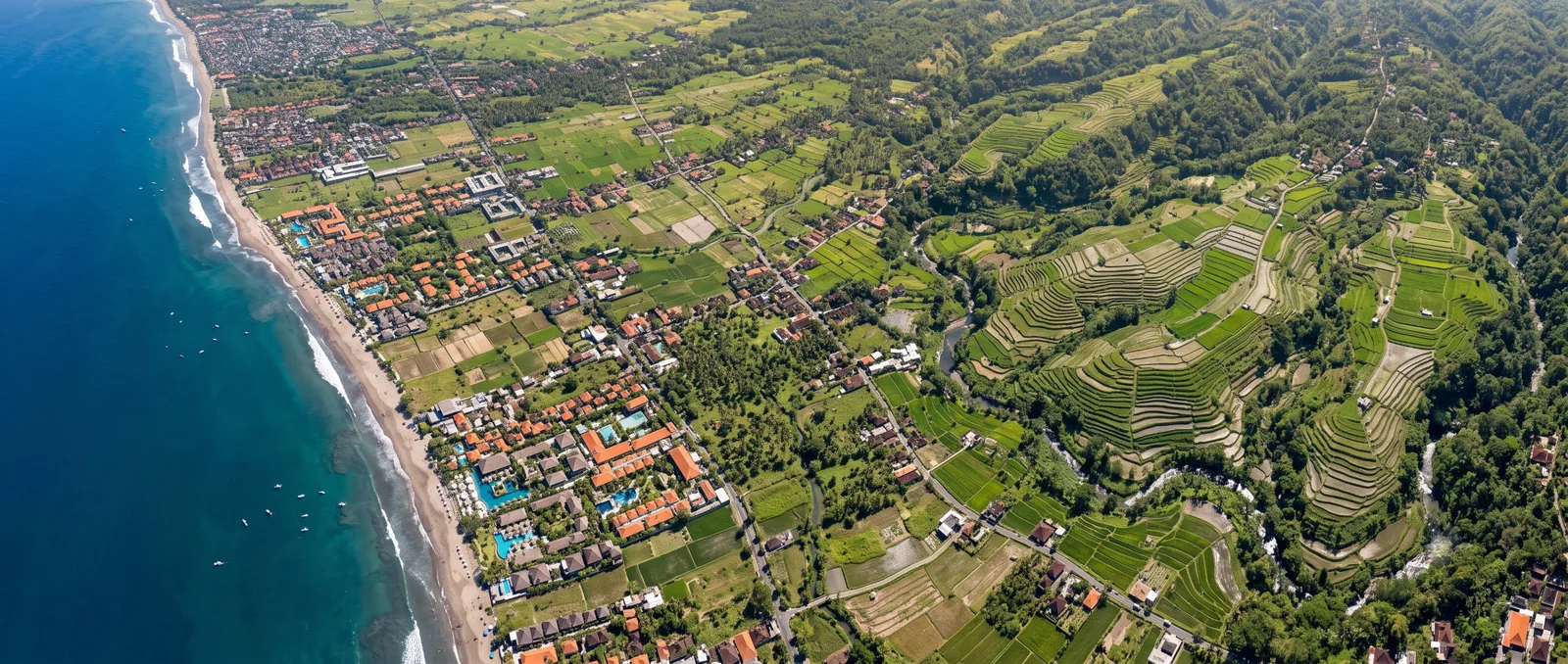
The best Bali waterfall route is based on geography, not an online ranking. North, central Bali, and East Bali should not be forced into one day because the road time will take more energy than the waterfalls themselves.
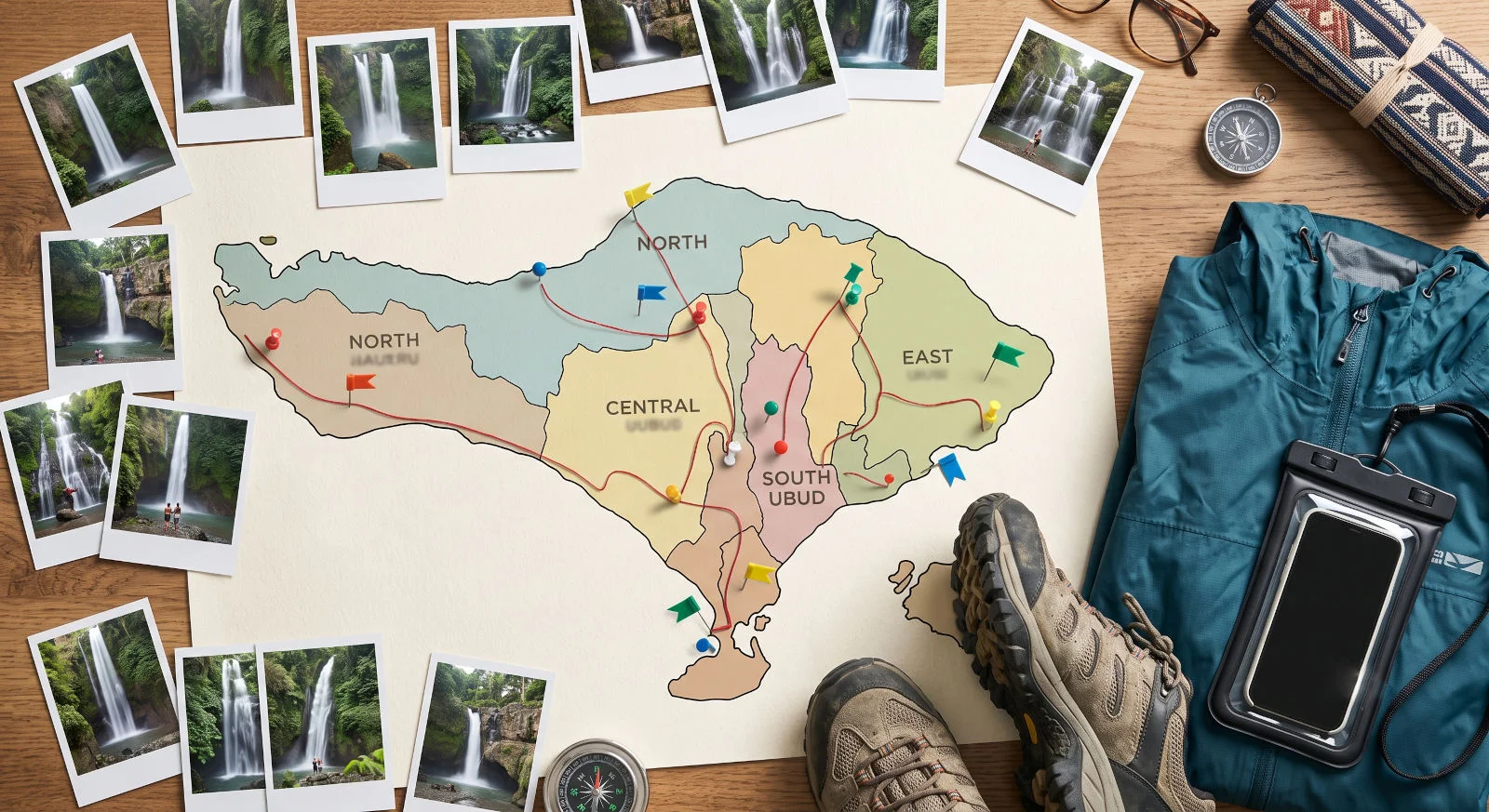
Good clusters:
- Central route from Ubud: Tibumana, Kanto Lampo, Rang Reng, Tukad Cepung.
- Northern day: Sekumpul, Gitgit, lakes, Lovina or Munduk.
- Bedugul: Nungnung, Leke-Leke, Ulun Danu, Jatiluwih.
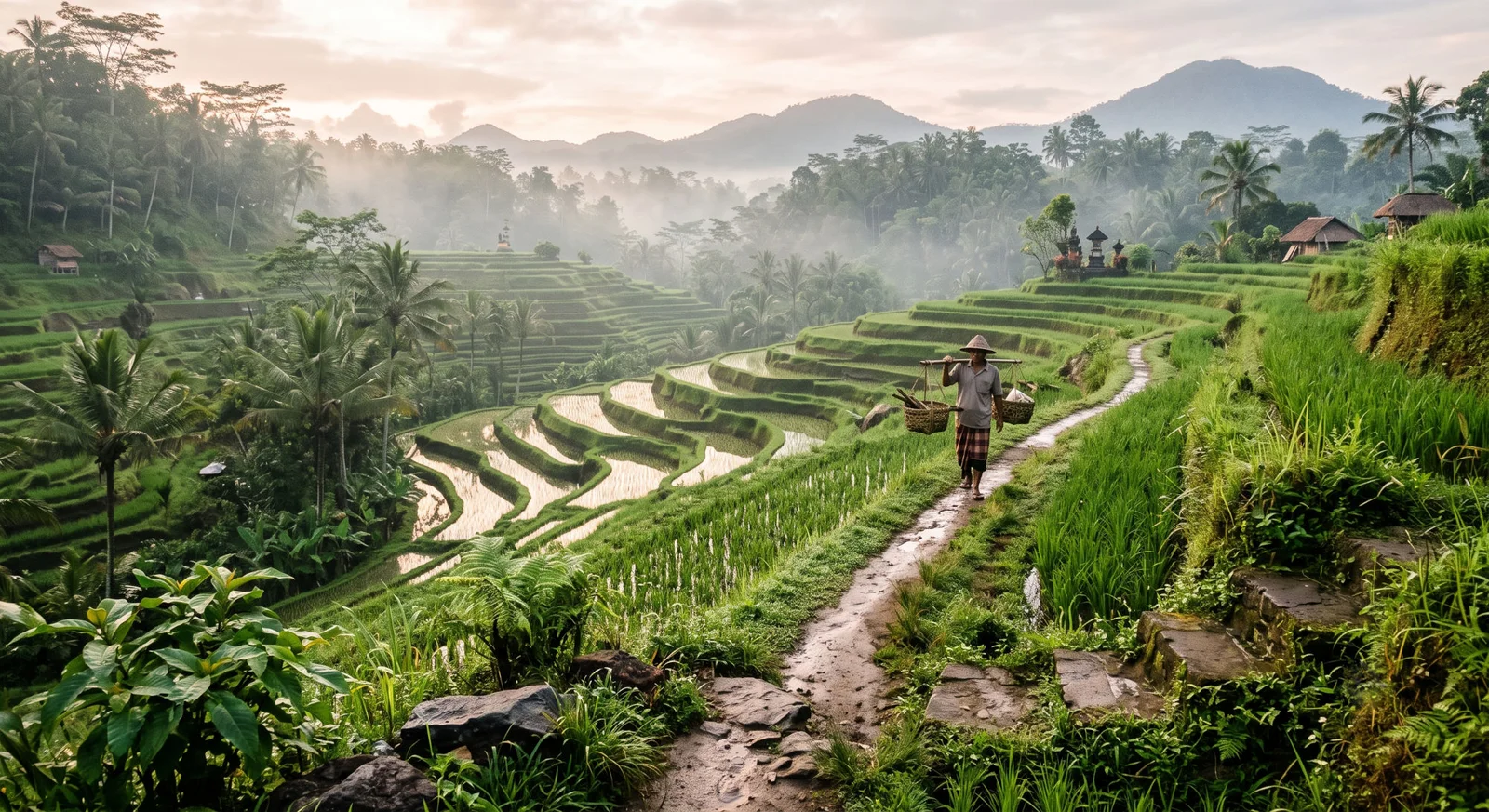
- Light route: Tegenungan + Ubud + rice terraces.
Bring shoes with grip, a dry phone pouch, a spare shirt, and cash for entrance or parking. After rain, stones get slippery and water volume can rise quickly.